- Category
- Defense Tech
Russia’s New Geran-5 Can Hit 620 MPH—But Ukraine May Have Found Its Weak Spot
 Prefer U24 Media on Google
- Authors


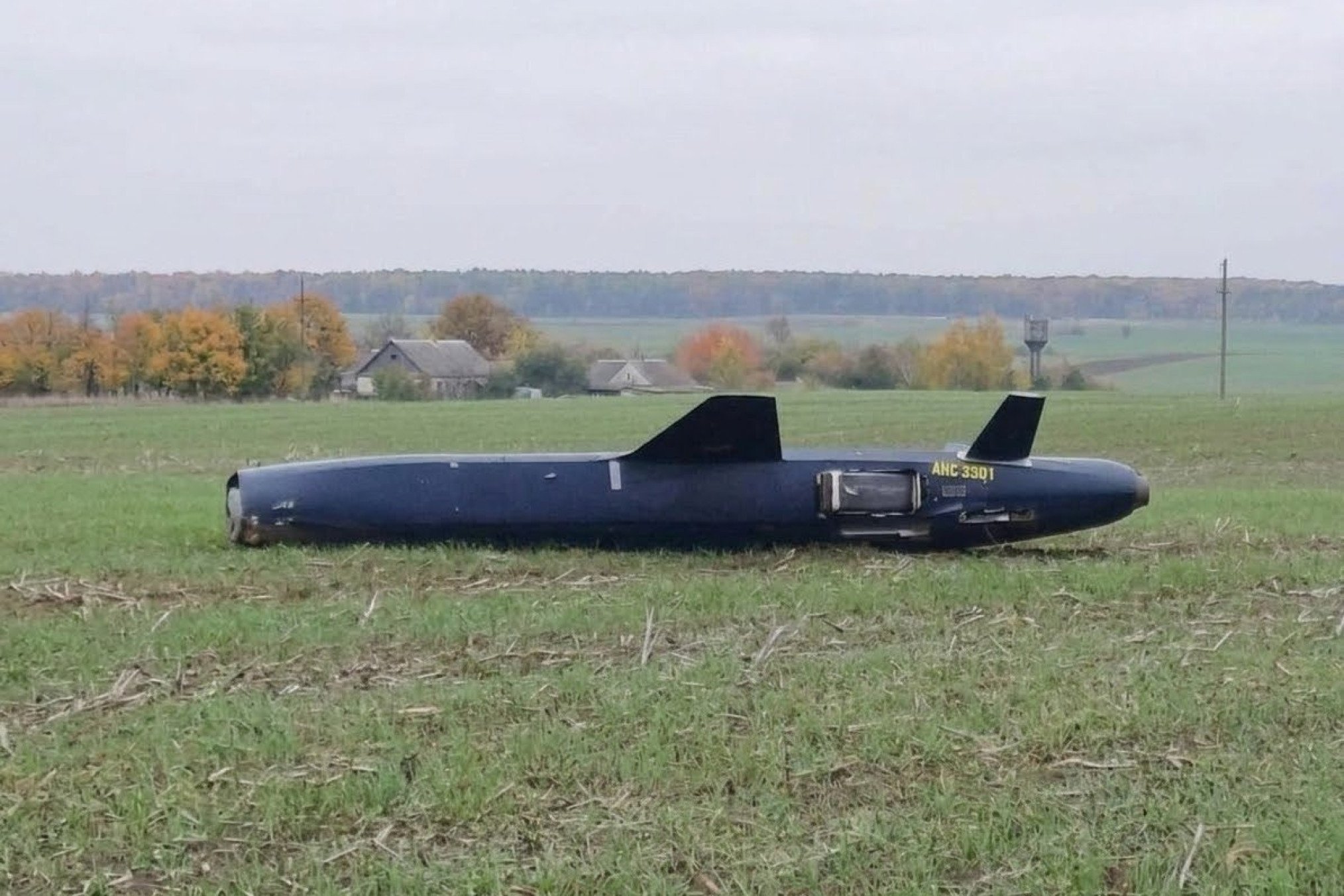
Russia’s newest Geran-5 K5-K has moved well beyond the capabilities normally associated with attack drones, combining a 1,000-kilometer range, a 90-kilogram warhead, optical terminal guidance, and bursts of speed approaching 1,000 kilometers per hour, according to data released by Ukraine’s Defense Intelligence and analyzed by Defense Express on November 11.
Based on those specifications, Defense Express argues that the weapon is increasingly appropriate to classify as a small cruise missile rather than simply another member of Russia’s expanding Geran drone family.
We bring you stories from the ground. Your support keeps our team in the field.
Ukraine’s Defense Intelligence says the Geran-5 K5-K has a cruising speed of about 450 kilometers per hour. During “certain maneuvers,” however, it can accelerate to as much as 1,000 kilometers per hour.
That large difference between cruising and maximum speed is important.
Defense Express assesses that the higher figure may refer to the weapon climbing before making a steep terminal dive toward its target. If so, the Geran-5 would reach its highest speed only during the final stage of the attack, when the window for interception is already extremely short.
A clear view on the new Russian Geran-5K5 low-cost cruise missile during flight.
— Status-6 (@Archer83Able) November 4, 2026
The missile apparently fell of its course and impacted a field somewhere in Ukraine.
The Geran-5K5 is a modified version of the Geran-5 missile with upgraded navigation systems and aerodynamic… https://t.co/81yzqVoVlR pic.twitter.com/G4JlDXsn6Y
During the main portion of its flight, however, its roughly 450-kilometer-per-hour cruising speed could leave it vulnerable to interceptor drones originally developed to counter Russia’s jet-powered Shahed variants.
That may offer Ukraine a comparatively economical way of dealing with the new threat.
Open-source estimates have previously placed the cost of even the baseline Geran-5 at no less than roughly $200,000 per unit. From a cost-effectiveness standpoint, Defense Express notes, using interceptor drones or surface-to-air missiles against such a target can therefore be justified.
An intact body of the upgraded version of the Russian Geran-5 low-cost cruise missile, called "Geran-5K5," was found in a field somewhere in Ukraine.
— Status-6 (@Archer83Able) October 23, 2026
The Geran-5K5 upgrade adds an autonomous optical terrain-matching navigation system, allowing it fly and correct its course… pic.twitter.com/bRJVZ2LRtZ
The K5-K variant also appears more dangerous than the basic Geran-5 because it carries Russia’s Susanin optical targeting system despite its reduced dimensions.
Optical terminal guidance could make the weapon less dependent on satellite navigation during the final stage of flight and potentially improve its ability to strike designated targets under electronic warfare conditions.
That makes destroying Geran-5 K5-K missiles in flight only part of the challenge.
This is what the new Russian "Geran-5" looks like next to an older version of the "Shahed".
— Anton Gerashchenko (@Gerashchenko_en) October 29, 2026
During maneuvers, Russian "Geran-5" drones already reach speeds of up to 1,000 km/h. Ukrainians have already recorded such cases.
Russia is focusing on speed and the mass production of… pic.twitter.com/DDOW4T1Icw
Reducing Russia’s ability to launch them would be equally important, but significant gaps remain in publicly available information about the weapon.
It is not yet known whether the Geran-5 K5-K can be launched from aircraft, which Russian military units operate the system, or what launch infrastructure is required.
For ground launches, it is also unclear whether Russia relies exclusively on large fixed catapults or has developed mobile launchers that could rapidly relocate between firing positions.
Earlier, Russian forces have begun deploying new Shahed-like attack drones, designated BM-35 and BM-70, against Ukraine.
They equipped BM-35 attack drones with jet engines to increase their speed and improve their ability to strike Ukrainian transport, military equipment, and supply routes, although Ukrainian interceptor drones have reportedly demonstrated their ability to counter the emerging aerial threats.
Discuss this article: