- Category
- Latest news
Russia Builds Nvidia-Powered MSU-270 Supercomputer Restricted to Elite Circle
 Prefer U24 Media on Google
- Authors


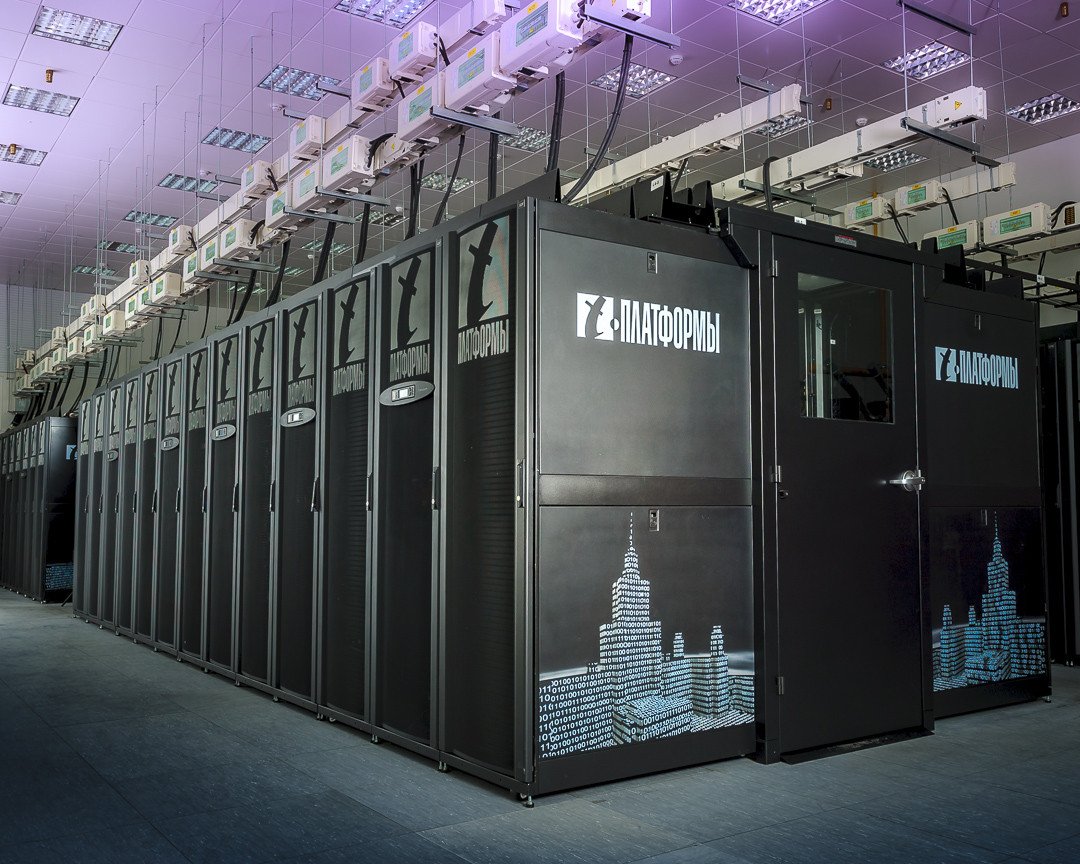
A high-performance supercomputer tied to Russia’s elite academic and political circles is operating under tight restrictions at Moscow State University, with even senior researchers unable to access it, according to an investigation by independent Russian outlet T-invariant on April 27.
The system, known as MSU-270, is reportedly overseen by Katerina Tikhonova—widely described as Vladimir Putin’s alleged daughter—and forms the core of a growing artificial intelligence ecosystem at the university.
We bring you stories from the ground. Your support keeps our team in the field.
Despite being housed within Moscow State University (MSU) infrastructure, the machine remains largely off-limits to staff at the university’s own Research Computing Center.
One researcher told T-invariant he had spent two years trying to understand what was happening inside the project.
“I’ve been asking colleagues at the Research Computing Center what is going on over at Tikhonova’s, but they just shrug—they’re not allowed in there,” he said.
Access to MSU-270 appears to be restricted to a small group of insiders, while the university’s older system, Lomonosov-2, remains available to the broader scientific community despite frequent breakdowns and outdated performance.
Moscow State University’s new supercomputer, controlled by Putin’s daughter, was built using smuggled Nvidia chips
— The Insider (@InsiderEng) April 28, 2026
The MSU-270, worth $37.4 million, was assembled from Nvidia equipment purchased through a Chinese intermediary, @t_invariant_eng reports.https://t.co/r4IaHtEziW
The investigation also found that the supercomputer—estimated to be worth at least $37.4 million—was assembled using Nvidia hardware obtained through indirect channels.
Although Nvidia halted all business operations in Russia in 2022, the components were reportedly acquired via a Chinese intermediary and listed in procurement documents under the fictitious brand name “SOLAR PEAK,” masking their origin, T-invarian wrote.
At the same time, the broader AI ecosystem linked to the project is shifting toward Chinese technology. Since March 2026, VTB Bank, which finances the initiative, has begun deploying Chinese-made GPUs across key applications, including computer vision, speech recognition, and generative AI.
According to VTB deputy president Vadim Kulik, internal testing showed strong performance from the Chinese processors “without significant modifications.” The bank also recently recognized the MSU AI Institute at the Data Fusion Awards forum for its role in a joint AI project in China, though details were not disclosed.
-007b7438a05c303eaadec523aa0aa882.jpg)
The entire structure—including the MSU-270 system, the AI Institute, and a newly launched Faculty of AI—is reportedly managed under Tikhonova’s leadership. The faculty formally opened on April 21, 2026, further expanding the university’s role in Russia’s AI ambitions.
Among the projects under development are a gait analysis system designed to detect psycho-emotional conditions with claimed accuracy above 80%, as well as drone and robotics programs developed in cooperation with a China-based university.
Earlier, Ukraine’s Main Intelligence Directorate published detailed information on the design and electronic systems of the V2U—an AI-enabled Russian strike drone now actively deployed by Russian forces on the frontline.
Despite Russian markings, the drone is assembled predominantly from Chinese-made components—its motor, GPS module, servomotors, solid-state drive, rangefinder, speed controllers, and power supply elements at least.
It also incorporates a Japanese Sony photosensitive sensor, an electromagnetic relay from Ireland’s TE Connectivity, and the American NVIDIA Jetson Orin module.
Discuss this article:
-9bd5e1532102621f8fb1c4ba871a3171.png)