- Category
- Latest news
Russia Launches First Brain-Chipped Bird Drones for Surveillance Over Cities
 Prefer U24 Media on Google
- Authors

-111f0e5095e02c02446ffed57bfb0ab1.jpeg "Photo of Roman Kohanets")
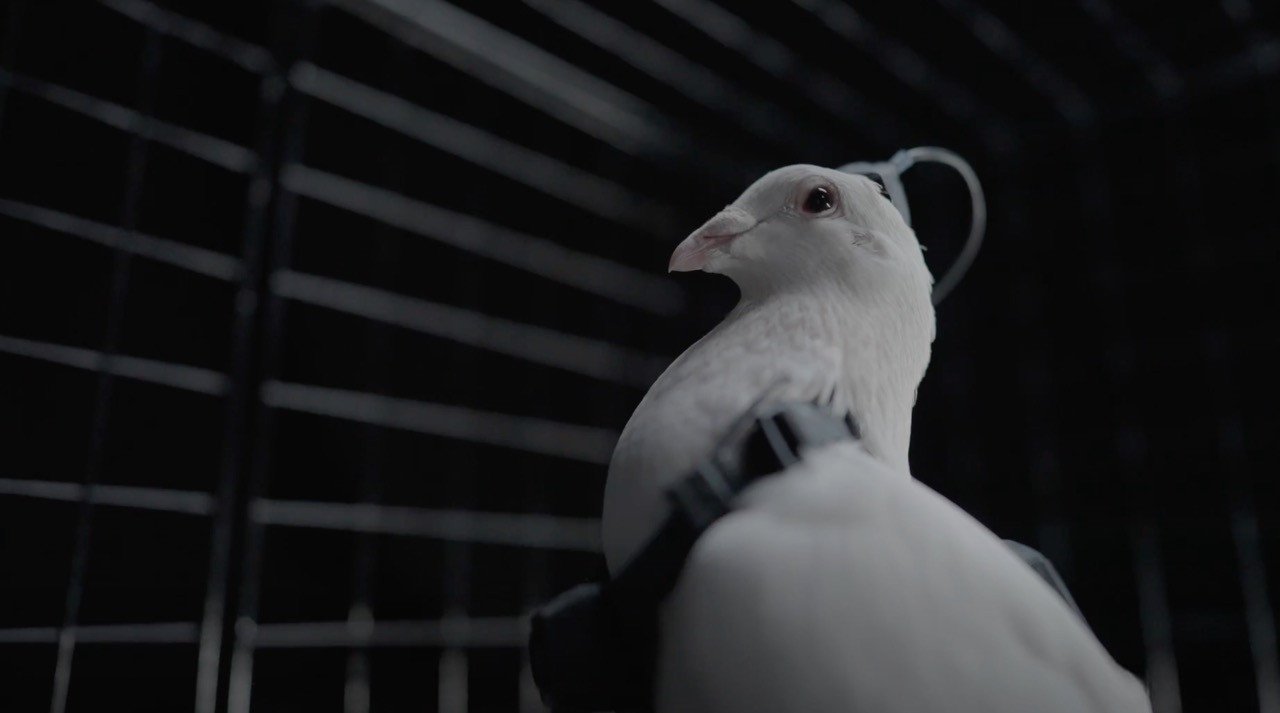
Russian neurotechnology company Neiry has conducted flight tests in Moscow of pigeons transformed into biodrones using implanted brain interfaces and backpack-mounted electronics, according to Forbes Russia and a company statement on November 25.
According to Neiry, the first flock of pigeons with implanted neural interfaces completed test flights from a laboratory and back, and the company is now checking the “flight characteristics” of dozens of chipped birds, some of which are expected to be sent thousands of kilometers away while others remain in Moscow for further trials.
We bring you stories from the ground. Your support keeps our team in the field.
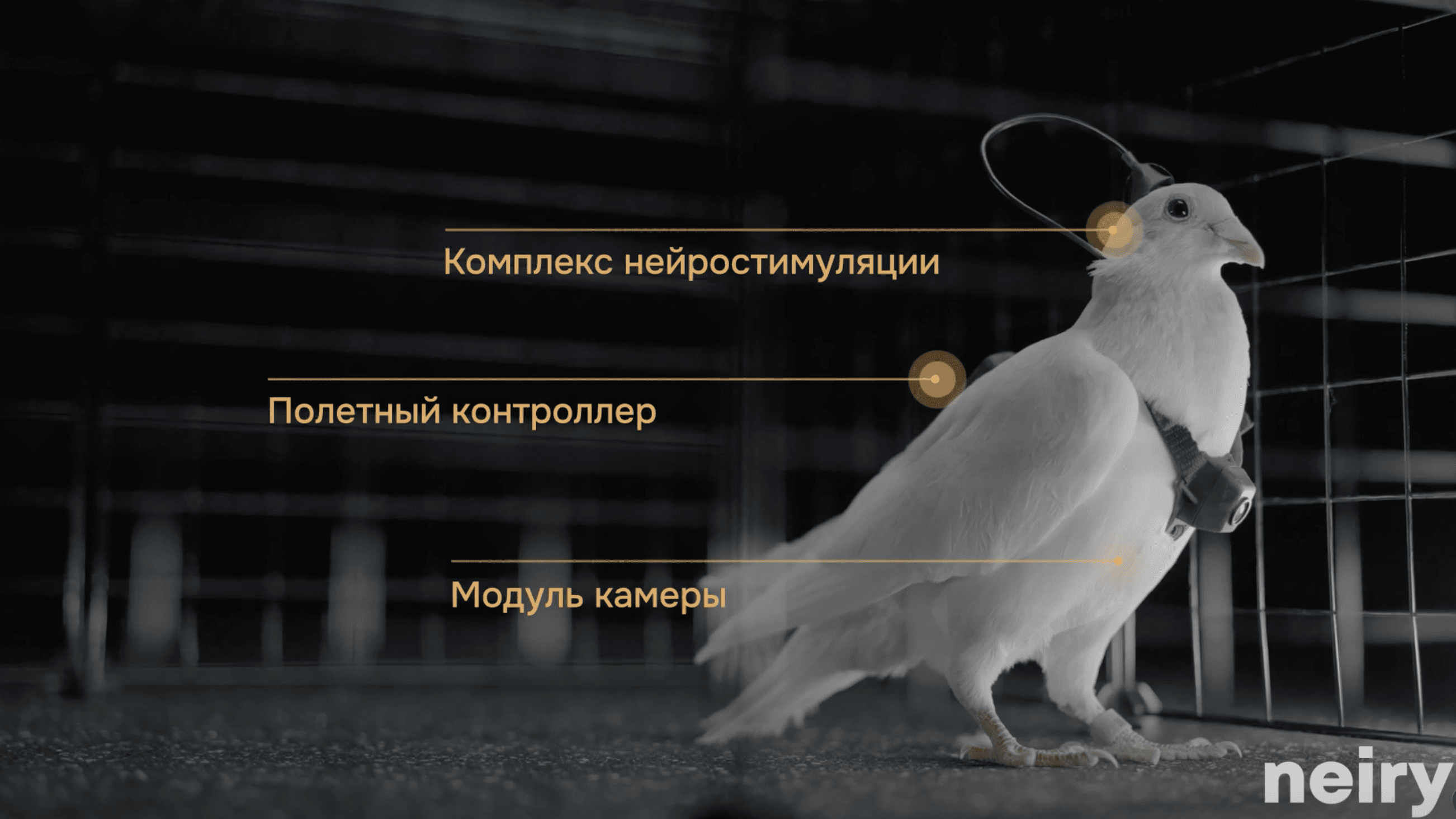
The system uses electrodes developed by Neiry that are implanted into specific areas of the bird’s brain and connected to a stimulator and controller housed in a small “backpack,” which also carries solar-powered electronics.
The controller receives a pre-loaded flight task similar to those used in conventional unmanned aerial vehicles, while the stimulator sends impulses that influence the bird’s motivation to turn left or right, with positioning provided by GPS and other navigation methods.
Neiry stated that, unlike trained animals, no behavioral conditioning is required because “any animal becomes remotely controllable after the operation,” and that surgeons use a stereotactic setup to place electrodes accurately, aiming for 100% survival of the birds.
Cameras mounted on the birds are described as operating under the same principles as surveillance systems on fixed infrastructure, transport and delivery robots, with Neiry claiming that faces are blurred and personal data removed using artificial intelligence in line with the legal requirements of the country where the bird operates.
The company plans to use the biodrones for extended monitoring of power transmission lines, gas distribution nodes and other infrastructure, as well as for environmental surveys, industrial inspections, search-and-rescue missions and additional security monitoring, and says the price of each biodrone is comparable to drones of a similar class while “hundreds of times” exceeding them in range and endurance.
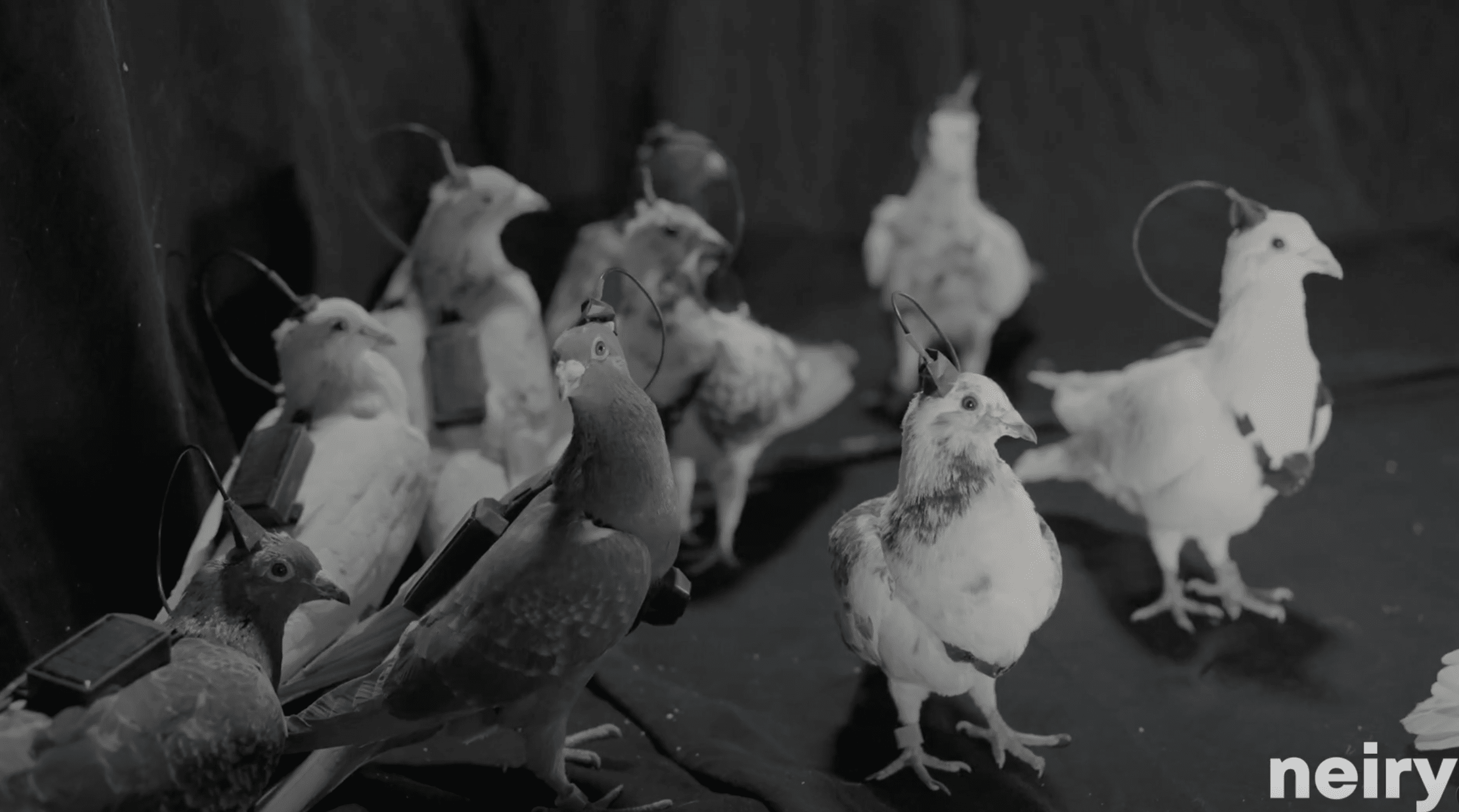
Neiry founder Alexander Panov said the current system is being tested on pigeons but can be adapted for use with other species. “Right now, the solution works on pigeons, but any bird can be a carrier. To carry more payload, we plan to use ravens for monitoring coastal facilities—seagulls, and for large sea areas—albatrosses.”
Neiry notes that research into controlling birds via implanted neurointerfaces has previously been carried out in China, South Korea, the US and India, but claims its team has moved beyond experiments toward industrial deployment and is considering taking the technology to international markets.
Earlier, it was reported that Ukrainian companies Vyriy and The Fourth Law have begun mass-producing FPV combat drones equipped with an AI-driven terminal guidance module that significantly boosts strike accuracy while keeping costs relatively low.
Discuss this article:



-c439b7bd9030ecf9d5a4287dc361ba31.jpg "Photo of Katherina Popilnichenko")