- Category
- Latest news
Sanctions Stall Russia’s Lunar Dreams—Moon Mission Postponed Again
 Prefer U24 Media on Google
- Authors

-72b63a4e0c8c475ad81fe3eed3f63729.jpeg "Photo of Cyril Barabaltchouk")
Russia has postponed the launch of its next lunar mission, Luna-26, pushing it from 2027 to 2028, the president of the Russian Academy of Sciences, Gennady Krasnikov, told Izvestia on August 22.
The orbital station is designed to identify suitable landing sites for future missions, with follow-up modules Luna-27.1 and Luna-27.2 aimed for the Moon’s South and North poles now expected in 2029 and 2030, also a year later than originally planned, The Moscow Times reported.
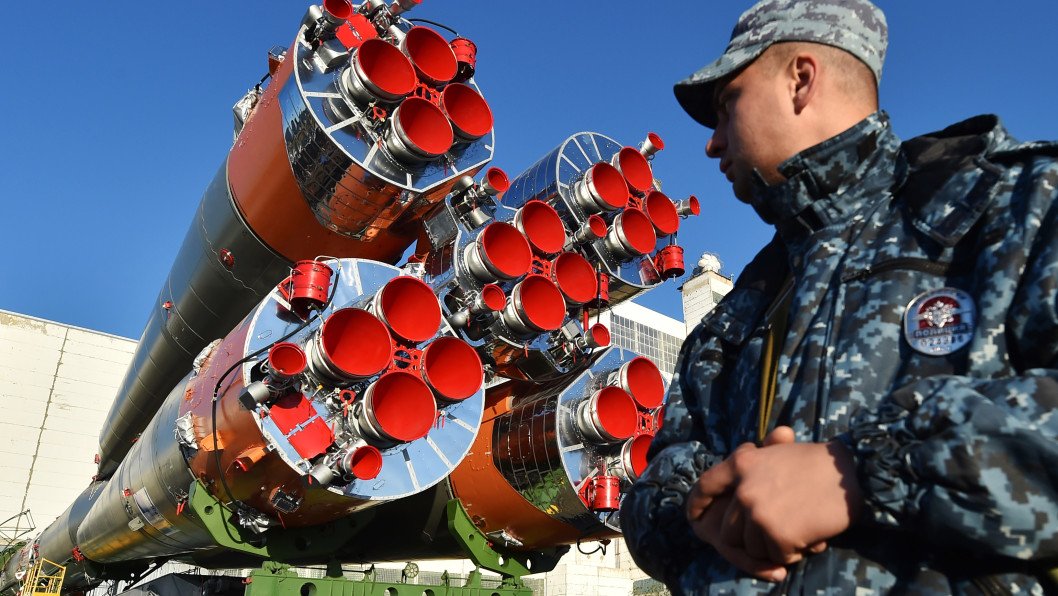
The delay comes in the wake of the August 2023 crash of Luna-25, which was intended to be Russia’s first lunar mission in the modern era. Igor Mitrofanov, head of the nuclear planetology department at the Russian Space Research Institute, said the mission’s failure forced engineers to rethink the program.
“The initial desire to quickly rehabilitate the program was an emotional reaction,” he said. “But it became clear that many onboard systems from the failed spacecraft could not be reproduced because they relied on Western components that are no longer available due to sanctions.” As a result, Luna-26 had to be redesigned from scratch, contributing to the schedule slippage.
Luna-25 itself had already faced multiple delays, with its first planned launch in October 2021 postponed to 2022, and then later.
Krasnikov also confirmed delays to Russia’s Venus mission, now scheduled for 2036 instead of 2031. The mission is supposed to study Venus’s surface, atmosphere, internal structure, and surrounding plasma, building on Soviet-era research conducted between the 1960s and 1990s.
Previously, it was reported that Russia has formally informed international regulators that it will consider European satellites aiding Ukraine’s military as “legitimate targets,” escalating its ongoing campaign of GPS and satellite signal jamming, according to a report by Space Intel Report.
Discuss this article: