- Category
- War in Ukraine
Russia Appears to Deploy New Sarmat ICBMs Capable of Striking US Despite Repeated Test Failures
 Prefer U24 Media on Google
- Authors


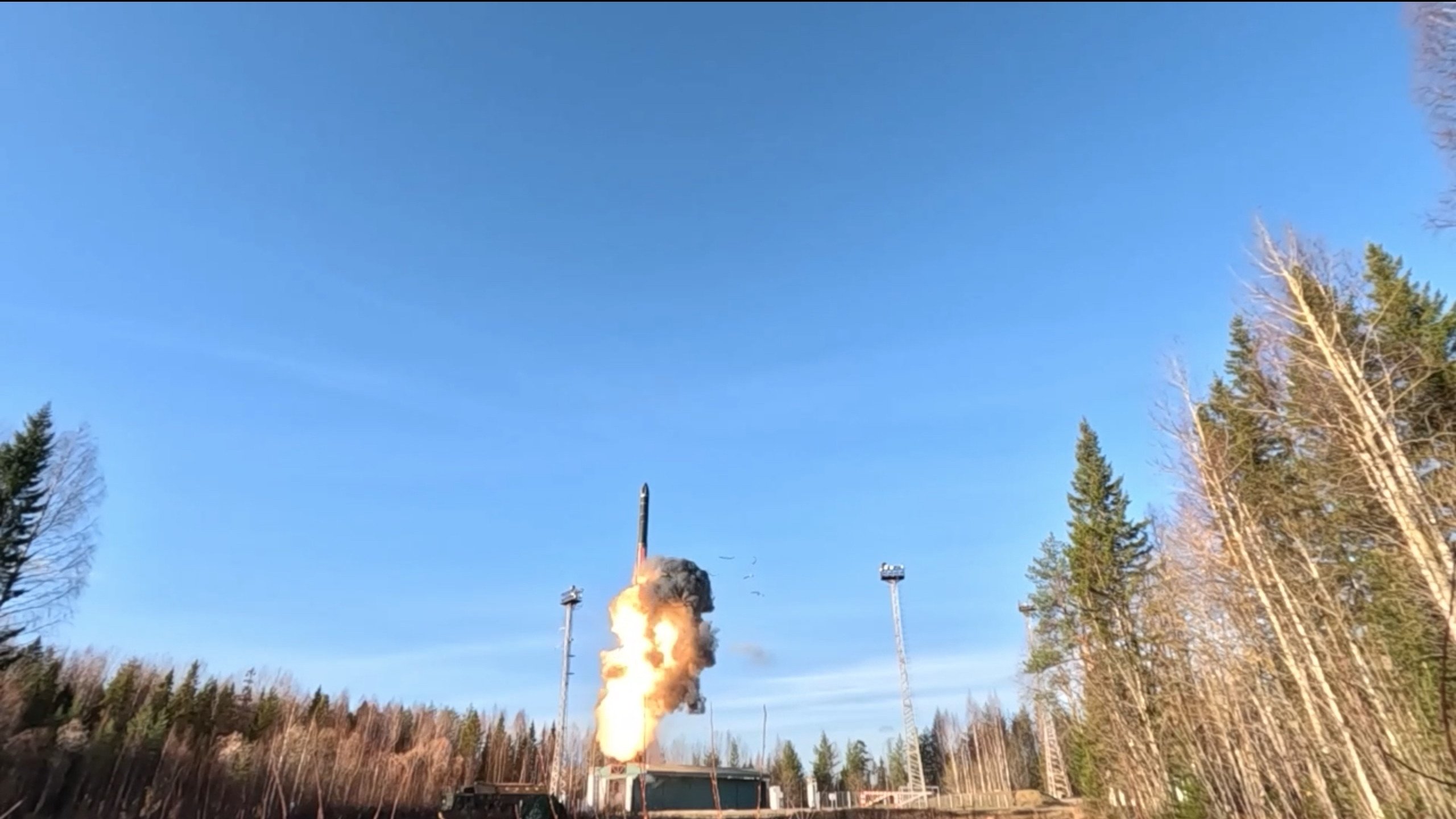
Russia appears to have begun deploying its RS-28 Sarmat intercontinental ballistic missiles (ICBMs), designed to carry multiple nuclear warheads and potentially strike the United States from an unconventional southern trajectory, despite years of development delays and repeated test failures.
We bring you stories from the ground. Your support keeps our team in the field.
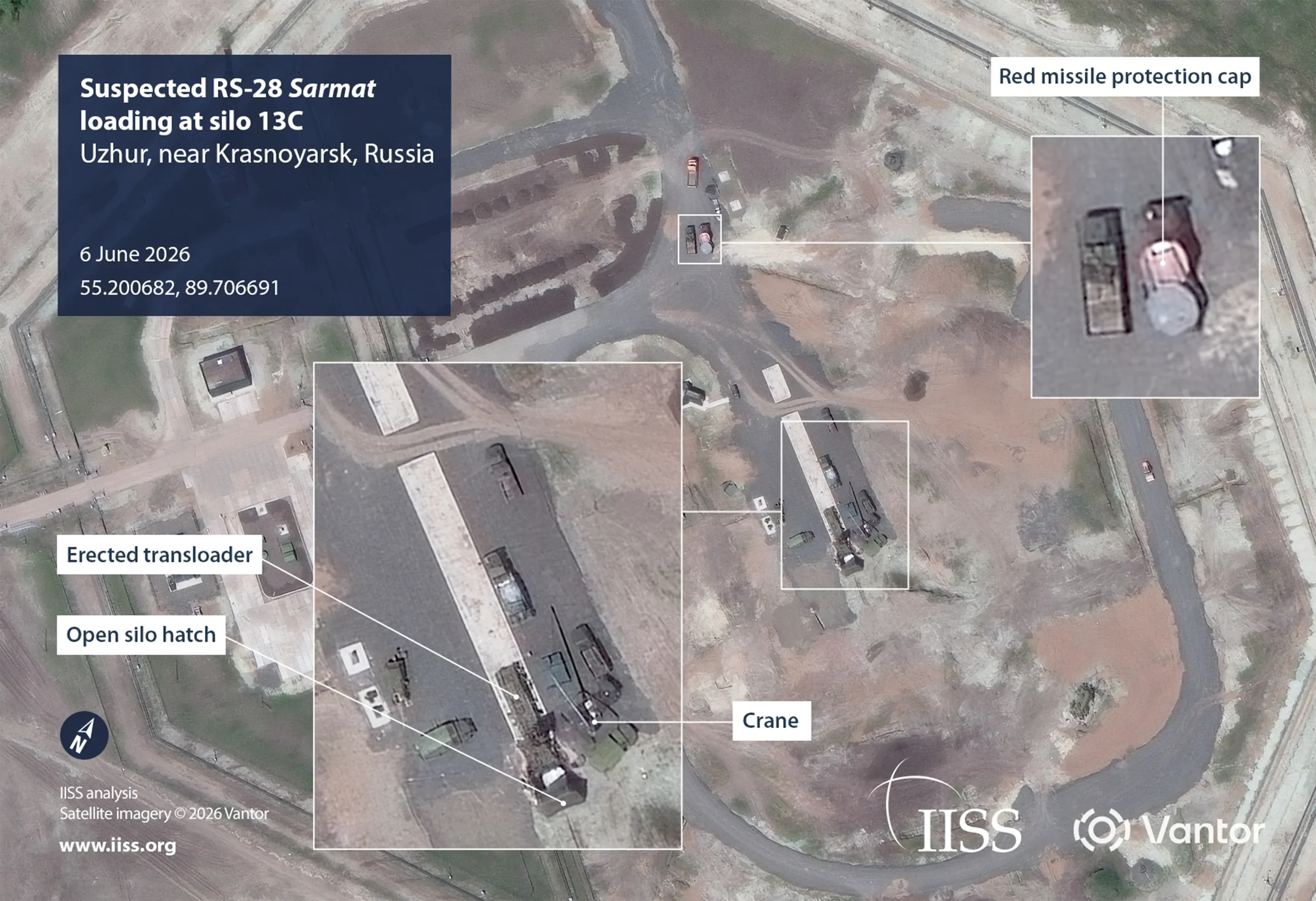
According to the International Institute for Strategic Studies (IISS) in a November 2026 analysis, satellite imagery suggests that the missiles are entering operational service with Russia’s 62nd Missile Division near Uzhur in Krasnoyarsk region.
Satellite images captured on June 6 show at least six military vehicles surrounding an open missile silo, including specialized equipment used to transport and install sections of intercontinental ballistic missiles.
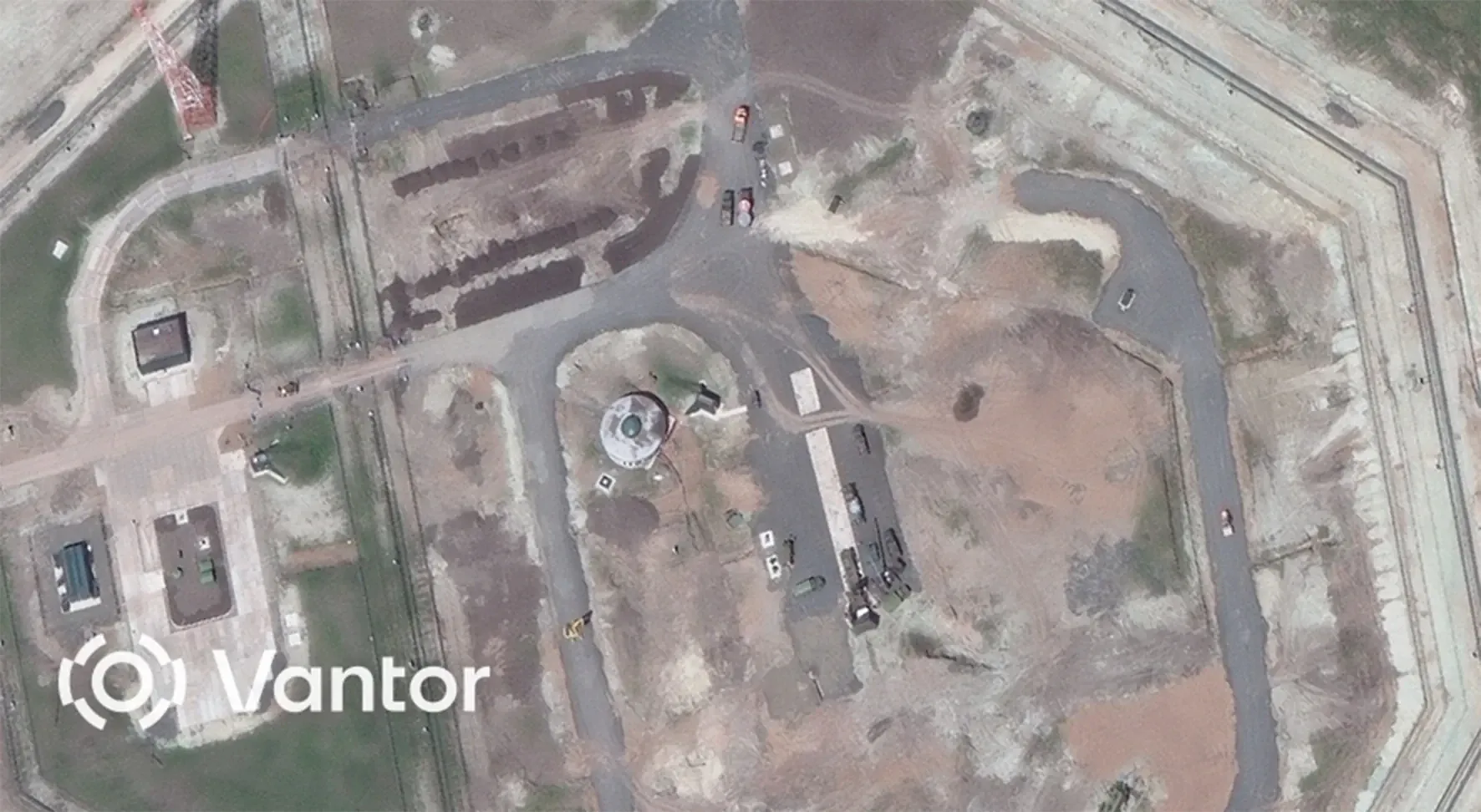
Analysts identified a transporter positioned almost vertically beside the silo, apparently without its missile section. A protective missile cap was also visible nearby, suggesting that part of a Sarmat missile may already have been installed underground.
The presence of a crane near the facility also raises the possibility that the missile has received its payload, potentially including nuclear warheads. However, the imagery does not conclusively establish whether the missile is on full combat duty.
The RS-28 Sarmat is a liquid-fueled ICBM designed to replace Russia’s aging Soviet-era nuclear missiles. According to IISS, it may carry up to 15 independently targetable nuclear warheads or multiple hypersonic glide vehicles.
Its development has been marked by significant setbacks. Russia conducted its first successful Sarmat launch in April 2022, followed by a second successful test in May 2026.
Between those launches, at least two tests failed. In September 2024, a Sarmat missile exploded inside its launch silo, while another suspected test in November 2025 ended when the missile lost control and crashed shortly after launch.
Despite these failures, Russian Strategic Rocket Forces commander Sergey Karakayev told Vladimir Putin in May that the missile could enter combat duty before the end of 2026.
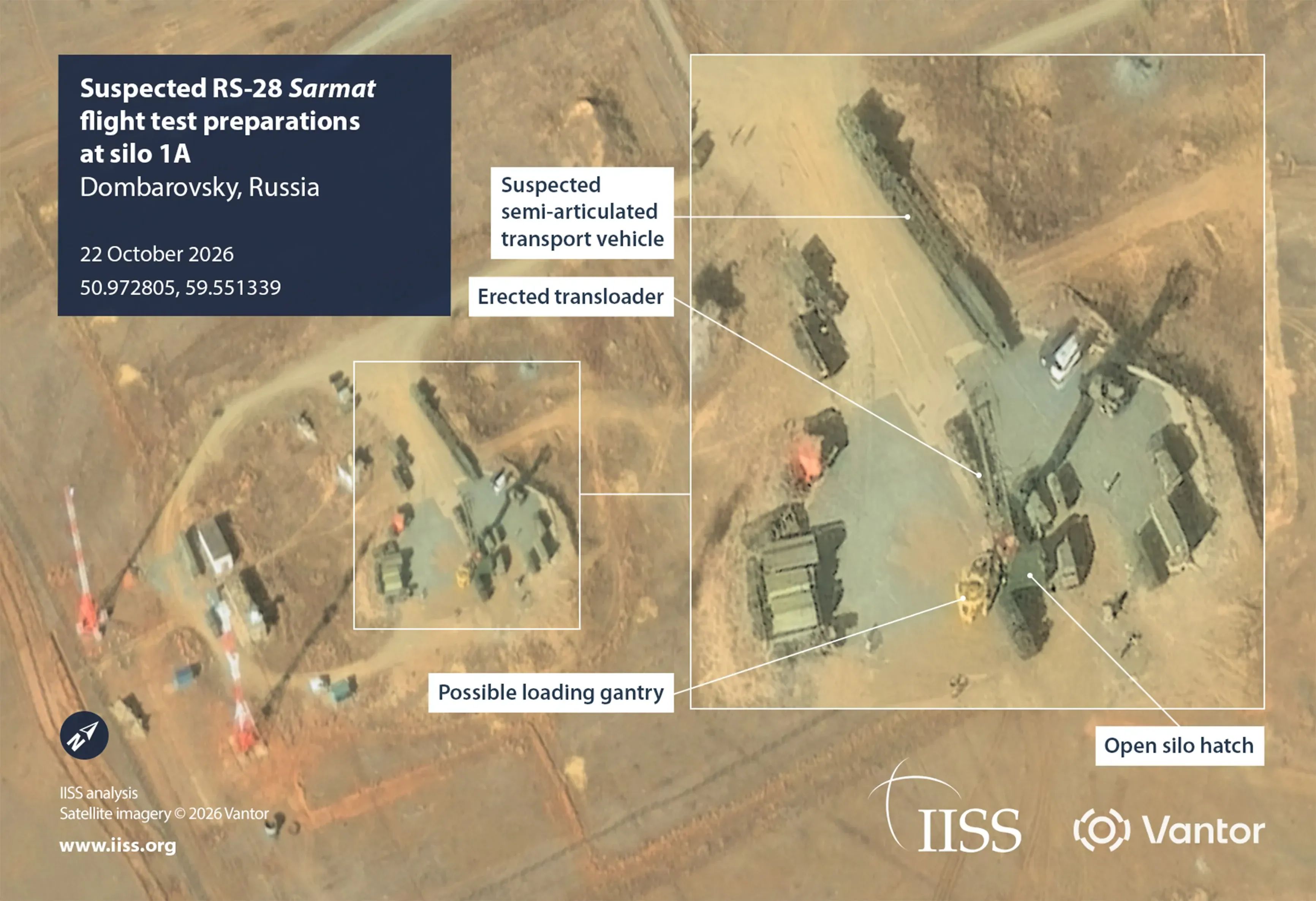
IISS also identified renewed activity at another missile facility in Dombarovsky in October, potentially indicating preparations for an additional flight test.
The Sarmat is expected to provide Russia with greater range than its predecessors and could potentially approach the United States from the south via a polar or near-polar trajectory, complicating missile defense planning.
Although questions remain about its reliability, the apparent deployment means the United States and its allies may now have to account for Sarmat as part of Russia’s operational nuclear arsenal.
The apparent Sarmat deployment comes as Russia continues expanding its nuclear arsenal. According to SIPRI data reported in September 2026, Moscow increased its deployed nuclear warheads to 1,796, the highest level in nine years, marking the fourth consecutive annual increase.
Discuss this article: