- Category
- War in Ukraine
Russia Lost Su-35s and a Su-57—Now It’s Sending a Trainer Jet to Hunt Ukrainian Drones
 Prefer U24 Media on Google
- Authors


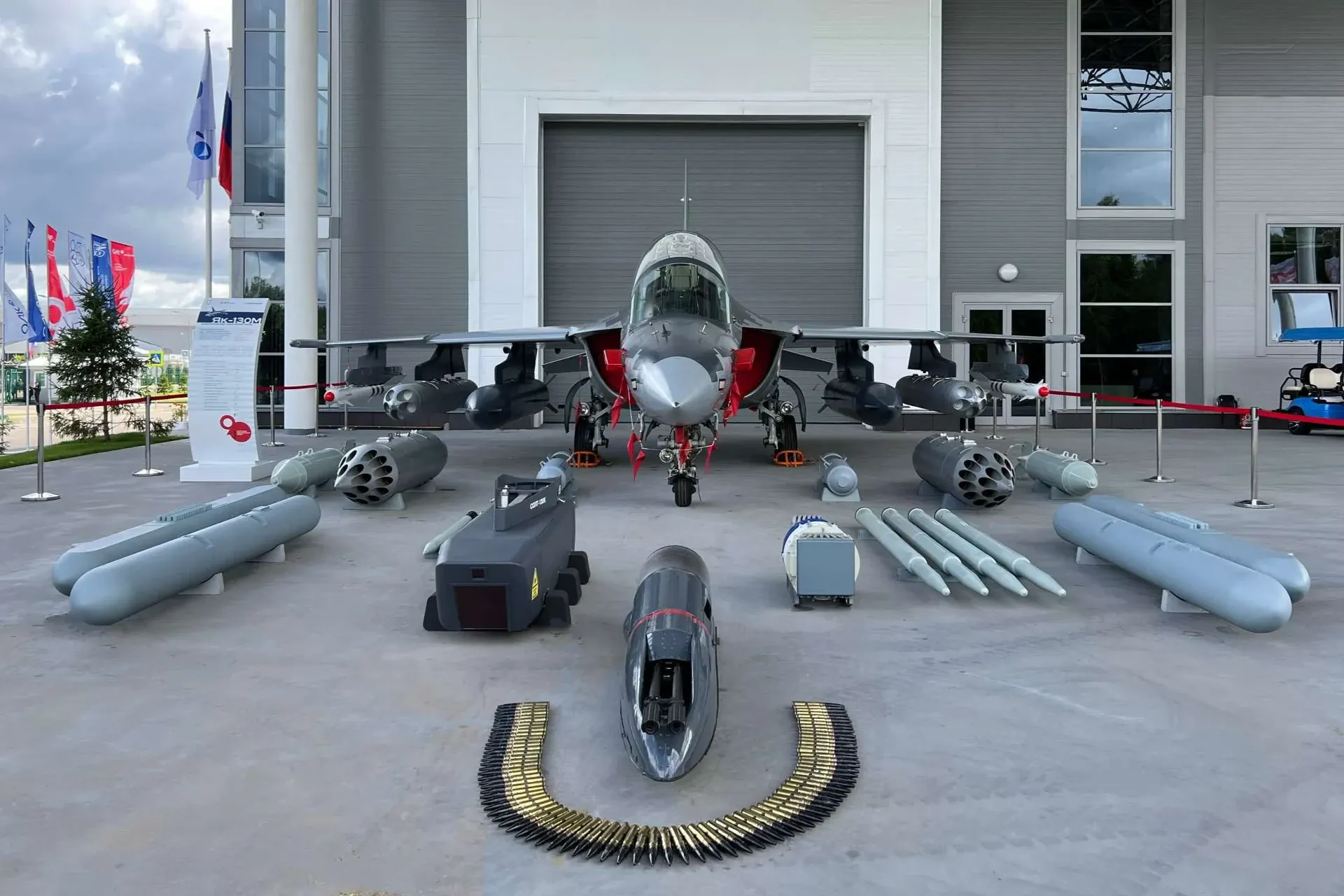
Russia is transforming its Yak-130M trainer into a lower-cost combat aircraft for intercepting heavy UAVs and attacking naval drones, potentially freeing its scarce Su-57 fighters for more demanding missions.
The modernized Yak-130M has been assigned specialized roles against large unmanned aircraft and uncrewed surface vessels, according to Russian state media cited by Army Recognition on July 24.
We bring you stories from the ground. Your support keeps our team in the field.
The move pushes the aircraft well beyond its original training role and gives Russia another airborne platform for counter-drone patrols, localized air defense, light strikes, and maritime security.
According to Army Recognition, the Yak-130M could form the lower tier of a layered airborne defense system. It would handle targets that do not require the speed, range, sensors, or cost of sending a Su-57—Russia’s most advanced operational fighter.
The Yak-130M combat trainer aircraft made its first flight.
— Massimo Frantarelli (@MrFrantarelli) June 25, 2026
🗺️ Irkutsk region.
🎥TV report "VGTRK" (June 25) pic.twitter.com/OM4MV7d25X
The aircraft’s modernization centers on the new BRLS-130R radar and SOLT-130K electro-optical targeting system. It also receives the Prezident-S130 defensive suite, updated communications, and a broader selection of weapons.
More than half of the aircraft’s equipment has reportedly been replaced or upgraded.
The new radar gives the Yak-130M an organic ability to search for and track targets, while its thermal and optical sensors provide a passive method of identifying them without relying entirely on radar emissions.
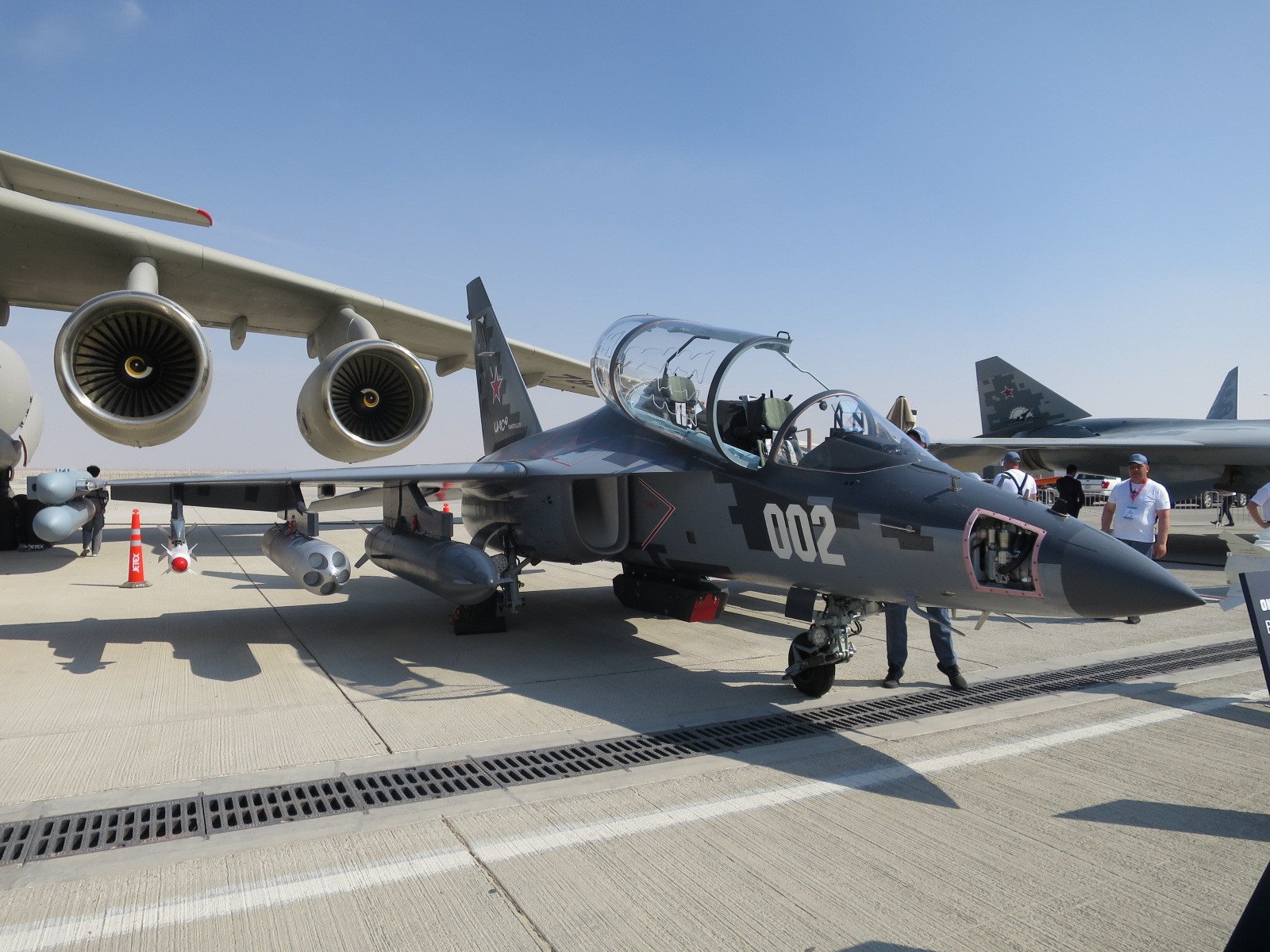
The aircraft could also receive target data from ground radars and air-defense command networks before using its own sensors for the final approach and engagement.
For air combat, the Yak-130M is reportedly being prepared to use R-77-1 radar-guided missiles and short-range R-74M infrared missiles. The combination would allow it to engage larger UAVs beyond visual range or complete an interception after identifying a target at a closer distance.
Heavy drones are especially suitable targets because they generally produce larger radar, heat, and visual signatures than small FPV systems.
A typical mission could involve ground controllers directing the Yak-130M toward a suspected UAV before the aircraft uses its radar and electro-optical system to classify and attack it.
Its two-seat cockpit could also help divide the workload, with one crew member flying while the other operates sensors, communications, and weapons.
Hunting naval drones would be more complicated.
Small, fast-moving vessels can be difficult to separate from waves and sea clutter, particularly at night or during poor weather. The Yak-130M would likely depend on information from coastal radars, ships, or other surveillance systems before using its thermal-imaging equipment to locate and identify the target.
Russia has said the aircraft will carry satellite- and laser-guided air-to-surface weapons, although it has not publicly identified the munition intended specifically for moving naval drones.
Putin got to tour the Irkutsk Aviation Plant, inspect the first serial-produced MC-21 airliners, and check out the upgraded Yak-130M trainer.
— Saint Javelin (@saintjavelin) July 24, 2026
Dear Ukrainian forces, how did you let this opportunity slip? That would’ve been one for the history books.
But again, judging by how… pic.twitter.com/wmJF8iGukK
Army Recognition assessed that the Yak-130M and Su-57 could serve complementary roles rather than compete for the same missions.
The Su-57 would remain responsible for long-range interceptions and more advanced aerial threats. The Yak-130M could instead patrol around strategic facilities, coastlines, and designated airspace where a fifth-generation fighter would be excessive.
That approach could help Russia preserve advanced fighters while adding a mobile interception layer between ground-based air defenses and frontline combat aircraft.
The Yak-130M remains in development, however. Three prototypes have reportedly been assembled, with testing expected to continue through December 2028. Deliveries are currently projected to begin late that year.
Cockpit of the Yak-130M advanced jet trainer and light attack aircraft.
— OSINTWarfare (@OSINTWarfare) November 18, 2025
📸: Giuseppe Cacace pic.twitter.com/anqom7ychW
With a maximum speed of roughly 596 mph and a range of about 1,000 miles, the Yak-130M is not a supersonic air-superiority fighter. Its potential value lies in combining patrol, surveillance, interception, and precision-strike capabilities in a cheaper and more adaptable aircraft.
Earlier, a three-week Ukrainian operation concluded with two precision drone hits destroying a Russian Su-24M at Saky airfield just as the bomber was preparing to strike Ukraine.
Discuss this article:


-c439b7bd9030ecf9d5a4287dc361ba31.jpg "Photo of Katherina Popilnichenko")