- Category
- War in Ukraine
Ukrainian Drones Strike Two Russian Oil Refineries With Combined Annual Capacity of Nearly 16 Million Tons
 Prefer U24 Media on Google
- Authors


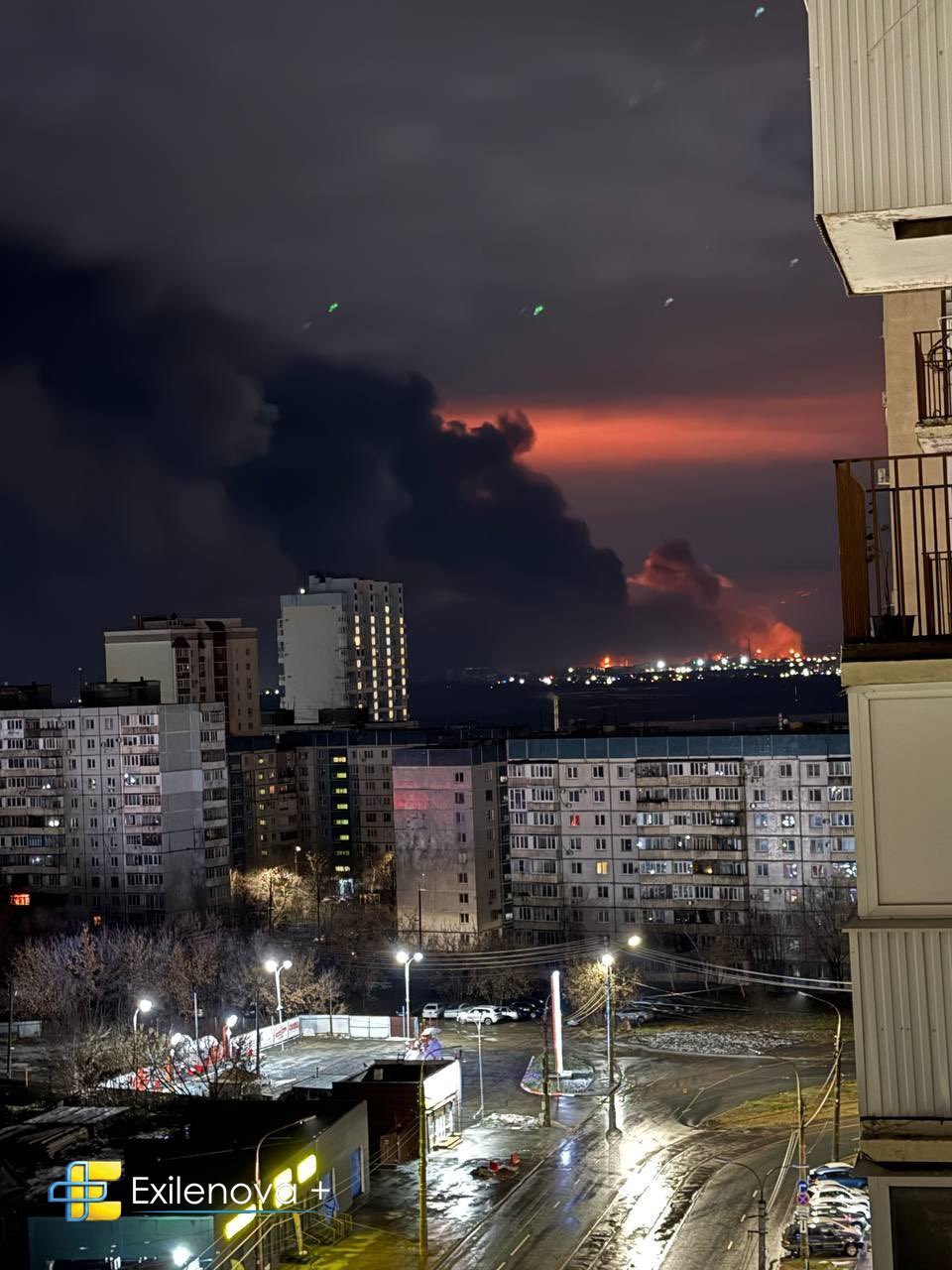
Two oil refineries operated by Russian state-owned oil company Rosneft—the Syzran and Kuibyshev oil refineries in Russia’s Samara region—caught fire amid a drone attack, according to an OSINT analysis by Russian media outlet ASTRA on November 25.
We bring you stories from the ground. Your support keeps our team in the field.
Local residents in Syzran shared footage showing a large fire within the city following the announcement of an aerial alert in the region.
After analyzing the footage, ASTRA identified the site of the fire as the Syzran oil refinery, one of the largest industrial enterprises in the Samara region. According to the outlet, the facility had been undergoing accelerated repairs following a previous attack in September.
Samara pic.twitter.com/dSHiOgySda
— Exilenova+ (@Exilenova_plus) November 25, 2026
ASTRA subsequently identified a second affected facility as the Kuibyshev oil refinery, located within the city of Samara.
According to local residents, a drone threat alert was issued in the region around midnight. However, air raid sirens were activated only after the attack had begun and were not heard in all areas.
Samara oil refinery after attack pic.twitter.com/4OjQOpRNGN
— Exilenova+ (@Exilenova_plus) November 25, 2026
Samara region Governor Vyacheslav Fedorishchev reported that Russian air defenses had intercepted more than 145 Ukrainian drones over the region.
The governor also reported localized power outages and changes to school schedules. Flight restrictions at Samara’s Kurumoch International Airport remained in place at the time of his statement, despite the drone threat alert being lifted.
Sizran, Samara Oblast.
— Exilenova+ (@Exilenova_plus) November 24, 2026
The Sizran oil refinery was also targeted by Russian strike forces. Footage shows a massive fire in the vicinity of the plant pic.twitter.com/B5W75jERRS
Commissioned in 1942, the Syzran oil refinery has been part of Rosneft since 2007. The facility has a designed annual processing capacity of approximately 8.5–8.9 million metric tons of crude oil sourced from Western Siberia and the Samara region.
Its production portfolio includes gasoline, diesel fuel, aviation kerosene, fuel oil, marine fuel, bitumen, and other petroleum products.
In February 2025, Ukraine’s Center for Countering Disinformation highlighted the refinery’s military significance, noting that it “plays an important role in supplying the Russian army with fuel and is part of military logistics,” according to ASTRA.
Ukrainian attack drones successfully struck a second Russian oil refinery tonight, with multiple fires and pillars of smoke seen rising from the Kuibyshev Refinery in Samara Oblast. pic.twitter.com/wiMWnU72t5
— OSINTtechnical (@Osinttechnical) November 25, 2026
The Kuibyshev oil refinery, meanwhile, is described as the largest oil industry enterprise in the Samara region. Established in 1943, the facility has operated as part of Rosneft since May 2007.
With a designed annual processing capacity of seven million metric tons of crude oil, the refinery processes oil extracted by Rosneft in Western Siberia and the Samara region.
The facility manufactures more than 20 types of petroleum products, including gasoline, K5-standard winter and summer diesel fuel, liquefied gases, and sulfur.
Together, the two refineries have a combined designed annual oil processing capacity of approximately 15.5–15.9 million metric tons.
The fires at the two refineries come amid reports of lasting damage to other Russian industrial facilities previously targeted by Ukrainian forces.
Earlier, satellite imagery published by the monitoring group Exilenova+ revealed that a production workshop at Russia’s Votkinsk Plant in the Republic of Udmurtia had been dismantled following a Ukrainian strike involving FP-5 Flamingo cruise missiles in February 2026.
The imagery shows that the plant’s electroplating and stamping workshop has been entirely demolished, leaving only a cleared plot of land where the production building once stood.
Discuss this article: