- Category
- War in Ukraine
Warmth From Poland: How Poles and Ukrainians Built a Winter Lifeline for Kyiv
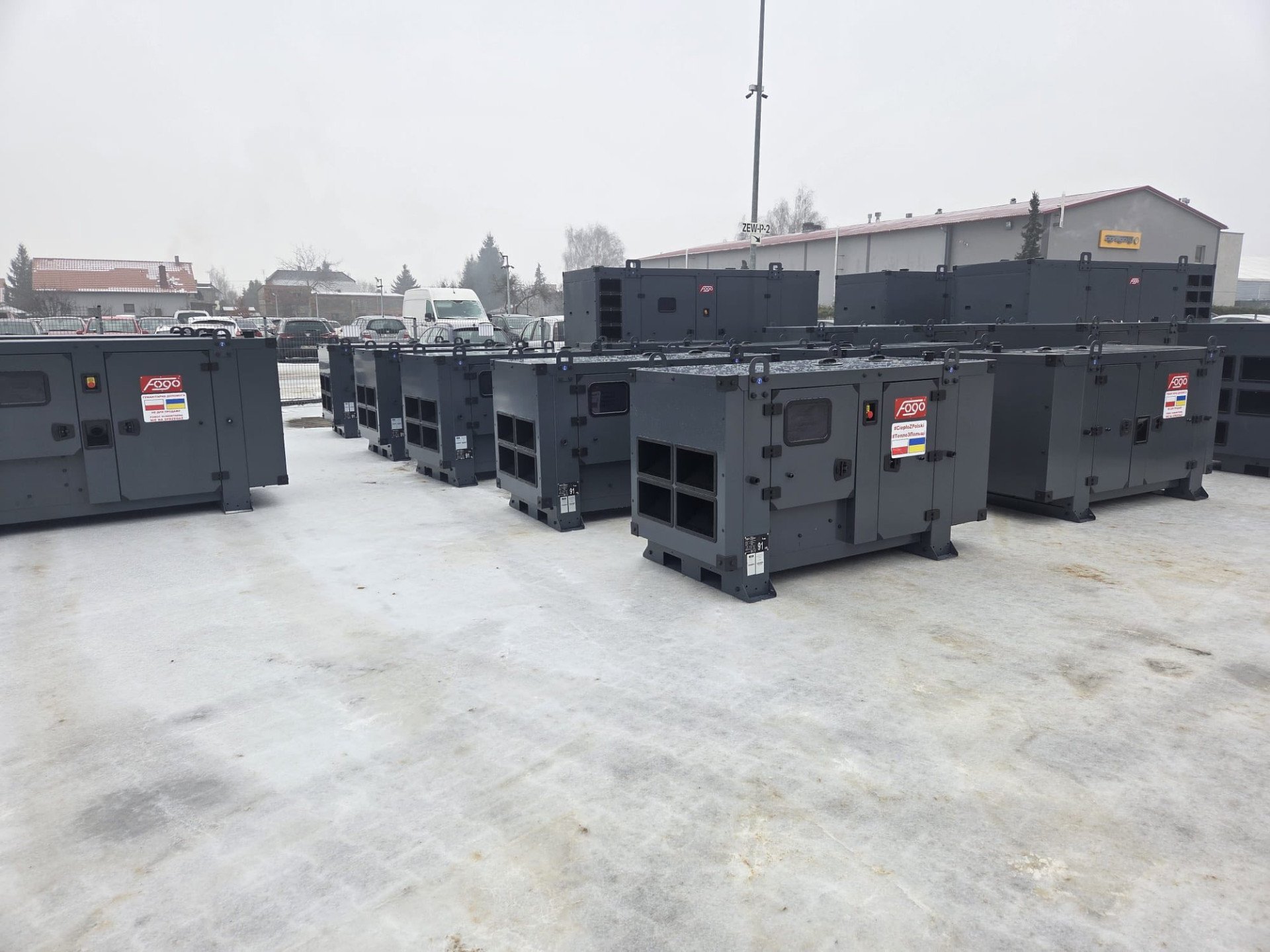
Frost and darkness. These are perhaps the two words that best describe the reality of every winter in Ukraine since the start of the full-scale invasion.
 Prefer U24 Media on Google
- Authors


Relentless Russian attacks on the country’s energy infrastructure turned everyday life for Kyiv’s civilian population into a struggle for survival.
In 2025, for an average resident on the city’s left bank, electricity was available for approximately six to seven hours a day, while temperatures outside plunged to around -21°C, or 5.8 degrees Fahrenheit.
“When a person comes home, climbs the stairs on foot, gets no water and sits in the dark, it simply overwhelms them psychologically,” says Mykhailo, who heads the housing cooperative that runs his building.
Yet, even in their darkest hours, Ukrainians were not left alone. Across Europe, ordinary people turned sympathy into concrete action. In Czechia, a crowdfunding campaign called Dárek pro Putina ("A Gift for Putin") raised more than $6 million in five days to buy generators, heaters and batteries for Ukraine. Similar appeals sprang up in Lithuania, Latvia and Romania. Generators arrived, bringing warmth to freezing homes and light to streets plunged into darkness.
One of the initiatives that helped set this chain reaction in motion originated just across the border, in Warsaw. Called Warmth from Poland for Kyiv, the campaign, organized by a group of relatively small NGOs, raised more than $3 million to purchase generators for Ukrainian cities.
A call, a chat, a target
It started with a phone call between two friends and a late-night work chat. Bartosz Kramek of the Open Dialogue Foundation, one of the organizers, remembers a shared sense of certainty among the participants: something had to be done, and there was little time to lose. “We knew we needed to act, and act quickly.”
And so they did. The campaign was launched, with an initial fundraising target of 400,000 zlotys, about $110,000. Based on their calculations, the organizers expected to raise enough money to send around 100 generators to Kyiv over the course of the entire campaign. But things quickly took an unexpected turn.
Natillia Panchenko, who leads the Stand With Ukraine Foundation, recalls:
“In the very first 24 hours, the incredible Polish women and men beat it.”
Within three days, the total had passed one million zlotys ($244,381.40), according to the organizers’ figures.
But the warmth that reached Ukraine came from more than just generators. It came from the people behind them — from those who recognized the urgency of the situation and decided that helping was not simply an option, but a necessity.
Bartosz Kramek remembers being particularly struck by the scale and diversity of the response:
“The entire wave of solidarity surprised us, because of its scale and the many donors. Very different circles united to help.”
Ordinary donors came first, Panchenko says. Foundations and companies followed suit. For example, the local energy firm Polenergia and the Kulczyk Foundation made a single donation of 500,000 zlotys ($122,229.22). Natalia Panchenko:“First and foremost, this campaign showed me that reality can be very different from what we see in the comments online — and that Polish-Ukrainian and Ukrainian-European relations are built, above all, by ordinary people.”
Politicians declare and announce, she says, but in the end it is ordinary people who decide whether to act. When governments were silent, or unsure whether backing Ukraine was still politically worthwhile, people launched fundraisers in their own countries and began to act.
“It is ordinary people who shape events, both at home and on the international stage — a fact we too often forget.”
The impact was almost immediate. As soon as donations reached the campaign’s account, orders were placed with manufacturers, and new shipments began making their way to Ukraine every week, as the organizers recall.
But the initiative was only gaining momentum. What had started with a handful of organizations and ordinary citizens gradually turned into a much wider mobilization. Public officials, churches and local authorities, including the Warsaw municipal administration, joined the effort, helping deliver something Kyiv desperately needed: light and warmth in the middle of a freezing winter.Then messages began arriving from abroad, from Czechs, Swedes and Icelanders among others. “Country after country they contacted us and wrote: where do you get the generators? We’re opening a fundraiser in our country. Help us,” Panchenko says.
What crossed the border
“Generators” is shorthand, Panchenko says, because everyone knows what one looks like. What left Poland was matched to where it was going. Diesel, petrol or gas-powered units went out according to which fuel a region could still get. Solar panels went to Kherson, where both fuel and gas are in short supply. The campaign also bought portable power stations in large numbers.
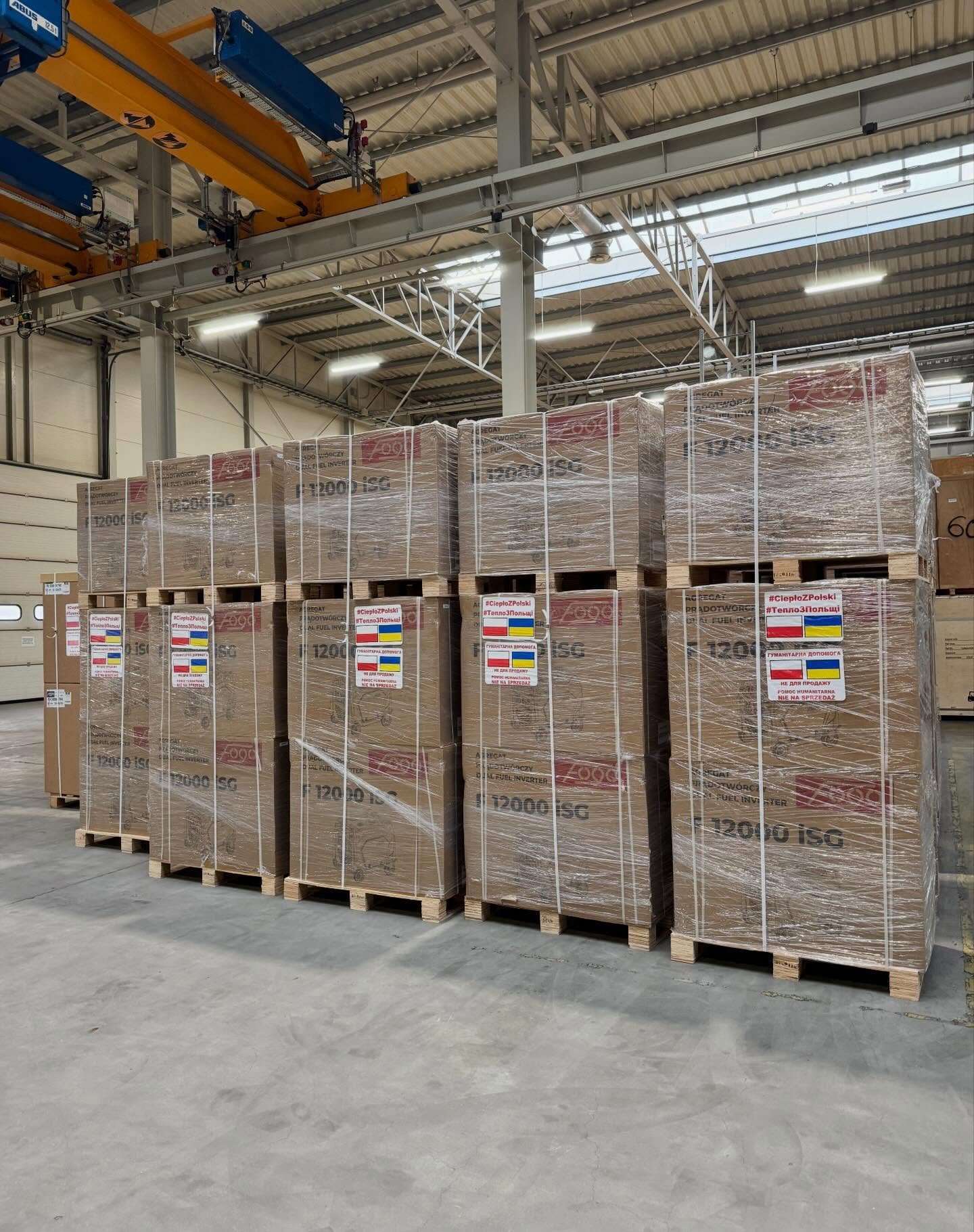
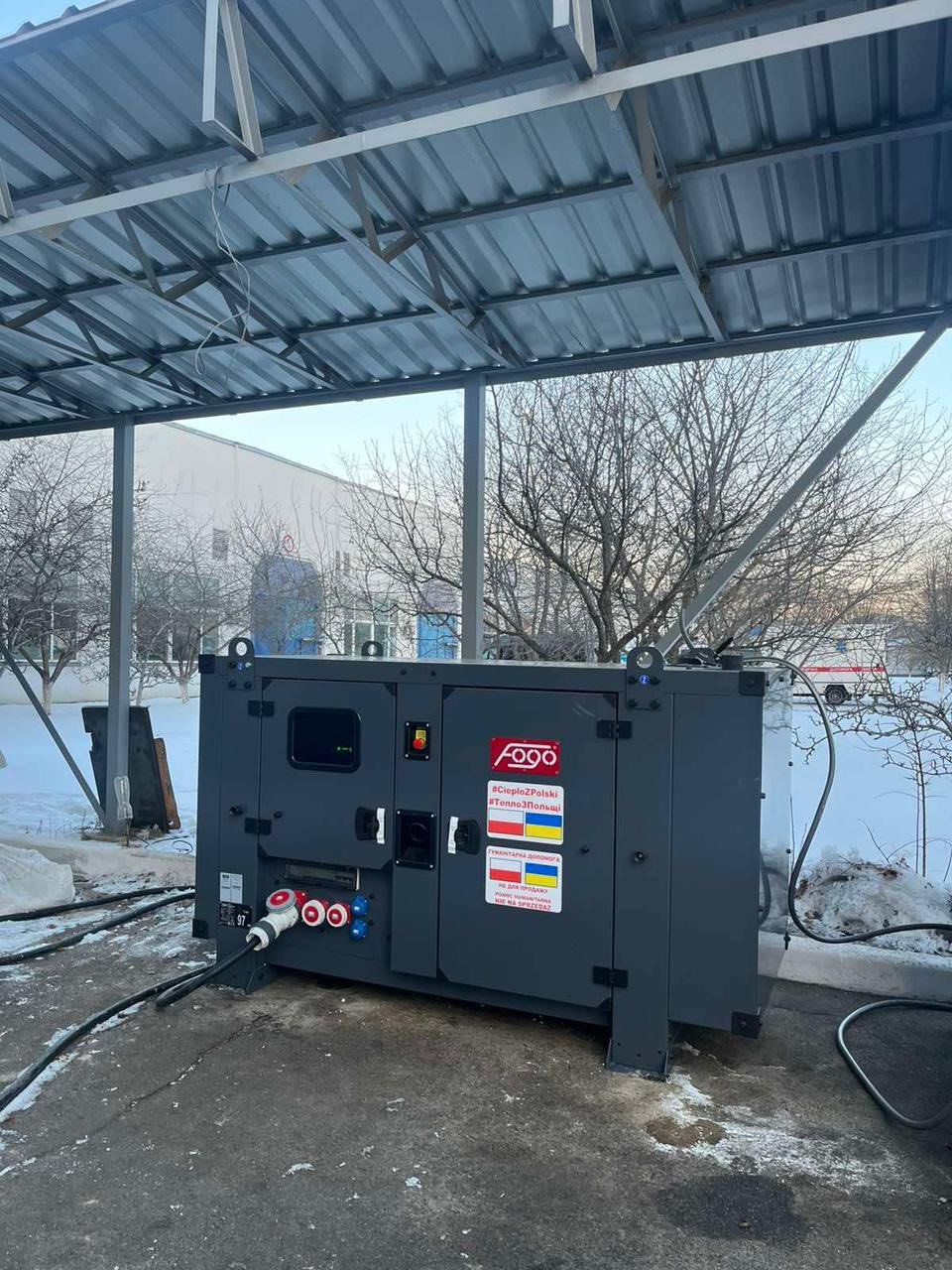
The large generators were built by Polish manufacturer FOGO, with capacities ranging from 12 kW to 600 kW. The largest units can provide enough power to keep a hospital, a school or an entire apartment block running.
Getting the equipment to Ukraine, however, presented a challenge of its own. Not every hauler is willing to cross the border into a country at war, Kramek says. As a result, the campaign came to rely on Ukrainian transport companies and drivers, who collect the generators in Poland and deliver them across the border.
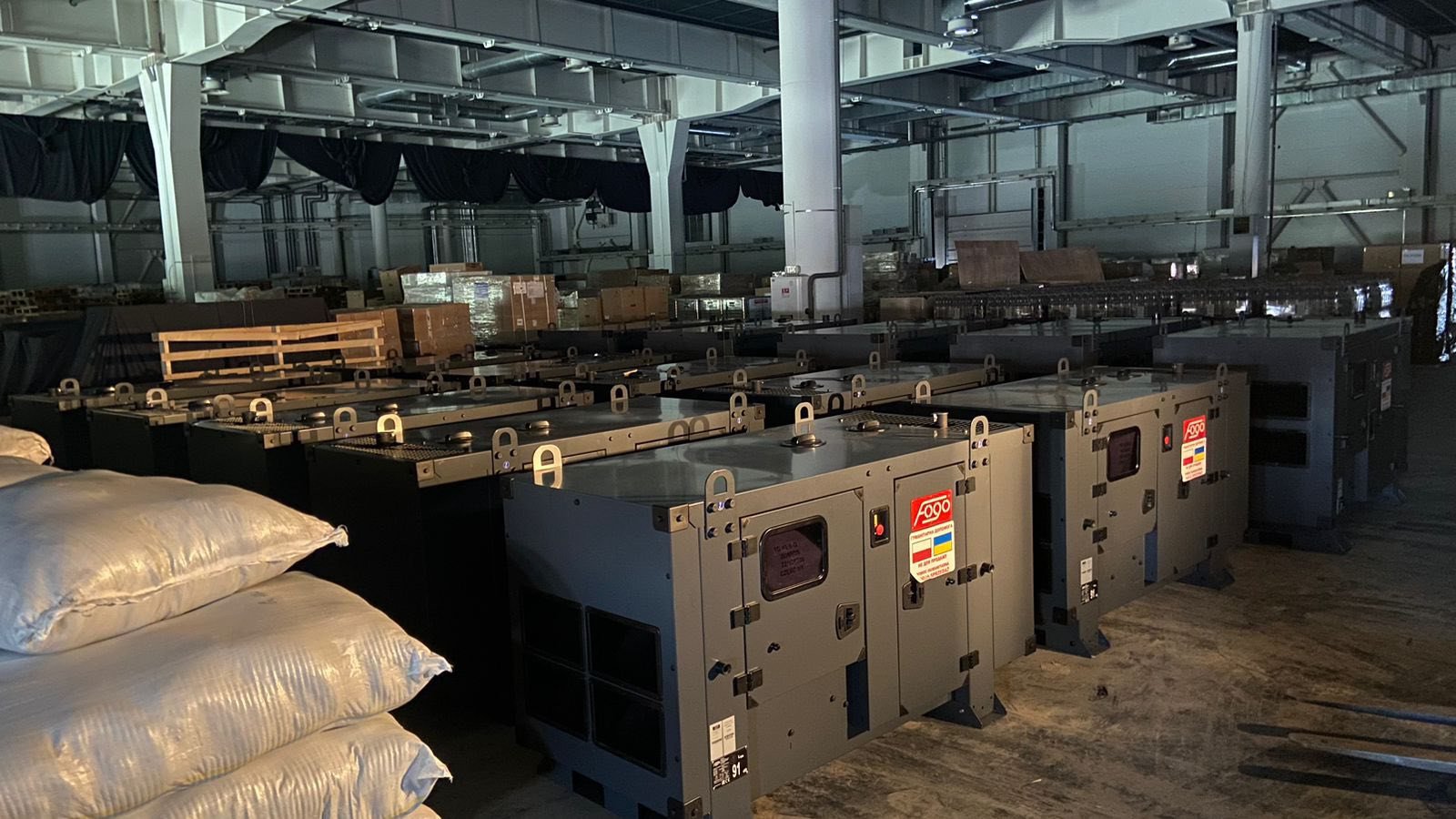
Inside one building
What one of those machines does once it is bolted down is clearest in Mykhailo’s building. When neighbors reached out to the campaign organizers for help, they got a positive response within a few days, and the volunteer team came to prepare the block for the generator. When it arrived, it began operating at full capacity within the week.
It now works in tandem with an inverter and a bank of batteries. The batteries carry the building through the first hours of an outage. When the blackout drags on, the generator starts, powers the building and recharges the batteries at the same time.
“Without this generator, if we just had the inverter, we could last six hours in all, and after that we would be sitting in complete darkness,” Mykhailo says.
They can now count on electricity, water and heating around the clock, regardless of the weather, disruptions to the city’s power supply or whatever else may happen.
Just as importantly, the generator belongs to the residents themselves, giving them a degree of security and independence from both municipal authorities and private energy providers. Yet such arrangements remain the exception rather than the rule. Across Kyiv and much of Ukraine, most apartment buildings lack this kind of backup infrastructure, leaving residents vulnerable to power cuts and disruptions to essential services caused by continued Russian strikes on energy infrastructure.
Before the frost
The second stage began on 19 October, three months earlier in the season than the first. Alongside generators for Kyiv’s apartment blocks, hospitals and schools, the campaign is ordering equipment built to the specifications of Ukrainian cities, including mobile transformer substations for places near the frontline.
“Not just to deliver generators to mitigate the cold last winter,” he says, “but to deliver something that could serve Ukrainian cities in the long term as well.”
The scale of the donations varies, but each serves a practical purpose. According to the organizers, $450 is enough to provide a family with a portable power station, keeping lights on and phones charged. A $6,000 donation can equip a school or clinic with a 20 kW generator, while $13,900 can provide a 50 kW unit for a 25-story apartment block home to 600–700 people. The largest contribution, $260,000, can finance a mobile power station capable of supplying several city districts.
The money is coming in more slowly this time. By mid-November, the second appeal had passed four million zlotys ($977,525.60), against a final target of 10 million ($2,443,924), the Polish business site “XYZ” reported.
Also, some of last winter’s donors have stepped back. “We’ve had some donors who said that right now they don’t wish to help Ukraine,” Kramek says. “They have already helped, and they do not consider it appropriate anymore.” Not too many, he adds, of those approached so far.
Others have come in. Polish entrepreneurs, among them InPost founder Rafał Brzoska, have given more than 500,000 zlotys between them. The Belarusian diaspora in Poland has joined as a partner. In October, the Belarusian opposition leader Sviatlana Tsikhanouskaya called on Belarusians to help raise money for generators “for ordinary people’s needs” in Ukraine.
Russian terror is leaving Ukrainian families without heat and power this winter.
— Sviatlana Tsikhanouskaya (@Tsihanouskaya) November 25, 2026
Belarusians are raising funds for generators through Warmth for Ukraine, launched by @bysolfund and our Mission in Ukraine.
I invite everyone to contribute ⬇️https://t.co/jIa8OIS6hc pic.twitter.com/NALhkjEqIO
The organizers are now inviting communities abroad to join.
What they repeat most is the deadline. “We must make it before winter,” their appeal says. Panchenko wants the money raised and the orders placed while it is still warm, because generators take months to build and deliver. “There is nothing to wait for, no point hoping for some miracle,” she says. “It simply won’t happen.”
If you want to contribute, you can do so on the campaign's donation page.
Discuss this article: