- Category
- Defense Tech
After FrankenSAM, Ukraine Mashes Kub and Buk Together—and Scores About 20 Air Kills
 Prefer U24 Media on Google
- Authors


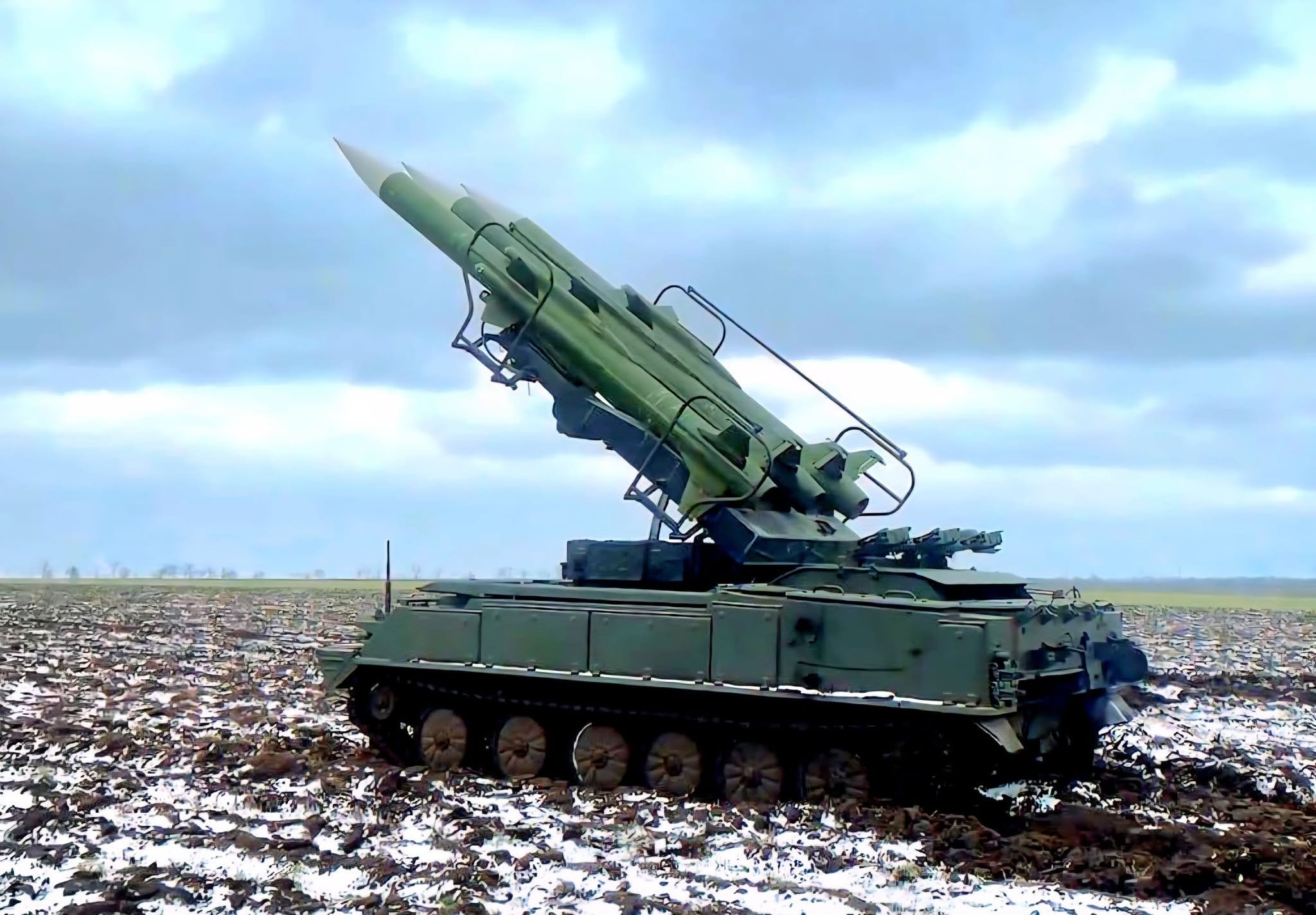
Ukraine has combined components of the Soviet-era Kub and Buk air defense systems into an unconventional battlefield pairing that has already destroyed roughly 20 aerial targets, most of them Russian jet-powered Shahed-type drones.
Ukraine’s 156th Anti-Aircraft Missile Regiment released footage of the hybrid configuration in combat on October 5, showing a Kub launcher operating together with a Buk self-propelled fire unit.
We bring you stories from the ground. Your support keeps our team in the field.
Ukrainian defense outlet Militarnyi noted that the unusual combination is possible because the two systems share related technical architecture dating back to the Soviet transition from Kub to Buk air defenses.
The setup helps compensate for one of the Kub system’s biggest limitations. A standard Kub launcher does not have its own autonomous target-illumination and guidance radar, while the Buk self-propelled fire unit carries an integrated radar capable of detecting, tracking, and continuously illuminating airborne targets.
At the same time, Ukraine can use remaining Kub-compatible missiles without consuming scarce Buk interceptors.
In practice, the Buk unit either detects the target itself or receives targeting information from another source, locks onto it, and maintains continuous radar illumination.
It then sends the launch command to the Kub 2P25 launcher carrying 3M9 missiles. After launch, the missile flies toward the target and its seeker homes on the radar energy reflected from the aircraft or drone being illuminated by the Buk.
“This combination has performed very well in destroying aerial targets. The Kub-Buk pairing alone has accounted for around 20 aerial targets,” Ukrainian troops said.
Most of those kills, according to the regiment, were Russian jet-powered Shahed-type drones, which are significantly faster than the original propeller-driven variants and present a growing challenge for Ukraine’s air defenses.
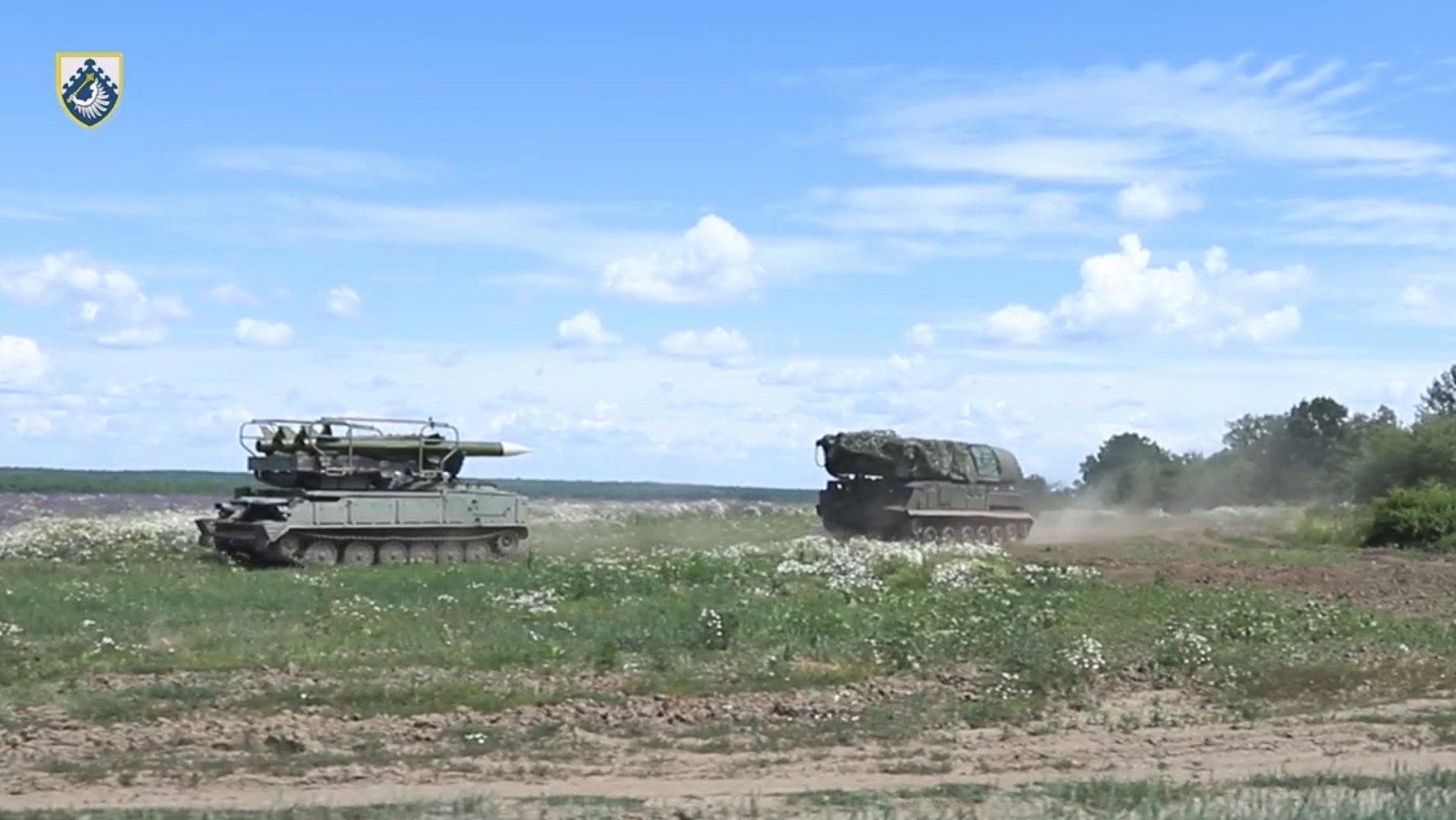
Although the configuration looks improvised, the underlying compatibility is not entirely accidental. Soviet engineers anticipated some degree of interoperability during the transition from the Kub to Buk systems in the 1970s and 1980s.
The 9A38 self-propelled fire unit developed for the Kub-M4 could be adapted to carry either three 9M38 Buk missiles or three 3M9M3 Kub missiles. The system shown by the Ukrainian regiment, however, uses a separate Kub launcher working together with a Buk fire-control vehicle rather than mounting both missile types on the same platform.
Ukraine has pursued a similar philosophy with its better-known FrankenSAM program, adapting Buk launchers and fire-control systems to use US-made RIM-7 missiles as Soviet missile stocks become increasingly difficult to replenish. The 156th Regiment also operates that configuration.
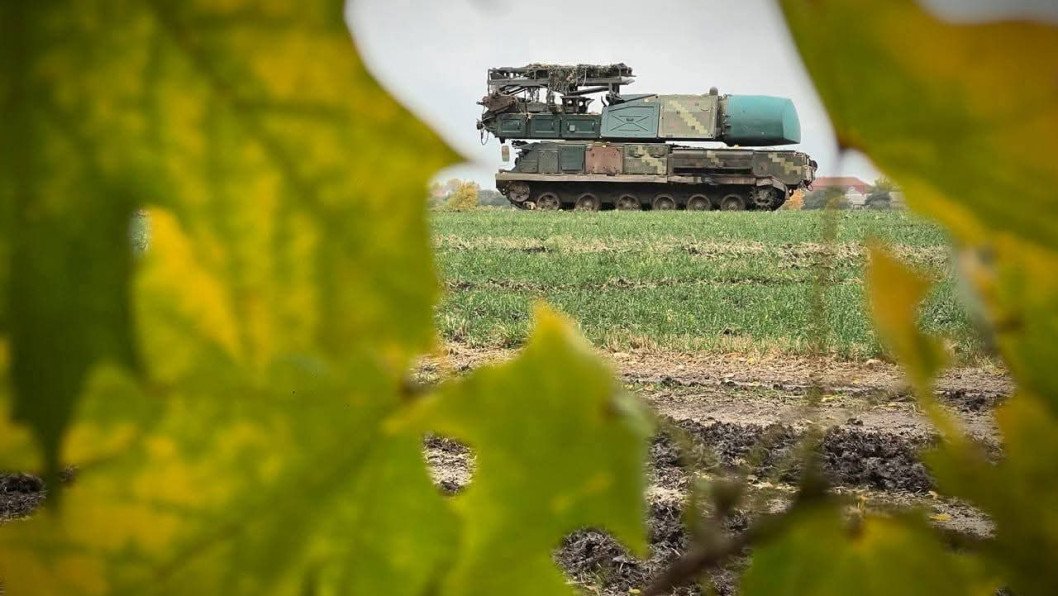
One Ukrainian crew commander said individual FrankenSAM vehicles have already accumulated dozens of confirmed aerial kills, while one launcher has fired RIM-7 missiles 131 times.
“We operate a modification of the Buk air defense system that is popularly called ‘Frankenstein’ and is equipped to fire RIM-7 anti-aircraft missiles. It has already proven effective in one sector. There are many destroyed targets—34. Some other vehicles have more, some have fewer,” the commander said.
Previously, reports emerged that Ukraine’s hybrid FrankenSAM air defense systems—combining Soviet-era BUK launchers with US-supplied RIM-7 or AIM-7 missiles—have already destroyed 105 Russian aerial targets.
Discuss this article:
-9a7b3a98ed5c506e0b77a6663f5727c5.png)

-cb47049fc5a80abacf2476d2b7f5b2e5.webp "Ukraine’s Varkhan unmanned ground vehicle. (Source: Ministry of Defense of Ukraine)")