- Category
- Defense Tech
HIMARS Just Learned to Hit Moving Targets—Bad News for Russian Guns and Air Defenses
 Prefer U24 Media on Google
- Authors



Lockheed Martin and the US Army have demonstrated a new way for HIMARS-launched GMLRS rockets to strike moving targets by updating their coordinates while the missile is already in flight—a capability that could make it much harder for mobile artillery and air-defense systems to escape after being detected.
The test was conducted at White Sands Missile Range in New Mexico, according to Defense Express on October 30.
We bring you stories from the ground. Your support keeps our team in the field.
During the demonstration, a GMLRS rocket launched from an M142 HIMARS was redirected in flight using updated target coordinates transmitted through Lockheed Martin’s Strigo datalink and a Remote Interceptor Guidance-360, or RIG-360, targeting device.
The rocket successfully struck a moving target. What makes the test particularly notable is how the capability was achieved.
.@LockheedMartin and the @USArmy successfully redirected an in‑flight GMLRS rocket during a recent test at White Sands Missile Range. This demo leveraged Strigo, HIMARS, RIG‑360 & F‑35, making it a pivotal step toward expanding the Army’s proven missile capability. Click below:
— Lockheed Martin News (@LMNews) October 28, 2026
Weapons designed to hit moving targets usually require a dedicated seeker capable of finding and tracking the target during the final phase of flight. In this case, however, Lockheed Martin used radio-transmitted targeting updates rather than making major modifications to the GMLRS itself.
That could offer a comparatively inexpensive way to expand the missile’s capabilities without installing a specialized seeker on every rocket.
Lockheed Martin said the equipment was integrated using company funding and could potentially be paired with other precision weapons as well, including Extended Range GMLRS and the Precision Strike Missile, or PrSM.
A GMLRS rocket just took a new target mid-flight
— Superintelligence Institute (@Superintellnst) October 30, 2026
On 28 October 2026, Lockheed Martin announced a program first. Working with the U.S. Army at White Sands Missile Range, New Mexico, the team redirected a GMLRS rocket that was already in flight.
The rocket left a HIMARS launcher.… pic.twitter.com/DzaapmNrol
PrSM Increment 2 is already being developed with a multimode seeker intended to provide a moving-target capability, particularly against ships. The GMLRS demonstration takes a different approach by continuously updating the target’s location through the RIG-360 system rather than relying on an onboard seeker.
For battlefield targets, that distinction could be significant.
Mobile artillery, air-defense systems, command vehicles, and other high-value equipment often depend on “shoot-and-scoot” tactics—firing or operating briefly before rapidly relocating to avoid counterstrikes.
A GMLRS rocket capable of receiving fresh coordinates after launch could reduce the effectiveness of that tactic, provided friendly sensors can continue tracking the target and transmit updated position data to the missile.
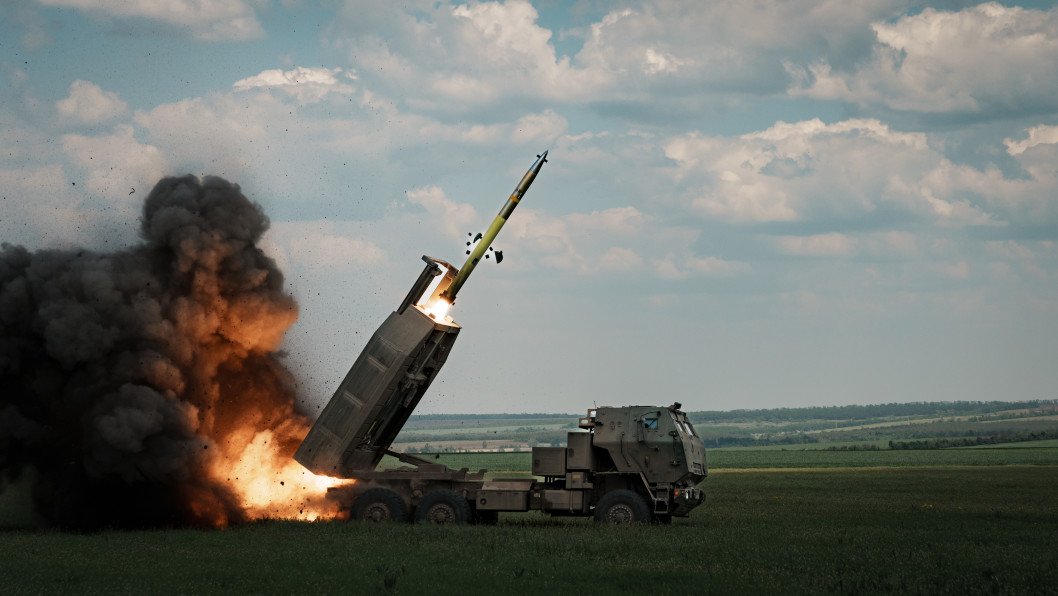
Defense Express notes that Lockheed Martin and the Army have not disclosed exactly what type of moving target was used during the test. The location offers one clue: White Sands is dominated by desert terrain and lacks large permanent bodies of water, making a ground vehicle or another mobile land target more likely than a ship.
For Ukraine, the development is particularly relevant because HIMARS is already routinely used to hunt Russian artillery, ammunition sites, command posts, and other high-value targets.
Ukrainian forces have previously combined US-made HIMARS with systems such as French CAESAR self-propelled howitzers to destroy Russian artillery and field ammunition depots in sectors including Pokrovsk.
Earlier, the 45th Artillery Brigade of the 11th Army Corps destroyed a Russian 9A316 transporter erector launcher and radar element from the Buk air defense system using an M142 HIMARS rocket system.
Discuss this article: