- Category
- Investigations
Why Russia’s Iskander-M Missile Still Relies on Western Chips for Its Most Critical Functions
 Prefer U24 Media on Google
- Authors

-111f0e5095e02c02446ffed57bfb0ab1.jpeg "Photo of Roman Kohanets")
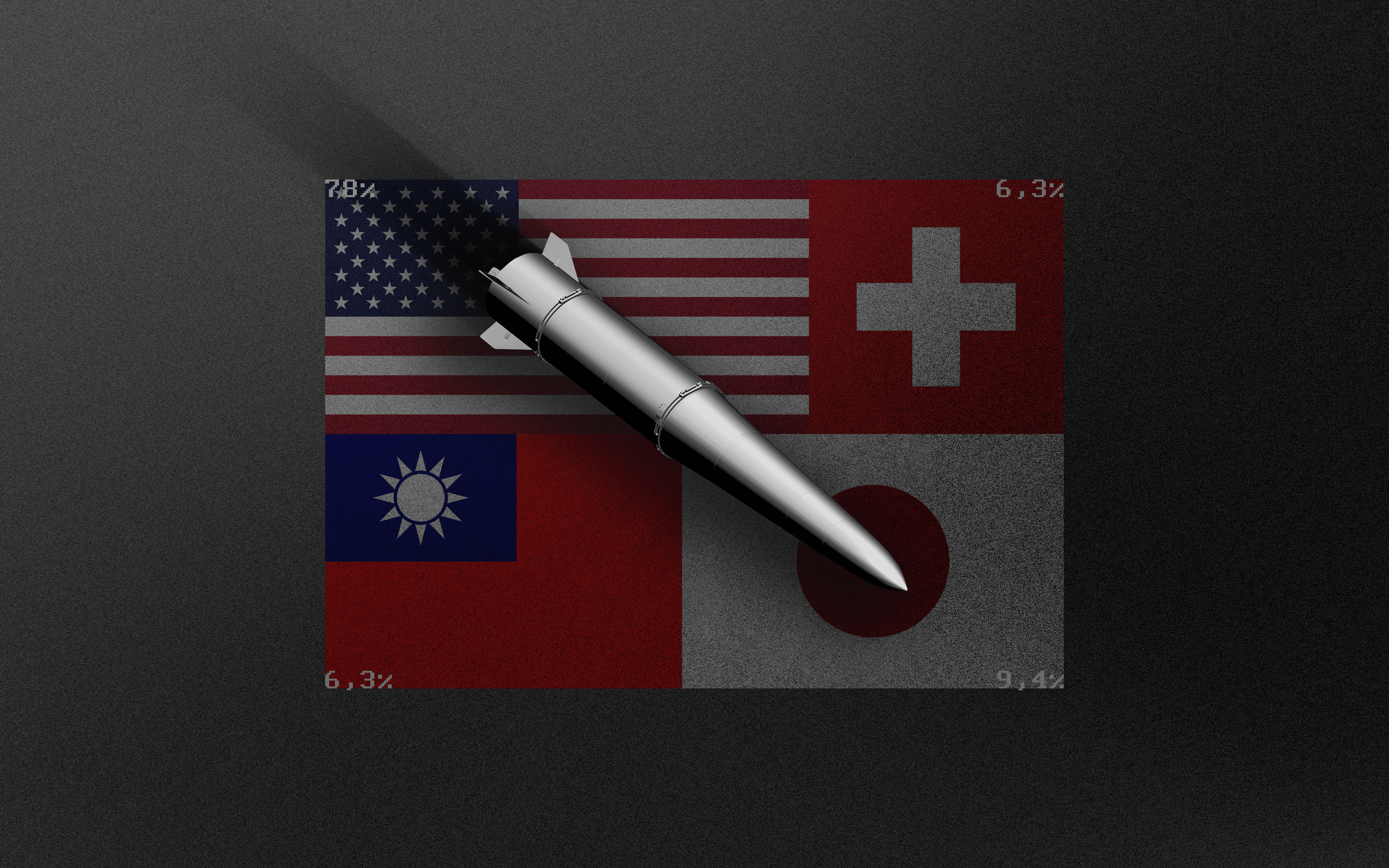
About 78% of the identified components in the inertial navigation system of Russia's 9M723 Iskander-M ballistic missile are US-made, an independent analysis has found.
The Independent Anti-Corruption Commission (NAKO) reached that figure after examining the missile's inertial navigation system, a core element that fixes the weapon's position and tracks its movement in flight. The share applies to the components identified within that single analyzed system, not to the missile as a whole.
We bring you stories from the ground. Your support keeps our team in the field.
The parts NAKO traced are not peripheral. According to the commission, the chips perform critical functions—signal processing, analog-to-digital conversion, digital isolation, power management, and memory.
Where the components come from
Two US firms account for most of the American share. NAKO traced almost 40% of the identified US components to Analog Devices and roughly 12% to Texas Instruments, with the remaining 48% spread across 11 other manufacturers.
American suppliers were the largest but not the only foreign source. NAKO's breakdown of the identified components by origin ran as follows:
American manufacturers accounted for 78% of the parts;
Japanese suppliers made up 9.4%;
Taiwanese firms, 6.3%;
Swiss firms, 6.3%.
Russia's "import substitution"
Moscow has pressed import substitution across its defense industry, and NAKO acknowledged that Russia has replaced some foreign parts—mostly simpler, less sophisticated ones. The commission described the Oreshnik as its most localized missile to date.
Where systems demand high-precision signal processing and data conversion, though, the reliance on Western components persists.
That unevenness, NAKO argued, matters for sanctions design. Rather than trying to choke off every electronic part reaching Russia, the commission urged a focus on the components that specific weapons cannot function without.
-1bb4f5071a92fb06a0b5f24c15d06b9a.jpg)
Not an isolated case
The Iskander missile is not the only weapon of its kind. On August 10, 2026, specialists from Ukraine’s Defense Ministry’s Main Intelligence Directorate (HUR) demonstrated foreign components extracted from Russian missiles, drones, and other weaponry to Ukrainian diplomats.
As of August 2026, the directorate had identified 5,816 foreign components across 202 Russian weapons systems, it reported, alongside numerous Russian and Belarusian parts.
Among the samples were an American Nvidia Jetson Orin microcomputer taken from a Russian S-71M cruise missile and an inertial module carrying parts from Texas Instruments and Japan's TDK.
A presentation at the Office of the President of Ukraine last week underscored the same dependency. Ukraine's presidential commissioner for sanctions policy, Vladyslav Vlasiuk, pointed to the Kometa navigation module and components of autonomous inertial systems as critical units. The reliance extends beyond electronics to imported rocket-fuel components, carbon fiber, specialized resins, aluminum and titanium alloys, and high-precision machine tools.
Why it matters for sanctions
Russia’s access to Western microelectronics has come under greater scrutiny as its ballistic missile campaign expands.
Since the start of 2026, Russia has fired more than 500 ballistic missiles at Ukraine while also deploying North Korean KN-23 systems.
President Volodymyr Zelenskyy has assessed that Russia can build up to 1,300 ballistic missiles a year and already holds 600 to 630 in its arsenal. He emphasized that Ukraine's forces are working to blunt Russia's military machine, though he acknowledged that the strikes continue.
Discuss this article:
-9a7b3a98ed5c506e0b77a6663f5727c5.png)



-206008aed5f329e86c52788e3e423f23.jpg "Photo of Oleksandr Moiseienko")