- Category
- Latest news
China’s Secret HQ-29 Missile Defense System Breaks Cover—Analysts Say It Can Hit Satellites
 Prefer U24 Media on Google
- Authors



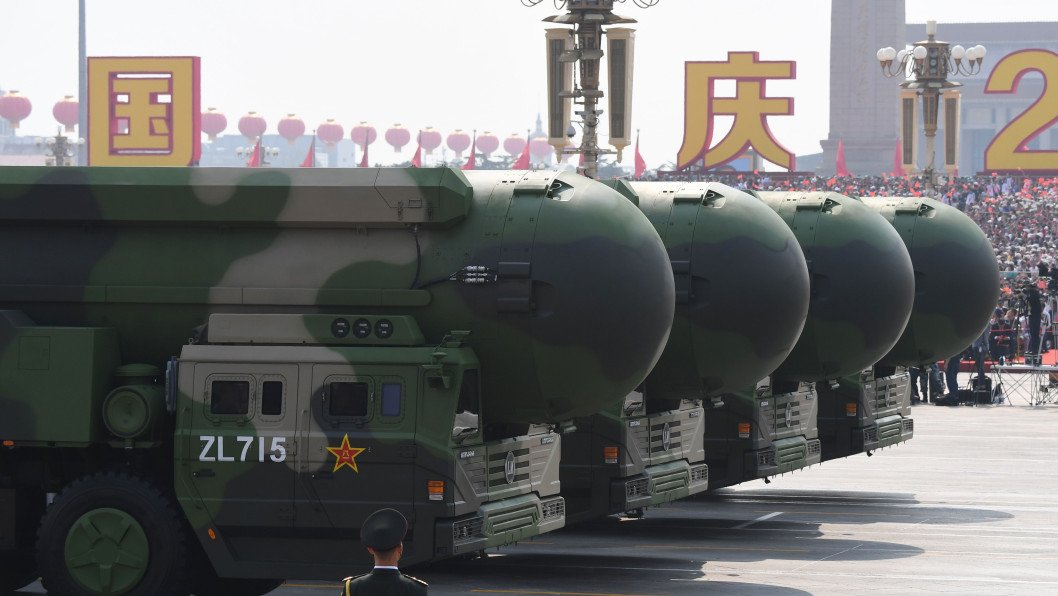
During rehearsals for an upcoming military parade in Beijing, observers spotted transporter launch vehicles carrying the newly designated HQ-29 system—a weapon long rumored but never before confirmed, defense media outlet Defense Blog reported on August 24.
Previously, there was not much information about the HQ-29 apart from low-resolution photos and Chinese social media posts.
#BREAKING China unveils its new HQ-29 mobile air defense system, capable of intercepting ICBMs, IRBMs, hypersonic missiles, and satellites. ( 📸 1 )
— The World War (@TheWorldWar12) August 24, 2025
⚡️China also paraded the DF-26D “Guam Killer,” a 4,000 km road-mobile IRBM that can carry nuclear or conventional warheads and… https://t.co/eeOqC6S6SW pic.twitter.com/CTf51Bb5I7
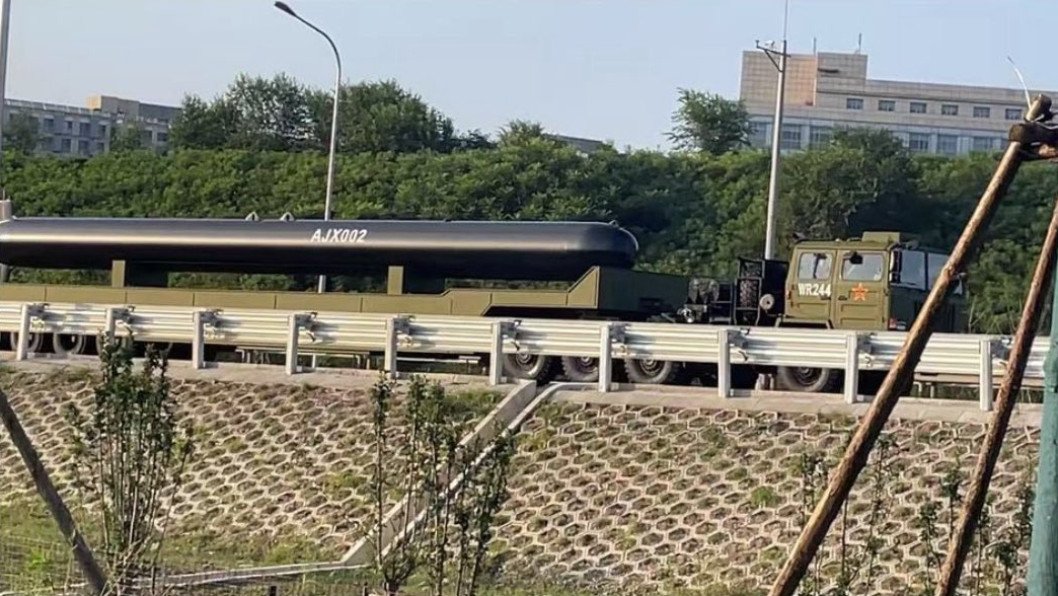
But images that surfaced a week ago of a six-axle transporter hauling two massive missile canisters sparked fresh debate—and those rumors were confirmed when the launchers rolled into view during parade preparations.
Each of the system’s missile containers measures roughly 1.5 meters (4.9 feet) in diameter, suggesting a weapon designed for far more than routine air defense.
Defense Blog analysts say the HQ-29 is built to intercept ballistic missiles at extremely high altitudes and could also be capable of striking satellites in low Earth orbit.
Chinese outlets have already branded the HQ-29 a “double-barreled satellite hunter”—a phrase that underscores Beijing’s ambition to push beyond regional missile defense into the global arena of high-altitude and even exoatmospheric interception.
The system is widely seen as a successor to China’s HQ-19, a high-altitude interceptor using “hit-to-kill” technology similar to America’s THAAD.
While the HQ-9 family handles lower-altitude threats, the HQ-29 appears designed to bridge the gap to more strategic interceptors, putting it in the same league as the US Standard Missile-3 or Russia’s S-500 and PL-19 Nudol.
-f5f7a02f8c56c4fe44ba62da6a41fc21.jpg)
The physical design of the launcher reinforces those comparisons. Its oversized canisters and dual-missile layout hint at a system optimized for high-probability kills against fast, complex targets.
Military watchers also point to its similarities with Russian S-500 launchers, suggesting China may be developing parallel concepts for strategic defense.
With its first public appearance, the HQ-29 signals that Beijing is moving rapidly to expand its missile shield—and, according to Defense Blog to challenge US and Russian dominance in exoatmospheric defense.
Earlier, reports emerged that China was accelerating efforts to develop capabilities to neutralize the Starlink satellite constellation, citing national security concerns over its growing use in modern warfare.
Chinese military strategists and scientists have outlined various methods to disrupt or disable the US-based satellite network, which is owned and operated by SpaceX.
State-backed Chinese media and academic publications increasingly label Starlink as a threat, describing it as a dual-use system that enhances US capabilities in military communications, drone operations, space reconnaissance, and nuclear deterrence.
Discuss this article:



-72b63a4e0c8c475ad81fe3eed3f63729.jpeg "Photo of Cyril Barabaltchouk")



-111f0e5095e02c02446ffed57bfb0ab1.jpeg "Photo of Roman Kohanets")