- Category
- Latest news
EU Must Be Ready to Replace US in Ukraine Peace Talks, European Council President Says
 Prefer U24 Media on Google
- Authors

-72b63a4e0c8c475ad81fe3eed3f63729.jpeg "Photo of Cyril Barabaltchouk")

European Council President António Costa stated that the European Union will eventually need to discuss security and peace with Russia, though the bloc must currently maintain maximum pressure on Moscow, EFE reported on March 17.
In an interview with the ENR agency consortium, Costa stressed that the EU must be ready to take place in the US Ukrainian peace negotiations.
We bring you stories from the ground. Your support keeps our team in the field.
“The time may come when President Trump decides not to continue or not to move forward with his efforts, or that, unfortunately, they will fail. Then we will have to be prepared to continue the efforts and try to achieve a just and lasting peace in Ukraine,” he said.
Responding to Belgian Prime Minister Bart De Wever’s recent call to normalize ties with Russia to secure cheaper energy, Costa warned against disrupting current diplomatic efforts.
Costa firmly rejected De Wever’s approach, confirming it will not be on the agenda at the upcoming European leaders' summit in Brussels. He reiterated that the EU’s core strategy remains entirely decoupling from Russian energy, not negotiating prices with Moscow. However, he acknowledged the sanctions exemptions for Hungary and Slovakia, whose Russian oil and gas supplies via the Druzhba pipeline have been disrupted by the war.
The critical disruption stems directly from a recent Russian drone strike on the pipeline’s infrastructure near the western Ukrainian town of Brody. The targeted attack caused severe internal damage to the pumping station, forcing a complete halt to the transit of Russian crude to Central Europe.
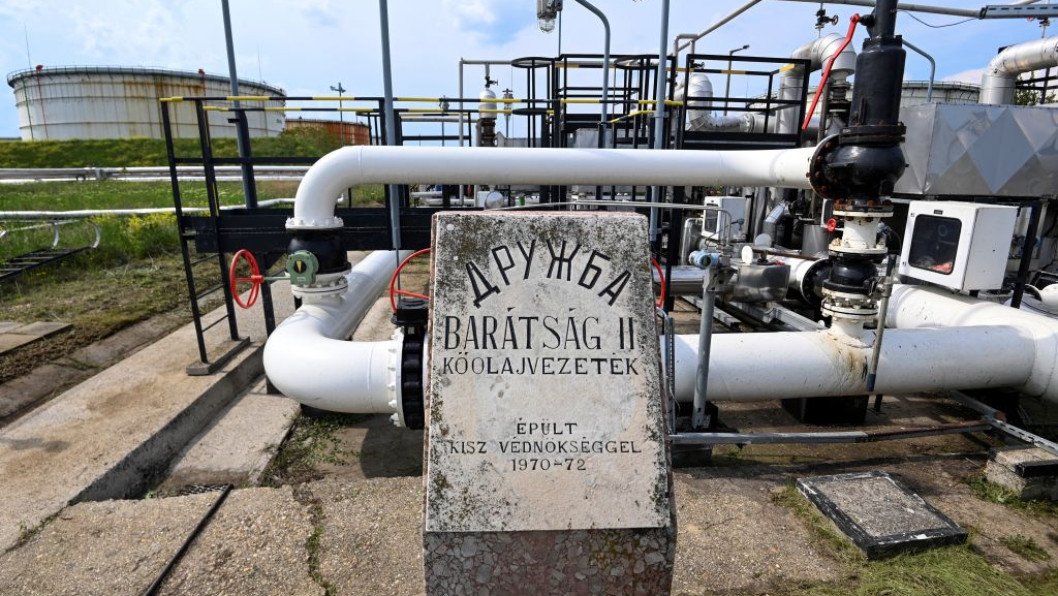
Despite clear evidence that Moscow’s own munitions crippled the supply line, Hungarian Prime Minister Viktor Orbán continues to publicly blame Kyiv for the energy shutoff. Orbán has actively weaponized the resulting fuel shortages in Hungary, using the Kremlin-caused crisis as political leverage to block further EU financial aid to Ukraine.
That specific pipeline disruption has led Hungarian Prime Minister Viktor Orbán to block a previously agreed €90 billion ($103 billion) EU loan to Ukraine. Costa condemned the blockade as “unacceptable,” reminding Orbán that all member states must act in good faith and respect finalized European Council decisions.
Concurrently, Costa addressed recent comments by Ukrainian President Volodymyr Zelenskyy, who publicly labeled the demand to repair the Russian Druzhba pipeline in exchange for the loan as “blackmail.” While reaffirming the EU’s unwavering military and financial support for Ukraine, Costa noted that European leaders cannot accept inappropriate rhetoric directed at any EU member state, even during highly emotional times.
The diplomatic standoff between Ukraine and Hungary escalated into a full-blown financial crisis over the past few weeks. A recent report detailed how Hungarian Prime Minister Viktor Orbán deliberately ignored evidence of the physical destruction of the pipeline by the Russian strike, falsely accusing Kyiv of cutting the flow as political blackmail.
Currently, Orbán uses the resulting energy shortage to justify blocking a critical EU war loan to Ukraine and seizing millions in Ukrainian state funds crossing the border.
Discuss this article: