- Category
- Latest news
New Iranian Proposal to US Skips Nuclear Talks, Seeks Strait of Hormuz Deal
 Prefer U24 Media on Google
- Authors

-72b63a4e0c8c475ad81fe3eed3f63729.jpeg "Photo of Cyril Barabaltchouk")
Iran has given the United States a new proposal to reopen the Strait of Hormuz and end the ongoing war, temporarily bypassing nuclear negotiations to secure a faster deal, Axios reported on April 27.
Current diplomatic efforts are at a stalemate, with Iranian leadership divided over what nuclear concessions should be placed on the table. The new proposal aims to bypass this deadlock, offering a quicker path to de-escalation by focusing strictly on lifting the US naval blockade and reopening the vital maritime waterway.
We bring you stories from the ground. Your support keeps our team in the field.
However, accepting this deal and ending the war would eliminate US President Donald Trump’s primary leverage in future negotiations. Two of Trump’s core war objectives require Tehran to suspend uranium enrichment entirely and remove its existing stockpile of enriched uranium from the country.
Trump signaled his intent to maintain the naval blockade, which is currently choking off Iran’s oil exports, during an interview with Fox News on April 26. Axios writes that the president expressed hope that the mounting pressure would force Tehran to capitulate within weeks.
“When you have vast amounts of oil pouring through your system… if for any reason this line is closed because you can’t put it into containers or ships… what happens is that line explodes from within,” Trump stated. “They say they only have about three days before that happens.”
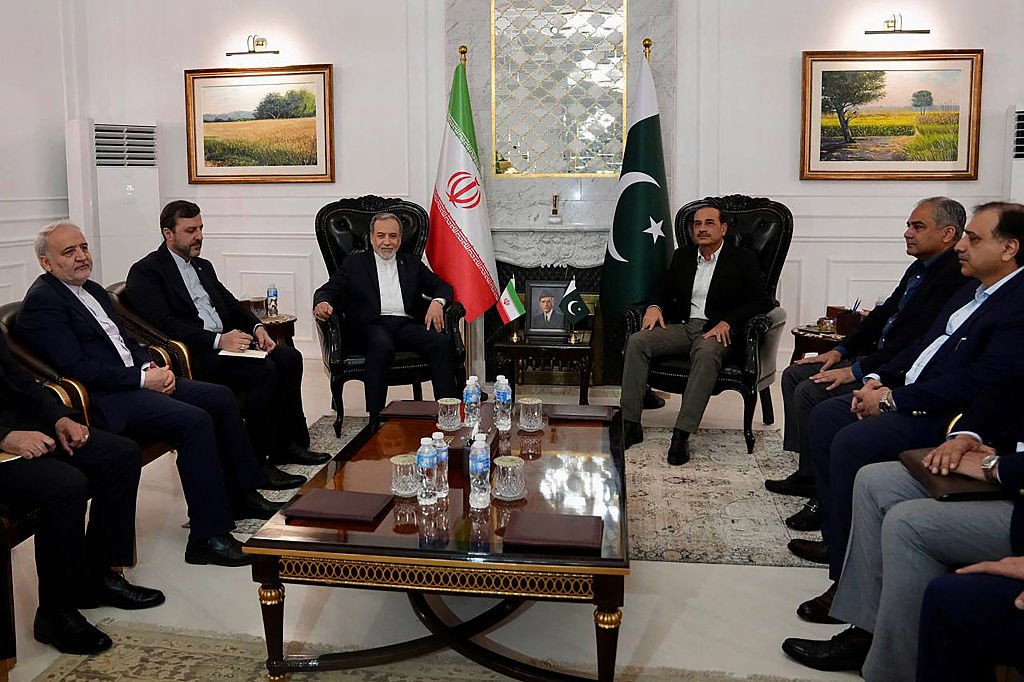
The diplomatic crisis deepened over the weekend after Iranian Foreign Minister Abbas Araghchi visited Pakistan without making tangible progress. In response, the White House canceled a planned trip by Trump’s envoys, Steve Witkoff and Jared Kushner, to meet Araghchi in Islamabad. Trump told Axios the noncommittal Iranian position made the 18-hour flight pointless, noting the Iranians could simply call Washington if they were ready to negotiate.
Following the canceled meeting, Araghchi held talks with Omani officials in Muscat before returning to Islamabad for a second round. He has also traveled to Moscow and met Russian leader Vladimir Putin today.

Behind the scenes, Araghchi presented the plan to bypass the nuclear issue to Pakistani, Egyptian, Turkish, and Qatari mediators. He reportedly made it clear that there is no consensus within the Iranian leadership regarding the US demands for a decade-long suspension of uranium enrichment.
The new proposal, delivered to the US via Pakistani mediators, focuses entirely on resolving the immediate crisis over the Strait of Hormuz. It suggests either a long-term extension of the ceasefire or a permanent end to the war, with nuclear negotiations only commencing at a later stage once the blockade is lifted.
The White House has received the document but has not confirmed if it will entertain the offer. Trump is expected to hold a Situation Room meeting with his top national security team on Monday to discuss the stalemate and potential next steps, according to Axios.
“These are sensitive diplomatic discussions and the US will not negotiate through the press,” White House spokesperson Olivia Wales told Axios, adding that the administration will only accept a deal that puts Americans first and prevents Iran from obtaining a nuclear weapon.
Iran’s Revolutionary Guards had previously seized two commercial ships—the MSC Francesca and the Epaminondas—directly in the Strait of Hormuz. This physical escalation, which included firing on the Greek-operated Epaminondas, occurred just as Trump extended a pause on military strikes while maintaining the strict US naval blockade.
By shutting down a maritime chokepoint that handles 20 percent of global oil and driving Brent crude past $101 a barrel, Tehran is trying to force Washington’s hand. The regime is proving that until the US lifts its blockade, Iran will weaponize the global energy market to dictate the terms of any future ceasefire, according to reports.
Discuss this article:
-9a7b3a98ed5c506e0b77a6663f5727c5.png)