- Category
- World
Ukraine’s Ground Robots Are Becoming Battlefield Platforms—And Procurement Is About to Surge
 Prefer U24 Media on Google
- Authors

-111f0e5095e02c02446ffed57bfb0ab1.jpeg "Photo of Roman Kohanets")
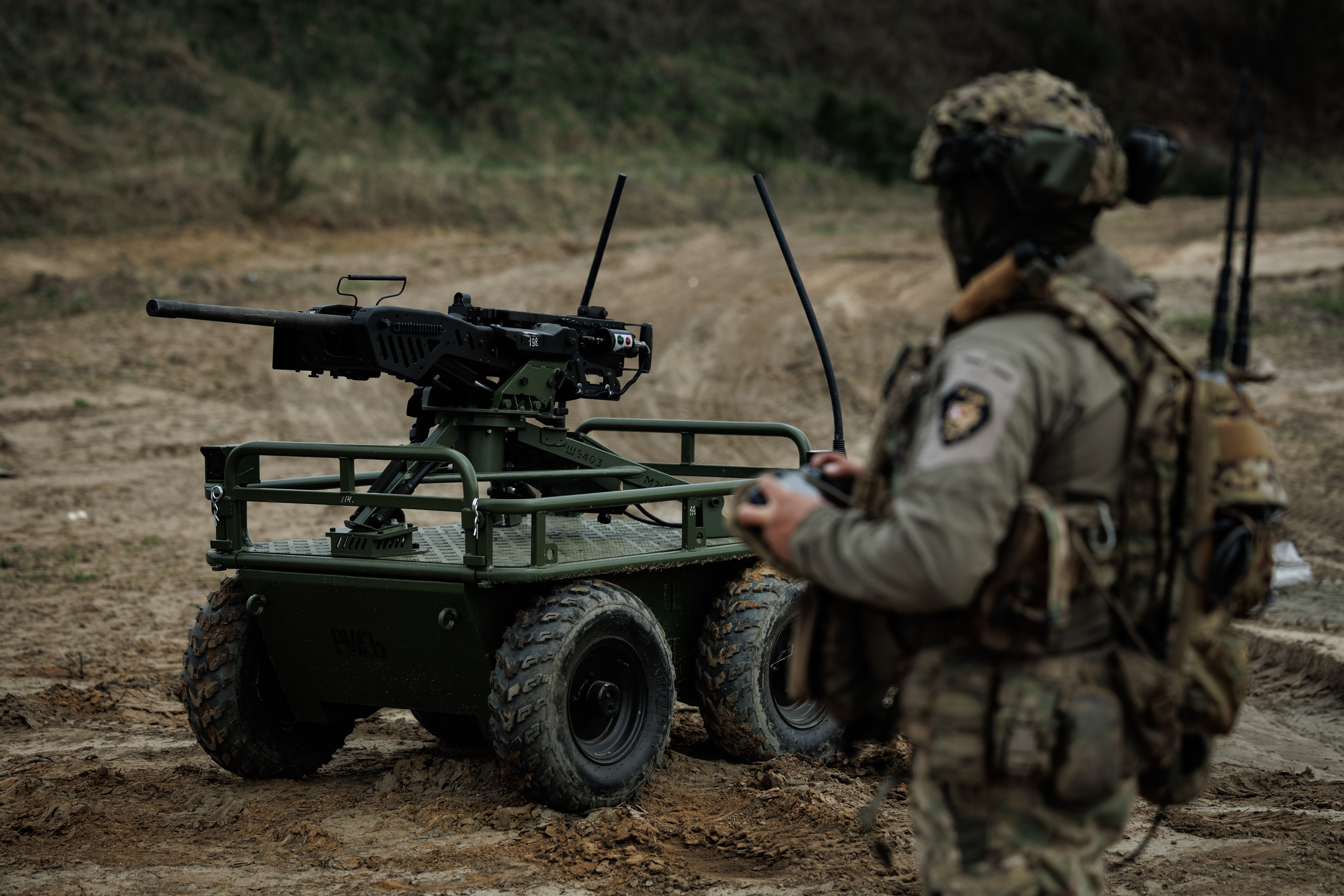
Once used mainly for logistics and demining, ground robots in Ukraine are rapidly evolving into multi-role battlefield platforms—as procurement is set to surge.
Ukraine plans to roughly double its procurement of unmanned ground vehicles (UGVs) in 2026, with the machines now carrying electronic warfare suites, radar, missiles, and mortars in addition to traditional logistics and demining roles.
Ihor Fedirko, CEO of the Ukrainian Council of Defense Industry (UCDI), outlined the projection to UNITED24 Media in an exclusive interview at the GLOBSEC 2026 forum on May 22.
We bring you stories from the ground. Your support keeps our team in the field.
Government procurement in the first half of 2026 is expected to reach close to 25,000 UGVs—roughly twice the total for all of 2025—as developers increasingly treat each vehicle as a universal carrier rather than a single-purpose tool, he explained.
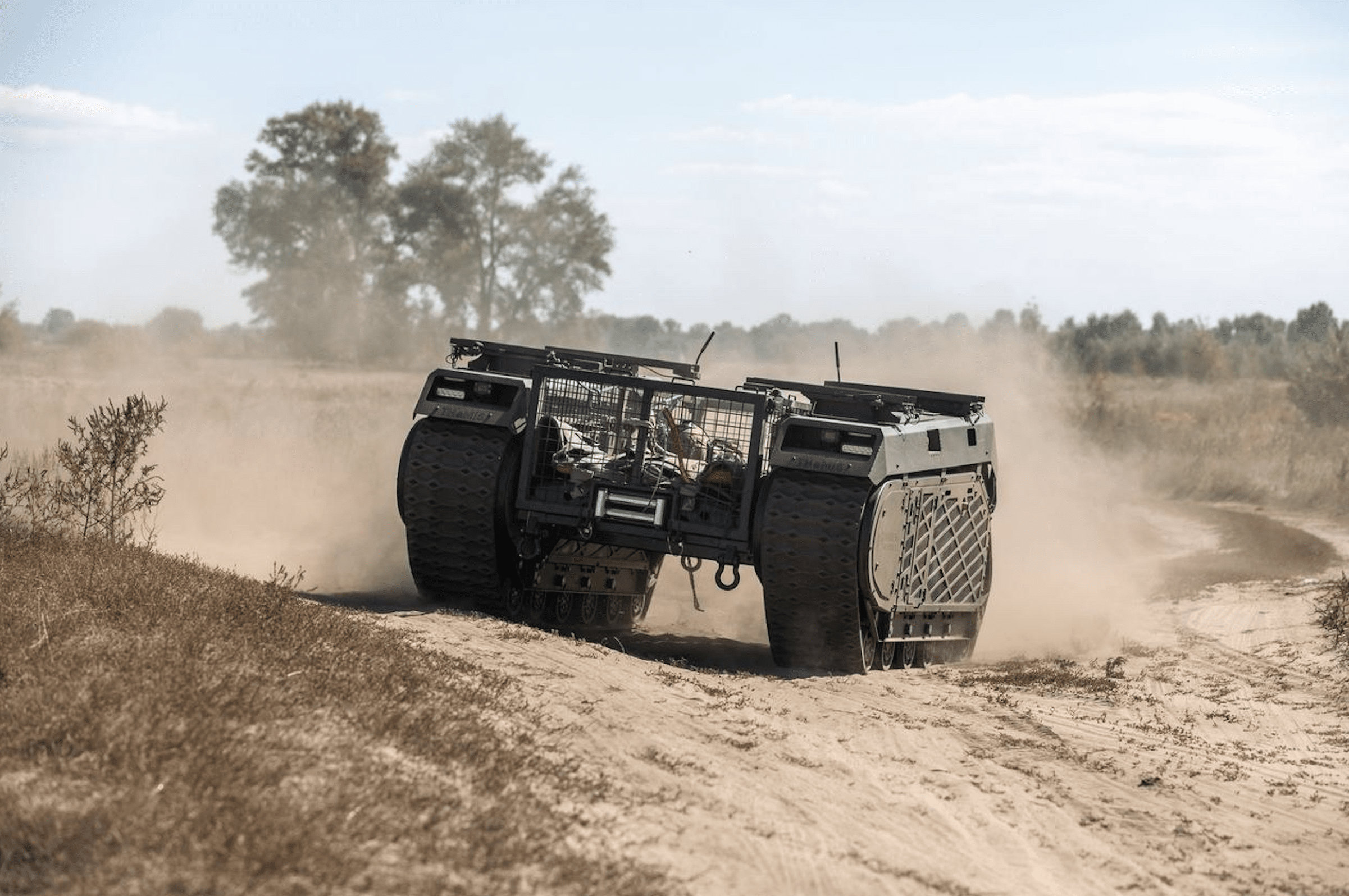
Fedirko described how Ukrainian forces now layer new capabilities on top of UGVs rather than fielding them for one task at a time. Electronic intelligence systems, radar, and even mortars or missiles are being mounted onto UGV chassis depending on the mission, he added.
The shift has reshaped how Ukrainian forces handle some of the most dangerous missions on the front line, particularly medical evacuation, where Russian troops routinely target soldiers attempting to recover wounded comrades from the line of contact.
It is no longer just a single-purpose solution—it is a platform.
Ihor Fedirko
CEO of the Ukrainian Council of Defense Industry
"In Ukraine, the UGV sector is one of the fastest-growing sectors in the battlefield line," Fedirko said. That dynamic, Ferdiko said, is precisely why Ukrainian forces have adopted UGVs for evacuation so fast.
Medevac UGVs are now fitted with armored capsules to shield casualties during extraction, Fedirko said, and some carry robotic arms designed to lift soldiers who cannot move themselves into the vehicle.
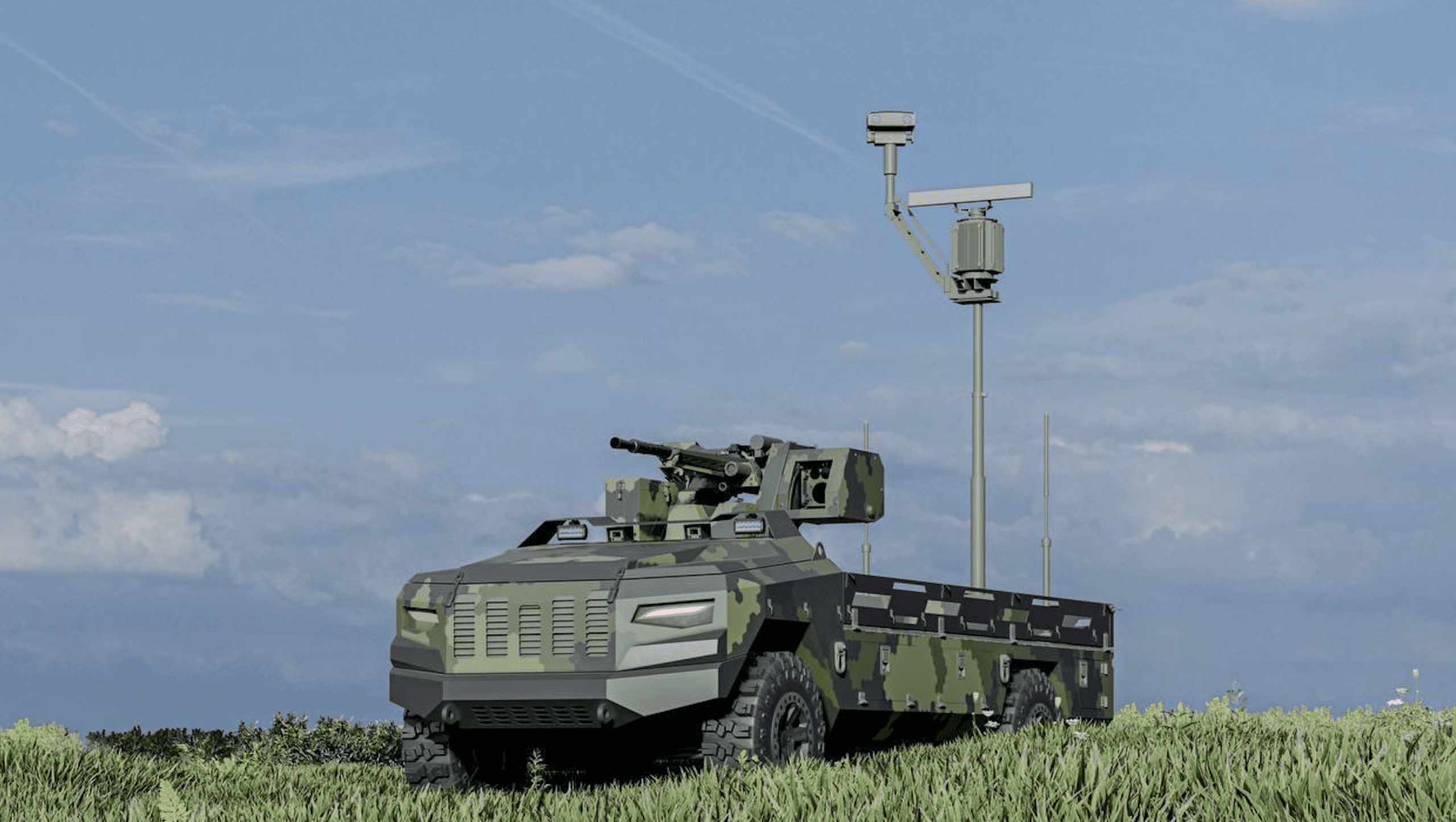
The shift toward unmanned ground systems is rapidly reshaping how both sides move people, ammunition, and wounded along the front line, where in some sectors, a 10-to-15-kilometer kill zone saturated with FPV drones has made conventional vehicle movement increasingly untenable.
Ukrainian President Volodymyr Zelenskyy has set a target of contracting at least 50,000 unmanned ground vehicles in 2026, with German manufacturer ARX Robotics already delivering hundreds of GEREON platforms to Ukrainian units for logistics and casualty evacuation.
In early May, Ukrainian National Guard troops near Kupiansk cleared a Russian fortified position using only drones and ground robots, with no soldiers deployed onto the battlefield.
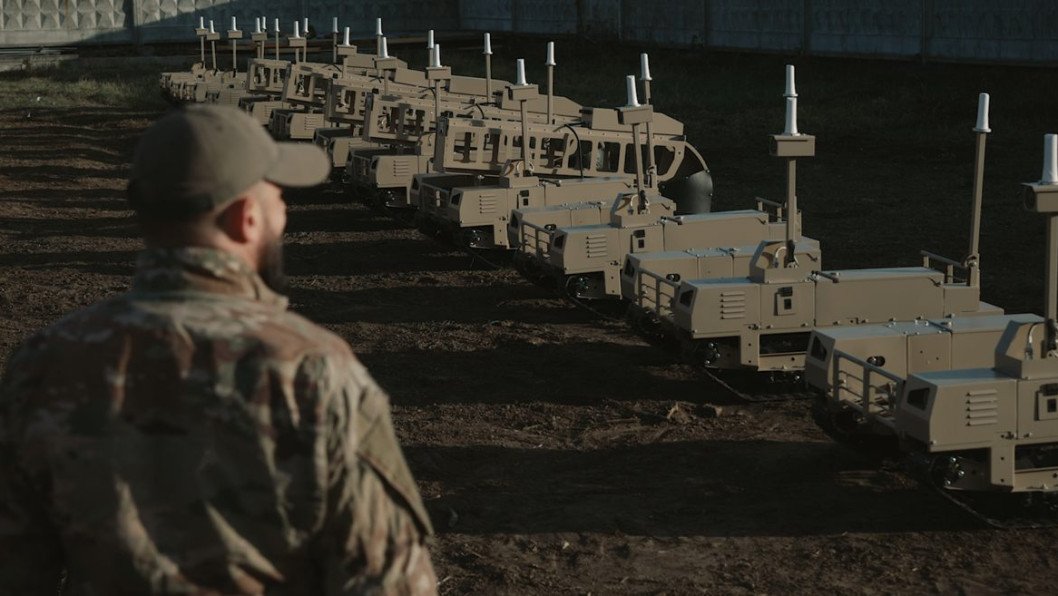
The scale-up is running into an obstacle that has nothing to do with the battlefield. Until January 1, 2026, Ukraine exempted imported electric vehicles from value-added tax—a measure that also covered UGVs, which are classified as electric.
When the exemption expired at the start of the year, UGVs purchased for defense needs effectively became up to 20% more expensive overnight.
Fedirko said the defense industry has lobbied parliament to restore the exemption specifically for UGVs, and that members of the Ukrainian Parliament are now working on Bill No. 15259 to do exactly that.
He added that he was "really appreciative" of the lawmakers involved and hopes that Ukrainian President Volodymyr Zelenskyy will sign the bill into law.
"The budget for the defense industry is not rising dramatically—but the needs are rising dramatically."
Fedirko
CEO of the Ukrainian Council of Defense Industry
"We want to get more of our UGVs for the same budget," Fedirko said. By his calculation, removing the tax would translate directly into roughly 20% more UGVs delivered to the front for the same money—several thousand additional machines on top of the 25,000-unit baseline projected for 2026.
Beyond military use, ground robots have already begun pulling civilians out of harm's way. Earlier this month, operators of the Kraken 1654 unmanned systems regiment used a ground robotic vehicle as the first leg of a three-stage rescue, extracting four civilians, including a wounded woman, from a frontline settlement near Lyman.
Discuss this article:
-4a56a6b482ec132402c16ef6fcabf9a2.png)


-c439b7bd9030ecf9d5a4287dc361ba31.jpg "Photo of Katherina Popilnichenko")



-72b63a4e0c8c475ad81fe3eed3f63729.jpeg "Photo of Cyril Barabaltchouk")