- Category
- Latest news
Third Army Corps Stops Russia’s Biggest Breakthrough Attempt Near Lyman, Video
 Prefer U24 Media on Google
- Authors

-111f0e5095e02c02446ffed57bfb0ab1.jpeg "Photo of Roman Kohanets")
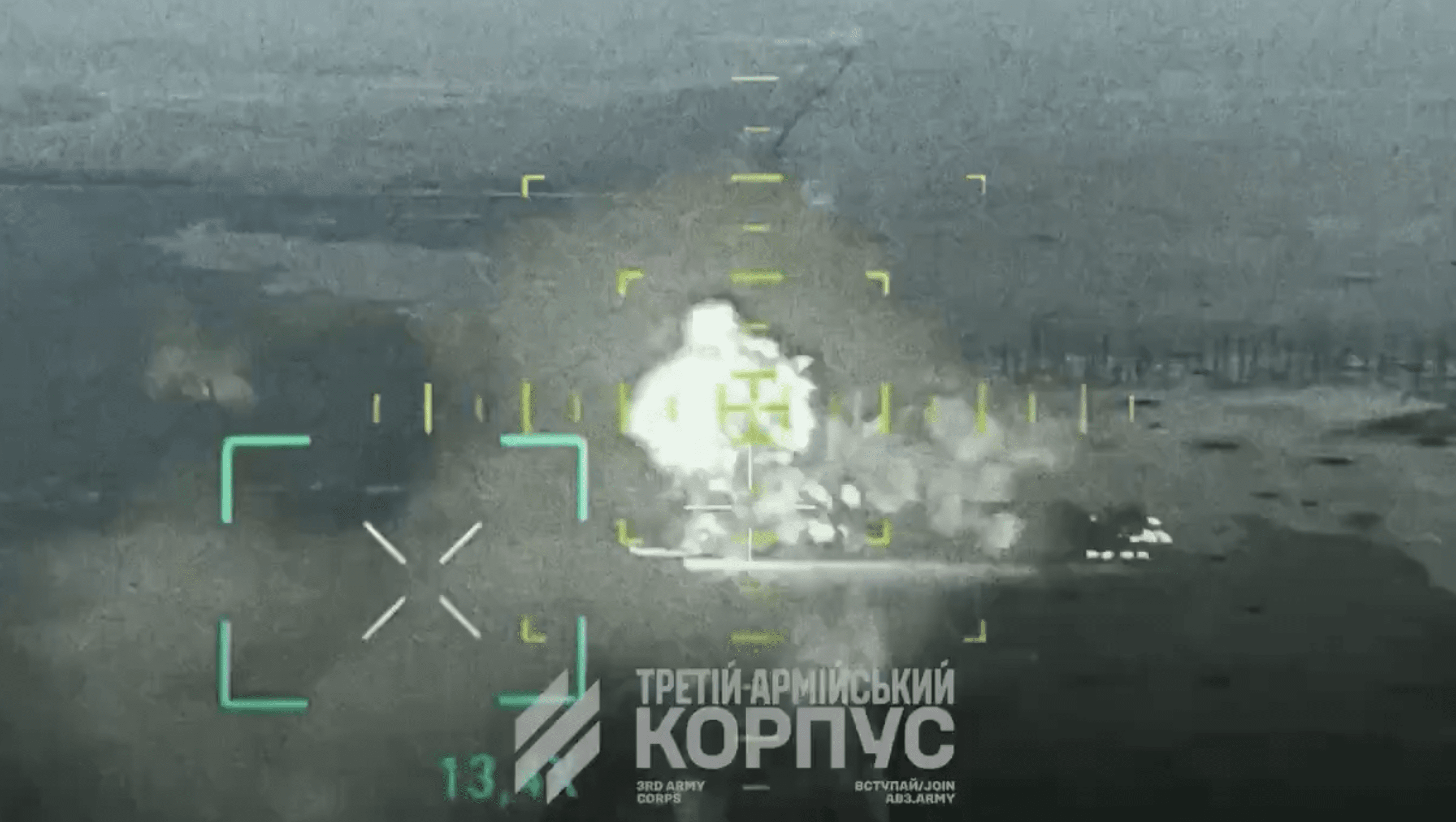
Ukraine’s Third Army Corps blocked what it described as Russia’s largest mechanized breakthrough attempt on the Lyman-Borova axis in northern Donetsk region after Russian forces attacked in seven directions, according to Ukrainska Pravda on March 21.
Ukrainian outlet reported that the assault took place on March 19 and involved elements of Russia’s 1st Tank Army and 20th Combined Arms Army.
We bring you stories from the ground. Your support keeps our team in the field.
The corps stated that more than 500 Russian infantry troops took part, backed by 28 armored vehicles and more than 100 motorcycles, buggies, and quad bikes. Ukrainska Pravda also reported that its sources confirmed the attack had been repelled and noted that Ukraine’s 60th Brigade played a major role in stopping it.
According to the corps, Ukrainian units turned the four-hour push into what it called a major failure for Russian forces. It reported Russian losses of 84 motorcycles, 11 infantry fighting vehicles and armored personnel carriers, and three tanks.
The corps also stated that a TOS Solntsepyok heavy flamethrower system and five artillery pieces were hit, while more than 160 enemy drones were destroyed.
General Andrii Biletsky, commander of the Third Army Corps, stated that his troops had been preparing for the assault for weeks after spotting signs of a wider offensive buildup.

“For a month and a half, we observed signs of preparation for the offensive,” Biletsky stated, adding that Russian forces had intensified guided bomb strikes on crossings over the Oskil River, attempted to cut logistics, built their own pontoon crossings, and cleared routes for an advance.
He added that each brigade had its own defense plan and that the corps coordinated the response, with the attack disrupted on every axis.
-6359eca46c72bde40a90abaaadd6eaa8.png)
Footage posted online by the Third Army Corps framed the battle as the largest attempted Russian mechanized offensive in the sector, underscoring Kyiv’s effort to present the failed push as a significant battlefield setback for Moscow.
The experience also fits into a broader Ukrainian effort to preserve manpower through battlefield automation.
Biletsky described ground robotic systems as a way to eventually replace up to one-third of personnel, reasoning that wider use could fundamentally reshape how Ukrainian infantry operates on the battlefield.
He framed the shift as a means of moving the most dangerous and routine tasks away from soldiers, allowing frontline units to preserve manpower and concentrate trained troops in roles where human judgment remains decisive.
Discuss this article:

-c439b7bd9030ecf9d5a4287dc361ba31.jpg "Photo of Katherina Popilnichenko")