- Category
- War in Ukraine
Russia Upgrades Shahed Drone With New Fuselage to Mount R-60 Air-to-Air Missiles
 Prefer U24 Media on Google
- Authors


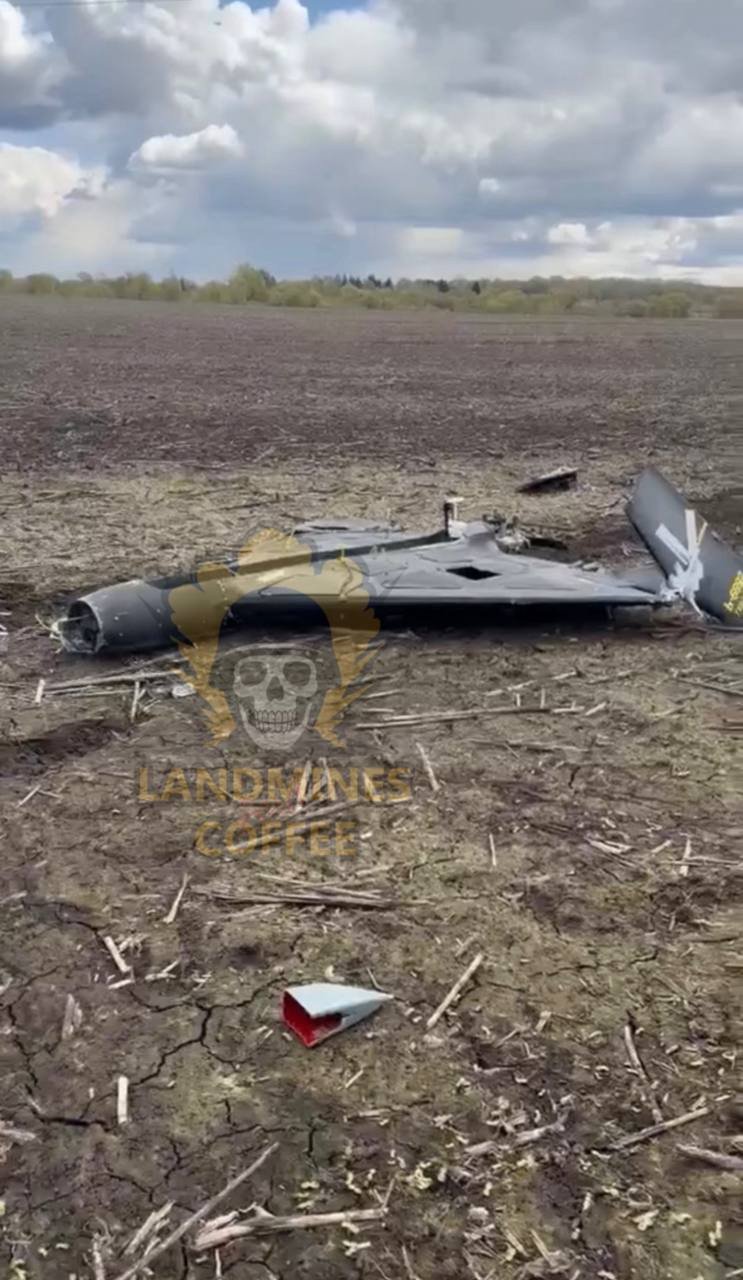
Russia has modified the design of its Iranian-origin Shahed-136 drones, known as “Geran-2,” to enable the launch of short-range air-to-air missiles, according to Ukrainian intelligence and open-source reporting.
We bring you stories from the ground. Your support keeps our team in the field.
According to the Ukrainian Main Directorate of Intelligence (HUR) and the specialized Telegram channel “Mines and Coffee with Sandwiches!” on May 3, the updated drone features structural changes to its fuselage to accommodate a standard aviation launcher for R-60 missiles.
The same source reports that these modifications appear to have transitioned from improvised field adaptations to factory-level production.

The revised configuration includes a dedicated mounting groove integrated into the drone’s upper fuselage for the APU-60-1MD launch rail, typically used on manned aircraft. In this setup, the drone no longer carries a conventional explosive warhead, suggesting a shift in its operational role. The fuel tank layout has also been altered to accommodate the new system.
According to HUR, the missile is mounted on top of the airframe and can be launched remotely by an operator. The drone is equipped with two onboard cameras—one positioned in the nose and another near the missile mount—providing visual feedback for targeting. Data transmission and control are facilitated via a Chinese-made mesh modem, Xingkay Tech XK-F358.
Once launched, the R-60 missile uses its infrared homing seeker to track airborne targets independently. The effective engagement range is estimated at approximately 7–8 kilometers.
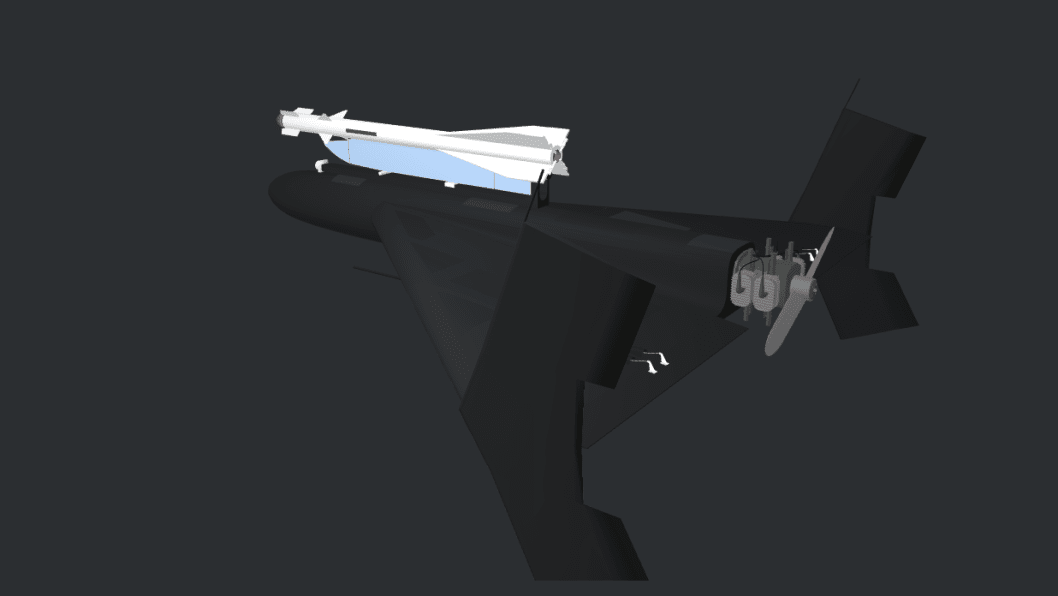
Ukrainian intelligence indicates that the system may allow for both operator-initiated launches and scenarios where the missile seeker locks onto a target prior to launch, with final authorization given remotely.
Despite these modifications, the drone’s core avionics—including its flight controller, navigation, and inertial systems—remain consistent with other Shahed variants used by Russia. Satellite navigation is supported by the “Kometa” anti-jamming module, designed to maintain signal integrity under electronic warfare conditions.
The onboard electronics suite also includes a Raspberry Pi 4 computer, tracking components, and dual GSM modems for telemetry transmission.
Earlier, Russia expanded the use of jet-powered Geran-3 and Geran-5 drones, launching them from new sites closer to Ukraine. These systems are significantly faster than earlier Shahed variants and are designed for longer-range strikes with improved resistance to electronic warfare.
Discuss this article:
-9a7b3a98ed5c506e0b77a6663f5727c5.png)


-29a1a43aba23f9bb779a1ac8b98d2121.jpeg "Photo of Illia Kabachynskyi")
-111f0e5095e02c02446ffed57bfb0ab1.jpeg "Photo of Roman Kohanets")



-24deccd511006ba79cfc4d798c6c2ef5.jpeg "Photo of Louis Beaudemont")