- Category
- Latest news
Russia Flips Missiles Backwards on Drones to Counter Ukrainian Air Interceptors
 Prefer U24 Media on Google
- Authors


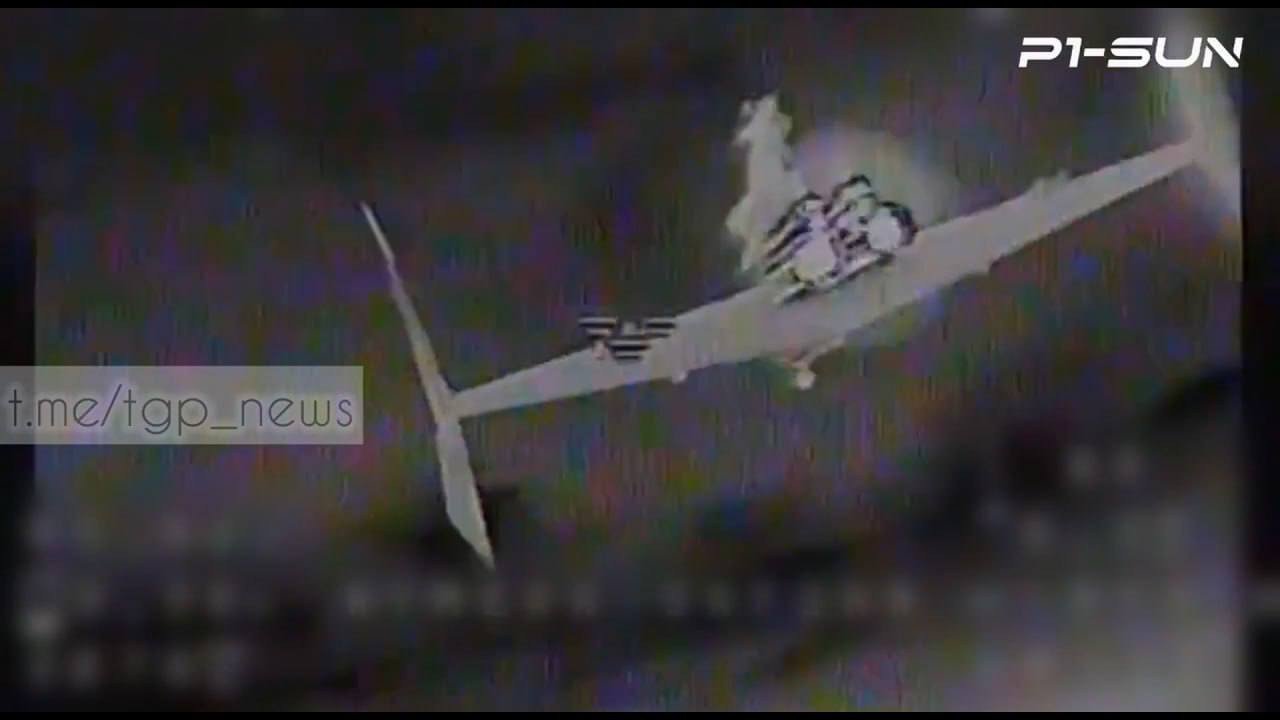
In a new field adaptation, Russian forces have been observed mounting a Soviet-era R-60 air-to-air missile in reverse orientation on a Shahed-type drone, possibly to engage Ukrainian helicopters involved in drone interceptions.
This configuration was captured in footage published by the Telegram channel Taras Hryhorovych povidomliaie on February 8.
We bring you stories from the ground. Your support keeps our team in the field.
According to Ukraine’s Defense Intelligence (HUR), the R-60 missile is typically designed for short-range air-to-air combat but has been adapted for launch from unmanned aerial vehicles.
In earlier sightings, the missile was installed in line with the drone’s forward motion. In this instance, however, the missile appears to be positioned facing backward, likely to increase its chances of detecting and engaging Ukrainian rotary-wing aircraft following behind the drone.
Дрон-перехоплювач «P1-SUN» збиває шахед, який ніс на собі ракету класу повітря-повітря P-60.
— Тарас Григорович повідомляє (@tgp_news1) February 8, 2026
Робота 105-го прикордонного загону ім. Князя Володимира Великого. pic.twitter.com/mtu5wGr8zZ
The modified drone reportedly carries the R-60 missile on an APU-60-1MD launcher affixed to the upper forward fuselage. Despite the non-standard setup, this installation is believed to allow the drone to carry out its conventional strike mission while posing a secondary threat to low-flying aircraft.
Video footage shows that the drone is equipped with two onboard cameras—one in the nose and another behind the missile launcher.
Communications and video transmission are handled via a Chinese mesh modem, the Xingkay Tech XK-F358. The drone’s flight systems, including navigation and inertial guidance modules, remain consistent with other variants of the Shahed platform.
Satellite navigation is provided by a Russian-made Kometa module, which reportedly supports signal integrity even under conditions of active electronic warfare. Additional electronics include a UK-manufactured Raspberry Pi 4 single-board computer, telemetry trackers, and two GSM modems to maintain control and telemetry transmission.
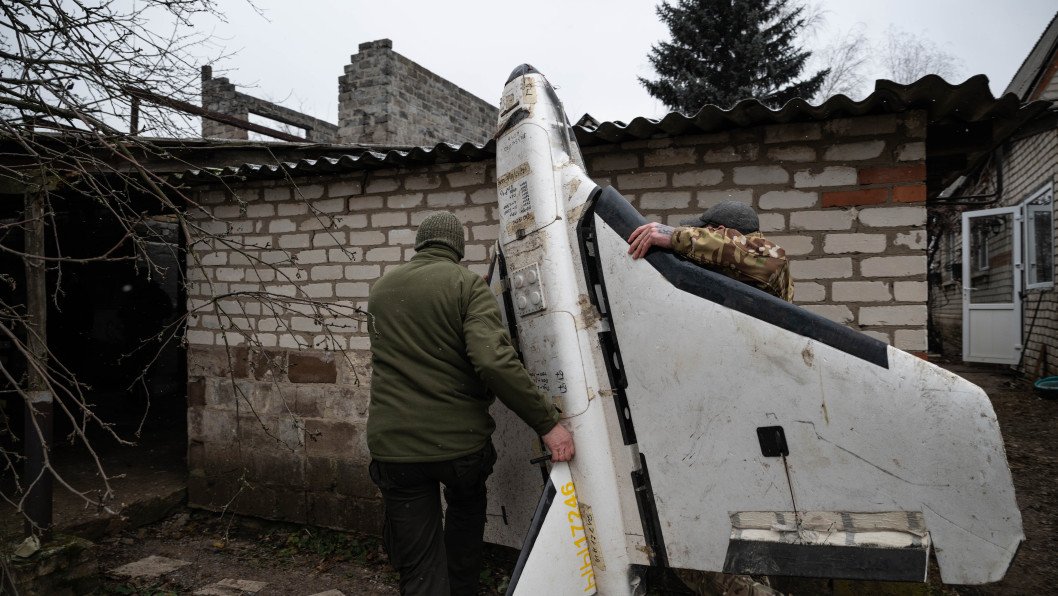
According to Ukrainian border guards from the 105th Detachment named after Prince Volodymyr the Great, a Russian Shahed drone carrying an R-60 missile was intercepted using a Ukrainian P1-SUN drone. The downed UAV provided further confirmation of Russia’s efforts to weaponize Shahed drones with legacy Soviet missiles.
The R-60 missile is fitted with an infrared seeker and has a reported maximum engagement range of 7 to 10 kilometers. Once launched, the missile’s seeker autonomously locks onto heat signatures, making it potentially effective against aircraft engines.
Earlier, Ukraine first documented the use of R-60 missiles on Shahed drones in December 2025. Since then, remnants of these missiles have been repeatedly identified in the wreckage of downed drones, including those equipped with jet propulsion systems.
Discuss this article:
-4a56a6b482ec132402c16ef6fcabf9a2.png)



-72b63a4e0c8c475ad81fe3eed3f63729.jpeg "Photo of Cyril Barabaltchouk")
-111f0e5095e02c02446ffed57bfb0ab1.jpeg "Photo of Roman Kohanets")