- Category
- Latest news
Russia Arms Jet-Powered Shahed With R-60 Missile Originally Built for Soviet Fighters
 Prefer U24 Media on Google
- Authors


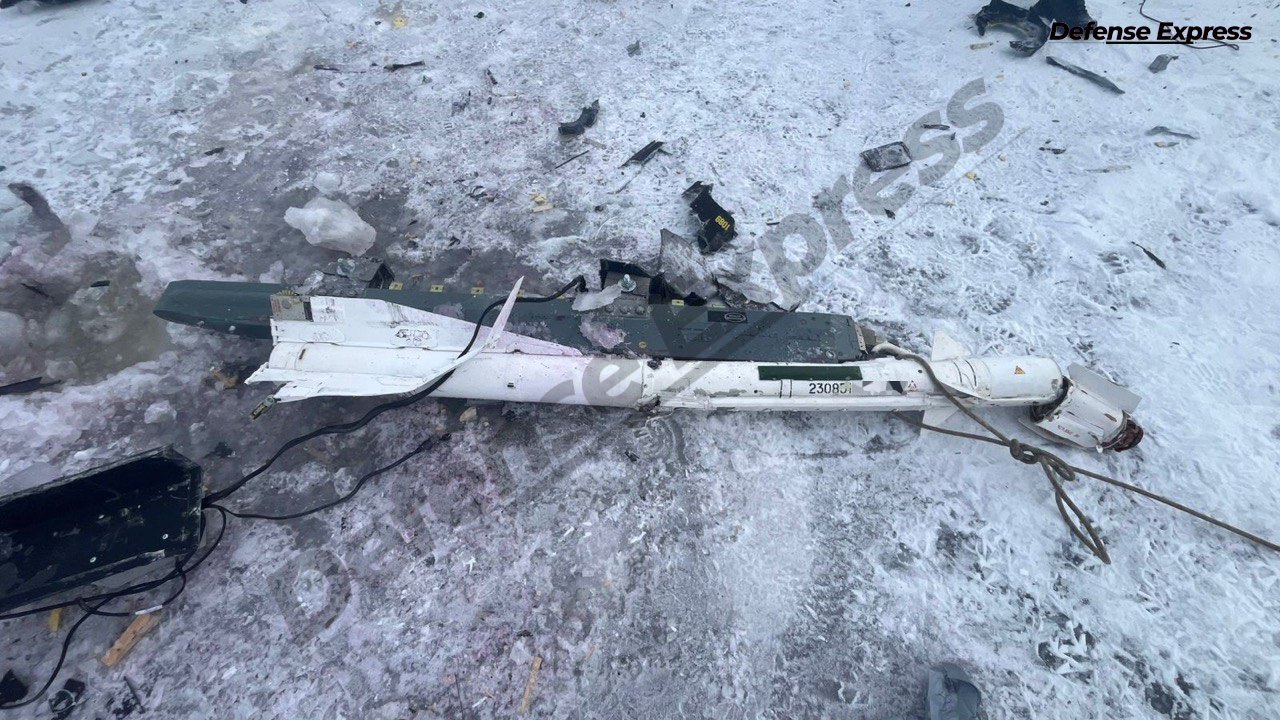
Russia has mounted a Soviet-era R-60 air-to-air missile onto a jet-powered version of the Shahed drone—named “Geran-4”—potentially increasing the threat to Ukrainian aircraft.
According to Defense Express on January 13, the weaponized drone was recently shot down by Ukrainian forces.
The Ukrainian outlet reports that this is the third known instance of a Shahed-type drone being modified to carry air-to-air weapons. Unlike previous attempts involving propeller-driven models, the latest platform is a jet-powered variant.
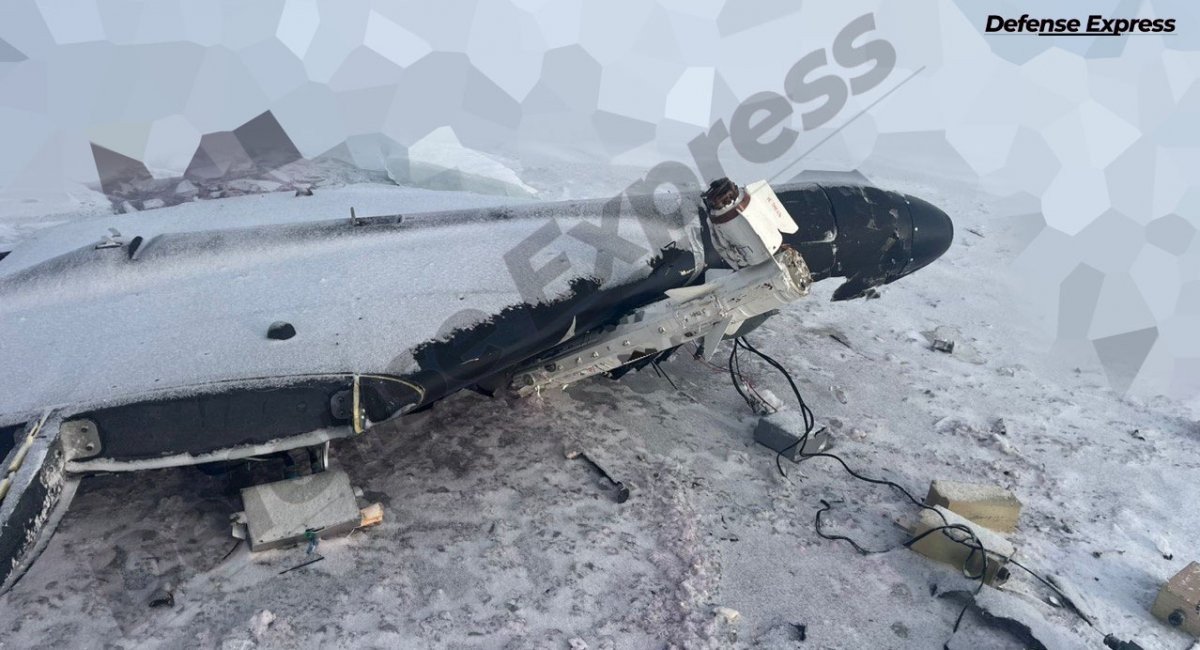
The downed Geran-4 reportedly featured a visible air intake, confirming the use of a jet engine and enabling the drone to fly at speeds between 350 and 500 km/h.
Defense Express states that the R-60 missile was mounted on a central pylon along the drone’s fuselage, consistent with earlier modifications seen on other Shahed models.
The missile’s infrared seeker is designed to lock onto heat signatures, allowing a ground operator to visually acquire a target and execute launch via video feed.
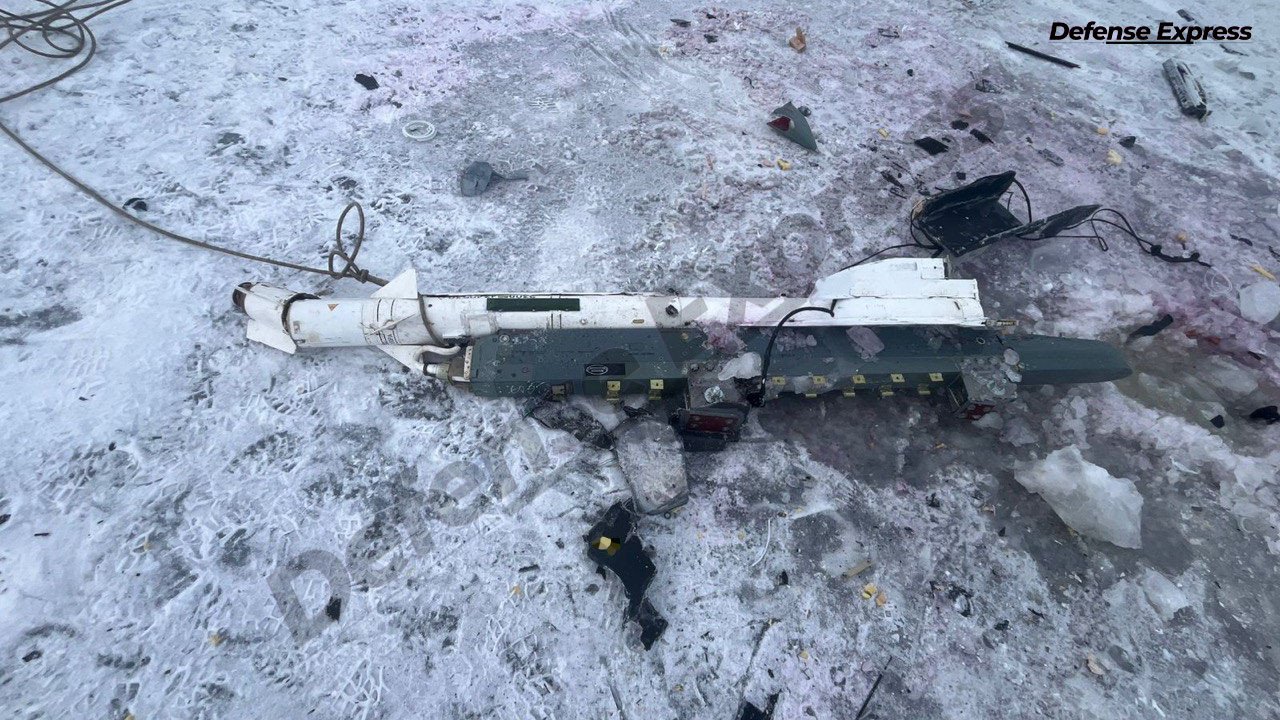
The R-60 missile has a maximum range of approximately 7–8 kilometers. However, its narrow field of view—between 24 and 34 degrees, depending on the version—makes target acquisition challenging, especially for older R-60 and R-60M models.
Despite these limitations, the use of a faster drone platform could reduce reaction time for Ukrainian helicopter crews. The higher speed of the Geran-4 allows it to approach airborne targets more quickly and maneuver more aggressively than previous propeller-driven variants.
The attempted deployment of the R-60 missile on a jet-powered drone suggests Russia is expanding its experiments in unmanned air-to-air engagement. Defense Express notes that earlier in January, Russian forces were observed trying to mount a man-portable air defense system (MANPADS) on a Geran-2 drone.
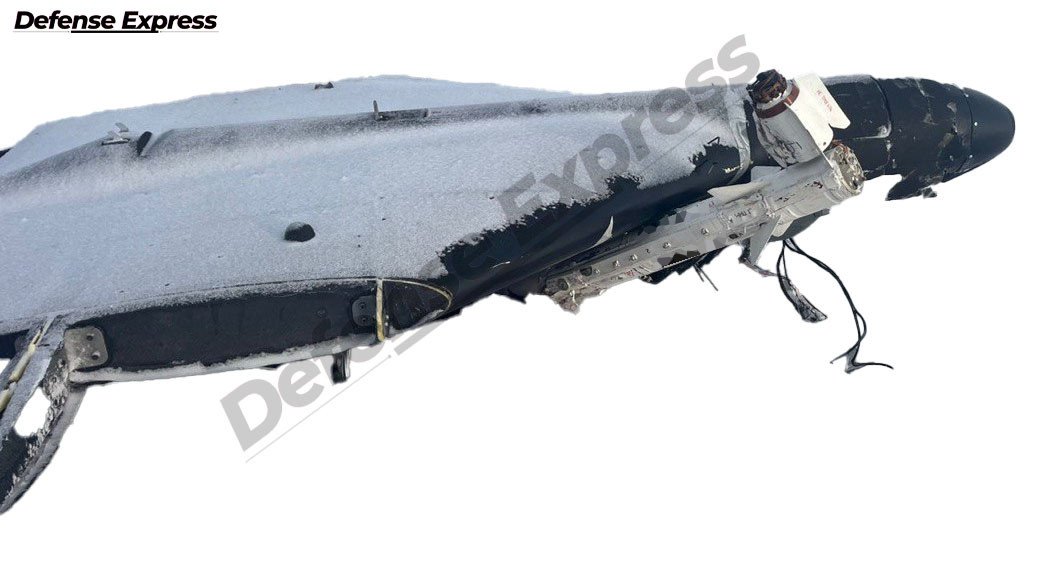
The report also raises the possibility of Russia adapting other long-range UAV platforms—such as the Iranian-designed Karrar, known as “Geran-5” in Russian service—for similar roles.
According to Defense Express, Russia’s ability to experiment with these systems depends on developing advanced control networks, likely using mesh communication modems. The outlet emphasizes that disrupting these networks should be a priority for Ukrainian defense efforts.
Earlier, Ukrainian forces recovered a modified Shahed drone carrying a Russian Verba MANPADS, marking one of the first confirmed cases of a loitering munition armed with a surface-to-air missile. The system allowed remote launches via video link, creating a new aerial threat to Ukrainian helicopters and low-flying aircraft.
Discuss this article:



-c439b7bd9030ecf9d5a4287dc361ba31.jpg "Photo of Katherina Popilnichenko")