- Category
- Latest news
Iran Deploys Russian-Made “FindFace” Software to Build Massive Domestic Surveillance State
 Prefer U24 Media on Google
- Authors

-72b63a4e0c8c475ad81fe3eed3f63729.jpeg "Photo of Cyril Barabaltchouk")
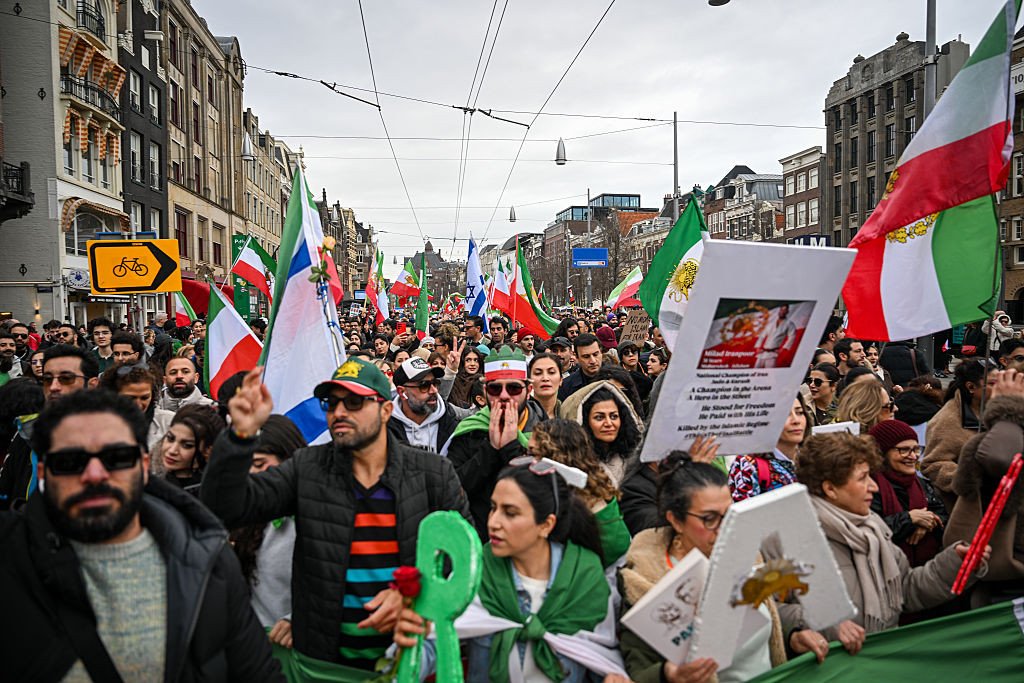
To tighten its domestic surveillance and repression, Iran has acquired FindFace, a sophisticated Russian-made facial recognition software, Le Monde and Forbidden Stories revealed in a joint investigation published on March 3.
The software, developed by Russian company NtechLab, was acquired by the Iranian company Rasadco in 2019 and later sold to various Iranian state entities, including the Ministry of Intelligence and the Islamic Revolutionary Guard Corps (IRGC).
We bring you stories from the ground. Your support keeps our team in the field.
FindFace, a high-performance tool initially used for large-scale public surveillance during events such as the 2018 World Cup in Russia, has now been deployed in Iran. It allows authorities to track individuals across the country, identifying protesters and dissidents with alarming precision.
According to Nima Fatemi, an Iranian researcher specializing in surveillance technologies, this software enables the regime to compile “social mapping,” which tracks connections between individuals and monitors their movements, making it easier to arrest them later without needing to deploy resources immediately, Le Monde wrote.
These developments are not isolated; Iran has also established extensive video surveillance systems, with facial recognition being integrated into existing networks of street cameras, private properties, and public spaces like restaurants, companies, and subways.
The state has already accumulated vast databases of identity photographs, taken during passport and driver’s license issuance, which are now being leveraged by FindFace.
Documents obtained by Le Monde show the extent to which the Iranian regime has relied on companies with close ties to the IRGC. Rasadco, originally the purchaser of the software, was absorbed by Kama, a larger entity with strong connections to the regime. The acquisition of the software was made possible through a network of “screen companies” that enable the regime to covertly conduct business without drawing attention to its involvement in repressive activities.
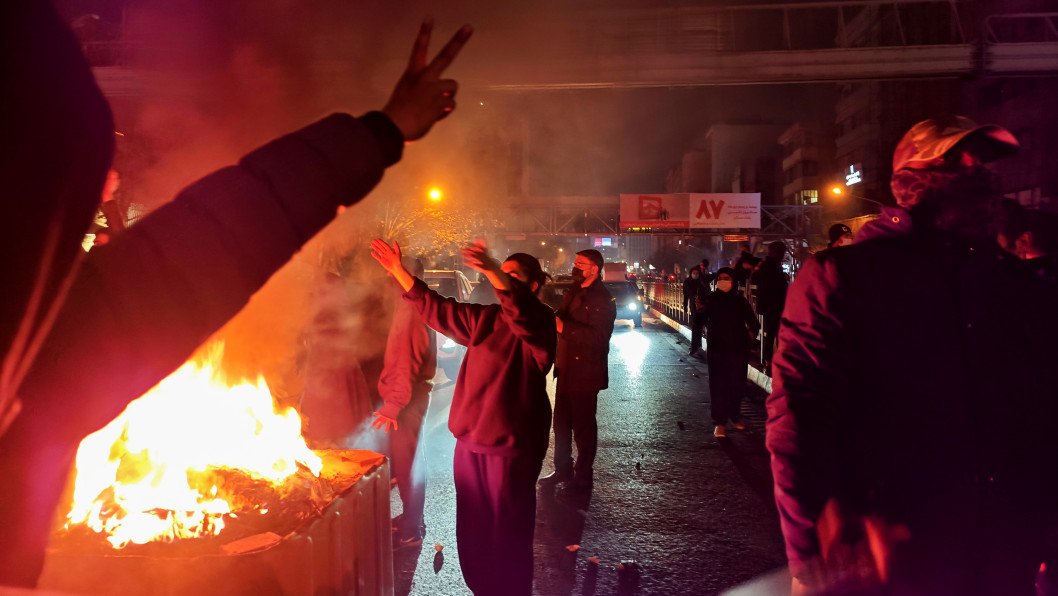
The strategic importance of FindFace lies in its ability to process and match facial data across a wide array of sources. This capability facilitates an environment where the regime can track individuals' activities both on the street and online, monitoring social gatherings and protests in real-time. These efforts contribute to a surveillance infrastructure designed to stifle dissent, intimidate the population, and prevent organized resistance.
Fatemi likens the use of FindFace and similar technologies to a “dystopian” future, where the government has complete control over its citizens’ movements. “It is one of the most symbolic tools of mass surveillance,” he says. Despite its flaws—such as difficulty in processing video from low-quality cameras—there is little doubt about the regime’s willingness to deploy such technology indiscriminately.
The purchase and use of such surveillance technology are indicative of the regime’s growing reliance on digital tools to control the population. As Ali, an insider familiar with the Iranian security apparatus, revealed, that these technologies are being developed by companies linked to the IRGC, which is central to Iran’s repression efforts. The regime’s goal is to establish a complete surveillance state capable of tracking individuals and suppressing any form of opposition.
Despite potential inaccuracies, it offers the regime a powerful tool for identifying dissidents, instilling fear, and making it more difficult for the people to rise up. The use of this technology could further entrench the Iranian government’s grip on power, with consequences that may have long-lasting effects on the rights and freedoms of its citizens, Le Monde reported.
Earlier, it was reported that the February 28, 2026, assassination of Iranian Supreme Leader Ali Khamenei was the result of a highly coordinated Israeli-CIA intelligence operation. The daytime strike on Khamenei’s Tehran compound was made possible by an unprecedented cyber breach: Israel hacked nearly all of Tehran’s traffic cameras.
By combining this video surveillance with mobile phone interceptions, operatives mapped the daily routines of Khamenei’s security detail, securing the real-time data needed to pinpoint the exact moment to attack.
Discuss this article: