- Category
- Latest news
Raytheon Boosts GhostEye Radar Production to Counter Russia’s and China’s Hypersonic Missiles
 Prefer U24 Media on Google
- Authors




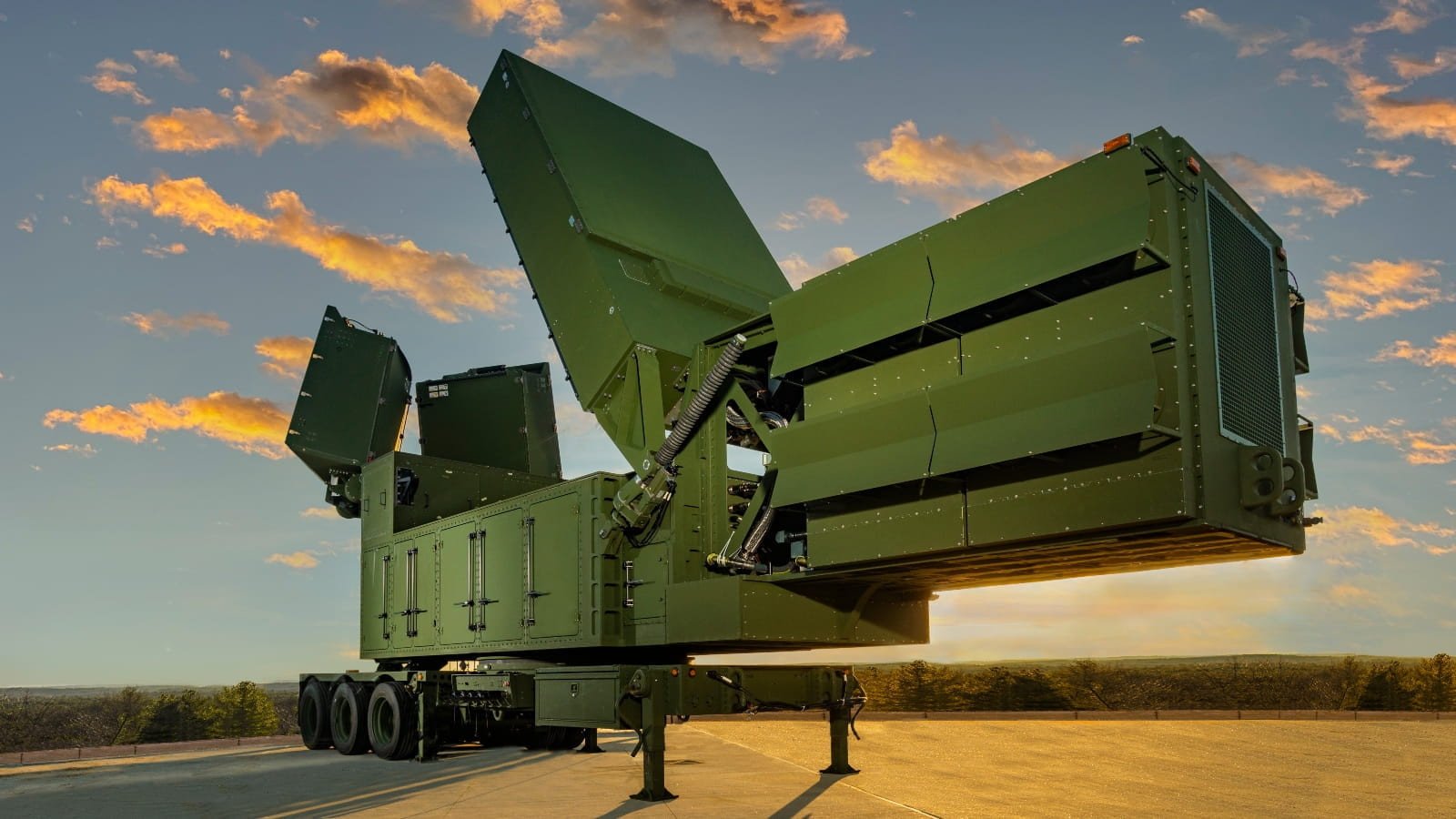
Raytheon is investing $53 million to expand its radar manufacturing capabilities in Massachusetts to meet surging global demand for its new Lower Tier Air and Missile Defense Sensor (LTAMDS)—a next-generation radar designed to bolster air and missile defenses against advanced threats, including hypersonic weapons, like Russian Kh-47M2 “Kinzhal,” according to Defense News on October 15.
The new 23,000-square-foot facility in Andover will support production and testing of LTAMDS radars, which integrate with the Patriot air defense system.
Raytheon is investing $53M to expand its LTAMDS radar facility, boosting production of this next gen air and missile defense radar. Learn more: https://t.co/8AT18eofTb pic.twitter.com/6zFNrZaOsI
— RTX (@RTX_News) October 15, 2025
The radars address one of the Patriot’s long-standing limitations by providing a full 360-degree field of view, compared to the 120-degree coverage of earlier systems like the AN/MPQ-53.
According to Defense News, Raytheon executives say the company has already received multiple letters of interest from foreign customers, although Poland remains the first and only confirmed buyer with an order for 12 units as part of its Patriot system modernization.
At Valiant Shield 24, Raytheon demonstrated a simulated complex missile engagement leveraging the U.S. Army's Lower Tier Air and Missile Defense Sensor, and Integrated Air and Missile Defense Battle Command System launching the Standard Missile-6 (SM-6) interceptor.
— AirPower 2.0 (MIL_STD) (@AirPowerNEW1) September 1, 2025
"#LTAMDS… pic.twitter.com/5zGlsXwZq9
The system only recently received US Army approval for low-rate initial production and continues to undergo operational testing—including real-world trials in Guam.
So far, Defense News notes, six prototype radars have been built, with two improved versions currently in assembly, incorporating feedback from military evaluations.
Raytheon plans to produce 12 LTAMDS units annually, expanding to 18 per year to accommodate foreign orders. The company aims to complete its new manufacturing facility by the end of this year.
AN/MPQ-53 pic.twitter.com/kJ7v7eXpoL
— suzu7466 (@suzu746692556) November 3, 2024
The latest expansion brings Raytheon’s total investment in LTAMDS-related production to over $400 million, covering software laboratories, automated subsystem assembly areas, antenna calibration ranges, and large-scale crane systems for final radar integration.
With growing global demand for next-generation radar systems, Raytheon joins other major defense firms such as Germany’s Hensoldt and France’s Thales, which are also ramping up production capacity to avoid multi-year backlogs.
-8ff74eb427048fb43a21b623ab814c0b.png)
Defense News notes that the LTAMDS, commercially branded as GhostEye, represents a critical step forward in integrated air and missile defense—offering improved target tracking, greater situational awareness, and enhanced protection against fast, low-flying, and hypersonic threats such as Russia’s Kinzhal missile.
Earlier, reports emerged that Lockheed Martin aimed to begin orbital testing of hypersonic missile interceptor satellites within the next three years.
The US defense giant is exploring a variety of space-based concepts to take down threats like Russia’s Kinzhal and Tsirkon missiles. Options reportedly include everything from laser weapons to “munition satellites” capable of maneuvering autonomously for direct kinetic interception.
Discuss this article:



-72b63a4e0c8c475ad81fe3eed3f63729.jpeg "Photo of Cyril Barabaltchouk")

-111f0e5095e02c02446ffed57bfb0ab1.jpeg "Photo of Roman Kohanets")

-e88c01988249cd60b6f04f79d29156b7.jpeg "Damage to “Cosmogony,” the largest painting in Ukraine, following a Russian drone attack on Lutsk on October 13, 2026. (Source: @sashyyna/Instagram)")
