- Category
- Latest news
Polish MiG-29s Intercept Russian Spy Plane Flying “Dark” Over Baltic Sea
 Prefer U24 Media on Google
- Authors

-72b63a4e0c8c475ad81fe3eed3f63729.jpeg "Photo of Cyril Barabaltchouk")
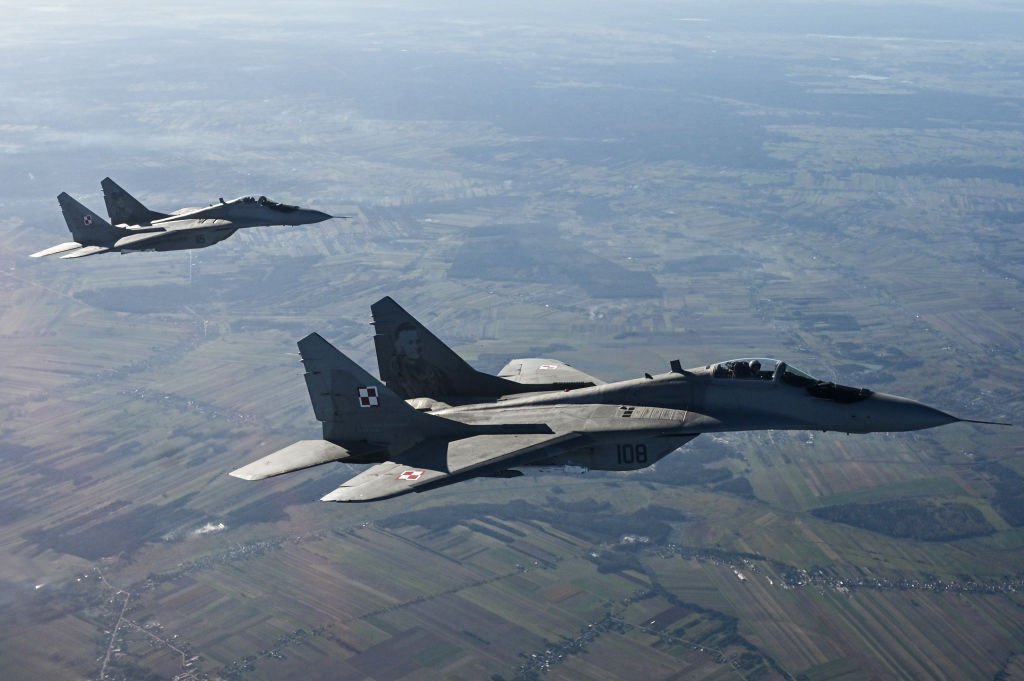
Polish Air Force MiG-29 fighters intercepted and escorted a Russian Il-20 reconnaissance aircraft flying over the Baltic Sea, Army Recognition reported on March 13.
Poland’s Operational Command confirmed the Russian spy plane was operating in international airspace with its transponder switched off and without a filed flight plan. Polish fighters quickly scrambled to visually identify and escort the aircraft, marking the ninth such Russian reconnaissance mission detected in the region so far this year.
We bring you stories from the ground. Your support keeps our team in the field.
The Il-20, designated by NATO as the “Coot-A,” is a specialized surveillance platform built specifically to harvest electronic intelligence. Rather than attempting to breach physical borders, the aircraft’s objective is to absorb data on NATO radar activity, radio communications, and quick-reaction scramble times.
By flying “dark” near sovereign airspace, Moscow forces NATO to react, allowing Russian intelligence to actively map the alliance’s defensive architecture and command-and-control networks, Army Recognition wrote.
The Baltic Sea remains a highly sensitive frontline for this type of electronic probing. The airspace links directly to the heavily fortified Russian enclave of Kaliningrad, where Moscow maintains dense anti-access and area-denial (A2/AD) capabilities.
Monitoring this specific corridor allows Russia to constantly test the military geometry of NATO's eastern flank, an area that has become even more critical following the recent integration of Swedish and Finnish forces into the alliance, according to Army Recognition.
While the Russian aircraft never violated Polish airspace, the successful intercept proves the continuing effectiveness of Poland’s legacy MiG-29 fleets in securing the skies. Military officials stressed that rapid interception missions are necessary to eliminate ambiguity, maintain absolute control over the air picture, and prevent Russian gray-zone tactics from escalating into direct confrontations.
Russian intelligence-gathering operations and airspace provocations along NATO's eastern flank intensified dramatically over the past few months. Throughout late 2025 and early 2026, allied fighter jets routinely scrambled to intercept Russian bombers, reconnaissance planes, and tactical fighters flying dark over the Baltic Sea.
A recent report detailed how these unannounced flights deliberately force NATO to activate its Quick Reaction Alert network, allowing Moscow to map allied radar frequencies and command-and-control response times.
Currently, as Russia continues to deploy specialized spy planes and heavily armed bombers near sovereign borders, European defense officials are pushing to streamline NATO engagement rules to better protect the highly sensitive corridor connecting Kaliningrad and the newly expanded Nordic alliance.
Discuss this article:
-9a7b3a98ed5c506e0b77a6663f5727c5.png)





-80134f2dc17b4a887d01513a1c7bc929.png "Illustration of Russian military infrastructure targeted by Ukrainian strikes in temporarily occupied eastern Ukraine. (Source: General Staff of the Armed Forces of Ukraine)")