- Category
- World
Ukraine’s Khartia and ARX Robotics Bring the Ground Robot War to Berlin’s New Age Defence Forum
 Prefer U24 Media on Google
- Authors


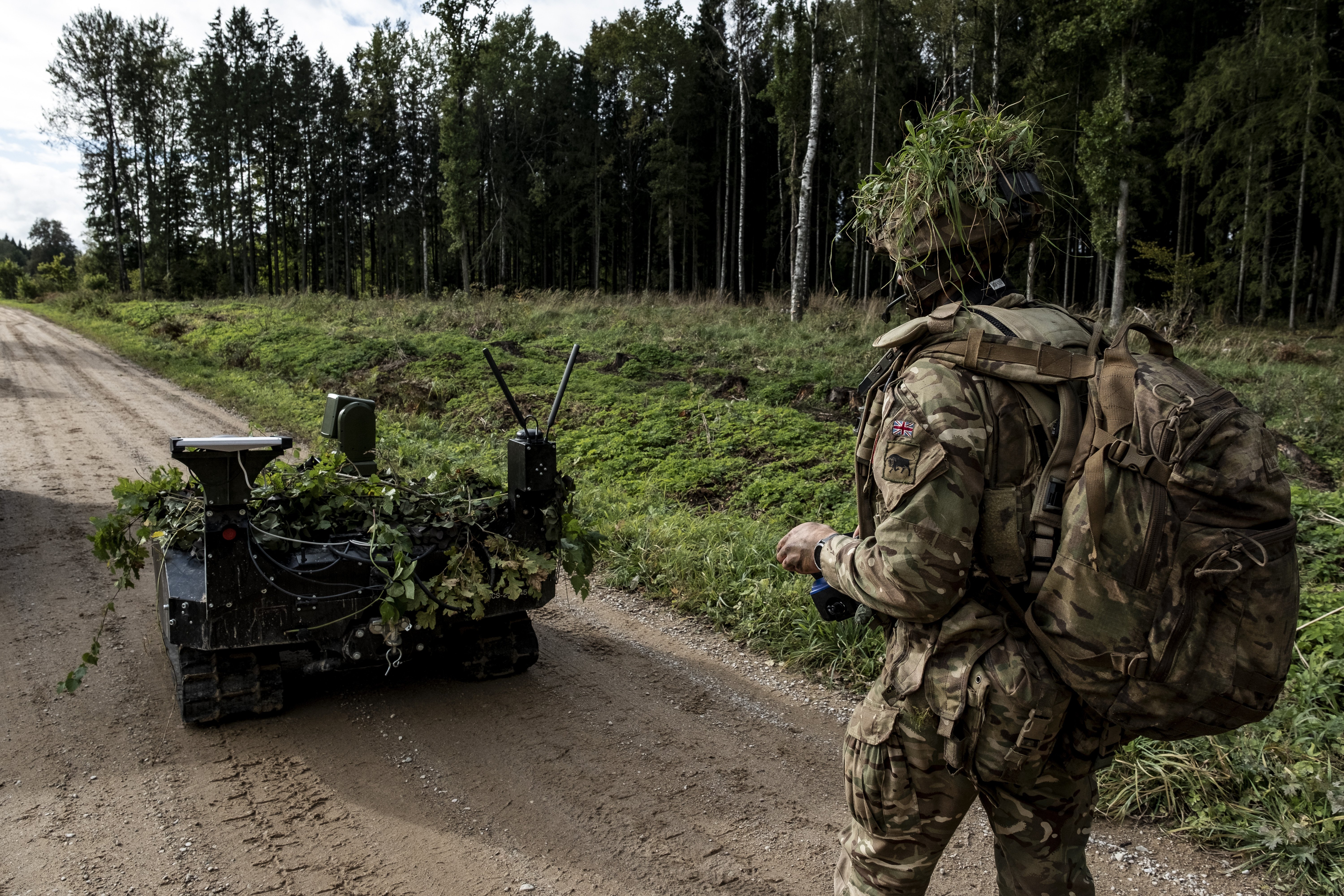
Reporting from Berlin, UNITED24 Media correspondents attended the New Age Defence conference on June 8, where European defense companies, military officials, investors, and Ukrainian frontline units gathered to discuss how modern warfare is being reshaped by drones, ground robots, and battlefield-tested technology.
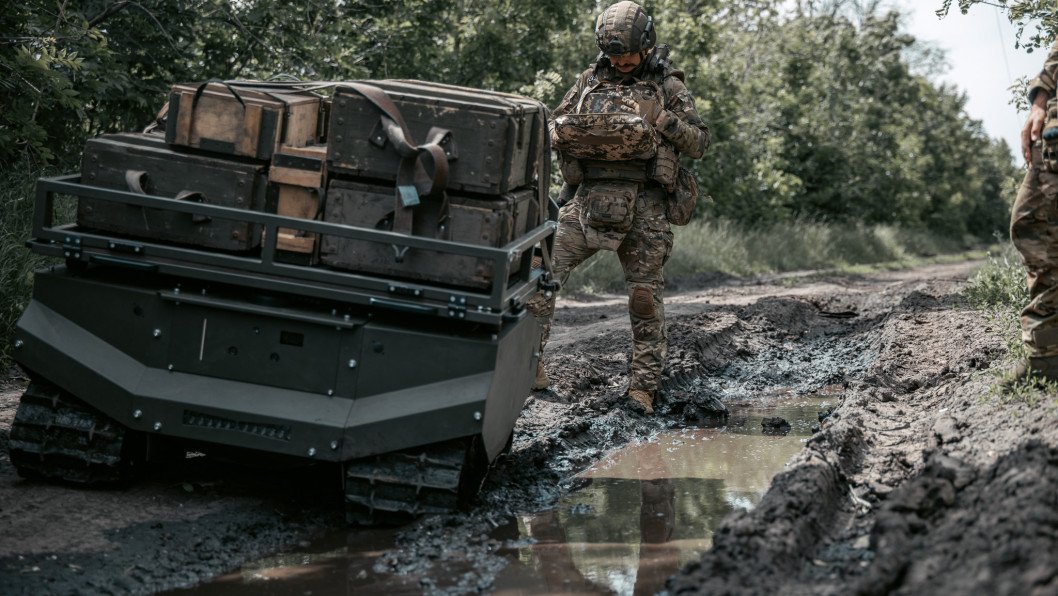
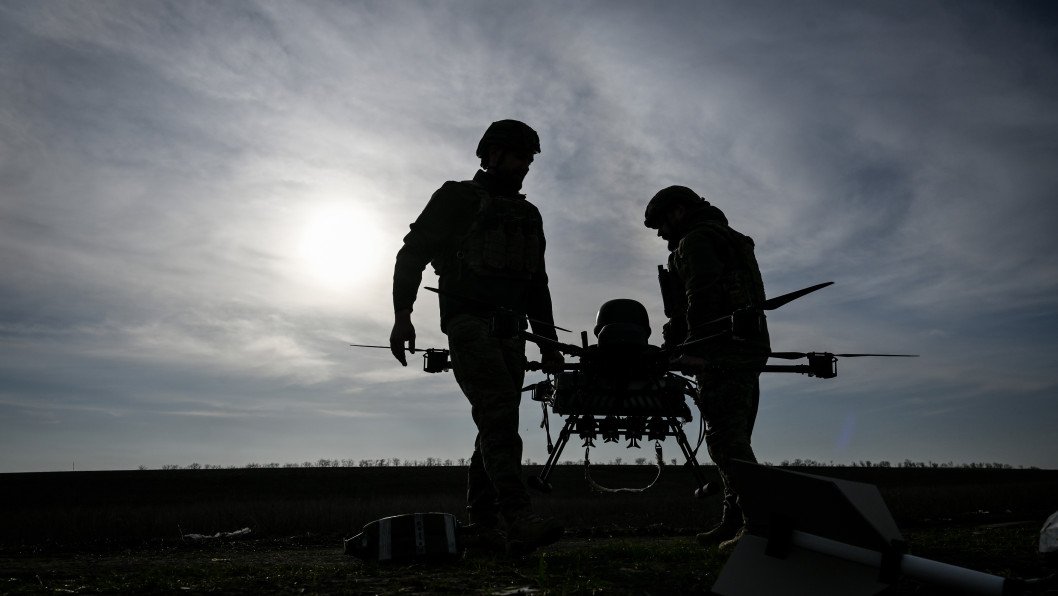
The conference focused on modern defense technologies and the lessons Ukraine has drawn from Russia’s war of aggression. While unmanned aerial systems have already transformed the battlefield, one of the key themes in Berlin was the fast-growing role of unmanned ground vehicles, or UGVs.
We bring you stories from the ground. Your support keeps our team in the field.
For Ukraine, UGVs are no longer a distant concept or a defense-tech experiment. They are already being used on missions, including evacuation, logistics, reconnaissance, and combat support. For European manufacturers, Ukraine has become the place where new systems are tested under the harshest conditions and adapted at wartime speed.
In interviews with UNITED24 Media at the conference, both a Ukrainian UGV commander and a European robotics manufacturer described the same reality from different sides: Europe has production capacity and engineering talent, while Ukraine has the combat experience needed to show what actually works.

The commander of a UGV company from the 21st Unmanned Regiment of the 2nd National Guard Corps, Andrii Kopach, said his unit already uses several ground robotic systems daily.
Asked whether any systems presented at the conference were already used by his unit, he pointed to two platforms.
“Yeah, we have already used TherMIT, Lyut. Those two UGVs we are using on a daily basis and they’re used in the previous missions,” he said.
🤖Ukrainian ground robots used to clear enemy infantry positions in Kupiansk.
— Special Kherson Cat 🐈🇺🇦 (@bayraktar_1love) May 1, 2026
In February 2026, a special operations unit of the “Lava” unmanned systems regiment (Khartia Corps), with support from the Khartia Brigade, eliminated 10 Russian troops holding positions in the city.… pic.twitter.com/dPOk2J2hzf
The officer said skepticism around UGVs was natural, even among Ukrainian soldiers at the beginning.
“To be honest, I was skeptical too. Like two years or maybe more, two and a half years ago, I was very skeptical about UGV,” Kopach said.
But that view changed as the technology adapted to battlefield needs.
“It’s okay to not understand UGV concept. So this is very adaptive thing. It’s always changing. So not everyone can understand why we need UGV. But it’s crucial technology for now in Ukrainian frontline as well,” he said.
In Germany and Europe there is a lot of experience of production. In Ukraine there is a vision and understanding of what fits. For example, there is a joint venture or joint projects. Some of them are already successful.
Andrii Kopach
Commander of a UGV company from the 21st Unmanned Regiment of the 2nd National Guard Corps
The commander said European countries are trying to adapt to the pace of change, while Ukraine provides the battlefield feedback needed to shape future systems.
“European countries are trying to adapt, to understand how to work with these technologies. But the successful things are in understanding countries, Germany especially, very good at manufacturing things and have a lot of professionals that can do fantastic things in a defense tech. So on the other half, Ukraine has a real understanding of how it works and what do we need and vision of modern warfare,” Kopach stated.
“So this communication is very, very important. For example, joint projects have already been implemented successfully. I hope it will only grow,” he added.
I had the honor to moderate a battle documentary movie discussion with two of the involved @khartiia_corps senior lieutenants at the “New Age Defence” conference / exhibition in Berlin today.
— Julian Röpcke 🇩🇪🤝🇺🇦 (@JulianRoepcke) June 8, 2026
The documentary movie is available to watch here: https://t.co/jP9MiohW7T pic.twitter.com/7VdM6v8vhe
That same message was echoed by Roberta Randerath, Director of Business Development at ARX Robotics, a German company producing unmanned ground vehicles already operating in Ukraine.
“ARX Robotics is a company very active in Ukraine, but also, for example, in Germany and the United Kingdom.”
“We have the biggest fleet of Western-built unmanned ground vehicles in Ukraine. Providing training and continued support to Ukrainian users is an important part of our work,” Randerath said.
ARX Robotics was founded by three German army officers and is headquartered in Munich. The company also has a production site, an office, and a large Ukrainian team in Ukraine.
“The company was originally founded by three German army officers. And the headquarters is based in Munich. And we also have a production and location site in Ukraine, where we also have our office and a big Ukrainian team,” she said.
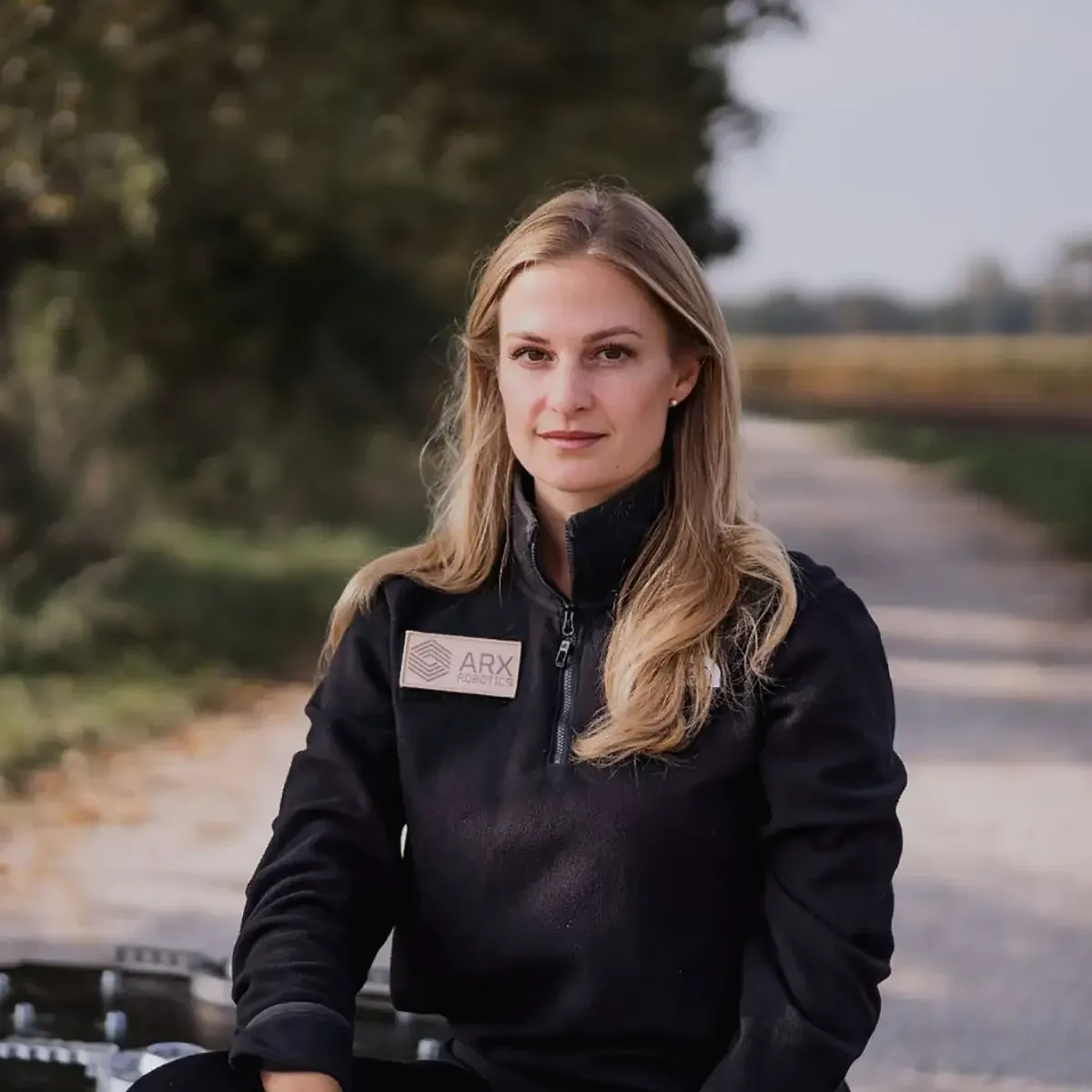
And every time, I can also tell you, when we get feedback that wounded soldiers have been evacuated, it’s really something where we are very, very happy to receive that feedback. It’s priceless.
Roberta Randerath
Director of Business Development at ARX Robotics
According to Randerath, ARX first donated a system to Ukraine in January 2024. Since then, its presence has expanded significantly.
“So, the first system that we donated to Ukraine came in January 2024. Soon after, we sent what was back then the biggest fleet, but the fleet is growing every month now. And we now have hundreds of systems supplied in Ukraine, and the fleet is growing,” she added.
Randerath said the company does not update its systems in fixed cycles because the battlefield changes too quickly. Instead, ARX constantly adapts both hardware and software.
“As you say, the battlefield basically changes all the time. It’s very dynamic. And we’re not reacting in periods, but constantly to these changes. So, we’re constantly updating the systems in terms of hardware and software,” she said.
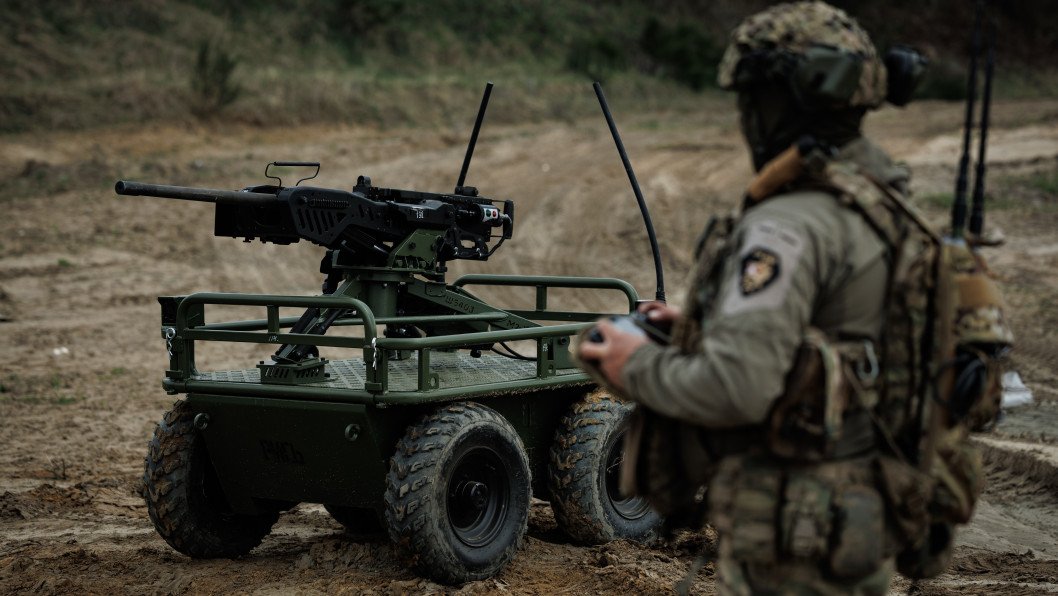
One major battlefield trend, she said, is the expansion of the so-called unmanned zone, which is forcing UGVs to operate at longer ranges and in different configurations.
“Yes, I think one big trend is that we see that the unmanned zone is getting larger, which means that the systems also have to be adapted to that. For example, they have to have longer range, or the sizes also change. So, that’s something we see,” she said.
She said the main missions in Ukraine currently include logistics, evacuating wounded and fallen soldiers, while other systems are configured for combat, reconnaissance, and surveillance.
“The main tasks currently in Ukraine are the evacuation of wounded and fallen soldiers, but also, for example, some of the systems have weapon stations and are combat UGBs, and we also see that reconnaissance and surveillance is becoming more important,” she said.

Feedback from Ukrainian users has become central to ARX’s development process. Randerath said Ukrainian operators have highlighted the importance of low heat and noise signatures, long mission duration, and effectiveness during night operations.
“I think we get a lot of feedback that we’re evaluating constantly. The main feedback is that the systems are very low in heat and noise signature, which is very useful. We get a lot of feedback on the duration of the missions, which I think is also an important part, especially when we speak about night missions,” she said.
Both the Ukrainian commander and ARX Robotics stressed that events like New Age Defence matter because they bring together the people who fight with the systems, the companies that build them, and the institutions that will have to adopt them.
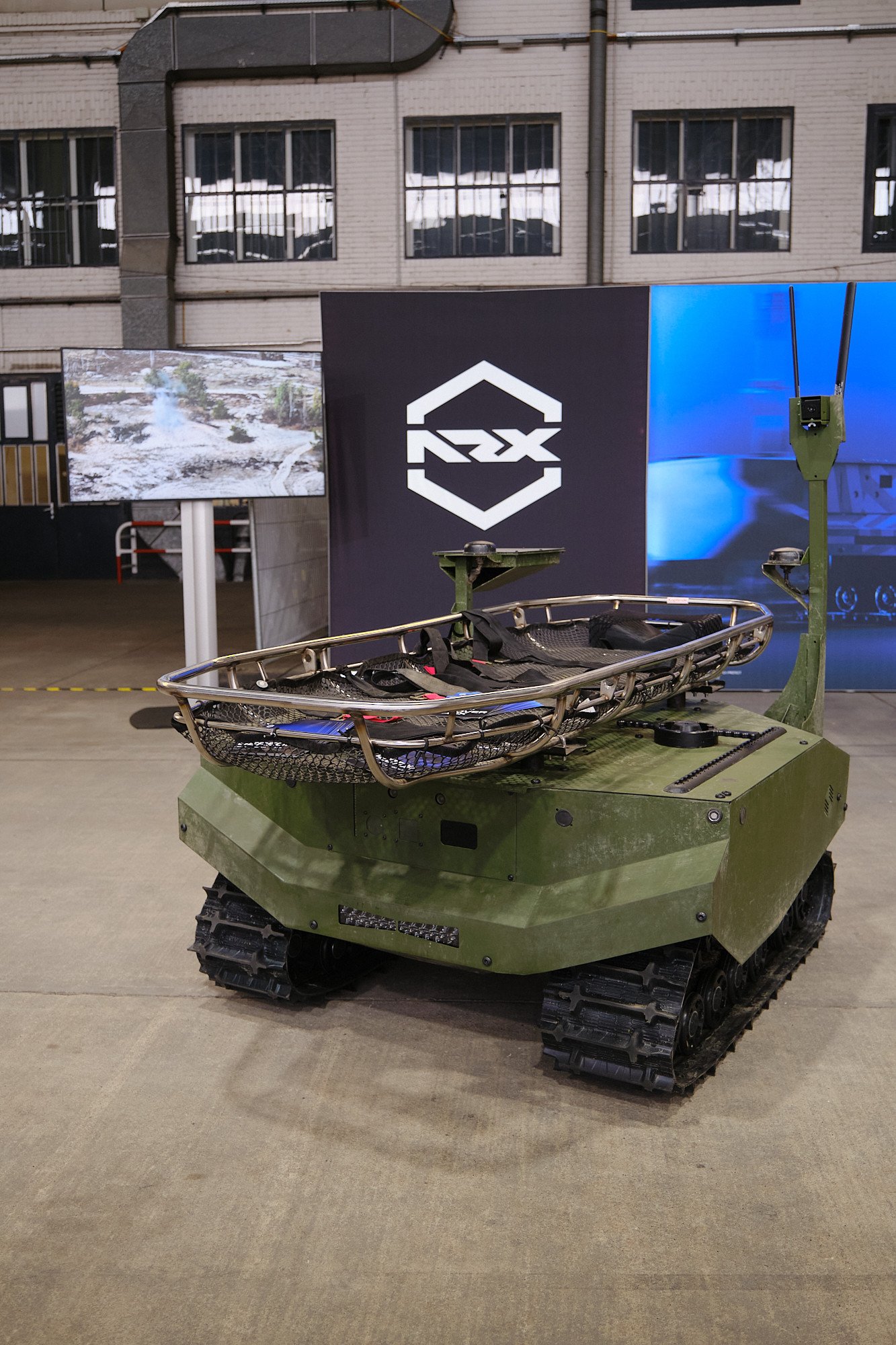
Randerath said communication with Ukrainian soldiers and Western militaries is “incredibly important,” especially because Ukraine is now offering lessons that the West needs to absorb.
“Incredibly important. We heard it today from the first speaker of the Wolfsdorf-Da Vinci, that we have to train our operators also. And that’s something where the Ukrainians are offering the help, which is priceless for us. And that’s something that I think we should accept that help,” she said.
She added that Ukrainian feedback should not remain limited to individual companies, but should influence Western military doctrine.
“And it’s also important to be in contact with the users, of course, with regards to adapting the systems to the mission in order to best support them. But also their feedback, their knowledge is of such high value to the Western world, and I think we need to adapt it as soon as possible also into our doctrines,” Randerath said.
Asked how Europe is doing in adapting its defense protocols and integrating unmanned systems, she said the continent is moving faster than before, but still not fast enough.
“So I think things are moving. Europe is getting faster here than we used to be. The understanding for the need of unmanned systems is finally here. However, we still seem to have issues,” she said.
“We’re not as fast as we probably could be when it comes to adapting. Of course, I mean, the speed in Ukraine is just not comparable. It’s super fast. But still, I think that the adoption takes too long,” Randerath said.
She said Europe needs more ways to integrate unmanned systems into current protocols, concepts of operations, and training.
“Still, in Europe, we need more ways in order to really integrate the systems into our current protocols and concepts of operations, more trainings, all that,” she said.
Looking ahead, Randerath said ARX Robotics will remain focused on unmanned ground autonomy, with larger systems and artillery-support platforms among future directions.
“So we are, our strength is unmanned ground autonomy. We will stay in that realm for now, but there will be bigger systems. And also with regards to supporting artillery, unmanned systems that you can expect,” she said.
Discuss this article:


-c439b7bd9030ecf9d5a4287dc361ba31.jpg "Photo of Katherina Popilnichenko")



-111f0e5095e02c02446ffed57bfb0ab1.jpeg "Photo of Roman Kohanets")