- Category
- Opinion
How Can Europe Rearm? By Scaling Ukrainian Innovation
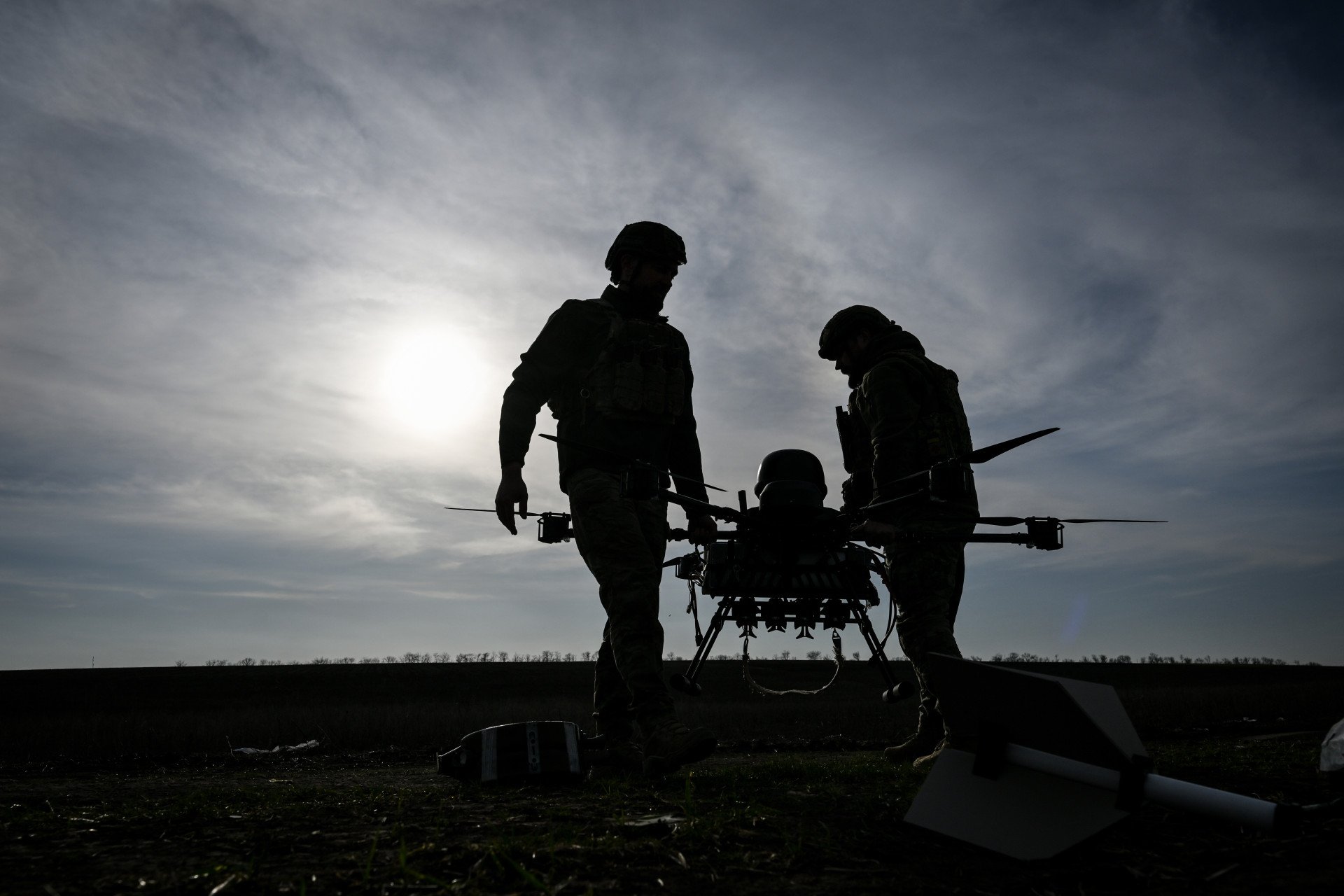
Europe is spending more on defence than at any point in decades, and its procurement systems favour expensive and long-cycle platforms. Ukraine has demonstrated a different model, with rapid iteration, low-cost systems, and constant battlefield adaptation.
 Prefer U24 Media on Google
- Authors




Global arms flows have increased by 10% between 2016-20 and 2021-25. European states have more than tripled their arms imports; total US exports of arms increased by 27%, which included a 217% increase in US arms exports to Europe. In 2025 alone, European NATO Allies spent an estimated $530 billion on defence, making Europe the world’s second-largest defence spender and placing it well ahead of Russia.
We bring you stories from the ground. Your support keeps our team in the field.
Four years of war in Ukraine and the recent war in the Middle East have demonstrated the changing nature of warfare and the central role of emerging defence technology, such as drone and counter-drone systems. Yet, European investments broadly continue to favour legacy equipment and established “national champions.” Defence procurement in European countries remains, in large part, directed at the top 10 companies, with less than a third of order volumes going to younger, smaller, and more innovative firms.
There is, in other words, a growing contrast between Europe’s continued attraction to exquisite, high-end platforms and Ukraine’s demonstrated preference for systems that are affordable, mass-produced, and iteratively improved. Recent comments by Armin Papperger, CEO of Rheinmetall, brought that tension into the open.
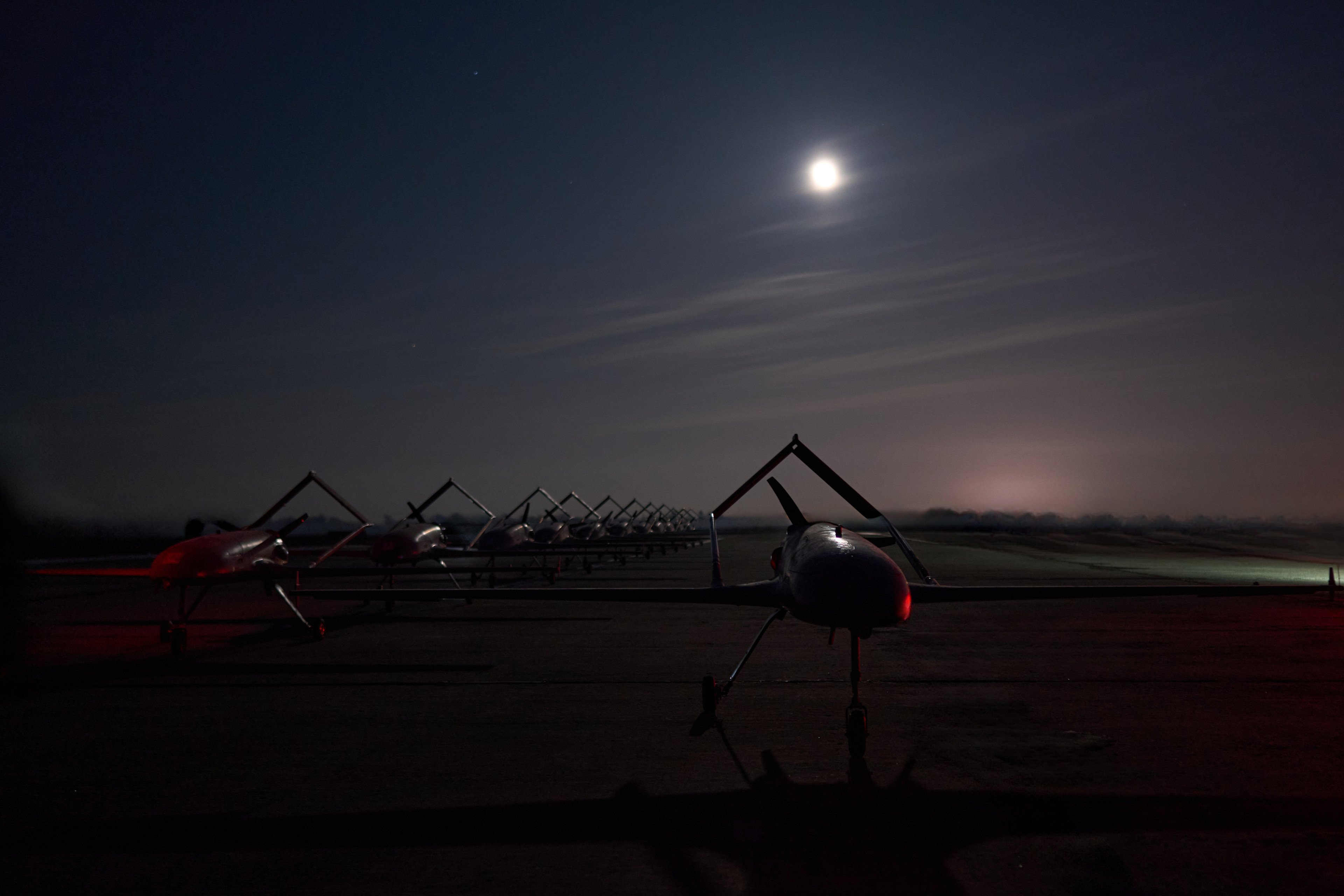
The real issue is not whether one rearmament model should replace the other, but how the two can be combined. Wartime innovation alone is not enough. Without certification, standardisation, manufacturing discipline, and pathways to scale, even the most effective battlefield innovations may struggle to endure. At the same time, Ukrainian defence-tech firms have developed forms of rapid iteration, operational learning, and combat credibility that Europe’s established defence industry cannot replicate. This article makes the case for why European defence primes and Ukrainian wartime innovators are mutually dependent and argues that deeper EU-Ukraine defence-tech cooperation is now a strategic necessity, not a gesture of solidarity.
Battlefield innovation as a design logic
Ukraine walks the innovation path out of necessity to survive. Without innovation, in a long-term head-to-head war with a country storing massive traditional weapons stockpiles, an economy ten times the size, five times the population, and the war being fought exclusively on Ukraine’s territory, Ukraine’s defeat would be guaranteed. For Ukraine, innovation by merging older technologies with cheap new inventions is a proven survival strategy.
When Ukrainians first faced Iranian-invented one-way attack Shahed drones that Russia uses to attack military and civilian targets across Ukraine because of their 2,000 km range, Ukrainians needed to respond quickly. The challenge was not technological: it’s just that the traditional air defence systems were never designed to confront the threat of a small, slow-moving, and hard-to-detect pilotless aircraft made of plastic. Every conceivable solution was tried to detect, track, and deactivate these threats before they reached population centres, and some decades-old technologies proved effective, like the Yak-52 trainer aircraft that first flew in 1976, Mi-8 gunship helicopters from 1968, and even the transport air carrier Antonov An-28 that’s been flying since 1969.
One would not think platforms like these would be an advantage in a modern war, but they found a renewed role away from the frontlines. Today’s must-have interceptor drones were conceived, tested, and improved years after unmanned aerial threats first appeared.
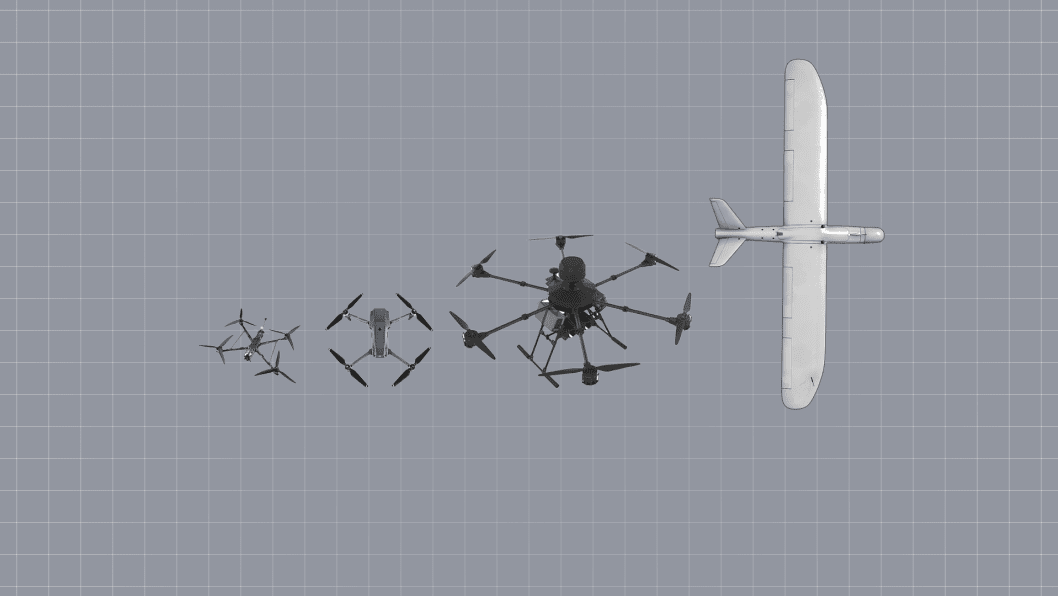
Ukraine’s rapid frontline innovation was driven by a bottom-up, experience-driven approach. When Russian First-Person-View (FPV) drones first targeted Ukraine, countermeasures were only partly available. Efforts to optimise existing jamming solutions and invent novel, more sophisticated ones were led by non-government organisations, charity foundations, the civil society volunteers, and the servicemen and women with engineering or entrepreneurial backgrounds themselves organised efforts to tweak and update existing jamming solutions and invent novel ones.
Realising the fall in effectiveness, the Russian army changed operational radio frequencies as a countermeasure, forcing Ukrainians to act in response (Andreika, 2025, Army Press University). This endless cycle of action, counter-action adaptation by the adversary, followed by a reaction to the adaptation is a defining feature of the conflict. Some call it innovation, but it’s the ability to keep up or increase the iteration speed of innovation that can open a window of opportunity to create a temporary battlefield advantage.
Below are the three necessary conditions for battlefield innovation acceleration:
1. Tight coordination and fast feedback.
Build it, test it on the front lines, get immediate feedback, fix it, upgrade it, and send it back into action the same week is the approach that keeps a given weapons system relevant longer, and helps to respond to the adversary’s countermeasures quickly. Hence the faster product-market fit, provided by constant combat testing and close alignment with the frontline needs.
2. Decentralisation and competition.
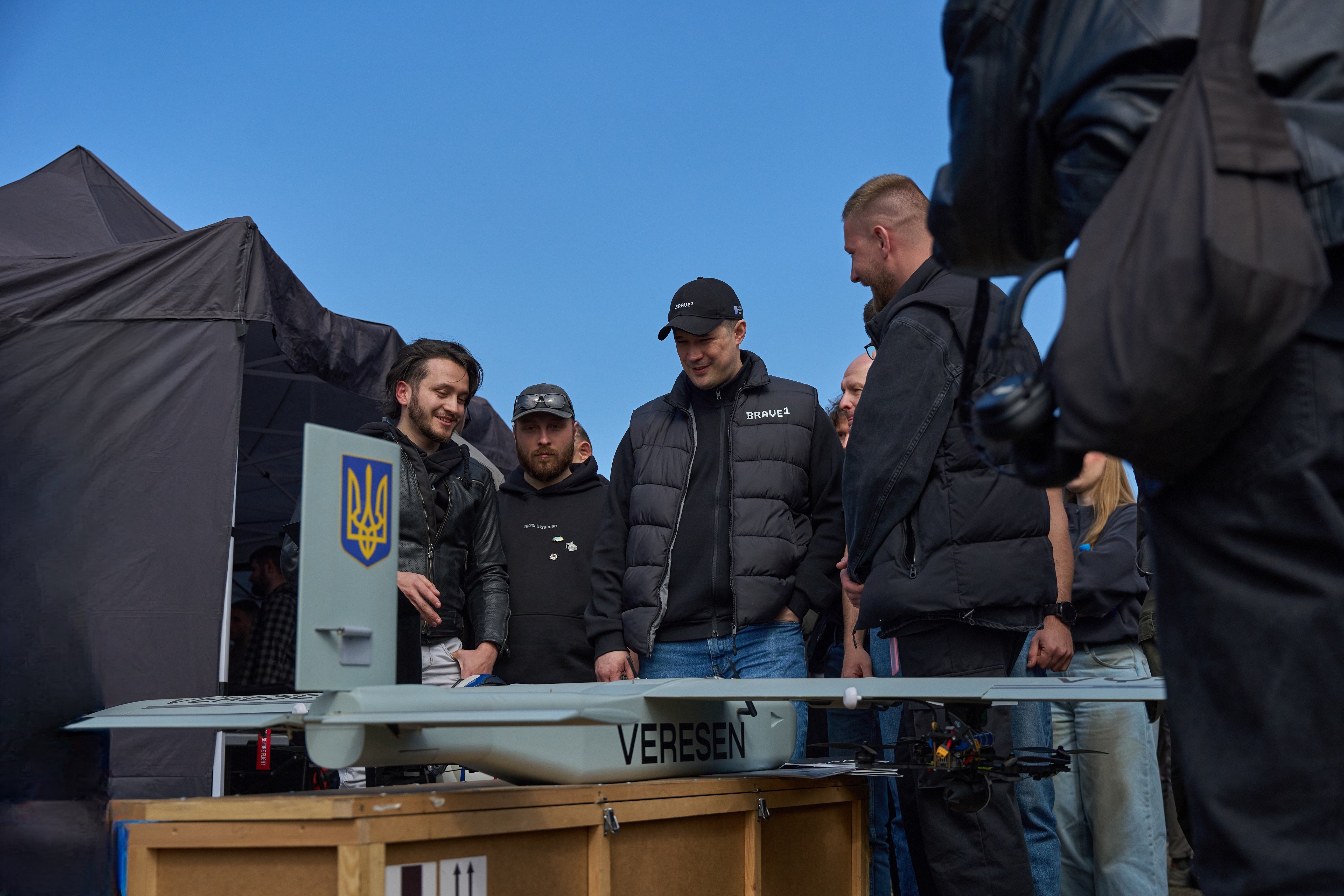
A variety of individuals, organisation, along with multiple funding sources in Ukraine are delivering the supply speed and iterative development advantage. The Ukrainian Ministry of Defence (MoD) teamed up with the Ministry of Digital Transformation to adopt the startup approach with the multifaceted Brave1 programme. The MoD has effectively encouraged competition by developing an “e-points” programme, where points awarded to military units for confirmed eliminated targets can be used on express reorders on the Brave1 Marketplace, part of Ukraine’s government-backed defence-tech platform connecting innovators, procurement agencies, and end-users (jokingly referred to as the “Amazon for drones”) with over 550 types of unmanned systems. The government does not select winners but rather certifies and funds priority needs projects—and not just from solutions built locally in Ukraine—all the while gathering data for analytics.
When describing the ‘Test in Ukraine’ programme, designed to encourage international companies to test their solutions in Ukraine, Defence Minister Mykhailo Fedorov described it as a programme that allows companies from partner countries to develop, test and refine technologies in Ukraine’s real operational environment, giving them access to battlefield conditions that cannot be replicated in laboratories and using Brave1 as the gateway for testing, joint development and scaling solutions that work in practice.
3. Low-cost and ‘good enough’.
Rapid weapon systems obsolescence deprioritises the perfect hardware that lasts 20 years and puts a premium on solutions that are good enough, mass-produced, and are quickly replaceable. Defending from swarms of cheap targets requires evenly low-cost and easily deployable counter systems producible on a mass scale.
In modern warfare, as demonstrated for years in Ukraine and recently in the Middle East, effective solutions and countermeasures must not necessarily be high-cost or high-tech. This notion is challenging the nature of modern deterrence.
Industrial success means scale and manufacturing, not innovation alone
Eventually, experimentation must give way to scaling proven solutions and systems, such as the low-cost interceptor drones that have been effective against first-generation Shahed drones. Their success is pushing Russia to adapt, replacing the older two-bladed pusher propeller and petrol engine design with a jet-powered version. But unless these interceptors are produced at scale, in numbers sufficient to cover current and future frontlines, even the old Shahed model will continue to remain a threat.
A proven solution in modern war environments requires both the traditional and the innovative models working together. For Ukrainian firms, partnership with European primes offers what wartime innovation alone cannot: certification, production discipline, access to NATO frameworks, and the capital-intensive capacity needed to scale proven systems. The Ukrainian drone ecosystem lacks standardisation, quality control, and sustainable scalability. In other words, while Ukrainians are currently stronger in adaptability, the reality of war prevents them from achieving industrial scale. This is where top European primes can join up Ukrainian defence innovators to form a symbiotic partnership that delivers six qualities which, taken together, constitute a defence industrial philosophy that prioritises reliability, interoperability and strategic resilience over speed or unit cost. These qualities are standardisation; quality assurance; long-term serial production; certification; integration into NATO frameworks; and the capacity for capital-intensive production, and prove their value not in peacetime procurement offices but in sustained operational conditions.
The six qualities are set out in more detail at the end of this article.
These matter as they reinforce each other in a system of mutually supporting strengths. Standardisation enables certification; certification enables NATO integration; NATO integration justifies long production runs and helps secure demand signals; long production runs absorb capital investment; capital investment funds the quality assurance infrastructure that makes standardisation and certification possible.
What remains is the challenge of developing a reliable process to convert successful innovations into affordable, reliable, mass-produced military systems that retain the modularity required for modification and upgrade.
Market access and partnerships as strategic imperatives
Delaying Ukrainian companies’ access to the EU market, and limiting EU access to Ukrainian innovators, carries strategic risks. An important one is the loss of know-how once high-intensity fighting falls below current levels. Ukraine’s defence-tech ecosystem has grown at remarkable speed, not only in the number of firms and their output, but also in the strength of the feedback loops linking the battlefield, procurement bodies, and industry. Europe’s leading defence firms risk losing more than additional production capacity. Rapid iteration under pressure, real-time user feedback, and the ability to adapt systems at the pace of war are not easily replicated in peacetime. Europe’s wider defence challenge is therefore not simply one of spending, but also of dependence, industrial lock-in, and slow adaptation. Strengthening Ukraine’s industrial base should form part of Europe’s response.
There have been meaningful recent efforts, led in part by the European Commission, to improve Ukraine’s access to the European market. The European Union’s Security Action for Europe (SAFE) instrument and the European Defence Industry Programme (EDIP), which includes dedicated support for Ukraine’s defence industry, are encouraging signs. Bilateral agreements are also increasing as European governments deepen direct engagement with the Ukrainian industry. This trend reflects a growing recognition that Ukraine possesses both operational experience and defence capabilities that European states increasingly want and need.
The strategic implication is that market access should not be treated as a narrow commercial question. It is also a matter of resilience, capability-building, and industrial adaptation. In this context, partnerships with Ukrainian firms are not simply desirable, but increasingly necessary if Europe is to absorb Ukrainian innovation, preserve battlefield-tested expertise, and reduce its own industrial rigidities. In defence, as in any other market, competitive pricing, proven performance, and operational relevance should matter.
From this perspective, partnerships, co-production, joint ventures, and selective acquisitions should be viewed as strategic opportunities. They can help integrate Ukrainian innovation into the European industrial base, diversify production footprints, and preserve battlefield knowledge that might otherwise fade as the war changes character.
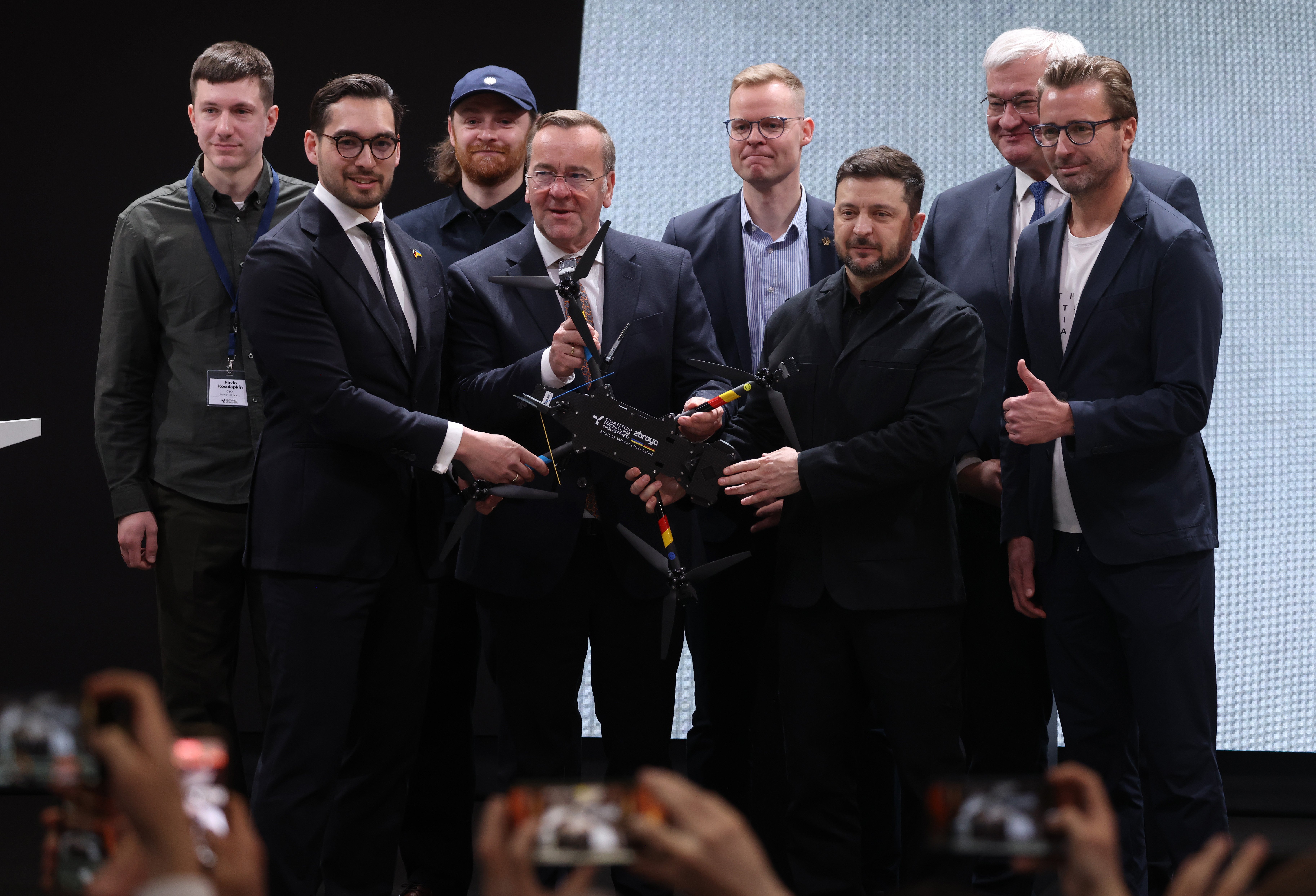
There are already signs of this shift. In December 2025, Quantum Systems and Frontline Robotics announced Quantum Frontline Industries (QFI), a German-Ukrainian joint venture established under the Ukrainian Ministry of Defence’s “Build with Ukraine” initiative. In April 2026, two additional joint ventures were established under the same initiative, further expanding industrial cooperation between Germany and Ukraine: Quantum WIY Industries, together with Ukrainian partner WIY Drones, and Quantum Tencore Industries (QTI), together with Tencore. These initiatives should be understood as the early foundations of a more integrated European defence-industrial model.
To conclude, Europe does not face a choice between legacy defence and wartime innovation, but the challenge of combining them. Ukraine offers the operational learning, iterative speed, and combat validation that Europe’s defence industry lacks, while European primes offer the scale, certification, production discipline, and integration pathways that Ukrainian innovators cannot fully build in wartime. The strategic task is therefore clear: deepen market access, co-production, and industrial partnerships now. Europe will adapt faster, spend better, and deter more credibly by building with Ukraine, not merely supporting it.
The six qualities
Top European primes can join up Ukrainian defence innovators to form a symbiotic partnership that delivers six qualities which, taken together, constitute a defence industrial philosophy that prioritises reliability, interoperability, and strategic resilience over speed or unit cost.
1. Standardisation. A foundational quality in defence manufacturing. When capabilities are built to uniform specifications, logistics chains are dramatically simplified, the parts are interchangeable, and lifecycle costs are lower.
2. Defence quality assurance. This goes far beyond what civilian manufacturing needs, covering not just end-product inspection but process audits, material traceability, non-destructive testing, statistical process control, and rigorous documentation chains. This enables reliability under extreme conditions: temperature ranges from arctic cold to desert heat, vibration, shock, electromagnetic interference and sustained high-tempo operational use.
3. Long-term serial production. Long production runs allow manufacturers to amortise tooling and setup costs across large unit counts, reducing per-unit cost significantly; accumulate process learning; yielding tighter tolerances and fewer defects over time; sustain a qualified industrial workforce with deep platform-specific expertise; and maintain supply chain relationships with tier-2 and tier-3 subcontractors. Critically, serial production preserves surge capacity.
4. Defence certification. Whether MIL-SPEC, STANAG, DO-178C or national acceptance processes, certification provides safety assurance from material failure, software fault, or electromagnetic incompatibility with its own subsystems, export control compliance to prevent uncontrolled proliferation of sensitive technology; liability and accountability about what was known, what was tested, and where responsibility lies; and lifecycle management, which imposes discipline on upgrade programmes.
5. Integration into NATO frameworks. This enables combined operations with shared fire control protocols, ammunition compatibility, and seamless coordination; collective procurement to pool demand, negotiate joint contracts, and achieve price advantage; industrial base integration, making the overall industrial base more resilient to disruption in any single country; and access to NATO infrastructure so that no platform may be technically capable but operationally isolated.
6. Capital-intensive production. Serious defence manufacturing (precision CNC machining centres, electron beam welding, explosive ordnance handling facilities, cleanrooms for electronics, test ranges) is expensive, and industrial quality is inseparable from capital investment. A defence industrial base that has made these investments provides genuine deterrence value beyond the weapons themselves. Workforce specialisation follows from capital intensity. Credible long-term commitment is signalled by capital investment. This credibility is essential for long-term government contracting relationships. If scale is the next challenge, then the next policy question is whether Europe is ready to give Ukrainian firms a lasting place in its industrial and procurement ecosystem.
This article was originally published by Friends of Europe on April 23, 2026.
Friends of Europe is a Brussels-based independent, non-profit think tank focused on EU policy analysis, dialogue, and debate.
Discuss this article:
-4a56a6b482ec132402c16ef6fcabf9a2.png)




-206008aed5f329e86c52788e3e423f23.jpg "Photo of Oleksandr Moiseienko")


-f3430f0449615e9897dff835086ac204.jpg "Ukraine Broke With a Soviet-Era Military System and Rebuilt It Around the Soldier")
-e126c16a85d580738cf2d57e760b80a3.jpeg "Photo of Vladyslav Greziev")