- Category
- World
Russian Ships Use First and Second World War Camo and Cages Against Ukrainian Drones
 Prefer U24 Media on Google
- Authors

-c439b7bd9030ecf9d5a4287dc361ba31.jpg "Photo of Katherina Popilnichenko")
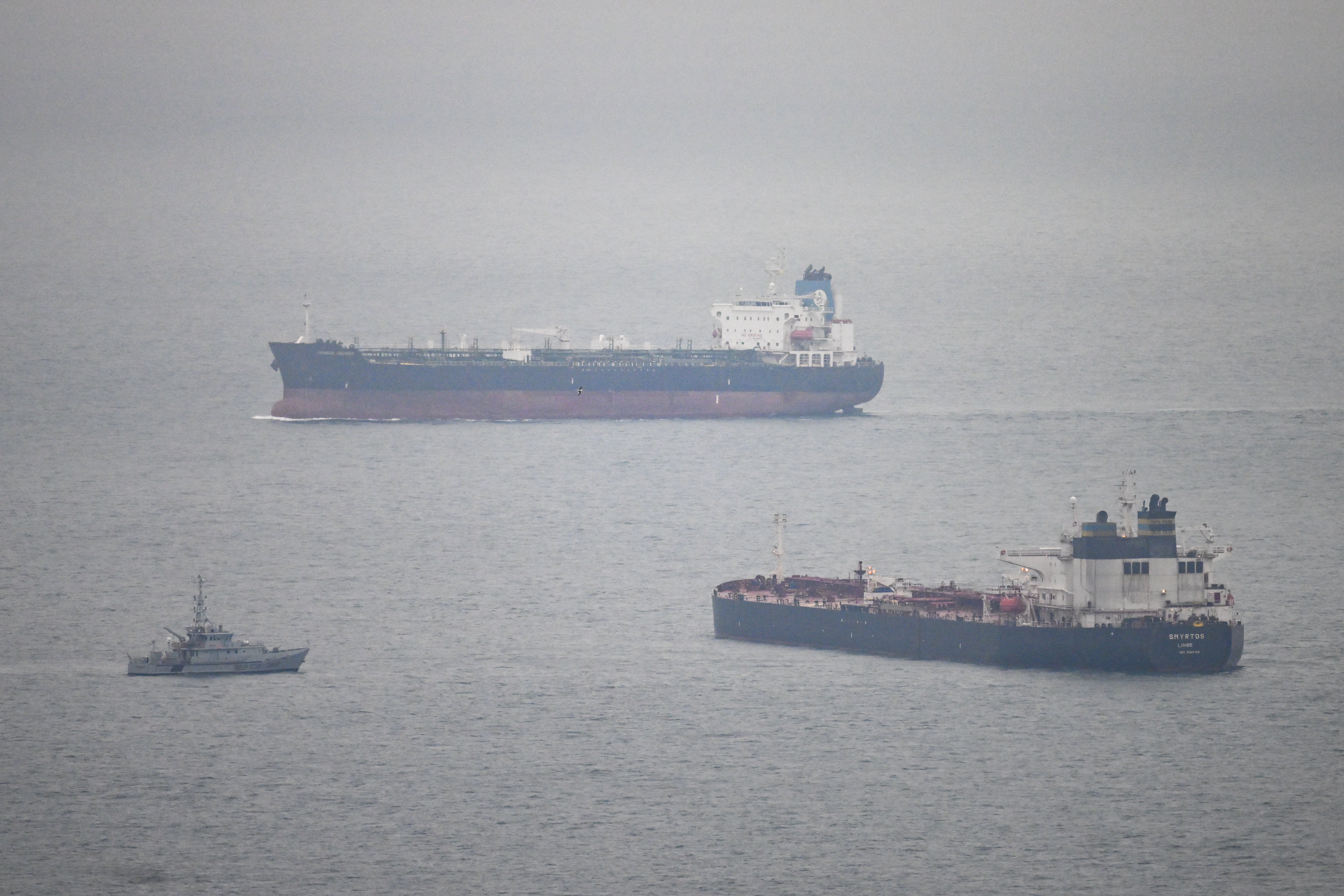
Russian commercial vessels navigating the Black Sea during Russia’s full-scale invasion of Ukraine have begun adopting physical and optical protective measures to guard against Ukrainian aerial and naval uncrewed systems.
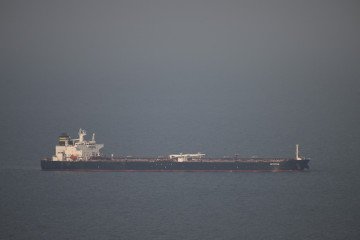
Shipping monitors and maritime observers recently identified several vessels carrying crude oil and general cargo, including a 28-year-old Suezmax tanker laden with approximately 1 million barrels of crude, as reported by The Insider on August 12.
We bring you stories from the ground. Your support keeps our team in the field.
Among these ships is a 119-meter cargo vessel built in 1987, which was spotted outfitted with protective netting, metal cage structures, and geometric camouflage patterns similar to dazzle designs utilized during the First and Second World Wars.
Shipping monitors and maritime observers recently identified several vessels, including a 28-year-old Suezmax tanker carrying approximately 1 million barrels of crude oil and a 119-meter general cargo ship built in 1987, outfitted with protective netting, metal cage structures, and geometric camouflage patterns similar to dazzle designs utilized during the First and Second World Wars.
Monitoring service TankerTrackers.com spotted the Sierra Leone-flagged Suezmax crude oil tanker CARUZO passing through Istanbul with around 1 million barrels of Russian crude oil.
The 28-year-old vessel is subject to sanctions imposed by the United Kingdom, the European Union, New Zealand, Canada, Switzerland, and Australia, though it is not listed on US sanction registers.
Environmental group Greenpeace identifies the vessel as part of the Russian shadow fleet, while Ukrainian military intelligence states that CARUZO has been involved in exporting Russian oil products outside G7 embargo guidelines and price caps since at least October 2023, including ship-to-ship transfers near the Kerch Strait in January 2024.
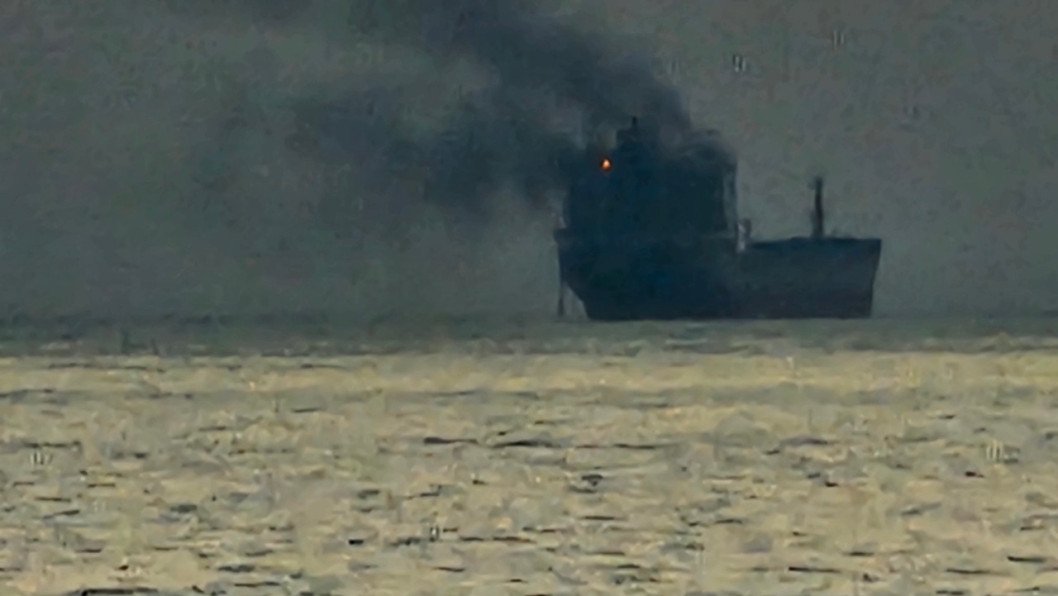
Crew members on board CARUZO completely enclosed the vessel's superstructure with protective netting, essentially enclosing the crew spaces.
The ship also features metal frame structures hanging from both sides of the stern section, which analysts indicate are designed to protect the engine room from attacks by explosive sea drones.
According to tracking data from Starboard Maritime Intelligence, the ship has regularly turned off its Automatic Identification System upon entering the Black Sea since July 2025 while recording static positions in the Bosphorus for months. Beyond the Black Sea, records list CARUZO visiting ports and terminals across Turkey, China, India, Malaysia, Morocco, Egypt, and Vietnam.
In a separate observation, Turkish merchant captain Murat Fırtına documented a distinct defensive modification on the Russian-flagged cargo ship MECHTA S in the port of Haydarpaşa on August 10.
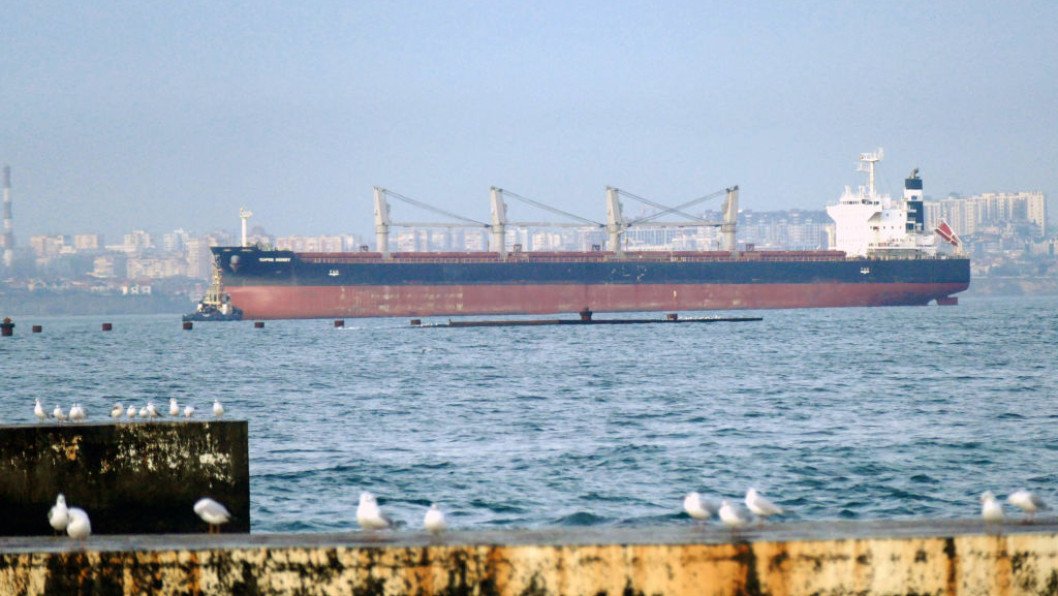
The 119-meter vessel, built in 1987 as Sormovskiy-3059 and designed for Black Sea and river-sea transport, was photographed displaying bold geometric shapes in shades of blue, dark blue, white, and gray across its hull, bow, stern, and superstructure.
The design mirrors the dazzle camouflage historically used during World War I and World War II to visually disrupt a ship's outline, obscuring its size, orientation, speed, and vulnerable impact points from optical targeting systems. Commenting on the vessel's appearance, Fırtına noted that older photographs of MECHTA S showed standard painting without geometric shapes.
"If considering that today even merchant ships in the Black Sea face threats from unmanned aerial vehicles and naval drones, it cannot be ruled out that such painting has not only an aesthetic purpose, but also represents military camouflage designed to complicate optical detection of the vessel and targeting," he stated, adding, "But it must be admitted: seeing a merchant ship in 2026 in the middle of Istanbul, in Haydarpaşa, looking as if it came off the pages of wartime history, is quite unusual."
The vessel MECHTA S is not currently included in official sanction lists or shadow fleet registries. Tracking records from Starboard Maritime Intelligence spanning 3,294 days—roughly nine years—indicate that Novorossiysk is the ship's most frequently visited port, with 83 recorded port calls totaling over 72 days.
The vessel recently underwent a 26-day maintenance period from July 15 to August 10 in Yalova, Turkey, before appearing in Istanbul.
Starboard data shows that the ship lacked active AIS tracking for approximately 930 days and 6 hours, representing about 28% of the monitored timeframe, while also lacking verifiable insurance coverage through recognized P&I clubs.
Earlier, Russia was seen fitting anti-drone netting to an FSB Coast Guard Project 22460 Okhotnik-class patrol ship based in temporarily occupied Crimea. The improvised protection reflected a broader trend of adding physical drone defenses to Russian naval vessels as Ukraine expanded its use of aerial and maritime drones.
Discuss this article:
-4a56a6b482ec132402c16ef6fcabf9a2.png)