- Category
- War in Ukraine
Is Russia Preparing Environmental Terrorism in Europe?
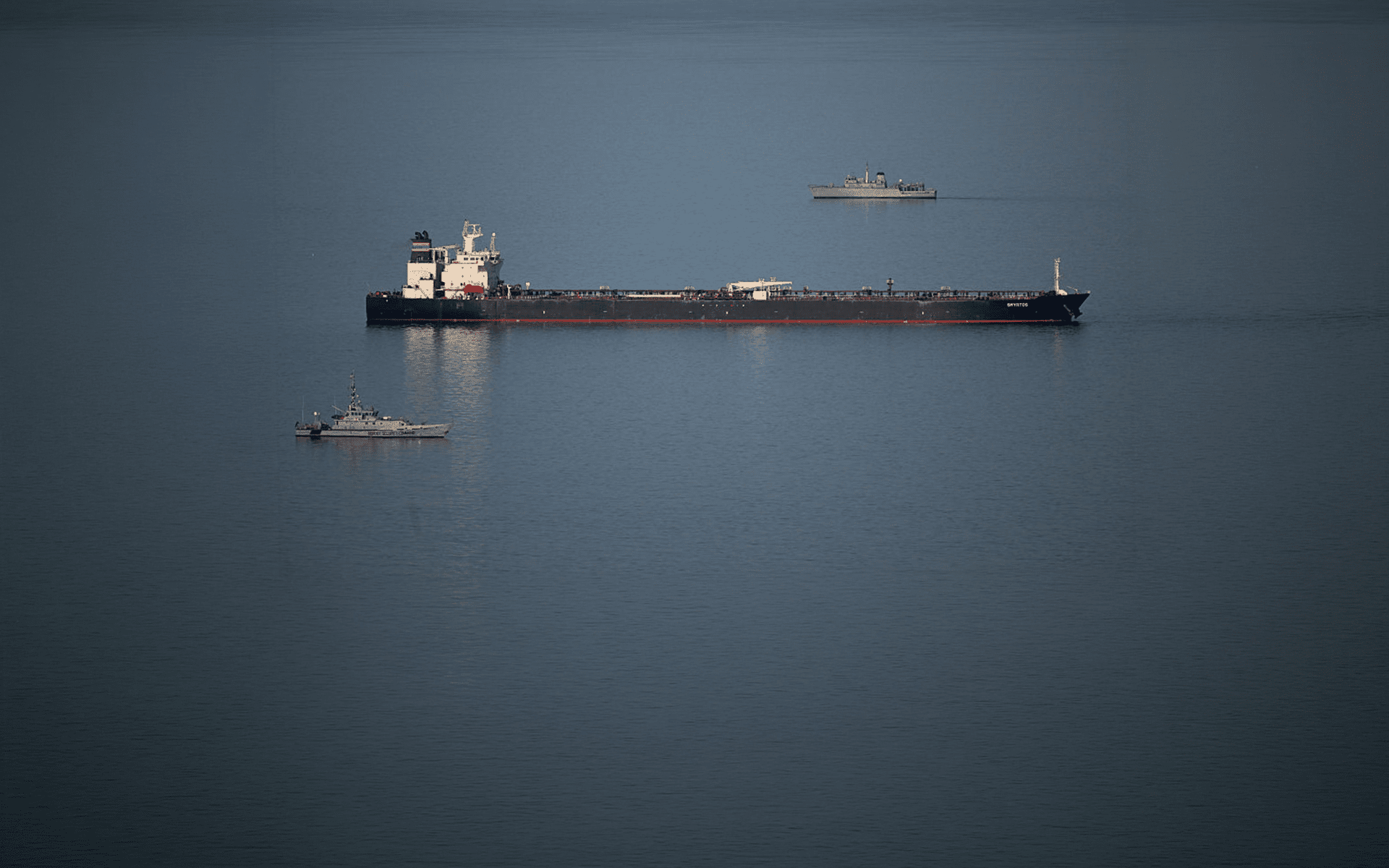
When the UK detained a Russian shadow fleet tanker in June, Moscow’s response wasn’t limited to diplomatic outrage. Senior Russian officials openly floated the idea of destroying their own vessels.
 Prefer U24 Media on Google
- Authors



-2ad54489d1370584a8ac09f1d3b4c082.jpg "Photo of Dmytro Ananyev")
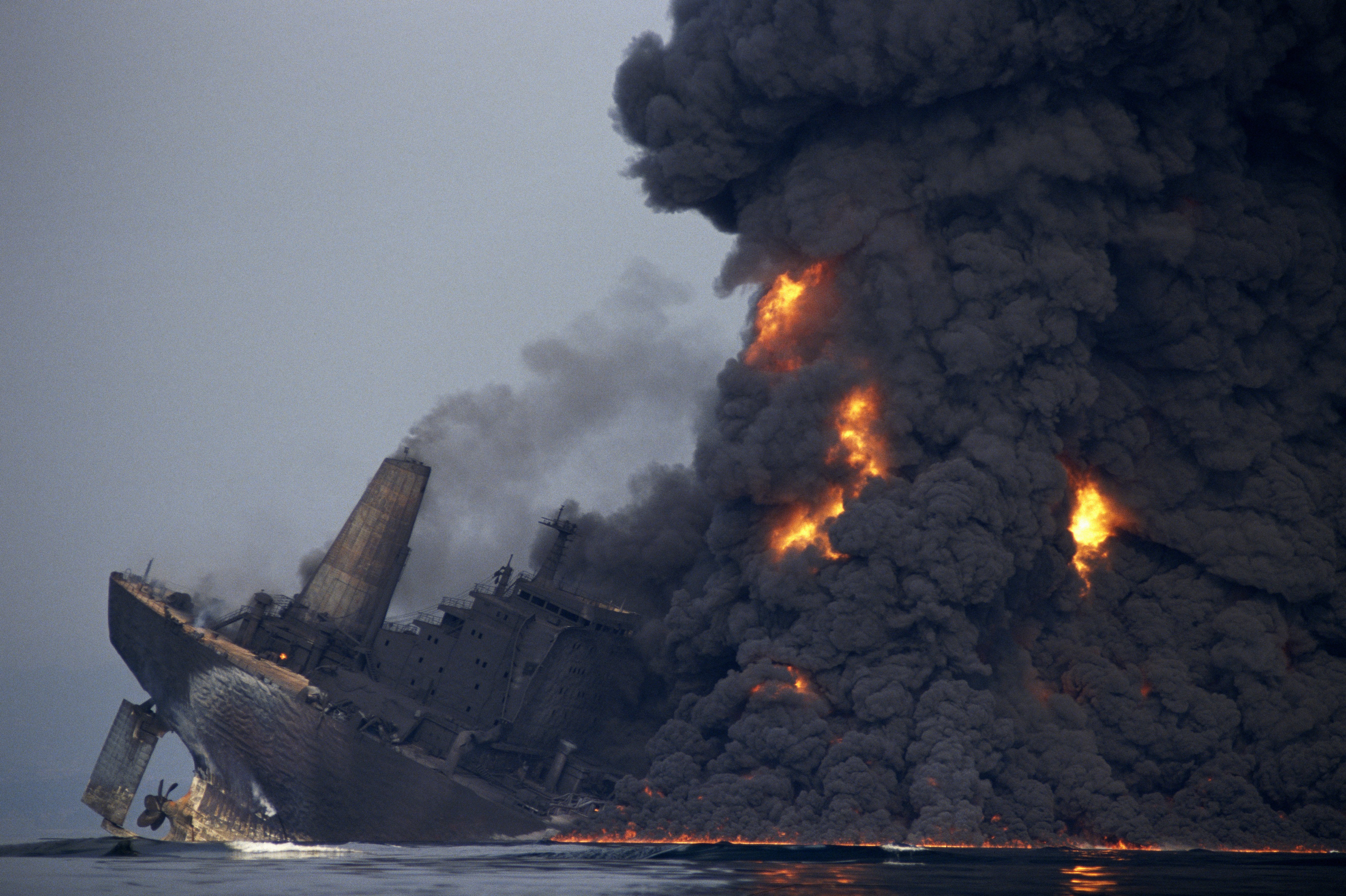
A sanctioned tanker carrying Russian crude oil exploded off the coast of Oman in August 2026, leaving behind an oil slick covering nearly 400 square kilometers. While investigators have yet to determine what caused the blast, it was yet another reminder of the environmental risks posed by Russia’s aging shadow fleet. But the greater danger may no longer be accidental spills alone.
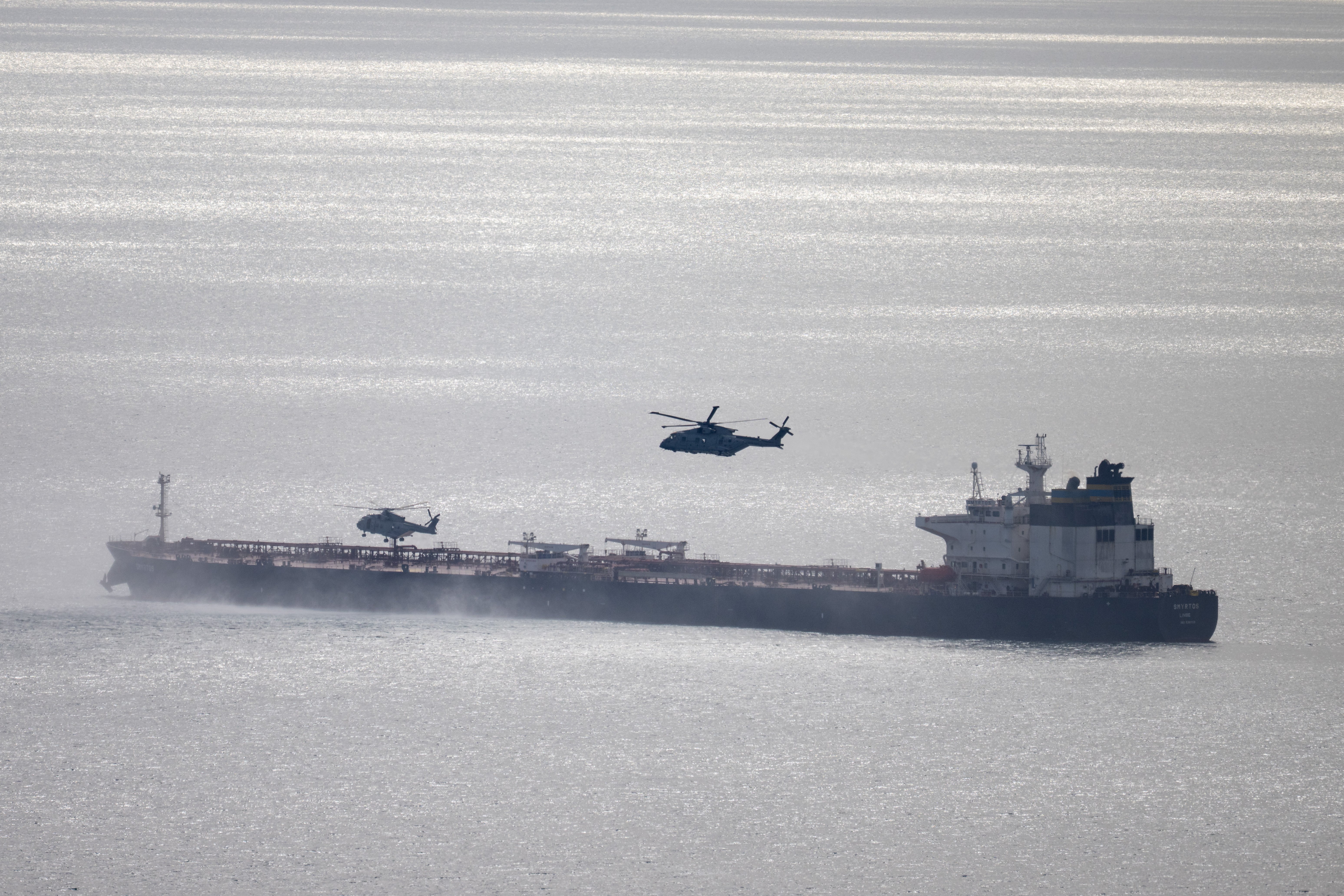
Earlier, in June, the British Royal Navy detained the Russian shadow fleet vessel Smyrtos. “This operation delivers yet another blow to Russia and reminds those fueling Putin’s war in Ukraine that they cannot hide,” then–UK Prime Minister Keir Starmer said.
We bring you stories from the ground. Your support keeps our team in the field.
The incident prompted several high-profile statements from Russian officials. That same day, Senator and former Roscosmos chief Dmitry Rogozin said Russia should mine and destroy its own tankers if they were detained by European countries. In addition, Russian presidential aide and Chairman of Russia’s Maritime Board Nikolai Patrushev claimed that vessels bound for Russian ports were being mined in European harbors.
This article examines how this form of coercion works, whether Russia is prepared to act on its threats, and how Europe can respond without weakening sanctions pressure.
Why Russia’s shadow fleet is under growing pressure
Russia’s shadow fleet remains the primary means of circumventing the oil price cap and sanctions on the maritime transport of Russian crude. Any threat to this logistics network is ultimately a threat to Russia’s long-term ability to finance its war.
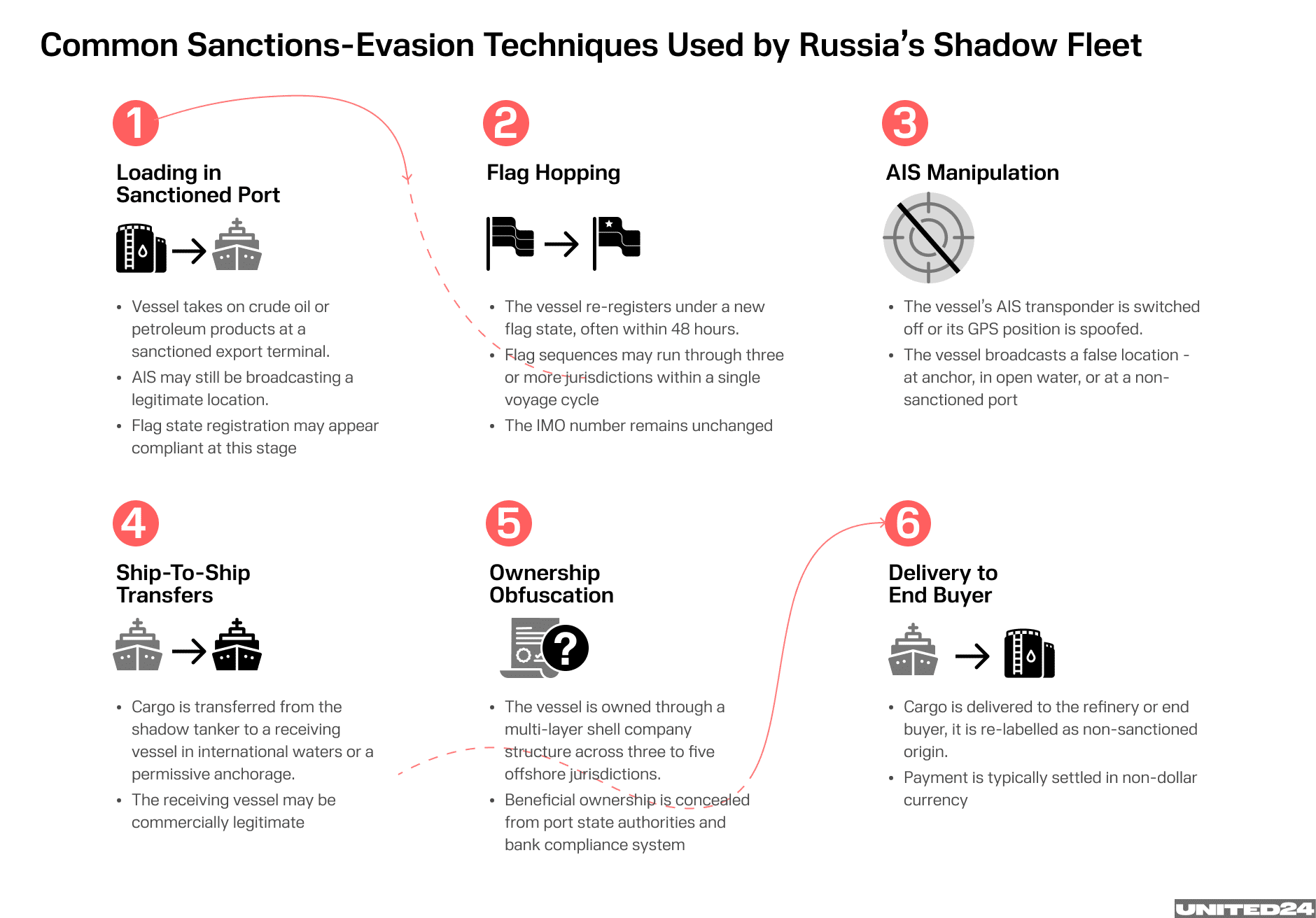
In the early stages, Moscow relied on legal and organizational methods to circumvent sanctions while maintaining export flows without direct confrontation with Western governments.
These measures include widespread reflagging of vessels under flags of convenience, transferring tankers to offshore companies with opaque ownership structures, creating multilayered corporate networks, using fraudulent or questionable insurance providers, and regularly changing vessel names and operators. Russia also resorted to diplomatic pressure, accusing the West of “piracy” and violating international maritime law, including the UN Convention on the Law of the Sea, which guarantees the right of innocent passage through territorial waters.
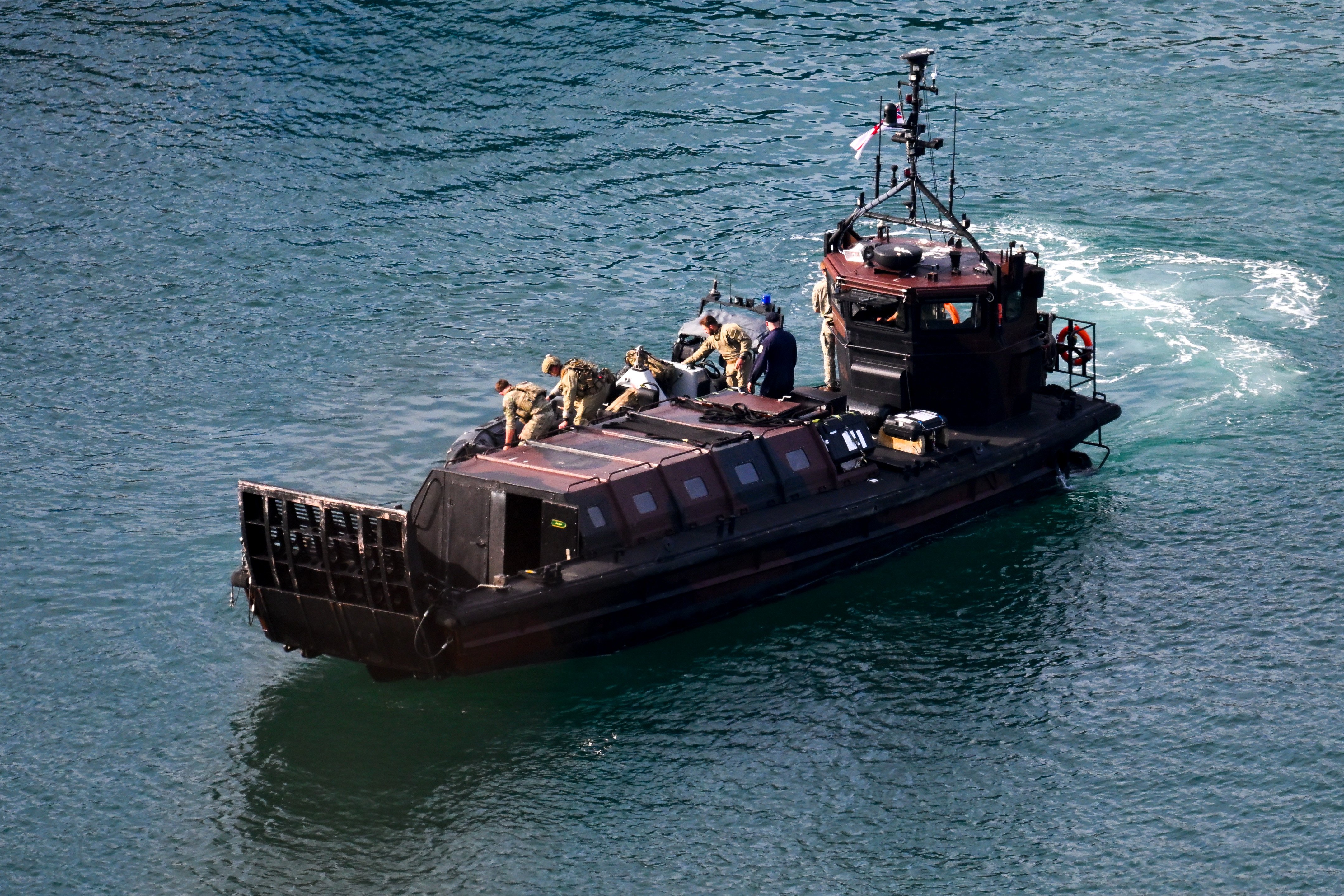
The situation began to shift as European countries moved beyond sanctions and adopted more active enforcement measures at sea, including detaining vessels and transferring confiscated ships to Ukraine. Although these measures alone are insufficient to significantly curtail the shadow fleet, they have become a growing challenge for Moscow. Each detained vessel costs Russia hundreds of thousands of dollars while inflicting reputational damage through disrupted deliveries and breached contracts.
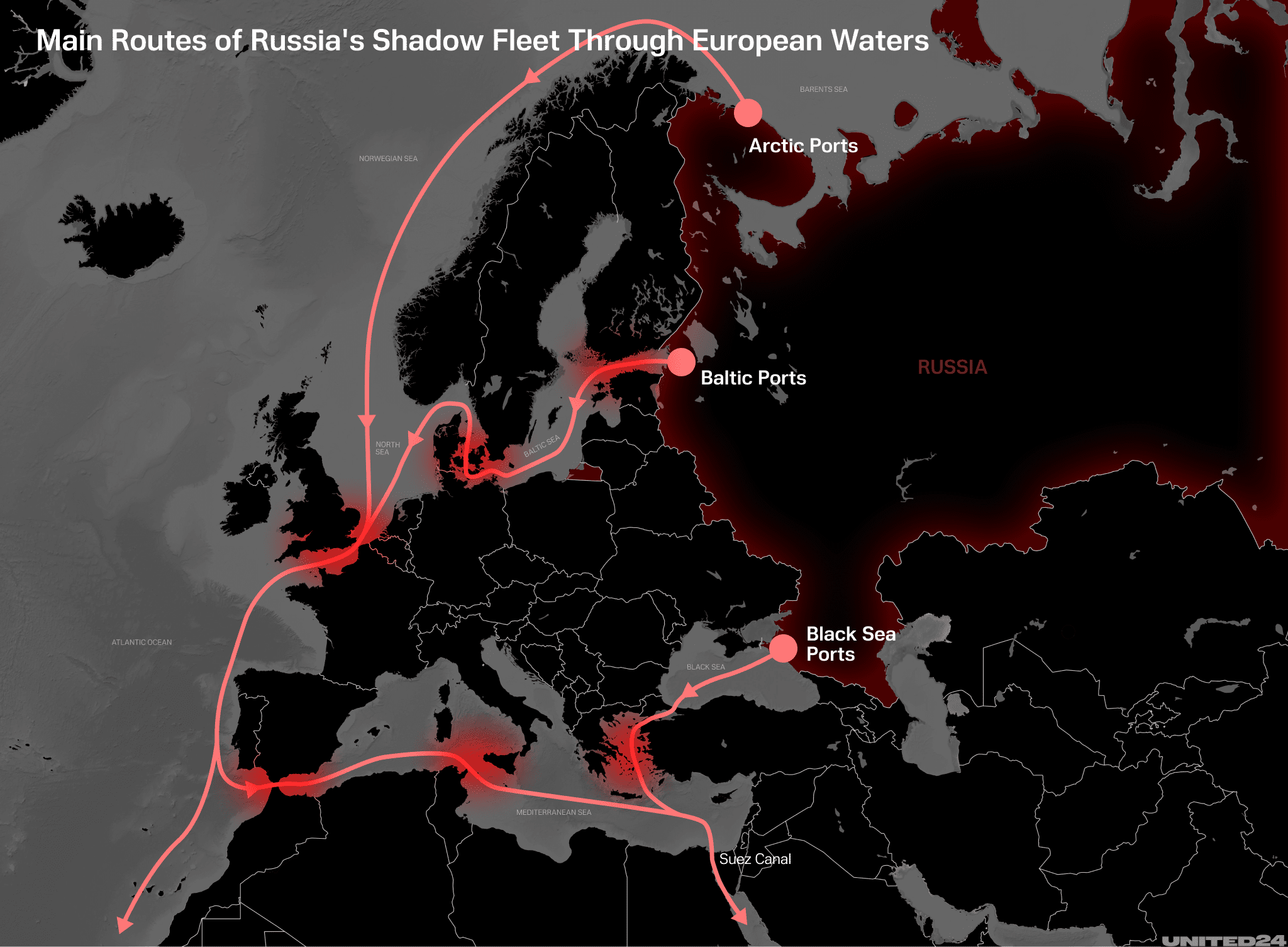
In February 2026, Patrushev warned that Russia could deploy its navy to protect affiliated vessels from what he described as “Western piracy,” hinting that Russian forces might also take action against ships sailing under European flags. Russia did, in fact, dispatch a Black Sea Fleet frigate to escort shadow fleet vessels, enabling them to transit the English Channel without being detained, while UK naval forces limited themselves to monitoring their movements.
However, providing full military escorts for every shadow fleet tanker—estimated at hundreds—is not a practical option. After Britain single-handedly detained and towed the Smyrtos to its coast on June 14, a Telegram channel affiliated with the Russian Ministry of Defense described the incident as “a precedent” demonstrating that “conditions for the shadow fleet are becoming increasingly difficult.” The channel acknowledged that escorting every vessel was impossible because “this is an exceptional measure that cannot be scaled up: Russia simply does not have enough warships to escort every commercial vessel through every dangerous strait.” At the same time, it argued that a solution must be found because “next, even countries that have never had a capable coast guard will learn how to detain defenseless ships.”
Legal remedies have also proven ineffective. Even when a vessel is eventually returned to its owner, the reputational damage and increased insurance costs have already been incurred. Economic countermeasures have likewise failed to produce meaningful results, as Europe independently reviews and adjusts its restrictions while Russia lacks sufficient leverage to force European governments to abandon pressure on the shadow fleet.
By June 2026, the Kremlin had effectively exhausted the practical tools available to protect its shadow fleet from inspections and detentions.
How environmental blackmail fits Russia’s strategy
Having exhausted other effective means of influence, Russia has begun accusing Europe of piracy while threatening environmental terrorism—specifically, by suggesting it could blow up tankers off Europe’s coastline if further vessels are detained. In doing so, the Kremlin seeks to raise the cost of pressure on its shadow fleet and compel European countries to abandon more assertive enforcement measures. In effect, Moscow is using the threat of an environmental disaster as a deterrent against Europe.
For the Kremlin, environmental blackmail offers a number of political and economic advantages. An environmental disaster would create domestic political pressure within European countries. If an oil spill were to occur following the detention of a tanker, opposition parties, local communities, businesses, and the media could ask their governments whether the operation had been worth the risk. This is precisely what Russia is counting on: turning sanctions enforcement into a domestic political liability for European governments.
In this way, the threat itself can serve as a deterrent. European authorities may begin acting more cautiously—not because they lack legal grounds to detain vessels, but because every detention could be viewed as a potential trigger for an environmental catastrophe.
The risk of an environmental disaster also provides Russia with opportunities for information manipulation. Patrushev, for example, has already advanced claims about “European mines.”
“It is no secret that commercial vessels regularly arrive at our ports with magnetic mines attached to their hulls, effectively turning them into floating bombs. We detect these mines, neutralize them, but the very fact that this is happening is obvious,” he said.
Such statements allow Moscow not only to obscure its own responsibility and potentially conduct false-flag operations, but also to argue that Europe itself “provoked” or “orchestrated” any resulting disaster. Through these threats, the Kremlin seeks to cultivate the image of an actor willing to respond disproportionately if pressure on its shadow fleet continues. The goal is to force European governments to consider not only the legal consequences of detaining vessels, but also the risk of a deliberately engineered environmental crisis—one for which Russia would attempt to blame the West in advance.
At the same time, carrying out an actual act of environmental sabotage would entail significant political and reputational risks for Russia. Such an attack would almost certainly be linked to the Kremlin, further undermining its already weak claims of non-involvement and giving Europe additional justification to increase, rather than ease, pressure on Moscow. This suggests that Russia’s objective is not the catastrophe itself, but the coercive effect of the threat.
The effectiveness of these threats also stems from Europe’s experience with a similar disaster. In 2002, the tanker Prestige, carrying 77,000 tons of heavy fuel oil, suffered hull damage during a storm and sank off the coast of Spain. Oil from the wreck drifted for weeks, contaminating the coastlines of Spain and France, with approximately 1,900 kilometers (1,180 miles) of shoreline ultimately affected. The disaster dealt a severe blow to fisheries, tourism, port infrastructure, and local communities. It is this memory—and the fear it evokes—that the Kremlin is seeking to exploit.
Russia has used environmental blackmail before
Threatening an environmental catastrophe at sea is not the first time Russia has used the risk of a large-scale crisis as a tool of political coercion. The same approach has been employed repeatedly in other domains.
The Russian-occupied Zaporizhzhia Nuclear Power Plant has become a clear example of nuclear blackmail. By maintaining control over Europe’s largest nuclear power plant, Russia has repeatedly created dangerous situations around the facility, forcing international actors—from the International Atomic Energy Agency (IAEA) to individual governments—to factor the risk of a nuclear accident into every decision concerning the plant. The IAEA continues to document ongoing safety risks, including the vulnerability of the plant’s external power supply, while condemning any attempts at nuclear coercion.
The 2022–2023 Black Sea Grain Initiative demonstrated the same logic in the economic and humanitarian spheres. Russia used the threat to the food security of dozens of countries dependent on Ukrainian grain as leverage to extract concessions and, after withdrawing from the agreement, as a means of pressuring global food markets. Ukraine, however, gradually established an alternative maritime export corridor, while Russia lost part of its ability to dictate the terms of Black Sea exports unilaterally.
Russia’s energy blackmail of Europe in 2022 offers another example. The reduction and eventual suspension of gas supplies was intended not merely to inflict economic damage, but to intimidate European governments with the prospect of a winter energy crisis and pressure them into reconsidering their support for Ukraine. In response, Europe accelerated its transition away from Russian energy imports, treating energy dependence as a security issue rather than solely an economic one.
In each of these cases, Russia sought to alter its opponents’ behavior through intimidation. Environmental blackmail at sea is another manifestation of this broader strategy. While such threats may have a short-term impact, Europe will most likely develop mechanisms over time to reduce their effectiveness.
How Europe can counter Russia’s environmental blackmail
The central danger of Russia’s environmental blackmail is that Moscow does not actually need to carry out its threat to achieve a political objective. For the Kremlin, it is enough if European governments begin limiting their own actions against the shadow fleet out of fear of a potential oil spill.
If Europe slows or scales back interceptions of shadow fleet vessels following Russian threats to blow up tankers, Moscow will conclude that environmental coercion works. Every future tightening of sanctions, detention of a vessel, or attempt to confiscate cargo could then be accompanied by new threats—not only of oil spills, but of broader maritime escalation.
Europe’s response should not be to retreat from pressure on the shadow fleet, but to prepare for the possibility of Russian terrorist-style provocations. The risk of Russian sabotage must certainly be taken into account, but it should not diminish the effectiveness of enforcement. In other words, environmental risk is an argument not against detentions, but in favor of conducting them more professionally, with better coordination and greater preparedness for Russian disinformation campaigns. Such a response should include the following measures:
At the operational level, authorities should involve explosive ordnance disposal specialists, inspect both the vessel’s hull and cargo before towing, and establish protocols for safely handling suspicious objects found on board.
At the legal level, Europe should develop a unified framework for the systematic—not ad hoc—handling of shadow fleet vessels, ensuring that detained ships do not return to commercial operations after completing only formal legal procedures.
At the coordination level, the European Union, NATO, and regional security frameworks—including the Joint Expeditionary Force (JEF), coastal states, maritime agencies, and law enforcement authorities—should coordinate within a single mechanism for investigating maritime incidents.
Ultimately, Europe’s response must be preventive in nature. If these measures are fully implemented, transporting Russian oil will become progressively more expensive, more risky, and increasingly toxic from both a commercial and political standpoint.
Russia doesn’t even need to blow up a tanker
Having exhausted practical means of protecting its shadow fleet—from diplomatic pressure to naval escorts—Russia has reverted to its familiar strategy of coercion, using threats of an environmental catastrophe to deter Europe from intensifying pressure.
At the same time, Russia’s objective is intimidation rather than an actual environmental disaster. The greatest danger lies in accepting the logic of this coercion. If European governments begin limiting enforcement actions against the shadow fleet out of fear of an oil spill, the Kremlin will conclude that this model of pressure is effective.
Europe’s response should therefore focus on systematic preparedness for possible Russian provocations. Only by doing so can this form of environmental blackmail—terroristic in both its logic and intent—be prevented from undermining sanctions enforcement and instead become another argument for strengthening it.
This article was prepared as part of the cooperation between UNITED24 Media and the international analytical and information community Resurgam.
Discuss this article:


-c439b7bd9030ecf9d5a4287dc361ba31.jpg "Photo of Katherina Popilnichenko")
-72b63a4e0c8c475ad81fe3eed3f63729.jpeg "Photo of Cyril Barabaltchouk")