- Category
- World
Europe vs. Russia’s Shadow Fleet: Why Detentions Alone Aren’t Enough
The fight over Russia’s war financing is increasingly being waged at sea, and Europe can no longer afford to view Russia’s shadow fleet as a regulatory problem. Is it prepared to disrupt that system rather than just monitor it?
 Prefer U24 Media on Google
- Authors

-2ad54489d1370584a8ac09f1d3b4c082.jpg "Photo of Dmytro Ananyev")
Russia created a shadow fleet to circumvent EU sanctions and preserve revenues used to finance the war and conduct hybrid warfare against Europe. In other words, the shadow fleet has long since become a key component of Russia’s military-political machine, while the EU still largely operates within a peacetime logic: checking flags, documents, insurance, and the technical condition of vessels. This limitation defines the main weakness of Europe’s response to the shadow fleet.
How does Russia’s shadow fleet help finance the war?
The economic significance of this issue increased after EU sanctions began restricting Russia’s oil and gas revenues. As of early February 2026, EU sanctions had reduced the Kremlin’s oil and gas revenues by 44%, falling to $2.9 billion in February compared to $5.2 billion in February of the previous year. The budget deficit for January–February 2026 alone reached $47.6 billion, compared with the $52.2 billion deficit planned for the entirety of 2026.
Between January and April, the deficit had already reached $81.6 billion. At the same time, the conflict in Iran caused major disruptions to regional energy supplies, triggering a sharp increase in the price of Urals crude from $53–56 per barrel to $110. Against the backdrop of rising prices, the United States suspended part of its sanctions against Russia, allowing it to increase oil-export revenues in March 2026 by approximately $9.3 billion compared with February, bringing total revenues to $19 billion.
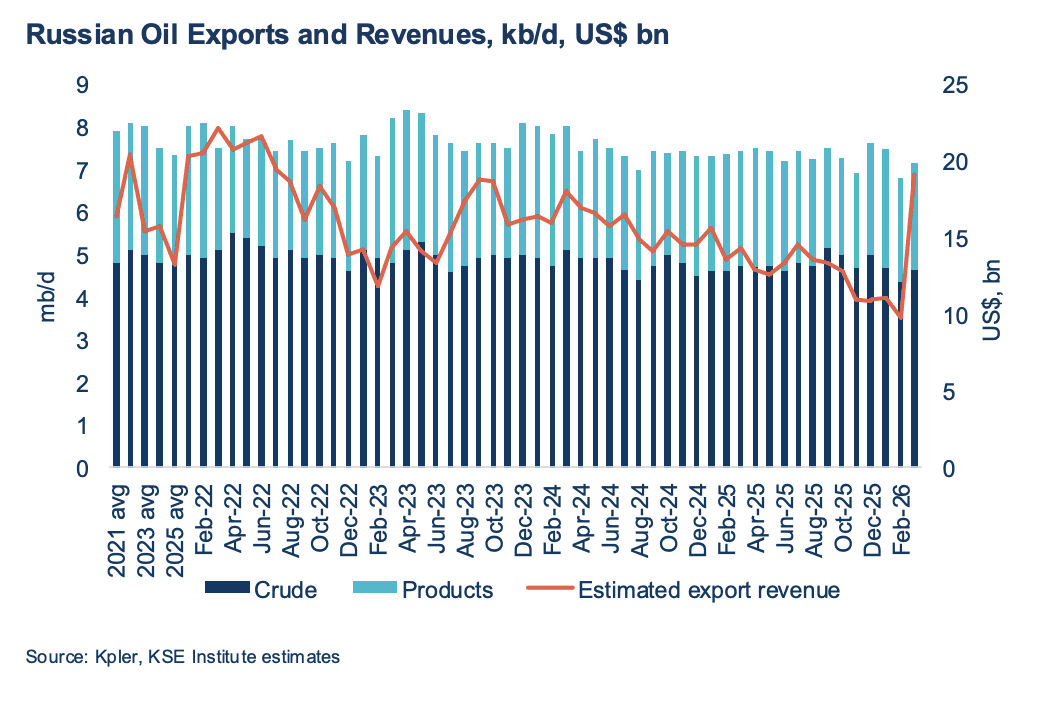
This poses a significant threat to both Ukraine and the EU, which now bears most of the responsibility for supporting Ukraine and maintaining pressure on Russia. It is therefore critically important for the EU to find ways to restore pressure on the Russian economy. One such solution is active countermeasures against Russia’s shadow fleet, which Moscow uses to sustain revenues from oil and gas exports.
During preparations for the EU’s 20th sanctions package, policymakers discussed imposing a complete ban on maritime transportation by Russian vessels carrying oil. Although that measure was not adopted, the issue has resurfaced during discussions of the next sanctions package. However, beyond sanctions pressure, Europe has also begun taking more decisive actions. It is therefore worth examining how efforts to counter Russia’s shadow fleet have evolved.
Arrested shadow fleet vessels
A list of arrested vessels associated with Russia’s shadow fleet includes detentions between March 2025 and May 2026.
Date | Country | Vessel | Reason for detention | Outcome |
March 21, 2025 | Germany | Eventin tanker (Panamanian flag) | Risk of an oil spill and loss of navigational control. | The tanker and its cargo were seized and confiscated in favor of Germany. |
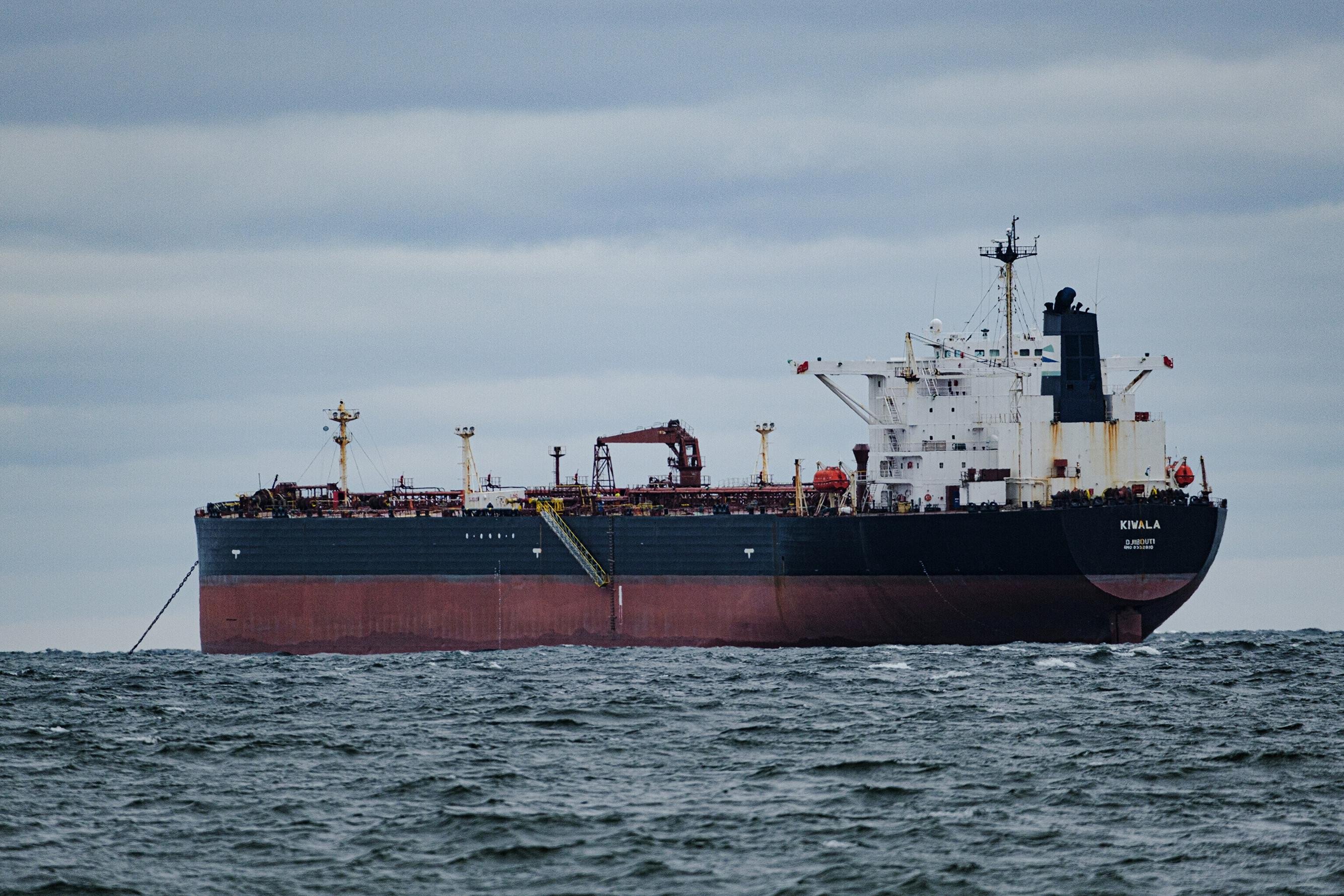
April 11, 2025 | Estonia | Kiwala oil tanker | Inspection of documents and legal status due to the absence of a flag. | Djibouti confirmed the vessel’s registration, and the tanker was released. |
September 28, 2025 | France | Kiwala/Boracay oil tanker | Investigation launched for “failure to provide proof of nationality/flag” and “refusal to comply with an order.” | The vessel was allowed to leave French waters, while the captain was arrested for violations discovered during the inspection. |
January 7, 2026 | United States | Marinera oil tanker | Violation of US sanctions against Venezuela. | The tanker was confiscated through court proceedings after arriving in the United States. |
January 7, 2026 | United States | Bella 1/Sophia oil tanker | US military says the vessel was operating in international waters and engaged in illegal activities in the Caribbean Sea. | The vessel was returned to Venezuela without explanation. |
January 22, 2026 | France | Grinch oil tanker | The vessel was sailing without a flag. | France was forced to release the vessel because of limitations in its domestic legislation. |
March 1, 2026 | Belgium (with French support) | Ethera oil tanker | Suspected use of a fraudulent flag. | Released on €10 million bail following an investigation. |
March 6, 2026 | Sweden | Caffa bulk carrier | Use of another state’s flag. | After a lengthy investigation, Swedish prosecutors announced the vessel’s arrest. |
March 12, 2026 | Sweden | Sea Owl tanker | Suspected use of another state’s flag. | The vessel has remained anchored near Trelleborg since March 12, 2026. On May 15, prosecutors launched a new investigation and detained another crew member suspected of using forged documents. |
April 3, 2026 | Sweden | Flora 1 tanker | In addition to allegations involving a fraudulent flag and operational violations, the vessel was suspected of causing an oil spill and committing an environmental offense. | After a brief investigation failed to uncover evidence supporting the allegations, Sweden released the vessel. |
May 6, 2026 | Sweden | Jin Hui tanker | Suspected use of a fraudulent flag and links to the shadow fleet. | Towed to a Swedish port pending investigation. |
Expanding sanctions on Russia’s shadow fleet
The British Royal Navy played an important role in many vessel-detention operations, either coordinating missions or providing intelligence. One example is cooperation with Scandinavian and Baltic countries within the Joint Expeditionary Force (JEF).
On March 26, member states issued a joint statement on strengthening cooperation against the shadow fleet. Following arrests and the confiscation of a cargo vessel in Swedish waters, Russian ships were forced to alter their routes, creating additional financial and logistical difficulties.
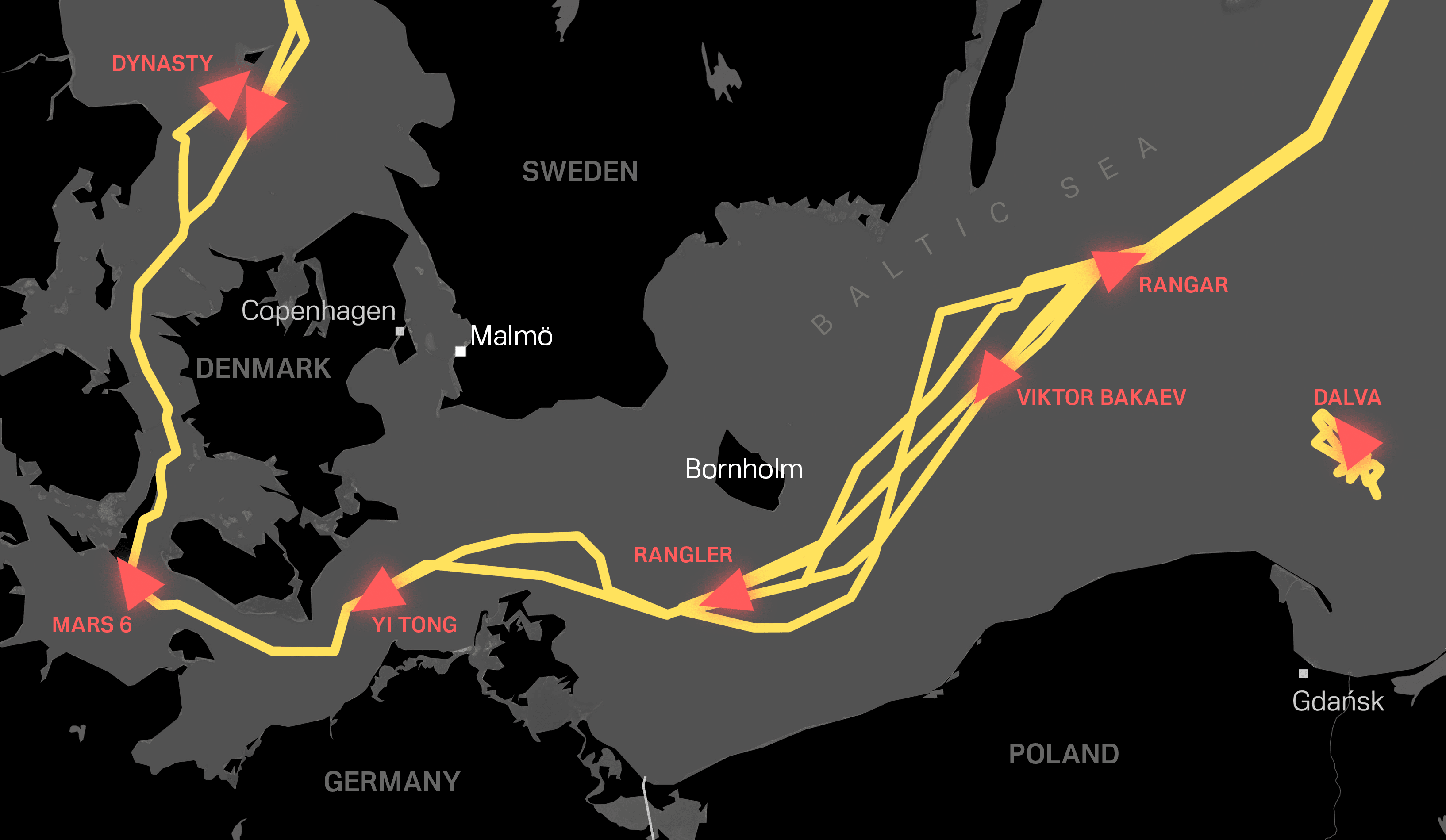
An important element of future pressure on Russia’s shadow fleet is the implementation of the EU’s 20th sanctions package and the development of the 21st package, which is expected to be adopted in late June or early July.
According to diplomats, a proposal to impose a complete ban on servicing Russian vessels in European ports was not included in the final version of the package. However, the package is expected to include a ban on maritime transportation of Russian oil and petroleum products (subject to coordination with the G7), restrictions on technical, financial, and brokerage services for LNG tankers and icebreakers, and a ban on servicing LNG terminals controlled by Russian companies.
Additional port and trade restrictions are also planned, including sanctions against specific ports, an expanded list of shadow fleet vessels, and a ban on the sale of tankers to Russian entities, accompanied by restrictions on their resale. Such a ban would close one of the main channels through which Russia replenishes its fleet. In 2023 alone, Greece and Malta sold more than 230 aging tankers to Russia, accounting for approximately one-quarter to one-third of the Kremlin’s shadow fleet at that time.
Another aspect of EU pressure involves targeting not only the vessels themselves but also the broader infrastructure that enables them to operate. European Commission guidance on sanctioned vessels emphasizes that restrictions apply not only to vessel owners but also to a wide range of EU-based participants in maritime operations. Operators, technical managers, crew-supply companies, charterers, insurers, logistics providers, and service companies are prohibited from providing any services to sanctioned vessels. While this approach does not solve the issue of confiscation, it increases risks for all parties involved in supporting sanctioned vessels, making such operations legally and financially toxic.
Why can’t Europe easily seize shadow fleet vessels?
Despite increasing reports of shadow fleet detentions, the actual number of detained vessels remains relatively small, especially given the fleet’s overall size.
Between December 2025 and March 2026, the United States, India, and EU member states detained at least 14 vessels, while the shadow fleet was estimated to include around 1,300 ships as of October 2025.
For comparison, the EU has sanctioned approximately 600 vessels, the United Kingdom around 500, and the United States 216. Given the scale of the shadow fleet, completely blocking this sanctions-evasion channel is unrealistic. However, the prospect of widespread arrests could encourage shipowners to raise transportation rates, potentially undermining the economic viability of the fleet for both the Kremlin and its customers.
What does international maritime law allow?
The legal framework governing vessel status and state authority is established by the United Nations Convention on the Law of the Sea (UNCLOS). Under the convention, vessels fall under the jurisdiction of their flag state, which exercises full authority over matters of safety, technical standards, and compliance with international norms. On the high seas, the flag state has exclusive jurisdiction over the vessel, significantly limiting other states' ability to intervene without clear legal grounds.
This creates a central legal challenge for the EU because most shadow fleet vessels remain formally protected by their flag states despite their involvement in sanctions evasion.
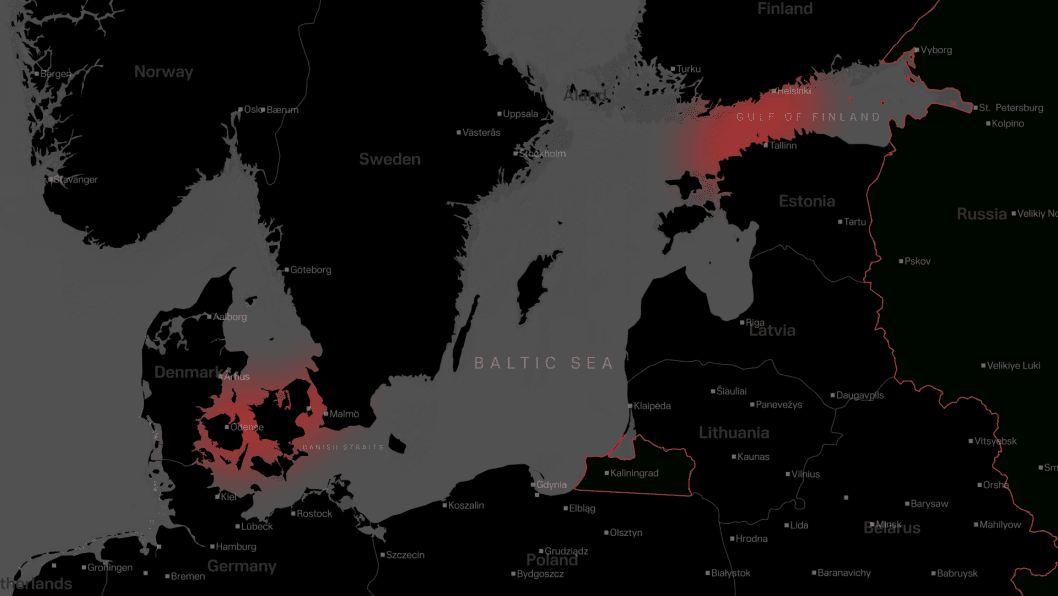
EU member states, therefore, face a fundamental limitation: the absence of a clear legal basis for the systematic confiscation of shadow fleet vessels.
Current EU actions are largely situational and focus on related violations rather than on the transportation of Russian oil itself.
Within exclusive economic zones, states possess limited authority and cannot arrest shadow fleet vessels without specific legal grounds. Full control exists only within territorial waters, significantly restricting operational opportunities. As a result, European countries rely on indirect legal mechanisms. The most common grounds for detention include the use of false or improper flags, lack of registration, violations of maritime safety standards, and environmental offenses.
In March, French lawmakers introduced legislation proposing to double prison terms and fines for vessel owners and operators who sail under improper flags or refuse to comply with stop orders. President Macron endorsed the proposal in April following the detention of the vessel Deyna in France in late March. However, parliamentary debate and voting on the bill are not expected before July 14.
Why are most shadow fleet vessels eventually released?
The EU has also focused on negotiations with flag states regarding the inspection of vessels. Such cooperation could reduce the willingness of countries to register shadow fleet ships and improve enforcement efforts.
A major challenge for Europe is that EU sanctions regimes contain no explicit provision allowing vessel confiscation. As a result, ships are generally detained for inspection, with authorities checking flags, documentation, insurance, and technical conditions. Most detentions are therefore temporary and end with the vessel’s release after inspections, corrective measures, or payment of fines. This significantly limits the effectiveness of enforcement.
Consequently, efforts against the shadow fleet depend heavily on political will, and most detained vessels are ultimately released after paying penalties. Yet this approach, which allows Russia to continue trading with relatively few obstacles, is poorly suited to the realities of the hybrid war it has waged against Europe.
What could the EU do next against Russia’s shadow fleet?
The future effectiveness of efforts to combat Russia’s shadow fleet will depend on whether the European Union can move from ad hoc actions to a systematic approach. Several possible scenarios can be identified.

The first scenario involves expanding sanctions policy with a stronger focus on the infrastructure supporting the shadow fleet. This includes further restrictions on access to insurance, technical services, financing, and port facilities. Such measures do not require radical changes to international law but can gradually produce meaningful results.
The second scenario envisions the development of a unified EU legal position favoring a broader interpretation of international maritime law. This would include more active monitoring of national ship registries to prevent vessels from operating under fraudulent flags, as well as expanding detention grounds based on environmental and safety risks. While this could increase the number of detained vessels, limitations regarding confiscation would remain.
The third scenario entails the most significant changes: creating a new legal framework at the EU level—or among a coalition of states—that would explicitly authorize the confiscation of vessels involved in sanctions evasion. Implementing such an approach would require substantial political will and could provoke legal disputes under international law, as well as increase the risk of escalation in relations with Russia. For the European Union, such a shift would represent a fundamental transition in sanctions policy from deterrence to coercion.
A fourth scenario involves accelerating negotiations with countries that allow Russia to register shadow fleet vessels in their registries. Reducing such opportunities would improve sanctions enforcement and facilitate the detention and confiscation of vessels.
The possibility of confiscation would not only increase the cost of sanctions evasion for Russia but also significantly reduce the attractiveness of participating in shadow fleet schemes for third countries and commercial operators.
It would also enable the EU to strengthen control over environmental risks in European waters.
For example, in 2024, two aging shadow fleet vessels sank during a storm in the Kerch Strait. Approximately 4,000 tons of fuel oil were released into the sea. Such aging vessels form the backbone of Russia’s shadow fleet and pose a direct threat to marine ecosystems in Europe and beyond.
The future of EU action against Russia’s shadow fleet
The EU is gradually moving beyond sanctions as its primary instrument for countering Russia and toward more active measures against the shadow fleet. However, these efforts continue to face limitations imposed by both international law and national legal systems.
The current model remains largely reactive and selective, allowing Russia to continue generating substantial revenues from energy exports. These revenues are used not only to finance the war against Ukraine but also to undermine security and stability across Europe. The shadow fleet continues to create direct environmental risks in European waters and weakens confidence in sanctions as a tool of EU foreign policy.
Without a unified legal framework at the EU level, these efforts cannot be scaled to systematically reduce Russia’s oil revenues. Consequently, countering the shadow fleet is not merely a component of sanctions policy but also part of a broader strategy aimed at strengthening Europe’s economic and security resilience.
Future developments will therefore depend on whether European governments are willing to move beyond flexible interpretations of existing rules and toward the creation of new, effective legal mechanisms, even if only at the regional level.
Given the constraints of international maritime law, the need to preserve freedom of navigation, and the risk of legal challenges based on property rights, the creation of a universal legal norm allowing the confiscation of shadow fleet vessels remains unlikely. However, the EU may pursue an alternative path by creating confiscation mechanisms, expanding the grounds for intervention, broadening the legal basis for prolonged detention, denying port access, revoking insurance coverage, and prohibiting the provision of services to such vessels.
This material was prepared as part of the cooperation between UNITED24 Media and the international analytical and information community Resurgam.
Discuss this article:



-c439b7bd9030ecf9d5a4287dc361ba31.jpg "Photo of Katherina Popilnichenko")