- Category
- World
Russia’s Arctic LNG Empire Has an Exploitable Logistics Flaw. Here’s How to Use It
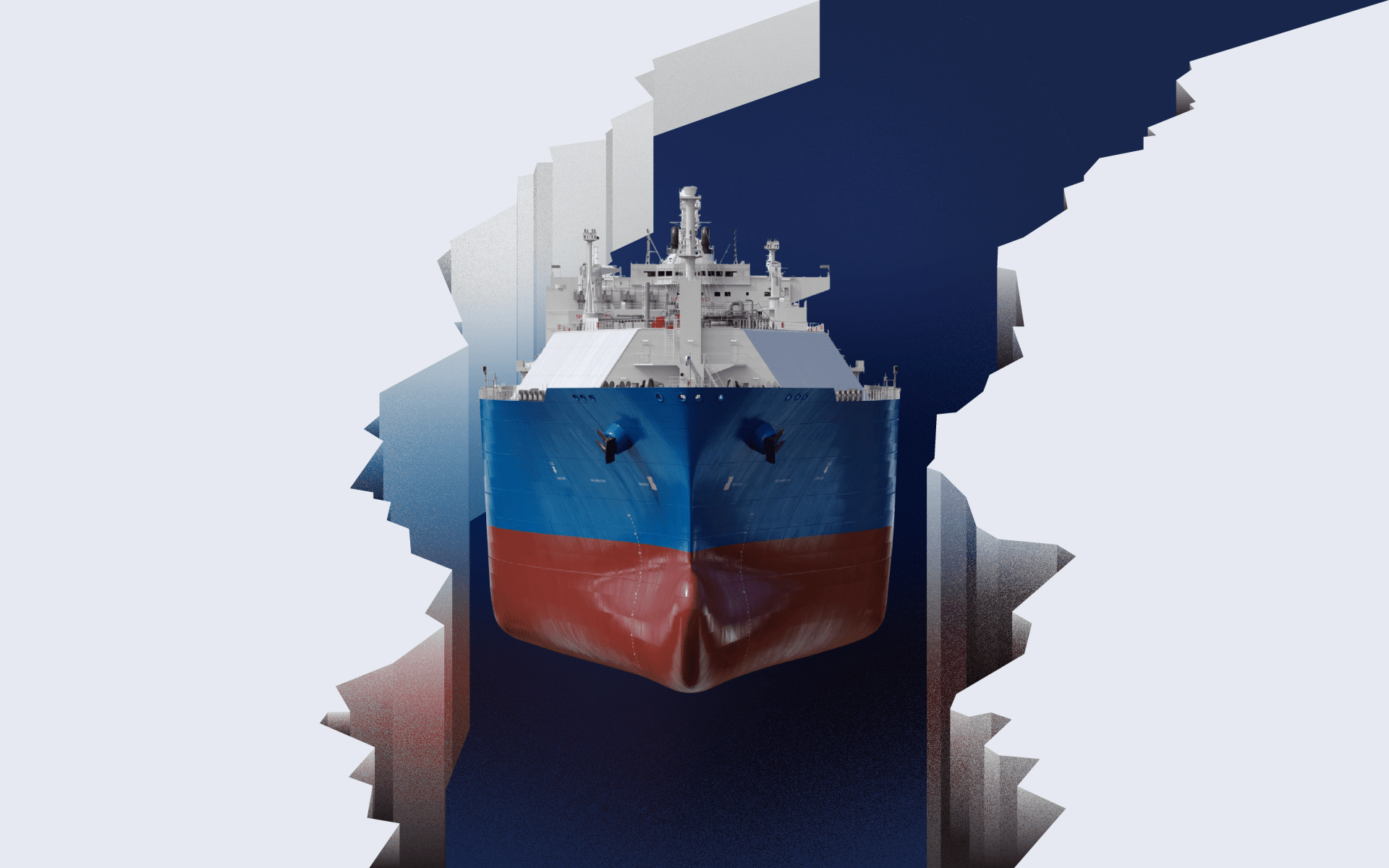
Russia may have the gas, but its Arctic LNG shipments still depend on a vulnerable logistics system Europe can disrupt, from icebreaking tankers to insurance and shipping finance.
 Prefer U24 Media on Google
- Authors

-d7f2a8a1dba838c5d48b1a2472516c31.jpg "Photo of Kostiantyn Hlushko")
On January 26, the European Union agreed to phase out Russian LNG (liquefied natural gas): short-term contracts will be banned starting April 25, 2026, while long-term contracts will be banned from January 1, 2027. EU companies that violate the sanctions risk fines of up to 3.5% of their total annual global turnover.
We bring you stories from the ground. Your support keeps our team in the field.
For the Kremlin, this means losing an important source of funding for its full-scale war against Ukraine and hybrid war against Europe. In 2025 alone, Russia earned about €7.4 billion (≈ $8.67 billion) from LNG exports to the EU, and revenues were expected to grow further. In the first quarter of 2026, supply volumes to the EU increased by 17% year over year. In March, in particular, Russia exported 1.7 million tons of LNG, compared with 1.4 million tons a year earlier.
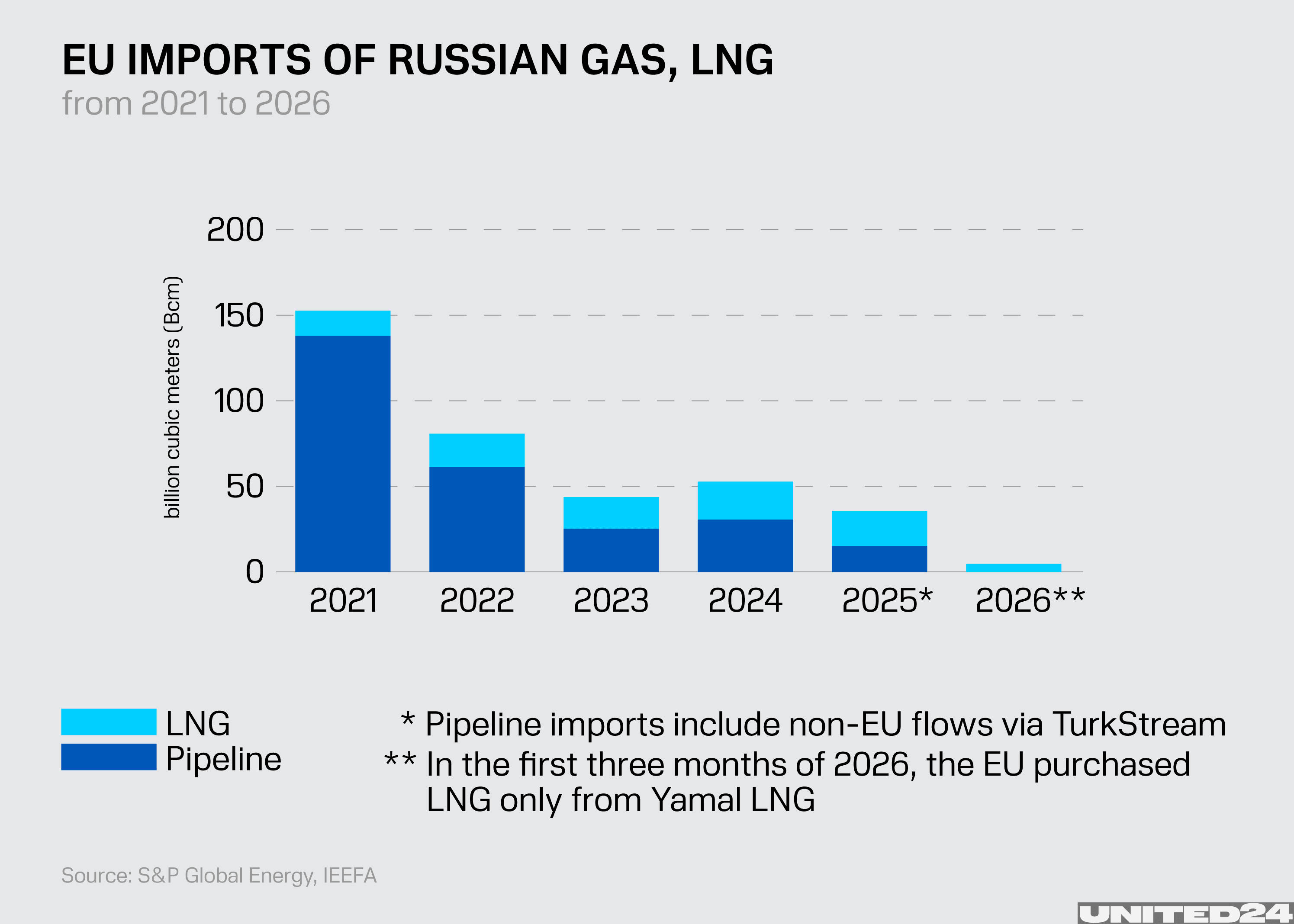
One way out of the situation for Russia may be to redirect supplies to Asian markets. This would require additional time and transport costs and would also reduce sales revenues, as Asian countries would demand significant discounts—China is already demanding discounts of 30–40% below the market price. While this would not deprive Russia of budget revenues entirely, it would significantly reduce them.
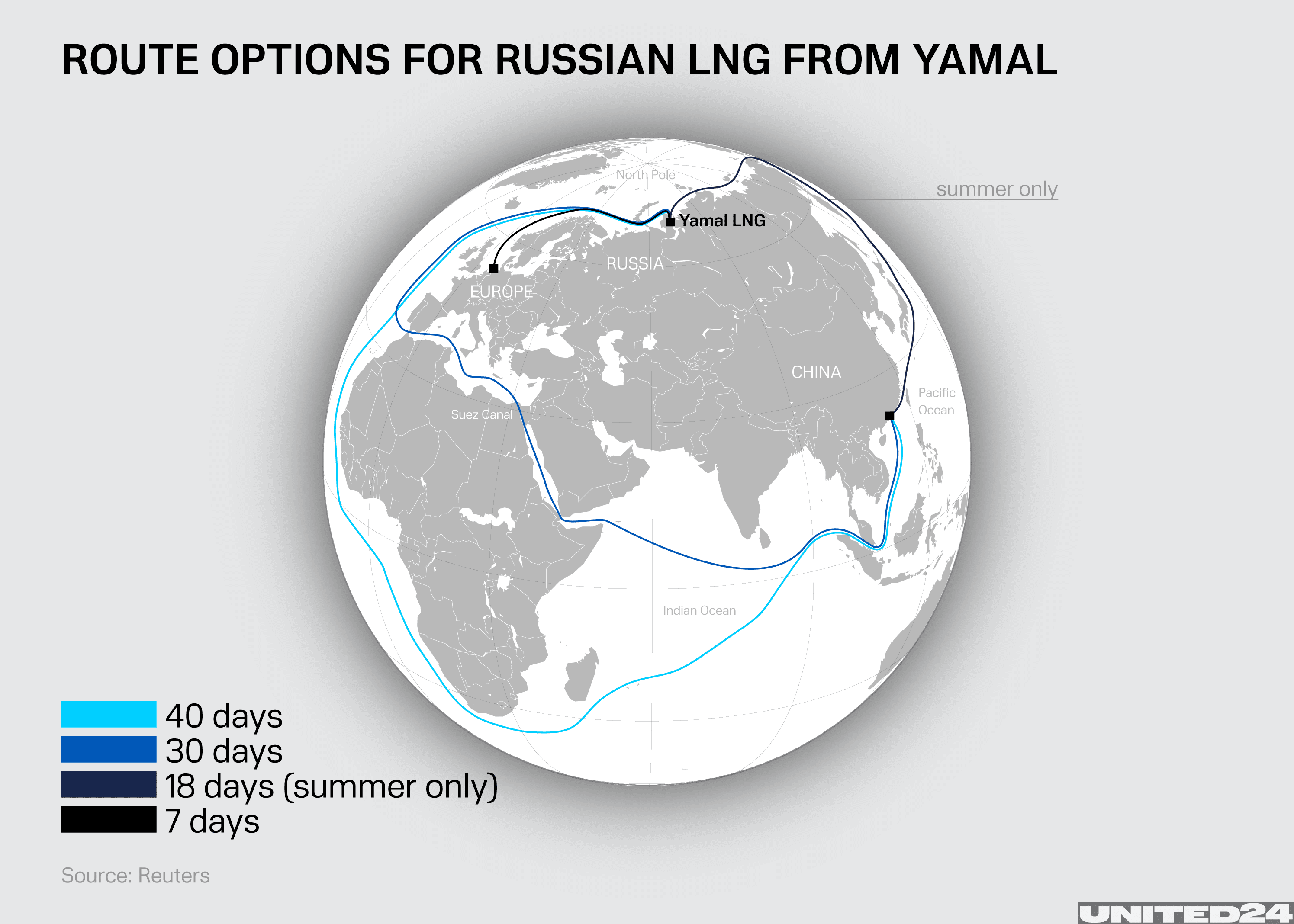
But these are not the only difficulties Russia may face.
Arctic logistics of Russian LNG
Russian LNG exports depend not only on production volumes, but also on transport capacity. At the center of the system is Novatek, Russia’s largest LNG producer, which controls two major LNG projects located in the Arctic: Yamal LNG and Arctic LNG 2.
Yamal LNG is currently Russia’s main LNG production tool. It has been operating since 2017 and, as of 2026, exports about 18 million tons of LNG per year. Yamal LNG is not under direct sanctions—restrictions on its operations will take effect only on January 1, 2027. This allows it to continue stable supplies, including to the European Union: in 2025, nearly 15 million tons of LNG were supplied from Yamal to the EU, accounting for more than 80% of the project’s capacity.
Arctic LNG 2, by contrast, is a new project that began operations in December 2023. It is under US and EU sanctions. In addition, in 2024 Arctic LNG 2 was forced to partially halt production because of a shortage of specialized tankers. This leads to one conclusion: without a fleet, the system does not work.
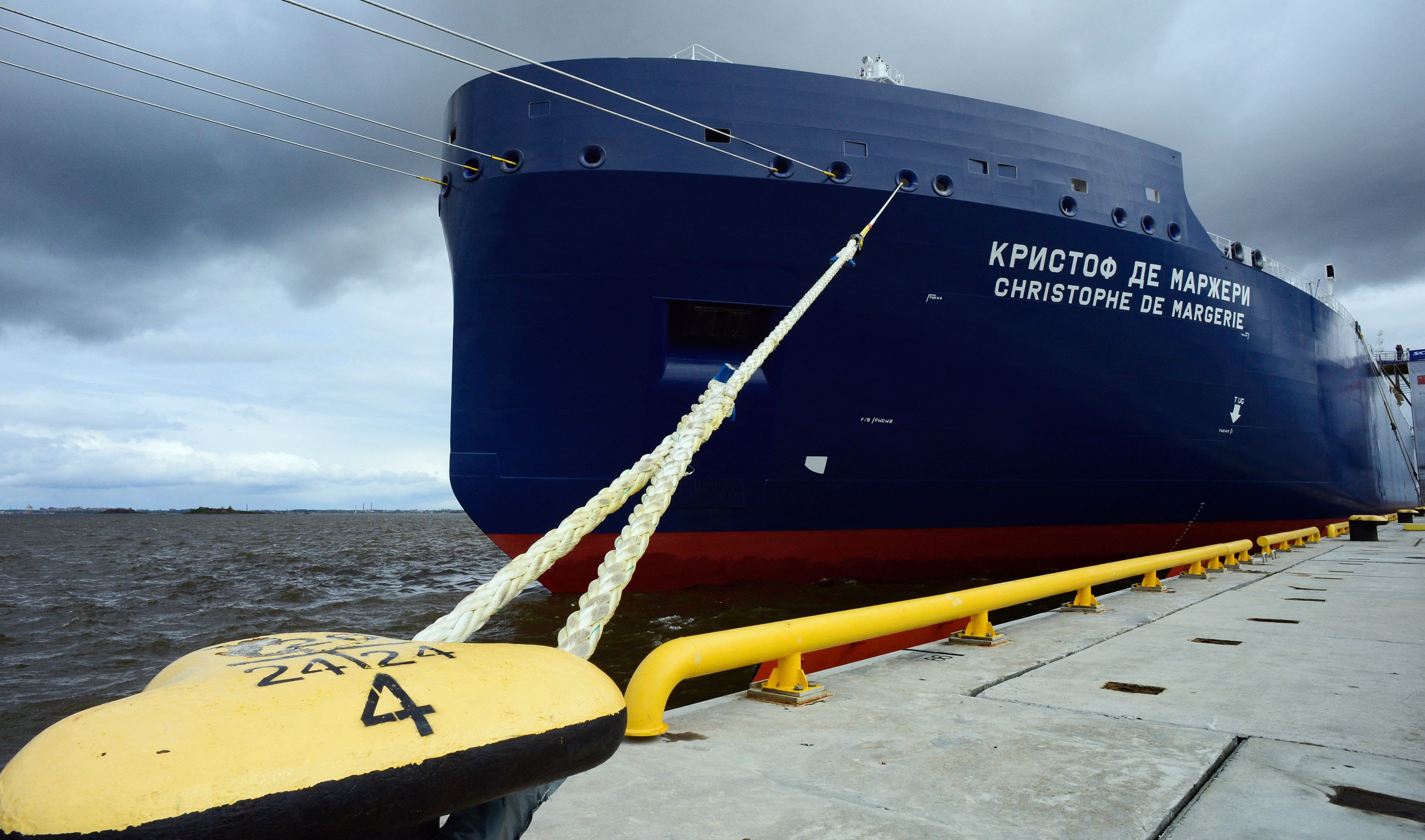
Icebreaking Arc7-class LNG tankers play a key role in transportation. Vessels of this class can navigate through ice up to two meters thick, which is crucial because during the freeze-up period in the Arctic, ice blocks navigation for non-Arctic vessels.
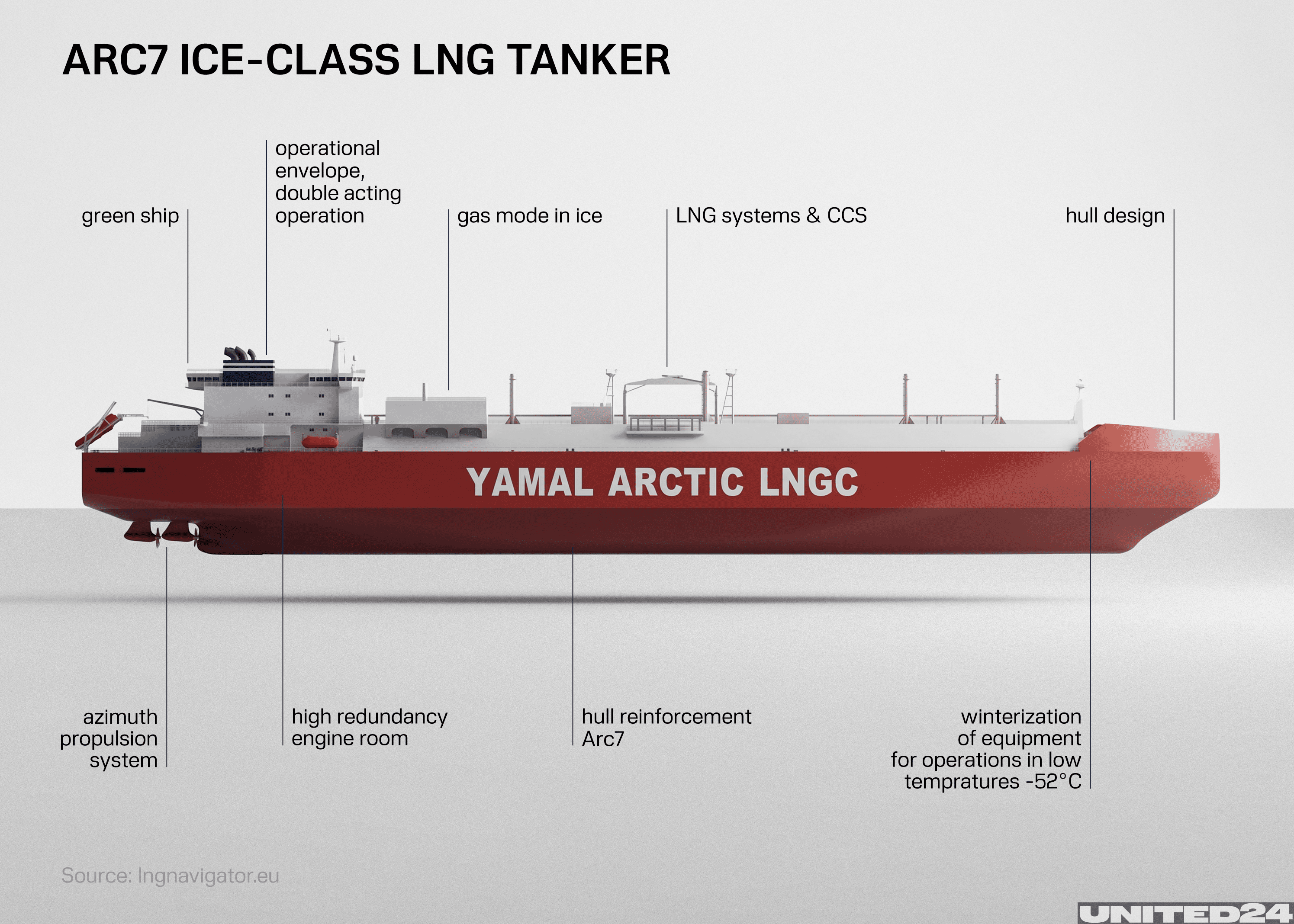
In early April, Yamal LNG was served by 14 such vessels, but Russia operated only three of them. The others are operated by the UK company Seapeak (six vessels) and Greece’s Dynagas (five vessels). The situation with Arctic LNG is even more complicated: although open sources mention three vessels serving the company, only one — the Alexey Kosygin — is operational, while two others remain at the shipyard. In 2020, Novatek ordered 15 vessels for Arctic LNG 2 from the Zvezda shipyard, but Western sanctions have significantly affected production capacity and timelines. The Alexey Kosygin entered service in 2025 — two years later than planned. At the same time, experts estimate that a full pivot to Asia would require a significant increase in the number of vessels.
This means that even the basic functioning of Russian exports depends on Western infrastructure, and Russia risks finding itself in a situation where it has LNG and demand for it, but its ability to transport it is limited to the vessels it already has — vessels that will continue to wear out, while construction of new ones will be delayed.
How Russia is countering the restrictions
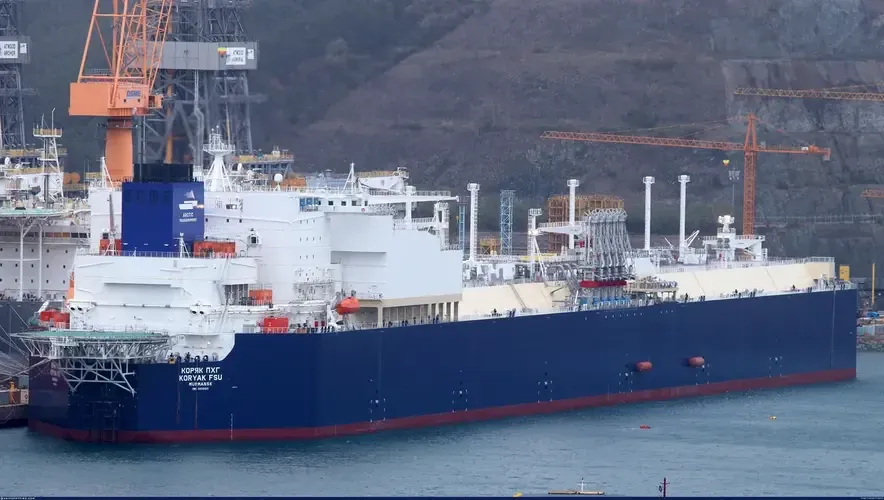
Given these threats, Novatek has already established its own shipyard and has also begun using transshipment in LNG transport. To reduce the burden on existing Arc7 vessels, LNG is transferred at floating LNG storage facilities in Kamchatka Krai and near Murmansk—facilities that are already under sanctions—onto ordinary shadow-fleet tankers or lower Arctic-class vessels, which then deliver it to Asia. These vessels can switch off their automatic identification systems (AIS), making it harder to track their routes and involvement in cargo transshipment.
The EU’s 20th sanctions package
The 20th sanctions package, adopted in April, is primarily aimed at countering Russia’s oil sector, but it also includes some steps that complicate trade in Russian LNG. In particular, it provides for due diligence requirements for tanker sales—requiring the seller to verify the buyer and ultimate owner—as well as a ban on EU companies servicing Russian icebreakers and LNG tankers and cooperating with the ports of Murmansk and Tuapse.
Although these steps make continued interaction between EU countries and Russia more difficult, they do not dismantle the existing infrastructure. Russia is still supplying LNG to the EU from Yamal LNG using Arc7 vessels, while Spain, France, and Belgium, which have long-term contracts with Novatek, had not presented supply diversification plans as of April 2, even though those plans were supposed to be submitted by March 1.
Another factor is the position of certain representatives of the European energy sector who oppose abandoning Russian gas within the deadlines set by the EU. In particular, Eni CEO Claudio Descalzi said in April 2026 that the EU should reconsider its plans for a full ban on Russian gas imports due to uncertainty about how supply volumes would be replaced.
What would weaken Russia’s export capabilities?
Further pressure should target not production, but the entire system that enables exports, including logistics, financing, and service support.
Terminating existing contracts for Russian LNG at this stage is not a realistic option, since a number of EU countries continue to rely on these supplies during the transition period before a full phaseout. At the same time, it is possible to reduce the profitability of Russian exports without interfering with contractual obligations by restricting the infrastructure supporting the flow of Russian LNG and its financial services. This is not about individual companies or institutions, but about LNG operations as such. In particular, the EU could limit or complicate the use of European letters of credit and bank guarantees to finance transactions involving Russian LNG, as well as narrow access to insurance and reinsurance for its maritime transport. Such measures would not change the formal terms of existing contracts, but they would increase costs across the entire LNG supply chain to the EU and reduce its economic appeal for the supplier.
Opportunities to expand the fleet must be closed off. The EU could begin imposing sanctions on companies in third countries that supply LNG tankers to Russia or help build a new fleet through intermediaries. The already introduced due diligence requirement could serve as the formal basis: if a seller fails to verify the ultimate buyer or ignores the risk of resale to Russia, this should be treated as a violation of the sanctions regime.
The third area is vessel operators. A significant share of the Arc7 icebreaking tankers that support exports from Yamal are still linked to European and British companies. A ban on their participation as technical or commercial operators would create a direct fleet management problem, even without the formal seizure of the vessels themselves.
To counter the disabling of automatic identification systems, it would be advisable to introduce a mechanism for automatically imposing sanctions or restrictions on vessels that are recorded switching off AIS in designated Arctic zones. This would reduce the effectiveness of covert logistics operations.
If these steps do not produce results, the next stage could be sanctions on all Arc7-class tankers used to transport Russian LNG, regardless of flag or ownership structure. This decision would directly limit Russia’s physical ability to export gas from the Arctic.
A separate area is preventing circumvention of restrictions through re-export. Even after imports to the EU are halted, Russian LNG could return to the European market through third countries, mixed with LNG of other origin or through contracts with suppliers, for example, from Asia. To avoid this, the EU could introduce a mandatory LNG origin certification system. If substitution is detected, sanctions should apply not only to companies, but also to their owners and affiliated structures.
At the same time, the EU could expand pressure beyond its own market. This means restrictions on buyers of Russian LNG in Asia and on ports that receive it. Full-fledged secondary sanctions remain a politically difficult tool, but even their partial use—for example, against specific ports or companies—could increase the cost of such operations.
Prepared as part of the cooperation between UNITED24 Media and the international analytical and information community Resurgam.
Discuss this article:


-c439b7bd9030ecf9d5a4287dc361ba31.jpg "Photo of Katherina Popilnichenko")

-111f0e5095e02c02446ffed57bfb0ab1.jpeg "Photo of Roman Kohanets")