- Category
- War in Ukraine
Russia Wants to Turn Its BK-10 Assault Boats Into Naval Drones—But Has Yet to Show One
 Prefer U24 Media on Google
- Authors


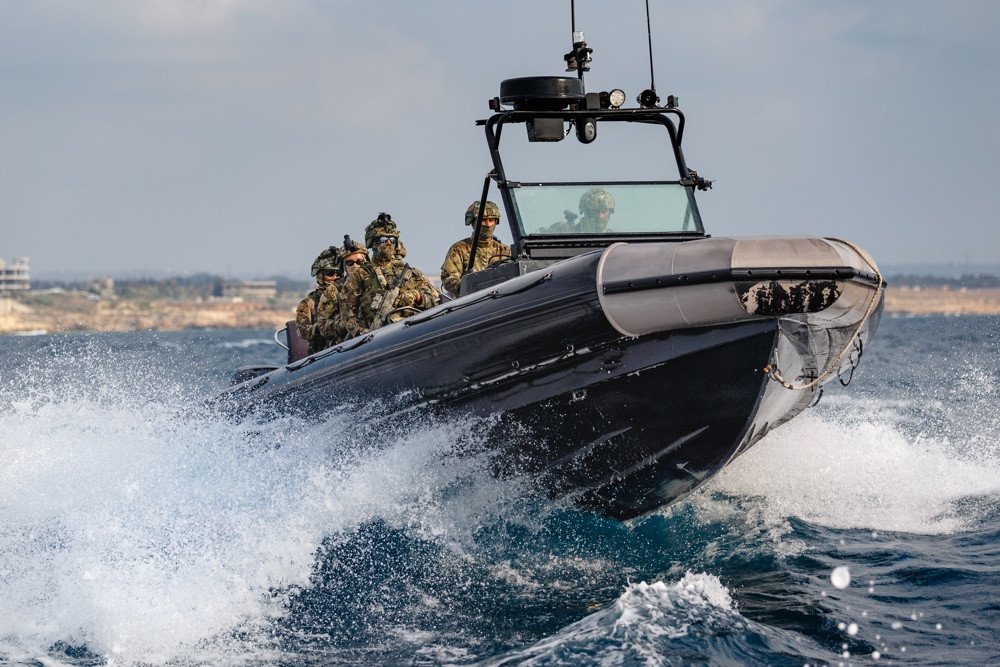
Russia’s Kalashnikov Concern says it is developing an unmanned version of its BK-10 assault boat as Moscow attempts to expand its capabilities in naval drone warfare.
We bring you stories from the ground. Your support keeps our team in the field.
The project was announced by Kalashnikov head Alan Lushnikov in an interview with Russian state-run news agency TASS on August 10. He said the company was working on an unmanned variant of the BK-10, but provided no details on a prototype, testing schedule, production timeline, or when such a vessel could enter service.
Lushnikov claimed the future unmanned surface vessel could carry different weapons depending on customer requirements. The existing crewed BK-10 can be equipped with 7.62mm and 12.7mm machine guns or a 40mm grenade launcher.
The BK-10, officially designated Project 02450, was originally designed as a high-speed assault boat capable of carrying up to 10 troops for coastal landings and fire support. The boat can reach speeds of about 74 km/h, or 40 knots, and has a range of roughly 248 kilometers while carrying a payload of up to 3.5 tonnes.
-f3c388a287d49ecee38a1cde34dd9be0.png)
The Russian military adopted the BK-10 in 2016, with the boats subsequently supplied by Kalashnikov. The announcement comes as Russia has increasingly sought ways to develop and field unmanned maritime systems after Ukraine demonstrated their effectiveness in the Black Sea.
Ukrainian naval drones have repeatedly targeted Russian warships, military infrastructure, and vessels supporting Russian operations, forcing Moscow to devote growing resources to countering unmanned attacks and experimenting with its own systems.
The BK-10 project is part of a broader Russian push to expand unmanned naval capabilities after Ukraine’s maritime drone campaign severely damaged the Black Sea Fleet and forced many Russian warships to relocate from temporarily occupied Crimea.
In July, Russia also said it had begun building its first uncrewed anti-submarine surface vessel, a roughly 500-ton ship intended to form the basis for further development of unmanned naval systems.
Discuss this article:
-9a7b3a98ed5c506e0b77a6663f5727c5.png)

-80134f2dc17b4a887d01513a1c7bc929.png "Illustration of Russian military infrastructure targeted by Ukrainian strikes in temporarily occupied eastern Ukraine. (Source: General Staff of the Armed Forces of Ukraine)")