- Category
- War in Ukraine
Ukraine’s New Kill-Zone Strategy Turns Frontline Territory Into a Trap for Russians

FPV drone warfare and Russia’s meat-grinder tactics forced Ukraine to redesign its fortifications. A new continuous kill-zone system aims to stop rapid Russian assaults through layered trenches, wider fire lanes, and anti-vehicle obstacles. This is what modern trench warfare looks like.
 Prefer U24 Media on Google
- Authors

-24deccd511006ba79cfc4d798c6c2ef5.jpeg "Photo of Louis Beaudemont")
Donetsk, Europe’s most heavily fortified region

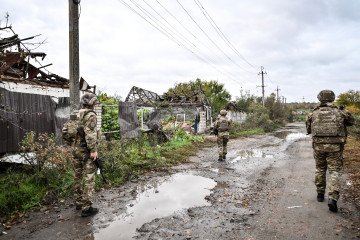
Due to the pace of Russia’s advances on the Ukrainian frontline—at the cost of roughly a million casualties and just 1.45% of the territory seized in three years—the Kremlin has repeatedly tried to push for Ukraine to surrender territory without a fight. It seeks full, de jure control over Ukraine’s Donetsk and Luhansk regions.
Beyond being illegal under international law, this demand is impossible for Ukraine to accept. The Donetsk region has become the most fortified territory in Europe: a “fortress belt” where Russian generals send hundreds of thousands of soldiers to gain only a few square kilometers in what they themselves cynically call the “meat-grinder.”
We bring you stories from the ground. Your support keeps our team in the field.
Because Russia cannot retake the territory by force without reaching the limits of its financial and manpower capacity, it is now trying to obtain it through diplomacy—pressuring Ukraine and its partners to “give” the region to Russia in exchange for “peace.”
By seeking to claim the land through negotiations, the Kremlin has attempted to acquire what it failed to conquer at immense military cost since 2014.
Christopher Miller
Financial Times correspondent
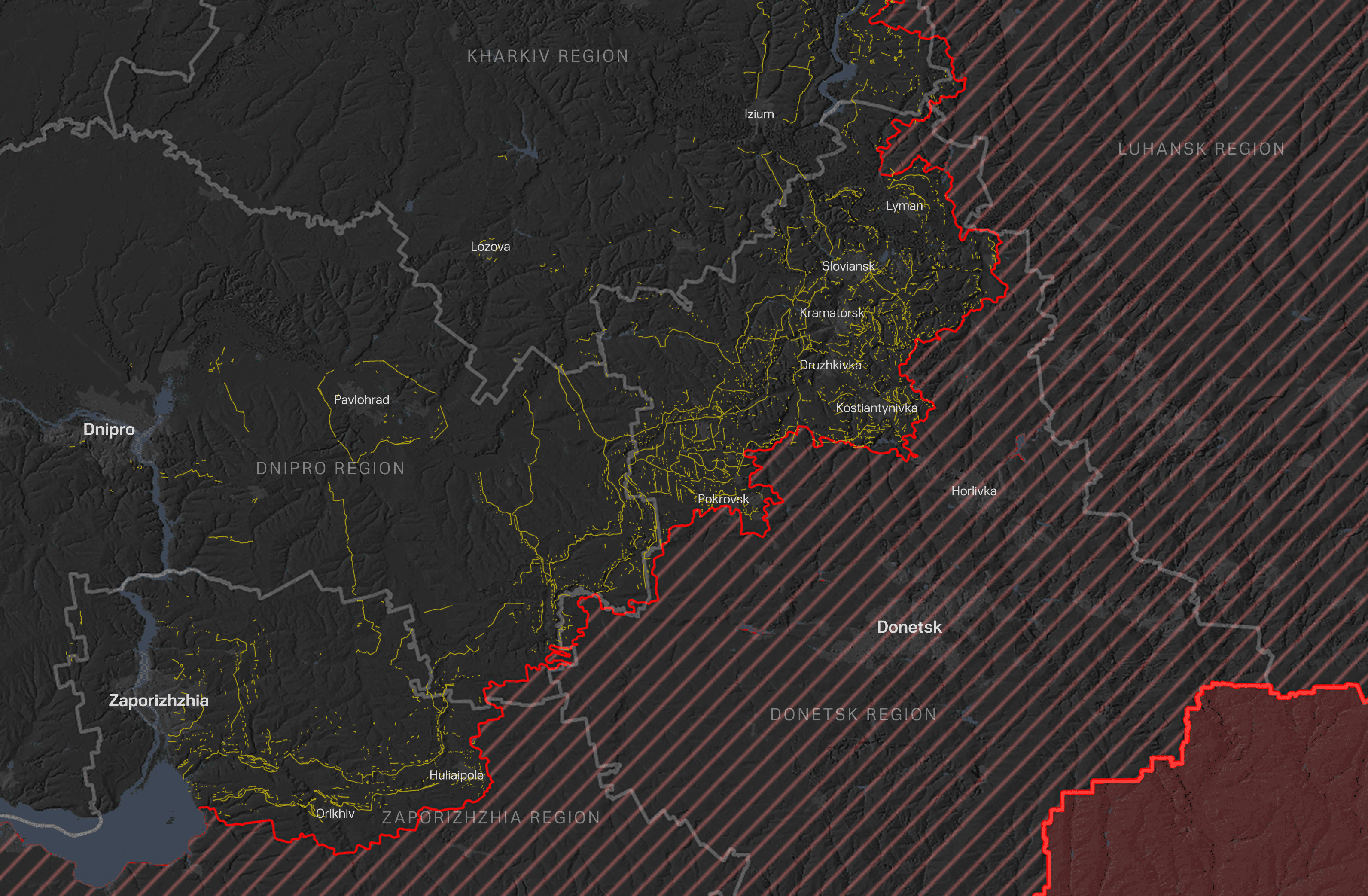
Indeed, Ukraine has invested a lot. Its latest fortifications along the frontline—from south to north, in the Dnipropetrovsk, Donetsk, and Kharkiv regions—appear far better adapted to drone-driven warfare that has evolved since 2023, as well as to the current state of the Russian army, which seems weakened and less capable of major offensive operations.
Just imagine giving all this area for free for the ‘peace’ that we already know will be broken as soon as they occupy the whole area. Who would be that much crazy [to accept the point]?
Clément Molin
French OSINTer
Drone warfare forces Ukraine to redesign fortifications
The current phase of the war is defined by FPV drones saturating the sky since summer 2023—and the trend keeps growing. Today, inside “kill zones,” when a drone detects a target in the open, it has more than an 80% chance of hitting it. These drones are also cheaper than artillery munitions.
Vauban’s defensive belts
If you entrench yourself behind strong fortifications, you compel the enemy to seek a solution elsewhere.
Carl von Clausewitz
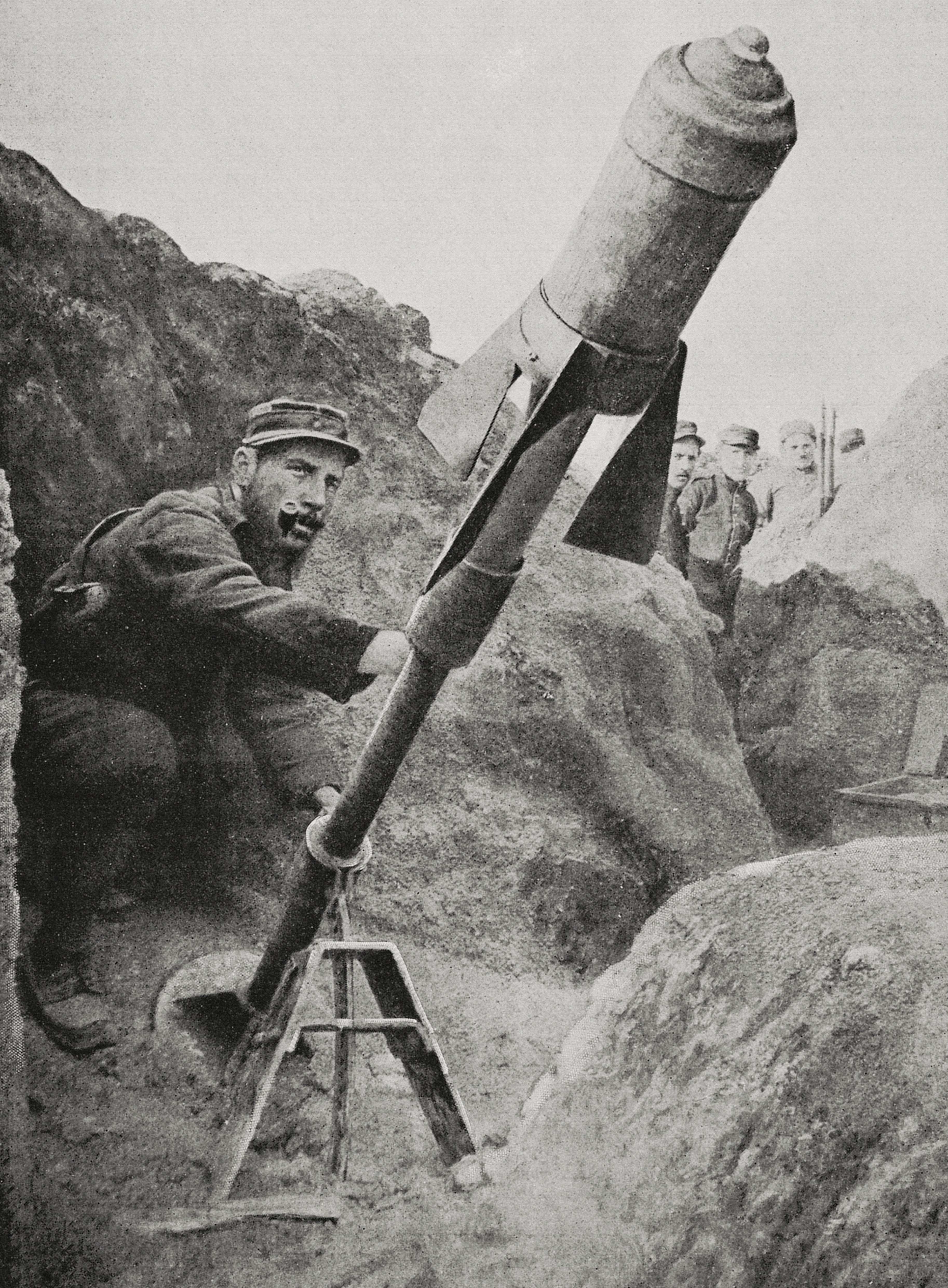
In the seventeenth century, French military engineer Sébastien de Vauban created the famous “iron belt,” a series of star-shaped bastioned fortresses inspired by Italian designs, meant to make France impossible to invade. This system—effective against smoothbore artillery—worked until new explosive shells appeared in the late nineteenth century. During World War I, only buried, dispersed, and reinforced concrete fortifications survived modern firepower.
Soviet-style fortification doctrine collapse
In 2022, Russian and Ukrainian forces designed fortifications according to Soviet doctrine. The International Center for Defense and Security (ICDS), a military think tank based in Estonia, describes it as a “concentration of forces and materiel in large strongholds, heavily fortified against the primary threats of massed artillery fire and major infantry assaults supported by armored vehicles.”
But drones made trenches one of the least safe places on the battlefield. By 2023–2024, the kill zone expanded. “A five- to ten-kilometer-deep ‘kill zone’ along the contact line in which conventional fortifications—wide trenches, large platoon- or company-sized dugouts, and concentrated strongpoints—became highly vulnerable and increasingly unusable,” ICDS said.
This trend accelerated with FPV proliferation and the arrival of fiber-optic drones, which are resistant to electronic warfare and provide much clearer vision until they hit their target.
By 2025, the kill zone has deepened to perhaps 35–40 km and become more lethal.
International Center for Defense and Security (ICDS)
Lessons from Ukraine’s 2023 counteroffensive
In 2023, Ukraine’s counteroffensive—expected to be rapid and mechanized—ran into the “Surovikin Line,” named after the Russian general who organized its construction in late 2022.
This Russian multi-layered defensive system included:
a first echelon of mines, anti-tank ditches, and dragon’s teeth
a second layer with extensive trenches manned by poorly trained mobilized troops
a third line with elite units, armored vehicles, and artillery
At the time, the kill zone still relied heavily on artillery. Systematic use of bomber drones, attack drones, demining drones, supply drones, and rescue drones had not yet become widespread.
Back to the exaggerated model.
— George Barros (@georgewbarros) September 5, 2023
Note that the third layer of the Surovikin Line - the fighting positions - are located at elevated positions - the commanding heights overlooking the Rabotyne -Verbove sector.
The vehicle ditch and dragon's teeth near Verbove are in the low point. pic.twitter.com/na9eQbldoD
After some criticism, Ukraine appears to have learned from these lessons and has begun constructing new fortification lines—clearly visible since late spring—that aim to address the tactical problems identified by the army and external observers.
A new, continuous defense line across three regions
Unlike previous conflicts, Russia’s war in Ukraine features a wide, shifting frontline that is constantly under video surveillance. It consists of small trench clusters hosting drone operators who operate at ranges of over 10 km and can stop infantry, vehicles, and artillery deployments before they reach firing distance. Innovation is so fast that tactics must adapt continuously—and even anticipate the next stage.
Defense lines now adapt both at the frontline and in the rear. Priorities include:
depth
greater dispersion of personnel (even one-soldier positions)
dispersal of equipment and logistics
use of robots, especially ground robots—an innovation that still gives Ukraine an advantage.
Engineering a megaproject under Russian fire
Ukraine’s engineering forces have launched large-scale construction of a continuous fortification line more than 2,000 kilometers long in the Donetsk, Kharkiv, and Dnipropetrovsk regions. It is planned to consist of (layouts may vary depending on terrain and tactical choices):
anti-tank and anti-personnel mines
plutanka, a network of thin metal wires anchored into the ground and stretched over several meters to slow infantry
a first anti-tank ditch, with barbed wire at the bottom to prevent infantry from hiding
a line of concrete tetrahedrons (dragon’s teeth) and several rows of barbed-wire rolls—all connected by a thick metal cable
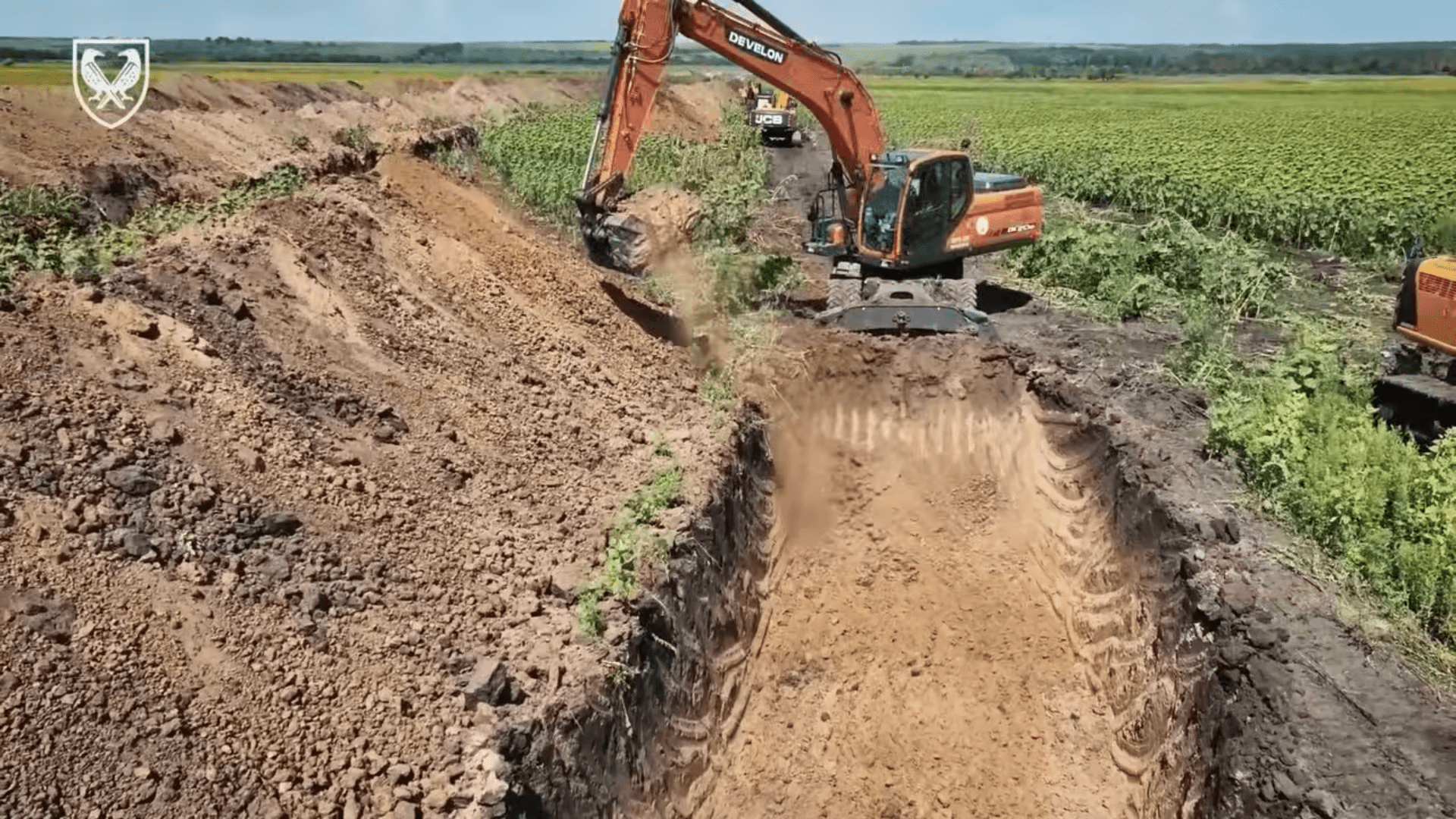

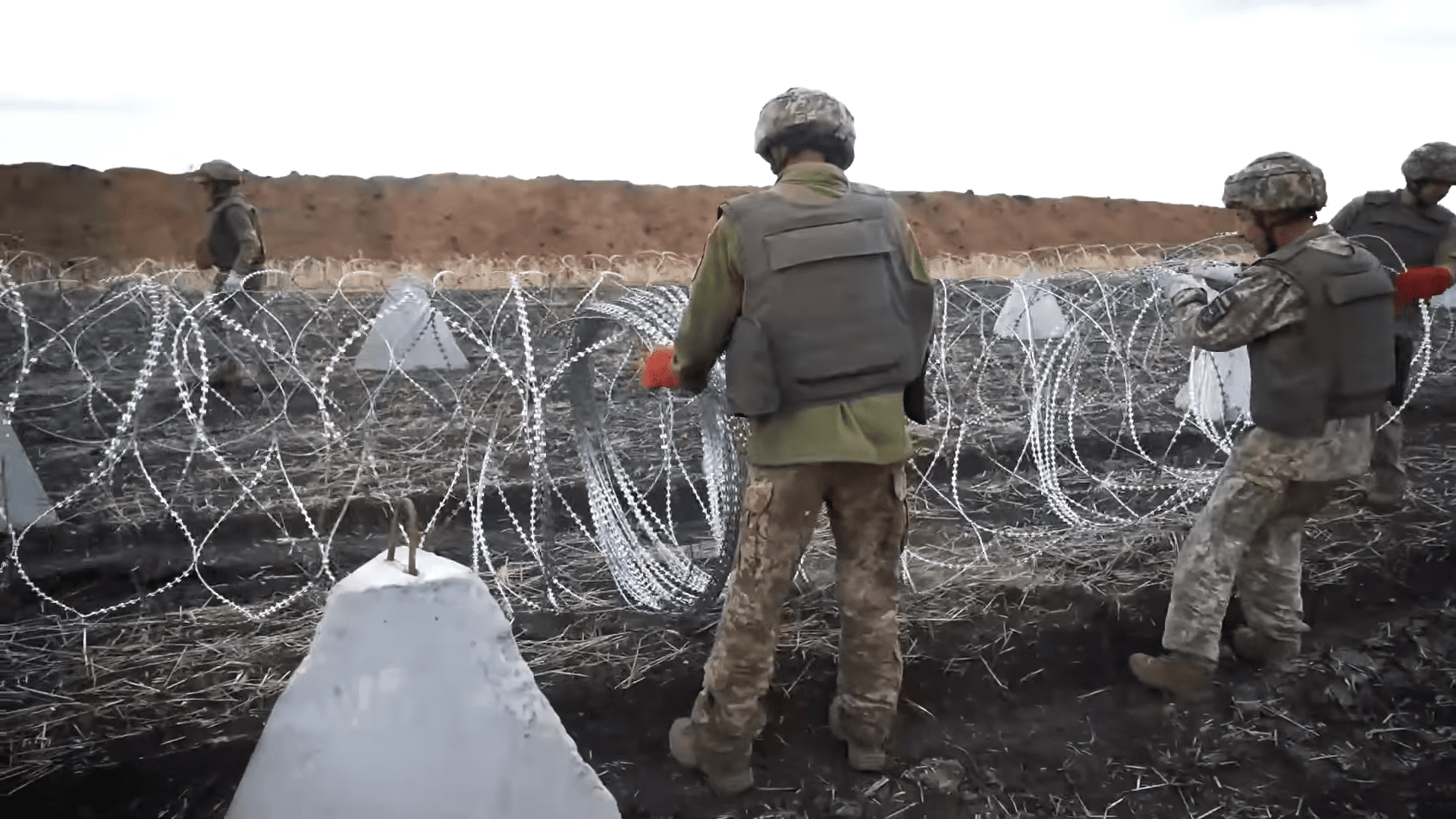
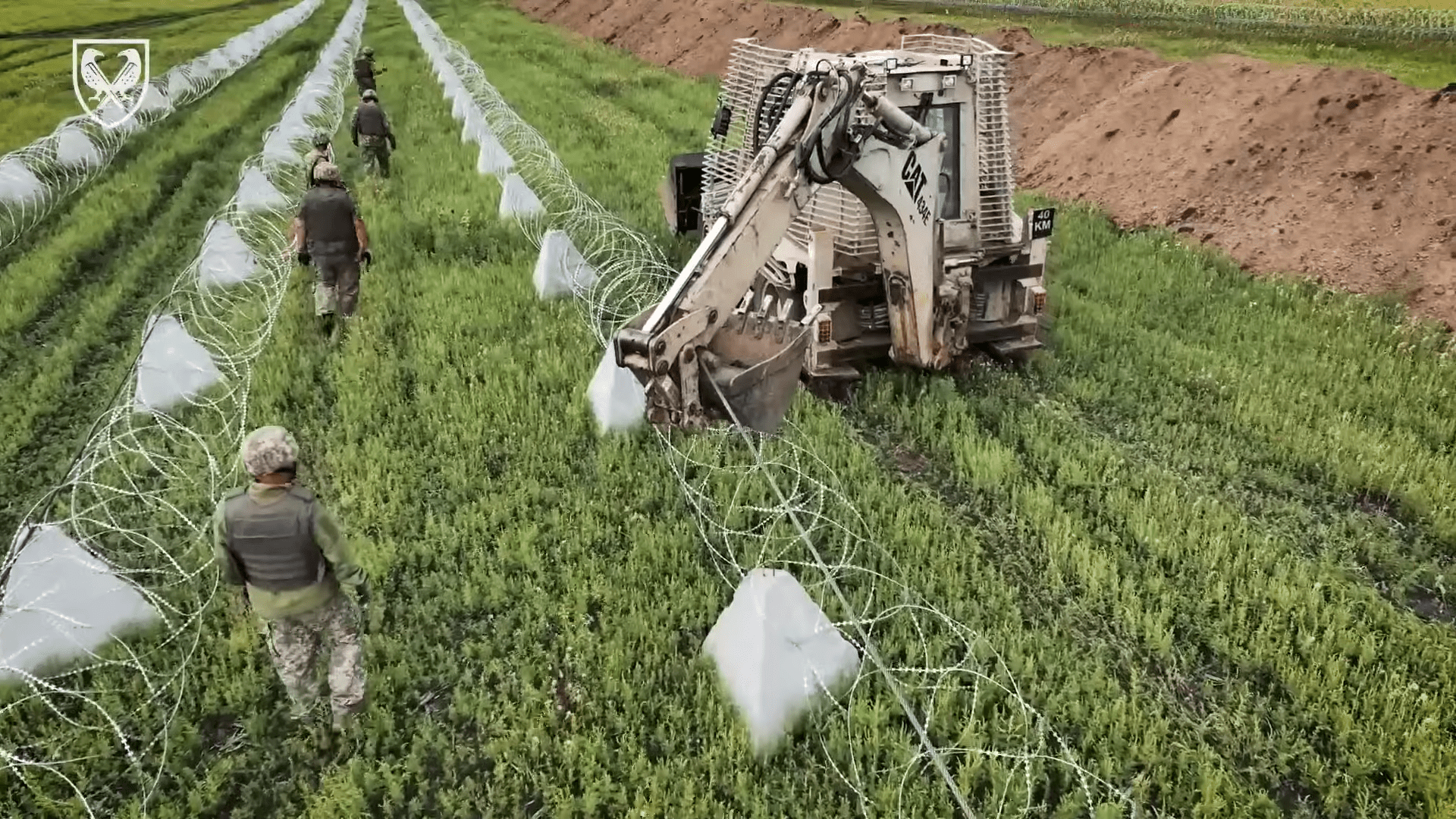
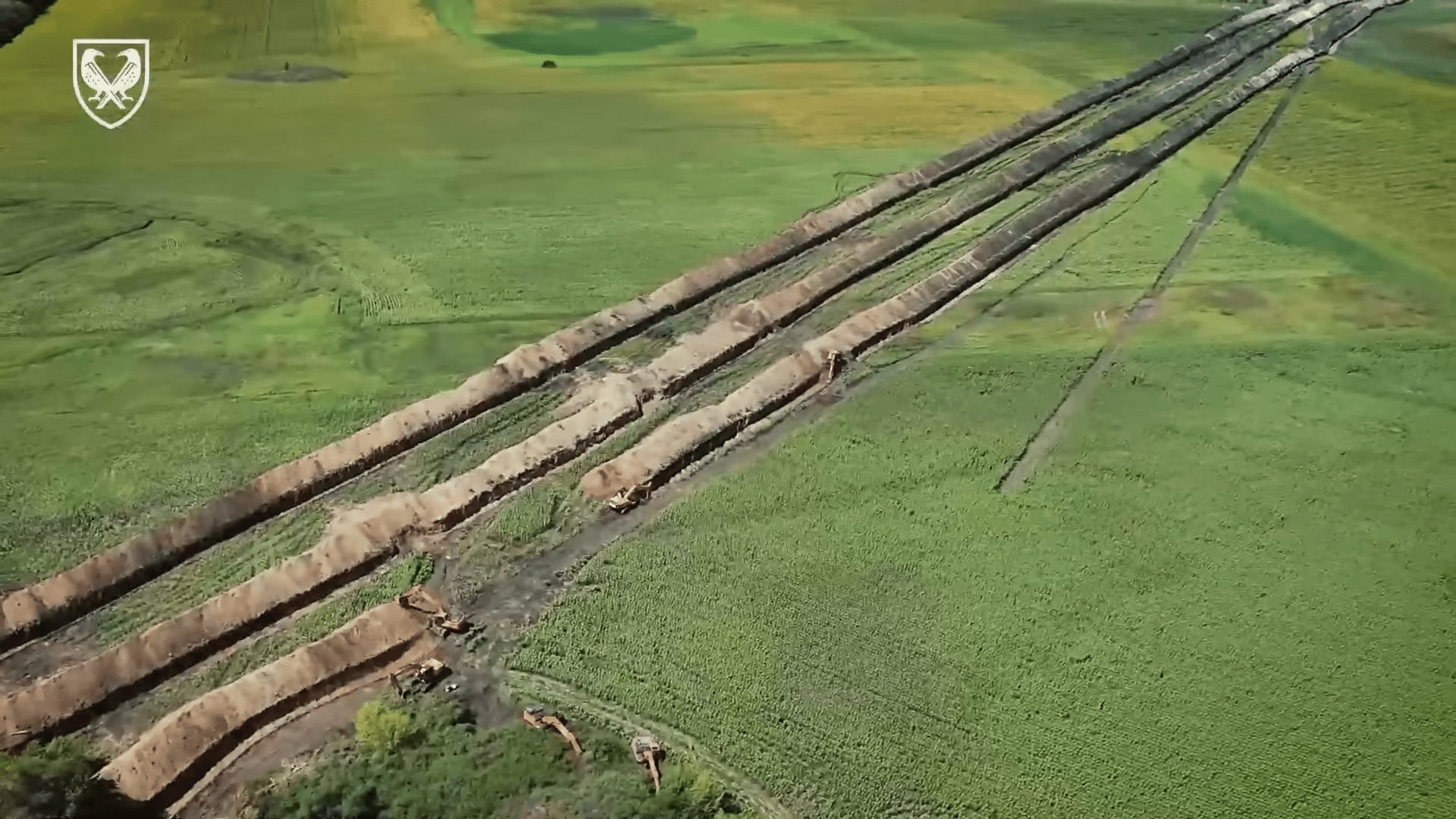
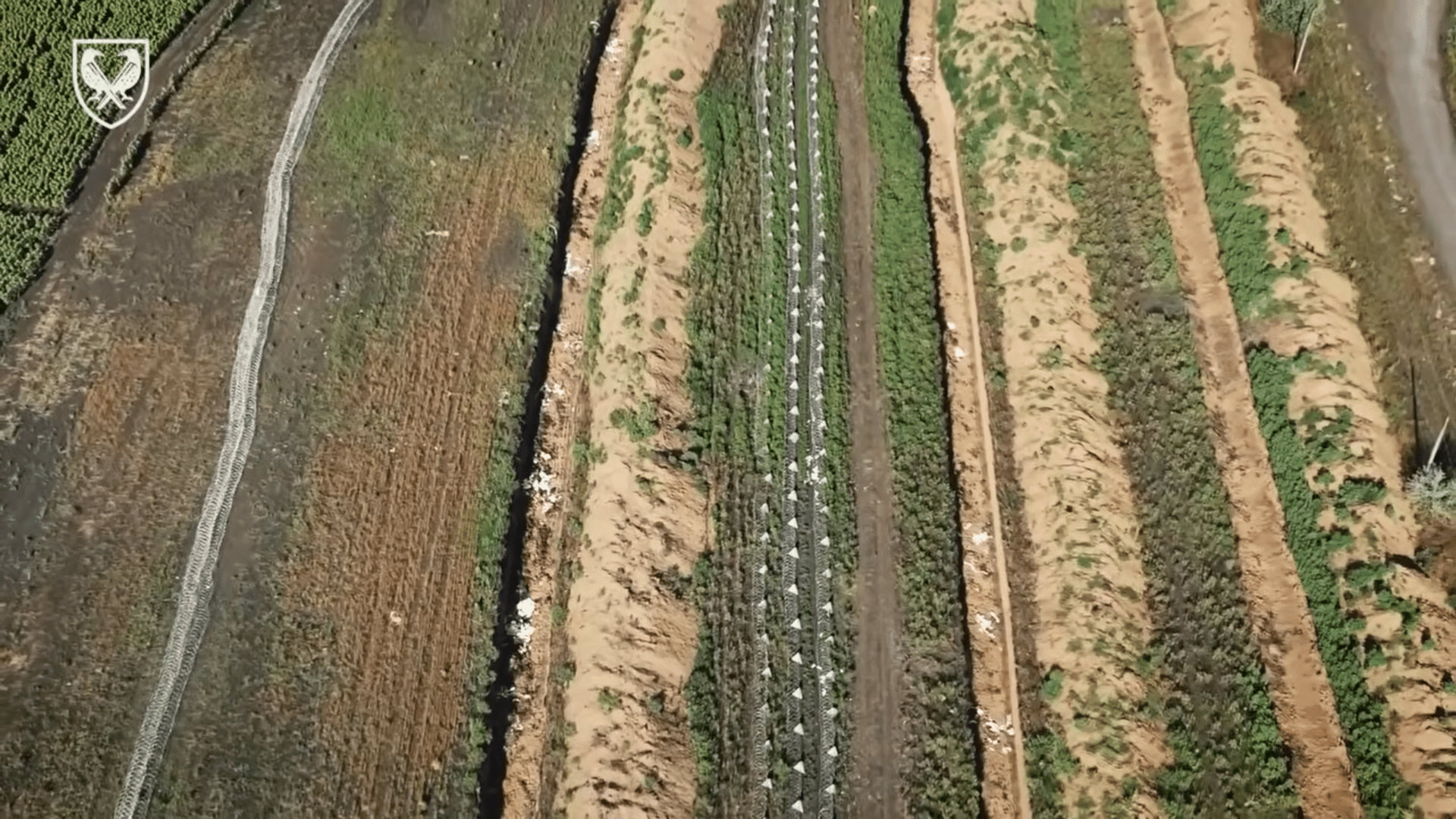
The Support Forces of the Armed Forces of Ukraine, operating close to the frontline and under constant Russian fire, are responsible for building these fortifications.
Specialized teams monitor the sky to protect engineers and technicians from drone attacks, especially fiber-optic drones. Every day, they are attacked four to five times by Russian FPV drones.
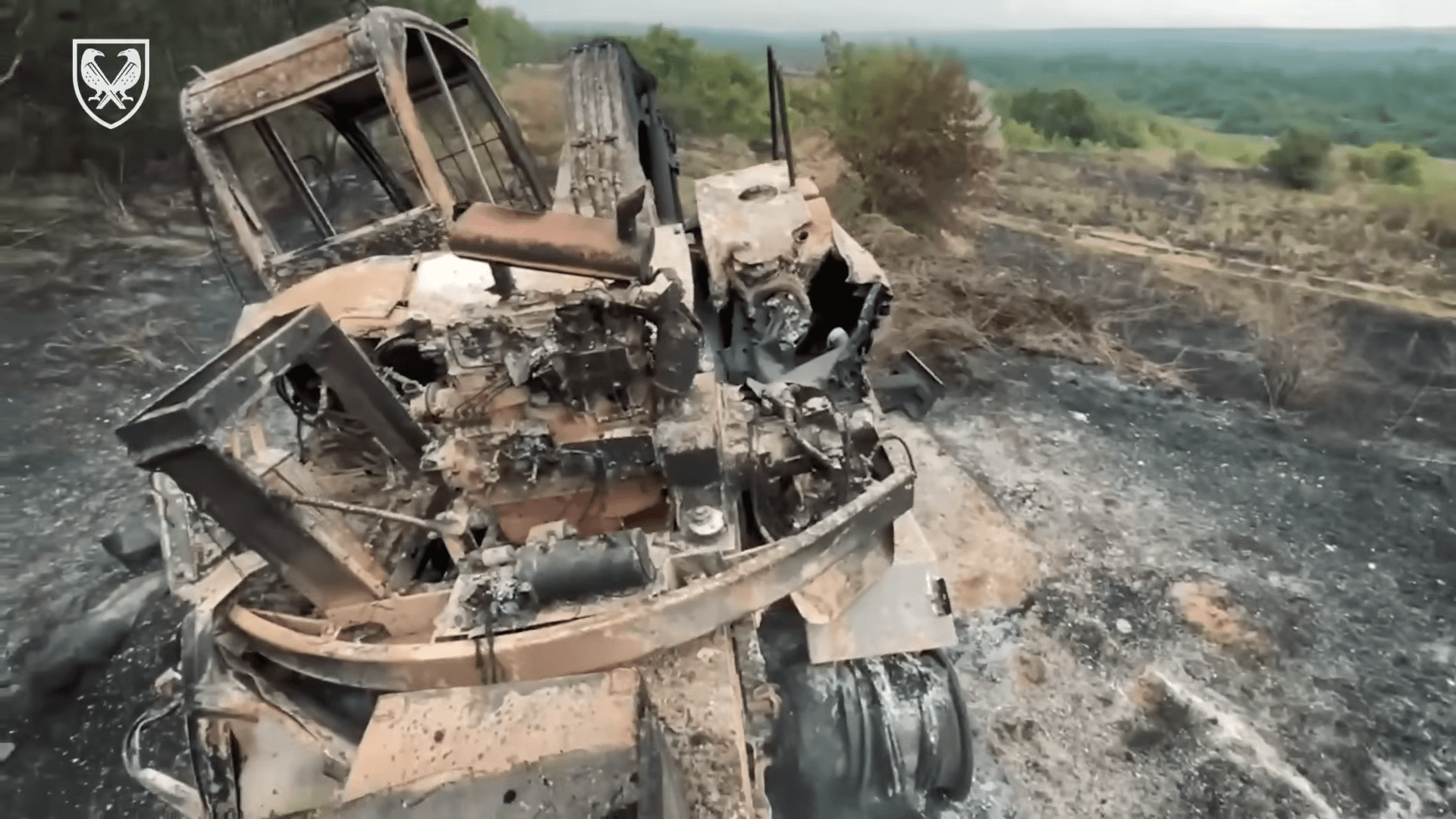
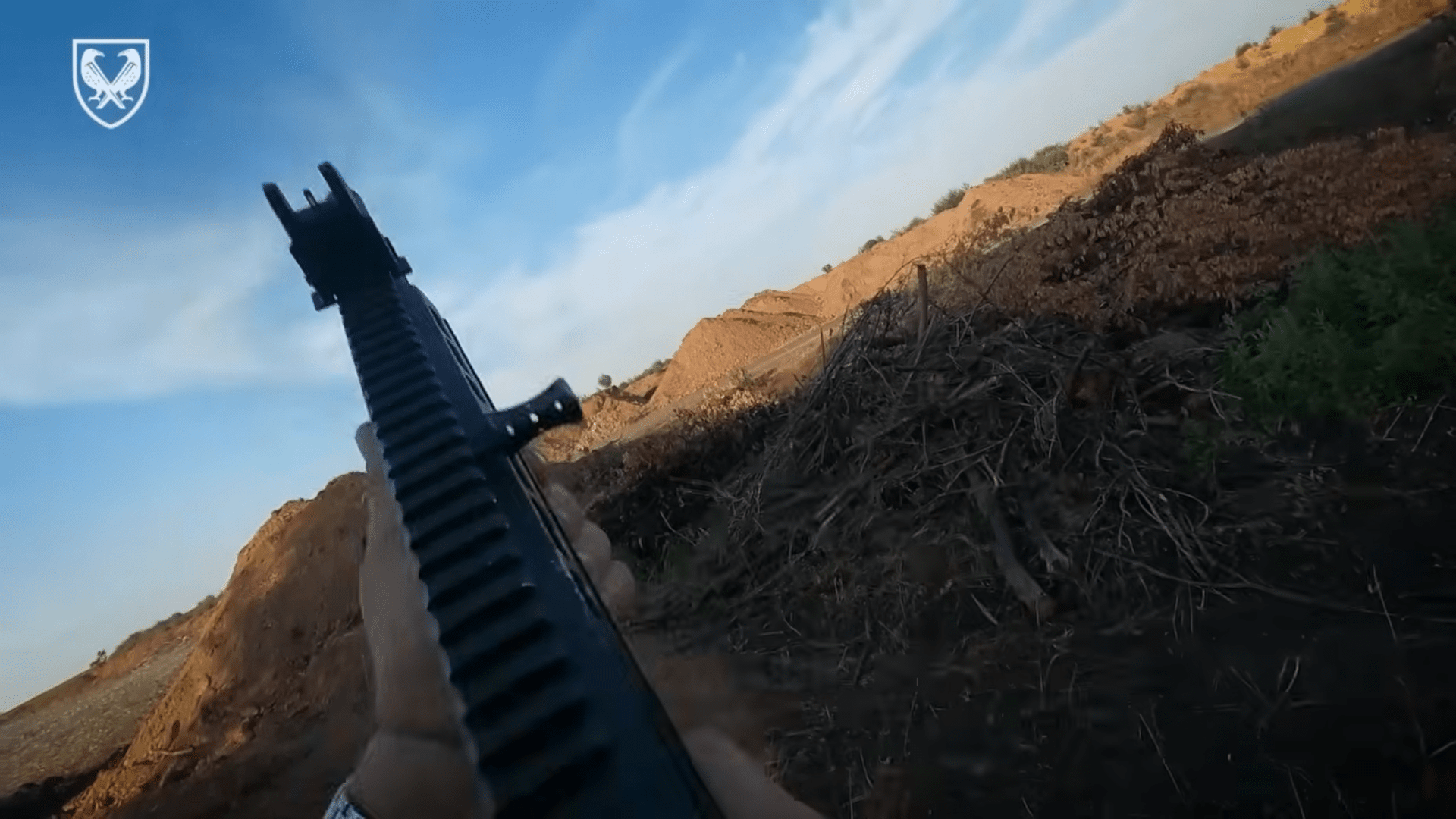
The fortification line is reinforced by thousands of small drone operators positions
Around these main lines, a dense network of micro-fortifications is built for small drone-operator groups capable of covering nearly 20 km, creating a real kill zone around the fortification lines.
These dugouts and trenches are camouflaged and protected against drone or infantry attacks by traps and metal roofing. Logistics roads are covered with fishing nets to catch FPV drones.
One example of this adaptation is the position of the fiber-optic drone operator Sigmund in the “Silver Forest,” a pocket still controlled by Ukraine in the temporarily Russian-occupied Luhansk region. It was recently filmed by a UNITED24 Media correspondent.
The footage shows a small group of soldiers, each with a defined role, surrounding one or more drone operators, holding a concealed, fortified, underground position with a range of several dozen kilometers.
These positions can be resupplied by aerial or ground drones, which are harder to detect and help avoid personnel losses on supply routes.
Another UNITED24 Media correspondent recently embedded with the 423rd Separate UAV Battalion, which hunts Russian soldiers and equipment from a small, concealed dugout used by drone operators.
Ukraine’s evolving fortification strategy noticed by OSINT researchers
This trend has been identified by several OSINT researchers analyzing satellite imagery, ground-level photographs of Ukrainian fortifications, and their battlefield performance. Particular attention has focused on the Pokrovsk sector in the Donetsk region, which has concentrated a significant share of fighting and Russian losses over recent months.
Multiple open-source analyses highlight how Ukrainian defenses have shaped Russian movement patterns in the area, limiting available routes of advance over long stretches of the frontline.
Giving away the remaining part of Donetsk oblast to Russia 🇷🇺 without a fight cannot be accepted by Ukraine 🇺🇦 because it still contains most of its fortifications and 5 cities.
— Clément Molin (@clement_molin) November 30, 2025
As you can see, there is not much fortifications on the west of Donbas border. pic.twitter.com/dUx7NCUIAS
One documented example from November shows Russian infantry units forced to use a single viable crossing point across several kilometers near Pokrovsk. Ukrainian forces targeted these choke points over several days using mines and FPV drones, resulting in sustained losses among Russian troops. Drone operations in the area included units from Ukraine’s 414th Separate UAV Systems Brigade, known as “Magyar’s Birds,” according to open-source reporting and verified battlefield footage.
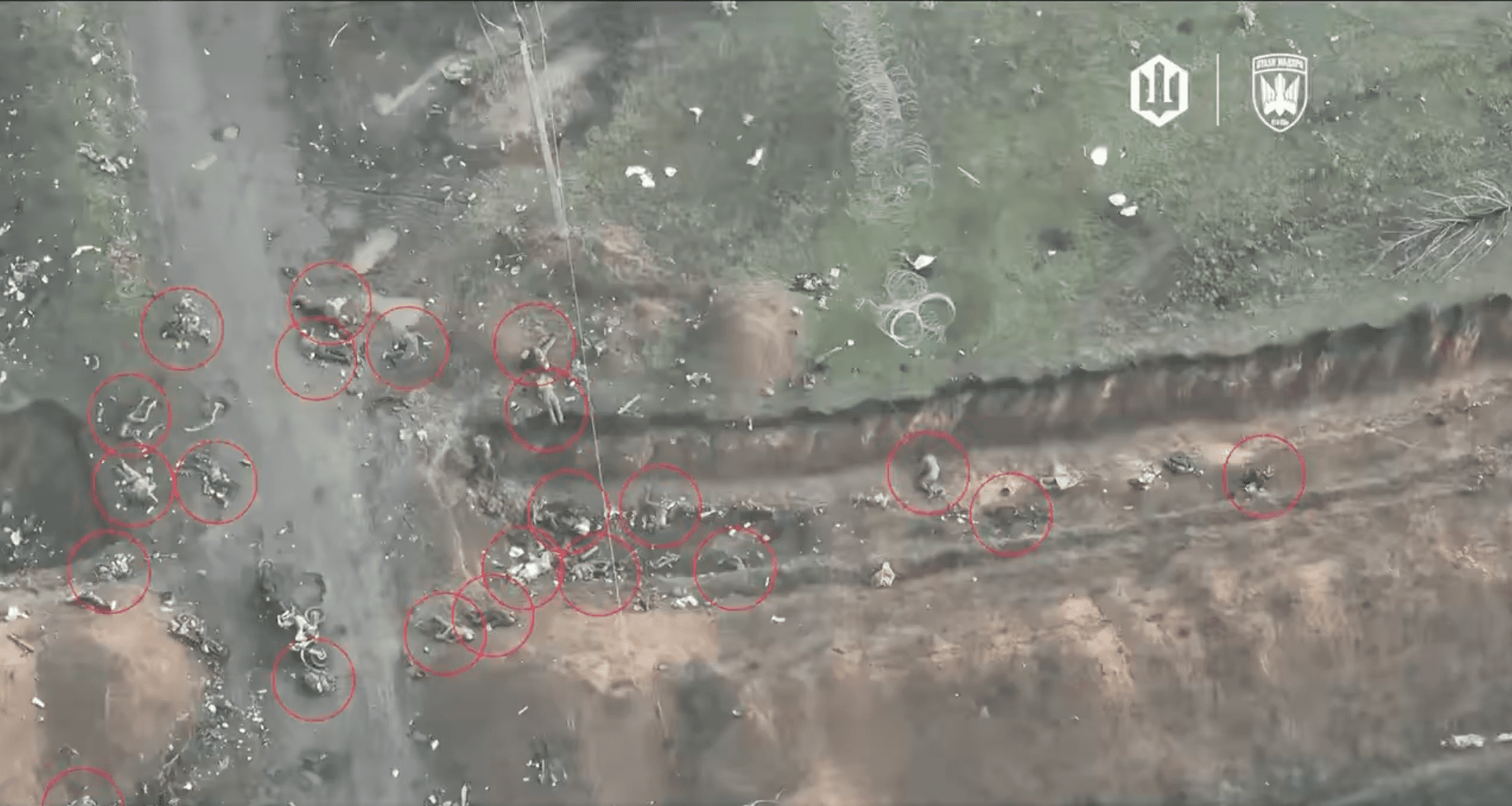
If the system’s effectiveness is widely recognized, the real question is whether this level of construction is consistent across the entire frontline. Another question is how Russia might try to adapt, such as using thermobaric guided bombs and artillery strikes to break these fortifications.
But given the current state of Russia’s motorized infantry and the difficulty to hide artillery positions from drone strikes, it remains highly unlikely that Russian forces could overcome this type of fortification without losing a huge number of soldiers. Over time, such losses would erode both the quantity and the quality of Russia’s available soldiers, as well as their willingness to keep advancing into fortified kill zones simply to exhaust Ukraine’s supply of FPV drones.
Ukraine handing over territory without a fight would mean forcibly swallowing a poison pill.
Christopher Miller
Financial Times correspondent
That’s why keeping the remaining part of the Donetsk region under Ukrainian control is vital. If Russia were to seize it, Moscow would gain a disproportionate advantage—space to rebuild its forces and a far easier route to continue offensive operations against other Ukrainian regions.
If Russia is not stopped in the East, its appetite won’t stop there.
Denys Zakiyev
Commander of the 23rd Engineering–Positional Unit Battalion
Discuss this article:
-4a56a6b482ec132402c16ef6fcabf9a2.png)

-37d0c4e589b794d453938c254fb3d00d.png "Comoros-flagged tanker KHORYV, Dnipro city, Ukraine, 2021.")



-111f0e5095e02c02446ffed57bfb0ab1.jpeg "Photo of Roman Kohanets")