- Category
- Latest news
Sweden Unveils $5K Mini-Missiles to Counter Russian Drone Threat
 Prefer U24 Media on Google
- Authors


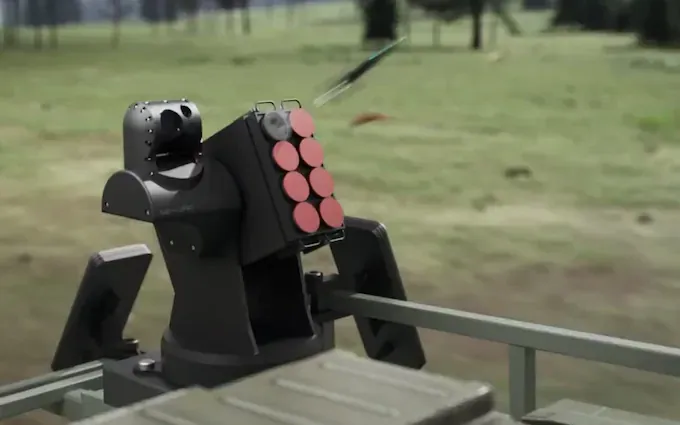
A Swedish defense company has introduced a new low-cost weapon designed to intercept Russian-made drones that have increasingly targeted airports, power plants, and other infrastructure across Europe.
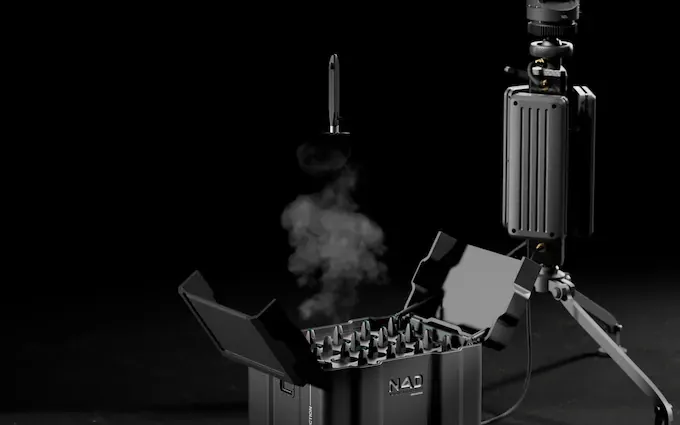
According to The Telegraph on October 4, Stockholm-based Nordic Air Defense (NAD) is developing the Kreuger 100—a compact, electrically powered interceptor that uses kinetic impact rather than explosives to destroy drones.
🇸🇪 Sweden just built a drone killer that costs $5K—16,000x cheaper than scrambling a fighter jet.
— Ivan Khomenko (@KhomenkoIv60065) October 7, 2025
🚫 No explosives
🎯 Rams drones mid-air
🤖 AI tracking, IR sensors
📦 Fires from hand-cannon or truck
🔥 Designed for EU cities and Ukraine’s frontlines pic.twitter.com/QLZXkQn5ck
The system relies on infrared sensors and onboard AI to autonomously detect and track aerial targets before ramming them at high speed.
“We’re building a small, electricity-driven interceptor which is only kinetic. It doesn’t have any warheads or explosives, it knocks the drone down by coming at high speed,” NAD CEO Karl Rosander told The Telegraph. “This means police can use it in civil environments.”
The company says the system is particularly suited for protecting airports and public areas, where using explosive munitions could create secondary risks such as fires or debris damage.
Each interceptor costs around $5,000, making it roughly 16,000 times cheaper to operate than deploying a fighter jet for interception missions.

Concept images show the mini-missile being launched from hand-held cannons, rifle-like devices, or vehicle-mounted systems, allowing both military and civilian users to respond quickly to drone incursions.
The interceptor’s range exceeds three kilometers, and it can function autonomously once a target is identified.
Unlike current anti-drone weapons used in Ukraine—many of which rely on explosive warheads—the NAD missile neutralizes targets through physical impact, making it suitable for use near populated or industrial zones.
European officials are increasingly alarmed by the rise in Russian drone activity over EU airspace. In recent weeks, suspected Russian reconnaissance and FPV drones have disrupted operations at airports in Germany, Denmark, and Norway.
Munich airport, for example, was closed overnight on October 2 following multiple drone sightings that led to flight cancellations and delays.
NATO Secretary General Mark Rutte recently warned that it is “unacceptable to shoot down drones costing one or two thousand dollars with missiles that may cost half a million or even a million dollars,” highlighting the need for affordable alternatives.
Earlier in September, the EU announced plans to build a “drone wall” along its eastern border after Russian UAVs violated Polish airspace. The initiative—supported by Ukraine and led by EU Defense Commissioner Andrius Kubilius—aims to create a layered shield using sensors, electronic warfare, and kinetic systems.
Discuss this article:
-331a1b401e9a9c0419b8a2db83317979.png)

-c439b7bd9030ecf9d5a4287dc361ba31.jpg "Photo of Katherina Popilnichenko")


-72b63a4e0c8c475ad81fe3eed3f63729.jpeg "Photo of Cyril Barabaltchouk")