- Category
- War in Ukraine
Canadians Help Ukrainians Win the War Against Russia’s Landmines
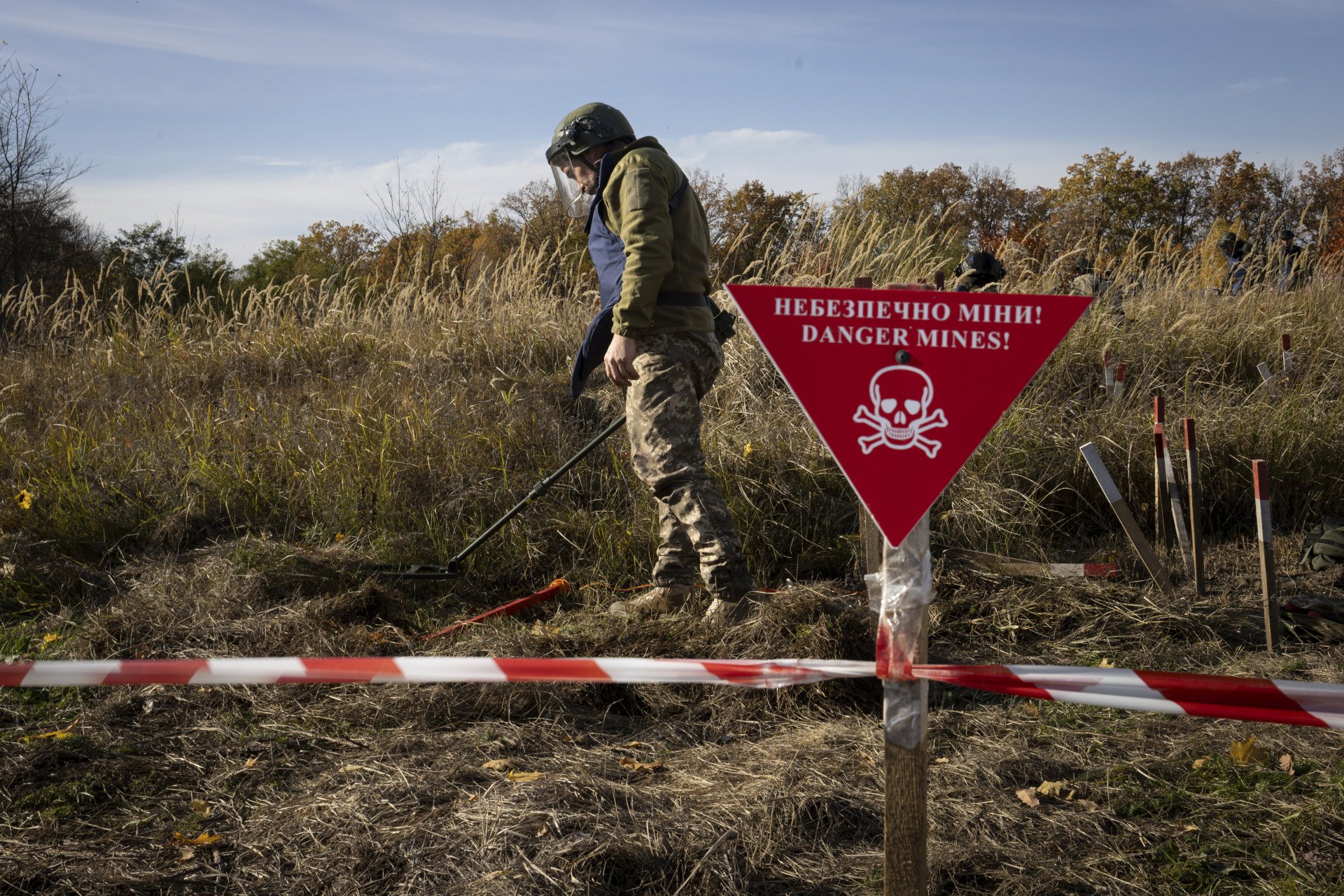
Radmyla was 22 when Russians invaded Ukraine in 2014, close to her hometown of Kramatorsk. Now, she is one of the next generation of deminers in Ukraine, thanks to one organization: Mriya Aid.
 Prefer U24 Media on Google
- Authors

-605be766de04ba3d21b67fb76a76786a.jpg "Joseph Place")
When Ukrainian soldiers liberate a village, the danger rarely leaves with the Russian army. Explosive ordnance litter the soil or can be found in homes and public buildings. Sometimes they are disguised as civilian objects, including toys, or buried deep underground or tucked away in people’s homes. Their sole intention is to kill long after the troops have withdrawn. One UN expert estimates that it will take decades to completely demine the country.
Mriya Aid is helping Ukrainians make their land and homes safe from mines by getting them trained in modern demining methods. We spoke to members of this NGO and Ukrainians who have been trained to demine their homeland.
Who is Mriya Aid?
Founded in February 2022 by Canadians, Ukrainians, and Ukrainian-Canadians, Mriya Aid describes itself as a non-profit organization registered in Canada and Ukraine, “dedicated to Ukraine’s defense” and the only Canadian body focused on demining Ukraine. It coordinates with Ukrainian state agencies thanks to their deep knowledge of the parties involved in demining across Ukraine and personal connections to Ukraine.
Mriya Aid helps Ukrainians get the training and qualifications, namely IMAS EOD , to effectively and safely remove explosives, which pose a risk to civilians even long after Russian forces have left the area.
Every single grenade, trip wire, mine, removed is a saved life.
Lubomyr Chabursky
Mriya Aid board member
A Donetsk region native demining her home from Russia’s “surprises”
Radmyla Volovetska is one woman who was trained in demining in programs organized by Mriya Aid. “I lived an ordinary life in a small city in the Donetsk region called Kramatorsk,” she said. “A city for which Ukrainian soldiers are now fighting every single day.”
Her life was very normal. She worked as a manager in recruitment, was a competitive athlete, and enjoyed taking local trips to see the nature of the region, which is “one of the reasons why I became aware of the problem of mined territories.”
The impacts of Russia’s war hit her in 2014. “Our city, like many others, experienced occupation. After enemy forces retreated, they left behind many dangerous ‘surprises.’ Mines and explosive devices located within residential areas were quickly cleared. Some of those operations I saw online, while others I witnessed personally.”
She said that after the liberation of Kramatorsk—after three months of Russian control between April and July 2014—when life slowly returned to normal, she continued traveling around the region and started noticing the first “DANGER MINES” signs.
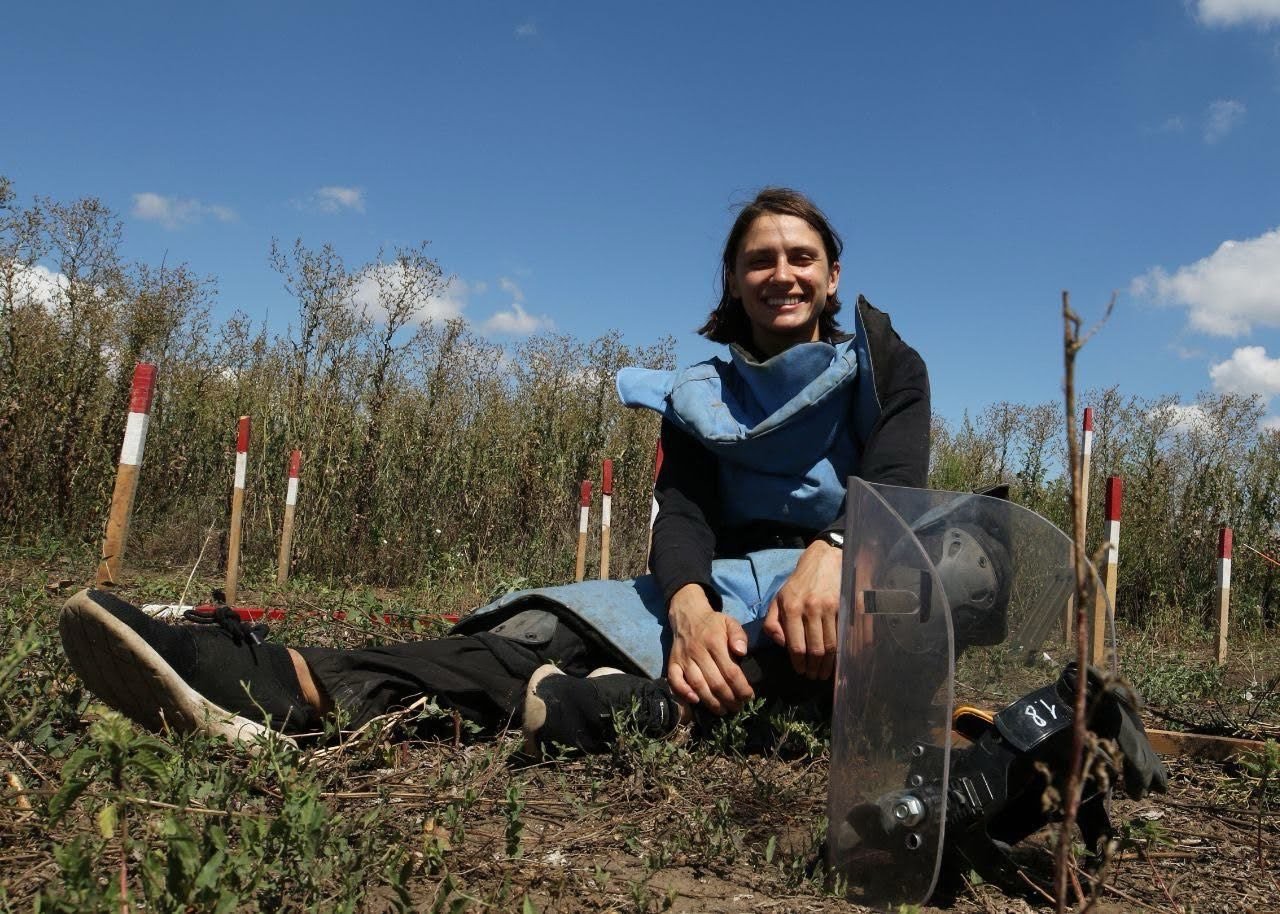
“They did not disappear—they became overgrown with vegetation, faded under the sun, and became less visible,” she said. “At that point, I realized that war leaves behind long-term consequences that people often do not even think about. Eventually, the first demining organizations appeared in our region and helped make our lives safer.”
She knew from the beginning of the full-scale invasion that she wanted to contribute to the defense sector, “to help, and not feel useless during such difficult times for our country.” As she remembered how serious the threat of explosive ordnance was from 2014 and the scale of the destruction, Radmyla decided to “look for myself in this field.”
“I found a vacancy that truly resonated with me and started training,” she said. She joined the Demining Center of the State Special Transport Service, where she encountered Mriya Aid.
What makes this organization stand out to her is their approach to people and to training itself: Mriya Aid only chooses the top quality providers. “They do not simply provide theoretical knowledge or certificates,” she said. “They genuinely prepare specialists for real-life situations and real responsibility. Their instructors create an environment in which people are encouraged to think critically, ask questions, make decisions, and continually improve themselves. They maintain very high international standards while still understanding the human side of this work and the realities we face in Ukraine.”
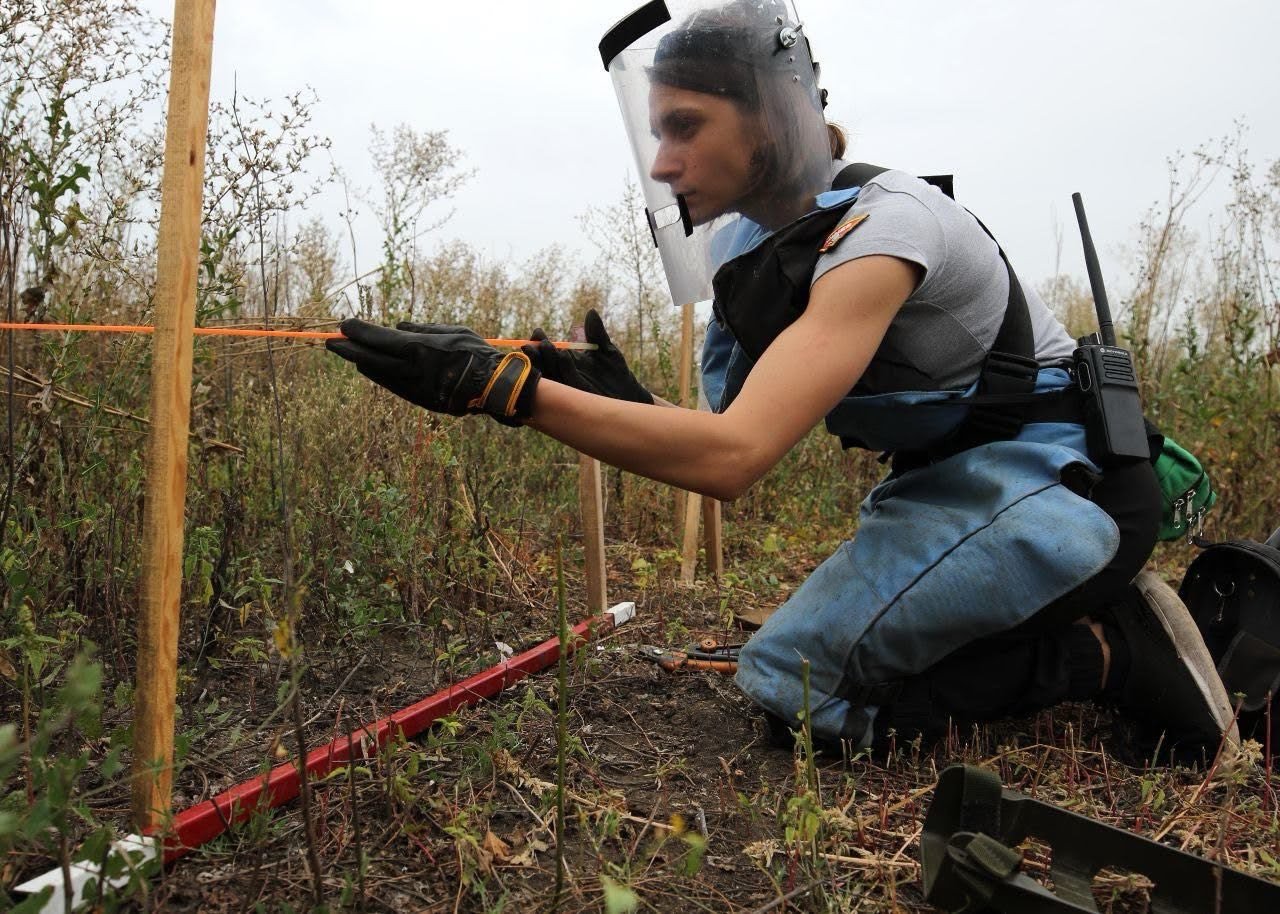
How Mriya Aid helps train Ukrainians
The organization did not start with explosive removal. As soon as the Russian invasion started, “we immediately took action. In 2022, we did everything we could to help Ukraine by sending whatever we could get our hands on. But over time, we pivoted to demining.”
“We did not want to be the ‘Amazon' of providing aid to Ukraine,” they said, as in, trying to do everything at once. “We wanted to focus on a specific need, keep a small structure to maintain efficiency, and focus on actually helping rather than getting slowed down by project management. We would rather spend less time on communications and more time doing things.” This is what makes Mriya Aid unique as a non-profit.
How it started
The pivot to explosive removal came when the then-Ukrainian General Valerii Zaluzhnyi directly told Mriya Aid about the need for help with demining. So the organization started raising funds to train sappers to modern standards. They started by sending Ukrainians to a center—named MAT Kosovo—where future deminers would receive the best possible training.
After the successful counteroffensives in Kharkiv and Kherson, the territories were left covered in explosive ordnance. These were “initially what would be expected: unexploded mortars, artillery, mines, etc. But now it has become more complex, with explosives, seismic sensors, and elaborate means to detect the presence of persons, which are harder to disarm.” By getting Ukrainians trained properly to adjust to the newer threats and coordinating with providers of proper equipment, they are saving the lives of those who are working in this area and those who are at risk of being killed by explosives.
The training
Mriya Aid’s focus on training helps Ukrainians become self-sufficient and draw on their direct battlefield experience, while meeting the high standards required to handle modern explosive ordnance. This has involved those in the police and other civilian sectors to the training courses, as well as those in the military, because what usually starts with a military operation at the front eventually affects civilians after the Russian forces have withdrawn.
This program helped Radmyla organize her knowledge, learn many new things, complete her training in Kosovo, and gain practical experience. Training took place at the center and in the area where they regularly practiced in a safe environment. Through Mriya Aid, she completed EOD Levels 1, 2, and 3.
Another such person who went to Kosovo is Ukrainian policeman Vadym Fursa, who became the top EOD graduate at MAT Kosovo in 2024. Currently, he shares his knowledge with the next generation of Ukrainian police officers in Dnipro. As the city routinely experiences attacks, due to its proximity to the frontline, police responders need to know how to deal with explosive ordnance, as other teams may not arrive as quickly as they do.
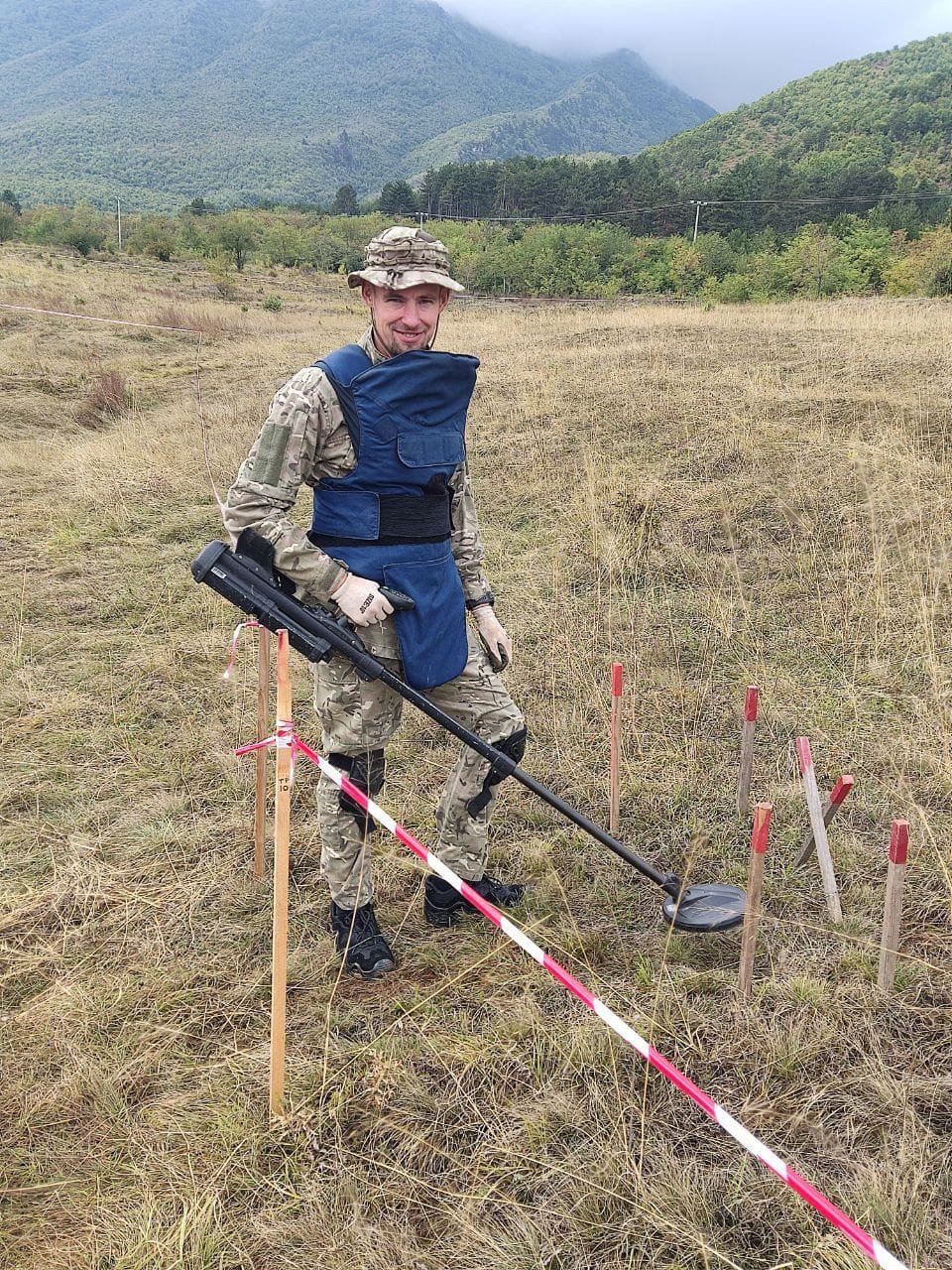
However, he says there is a lack of knowledge in this field. One issue Ukraine faced in 2022 was that the training of deminers was still very much influenced by “a Soviet approach,” as one Ukrainian member of the organization, Anastasiya Ringis, said. As a result, it was not suited to modern threats, but Mriya Aid worked to change this by promoting proper standards for handling the massive challenge of demining.
The training Vadym got especially explained how to deal with partially exploded ordnance, which poses a real threat in urban environments. Now, after the training and experience, he helps train police officers in removing explosives, passing on information which can save lives.
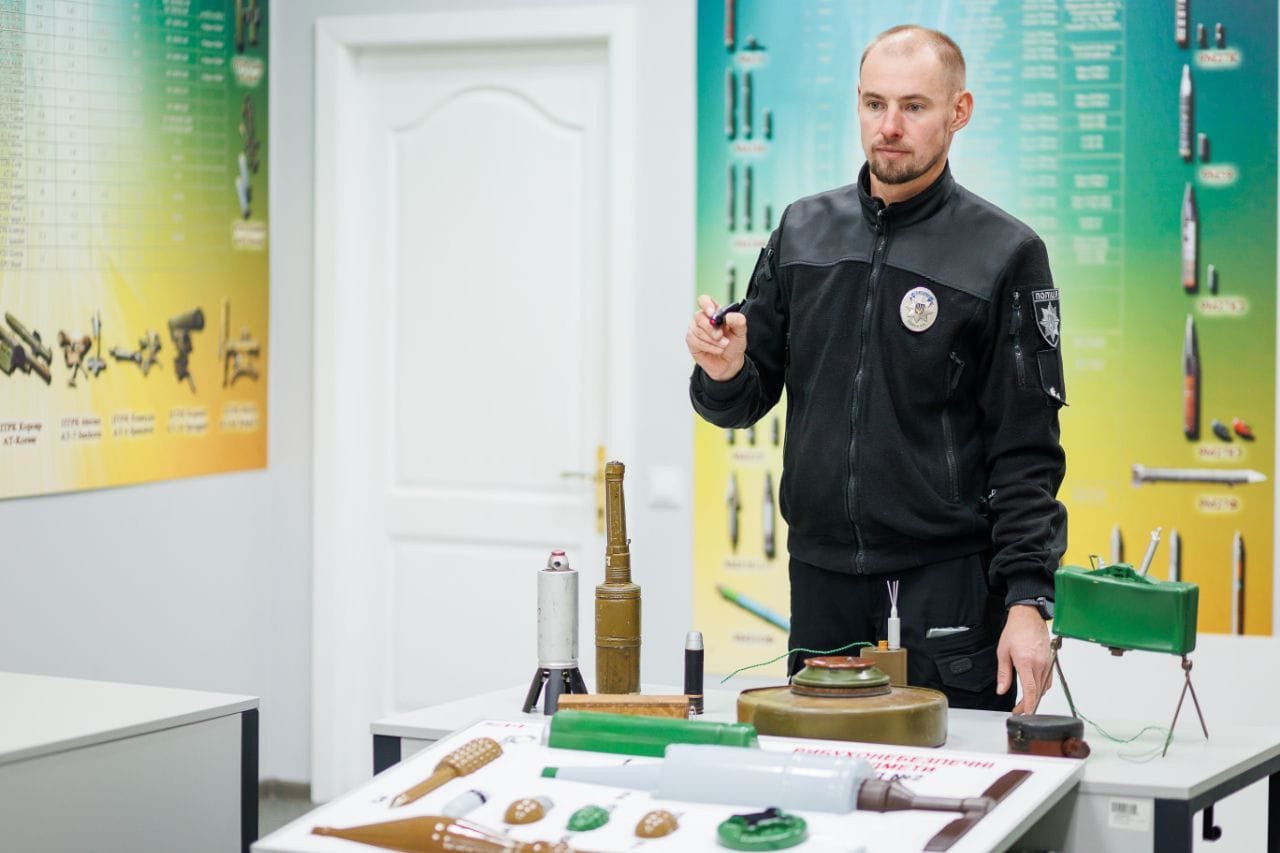
One of the most valuable parts for Radmyla was the practical, individual, and team-based exercises. “You were responsible not only for your own decisions, but also for your team,” she said. “It taught us leadership, responsibility, delegation, and trust in other people’s experience and judgment.”
Radmyla also learned about risk assessment and communication to keep everyone safe. She uses this knowledge and these skills every day and says that Mriya Aid provides a foundation for future challenges, enabling her to adapt to Ukraine's present realities.
By 2025, Mriya Aid had worked with 100 military and state-agency units and raised $10 million, and, since 2024, they represented Canada in the Demining Capability Coalition . The Coalition learned about the work Mriya Aid was doing, the impact they were having, and how connected Mriya Aid is to the “entire demining ecosystem,” and came to them to be included on their list of contributors.
One key focus of the organization is helping Ukrainian women get demining training, such as Radmyla. Gender equality is not only “a Canadian and a Ukrainian value,” they said. Women’s involvement also “brings an important perspective to the demining work.” As many women remain away from the frontlines, they are the ones who take care of themselves and their family’s safety in the formerly occupied territories, and are therefore often acutely aware of the danger.
The organization includes Canadian veterans and has helped Ukrainian veterans acquire new skills and integrate them into its projects, and has provided psychosocial support, as these veterans understand the needs they face. All of these attributes provide a model that other organizations can follow.
Yet the biggest challenge remains: contamination of territories occurs much faster than their clearance. “We increasingly use mechanical demining machines to speed up operations,” said Radmyla. “But even after the war ends, the fight for every safe meter of land will continue for many years. Right now, it sometimes feels endless.”
Every cleared meter brings confidence in a safer future. Even if, through all these efforts and time, we save only one human life or one animal life, it is all worth it. Every life matters.
Radmyla Volovetska
Discuss this article:
-4a56a6b482ec132402c16ef6fcabf9a2.png)


-c439b7bd9030ecf9d5a4287dc361ba31.jpg "Photo of Katherina Popilnichenko")



-29a1a43aba23f9bb779a1ac8b98d2121.jpeg "Photo of Illia Kabachynskyi")