- Category
- War in Ukraine
Now You See Me, Now You Don’t: Russia Gives Baltic Warships a Camouflage Makeover
 Prefer U24 Media on Google
- Authors


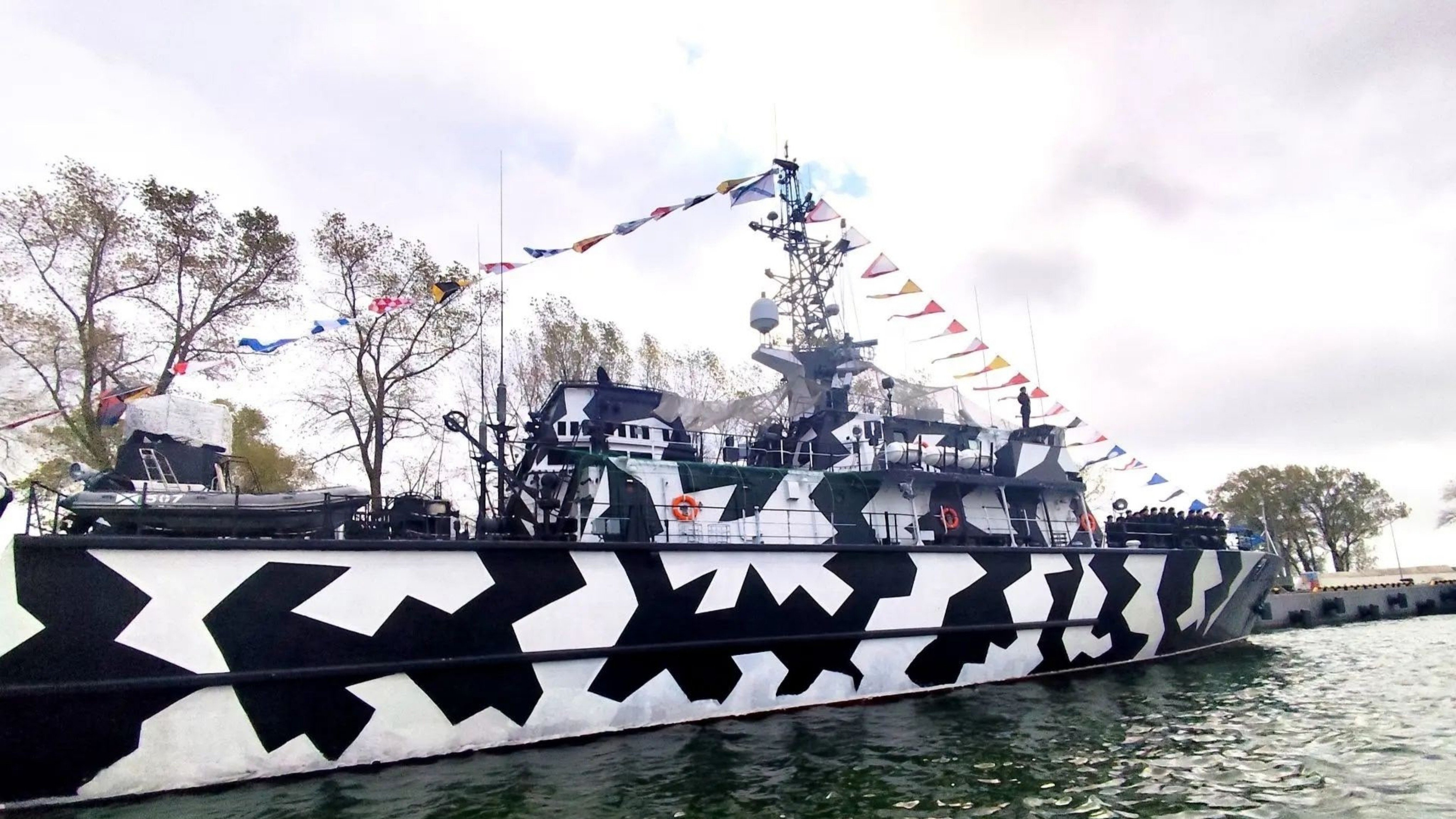
Russia has given two of its Baltic Fleet warships an unusual makeover, covering them in deceptive camouflage patterns and fitting them with anti-drone nets in an apparent attempt to make the vessels harder to identify and protect them against drone attacks.
We bring you stories from the ground. Your support keeps our team in the field.
On November 2, military observer and OSINT analyst Massimo Frantarelli published photographs showing the modified vessels stationed at the Russian naval base in Baltiysk, Kaliningrad region.
Russian Navy ships with deceptive camo and anti-drone cage/netting.
— Massimo Frantarelli (@MrFrantarelli) October 31, 2026
Project 22800 Karakurt-class corvette “Odintsovo”.
Project 12700 Alexandrit-class minesweeper "Aleksandr Obukhov".
🗺️ Baltiysk, Kaliningrad region.
📸"Baltiyskiy gorodskoy okrug"(Oct 30) https://t.co/FsIcIr5E8A pic.twitter.com/gyuNpic8vq
The ships were identified as the Odintsovo, a Project 22800 Karakurt-class missile corvette, and the Aleksandr Obukhov, a Project 12700 Alexandrit-class minesweeper.
Both vessels feature unusual geometric paint schemes that break up their recognizable silhouettes, creating visual distortions intended to make their shapes, dimensions, and orientation more difficult to determine.
The US-based defense community Drone Wars explained that deceptive camouflage relies on contrasting colors and geometric patterns to distort the outlines of military equipment, potentially complicating visual identification and targeting.
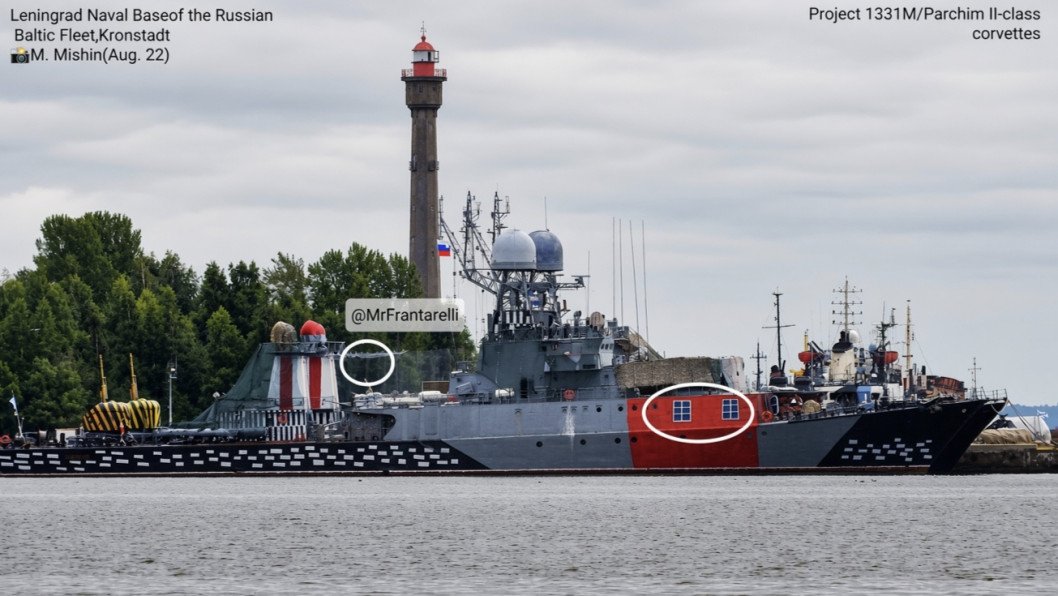
However, Russia is not relying on paint alone. Both warships have also been equipped with anti-drone nets and cage-like protective structures, apparently intended to provide an additional layer of defense against unmanned aerial threats.
Frantarelli identified Baltiysk, the main base of Russia’s Baltic Fleet, as the location of the vessels. The photographs were attributed to the Baltiysk municipal district and dated October 30. The unusual makeover follows similar defensive modifications to Russian vessels operating elsewhere.
In June 2026, Russia was also spotted installing anti-drone netting on the Baltic Fleet’s large landing ship Aleksandr Shabalin. The vessel, photographed escorting a Russian cargo ship in the Baltic Sea, had green protective mesh covering parts of its superstructure and deck to provide additional defense against drone attacks.
Discuss this article: