- Category
- War in Ukraine
Ukraine Unveils Upgraded Vepr Ground Robot for Evacuation, Logistics and Demining
 Prefer U24 Media on Google
- Authors


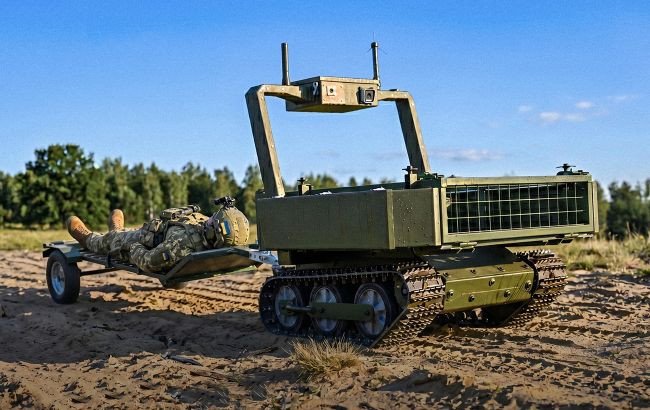
Ukraine’s arsenal of battlefield evacuation systems has been expanded with the addition of the Vepr unmanned ground vehicle, a domestically developed robotic platform designed for logistics, casualty evacuation, and combat support missions, Ukraine’s Ministry of Defense announced on June 3.
According to the ministry, the Vepr ground robotic complex has been operating on the frontline since 2024. Drawing on combat experience and feedback from Ukrainian servicemembers, developers have significantly upgraded the platform to meet evolving battlefield requirements.
We bring you stories from the ground. Your support keeps our team in the field.
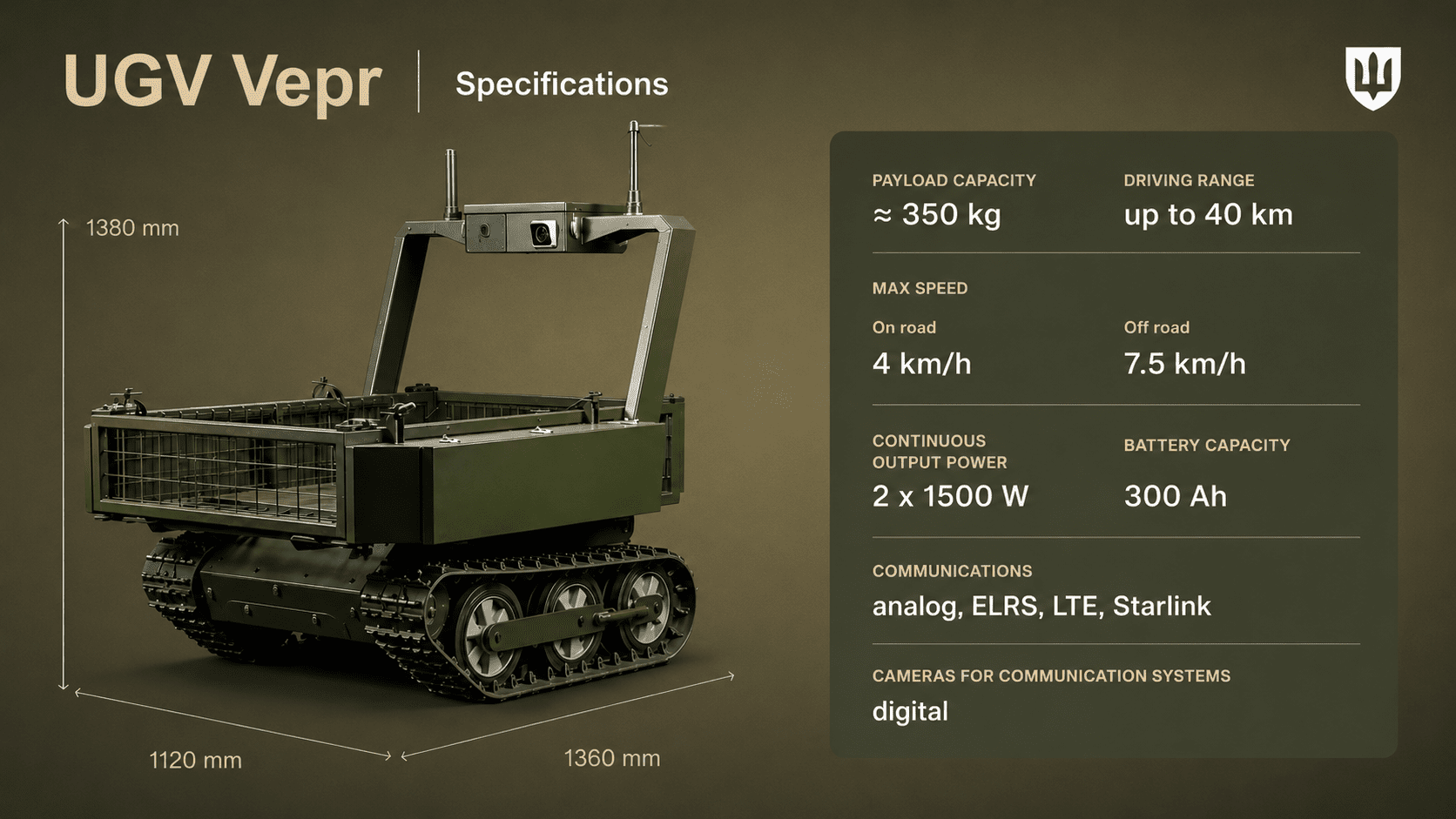
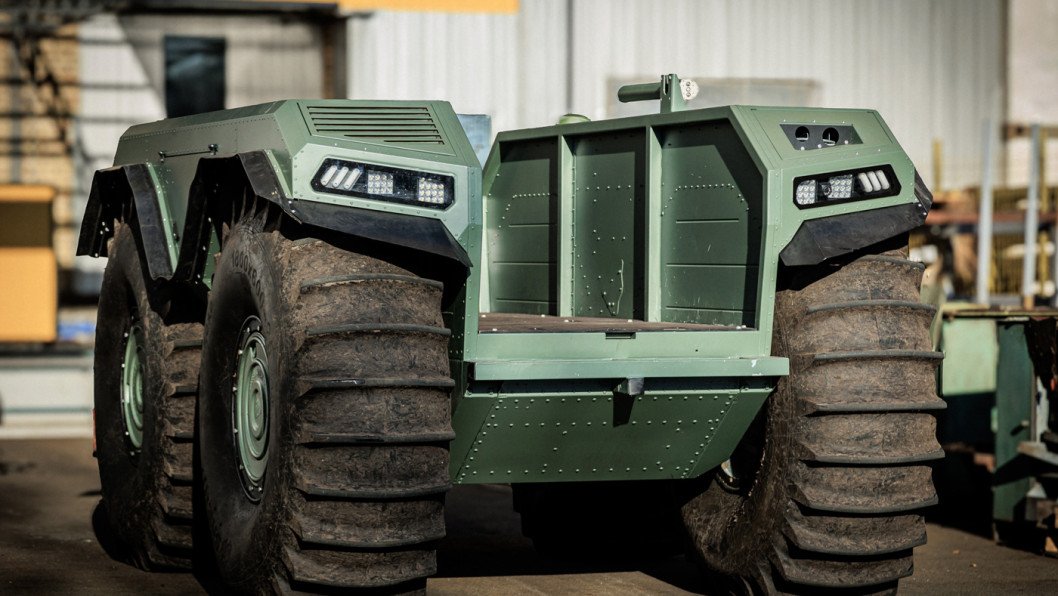
The Vepr measures 136 cm in length, 112 cm in width, and 138 cm in height with its mast installed. Weighing approximately 350 kilograms when fully equipped, the vehicle is capable of transporting cargo of an equivalent weight.
Powered by two 1.5-kilowatt electric motors, the platform can reach speeds of up to 7.5 kilometers per hour. Its battery system provides a range of nearly 40 kilometers on a single charge. The vehicle is also equipped with digital cameras and supports multiple communication systems.
According to the Ministry of Defense, the Vepr platform is capable of transporting ammunition and military equipment weighing up to 350 kilograms, evacuating one or two wounded personnel simultaneously, conducting remote demining operations, and recovering damaged vehicles or other robotic systems from the battlefield.
The ministry said Ukrainian unmanned ground systems currently carry out approximately 10,000 logistics and evacuation missions each month. During the first half of 2026, the government plans to procure more than 25,000 ground robotic complexes, more than double the number contracted throughout all of 2025.
The growing role of ground robotic systems is already being reflected in frontline operations and civilian evacuation efforts.
In May, Ukrainian paratroopers from the 25th Separate Airborne Brigade evacuated an elderly woman from the Pokrovsk sector after she appealed to soldiers for assistance in leaving an area threatened by advancing Russian forces.
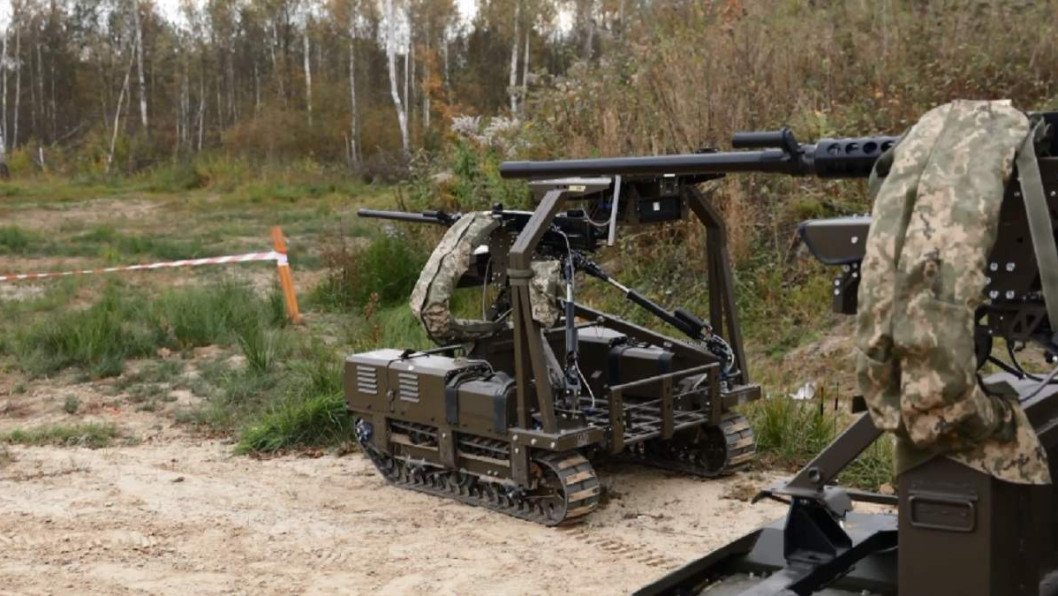
Military officials said the security situation in the area had deteriorated due to relentless Russian shelling and the proximity of active combat operations, prompting the woman to leave her home.
Because she was taking personal belongings with her, Ukrainian troops employed a ground-based robotic platform to transport part of her property during the initial stage of the evacuation.
According to the Air Assault Corps, the evacuation was carried out under challenging conditions. The woman remained in her hometown for as long as possible despite the growing danger, ultimately deciding to leave only when the situation became untenable.
“The decision to leave her home was not easy, but she stayed on her native land until the last possible moment. The evacuation took place under difficult circumstances: first, her belongings were loaded onto a ground robotic platform, after which several kilometers were covered on foot under the protection of our paratroopers,” the military said.
In a separate operation, operators from Ukraine’s “Kraken 1654” drone brigade successfully evacuated four civilians from the vicinity of Lyman through a coordinated three-stage rescue effort.
Discuss this article:
-9a7b3a98ed5c506e0b77a6663f5727c5.png)