- Category
- War in Ukraine
How Ukraine’s Ground Drones Are Ushering in a New Era in Military Technology
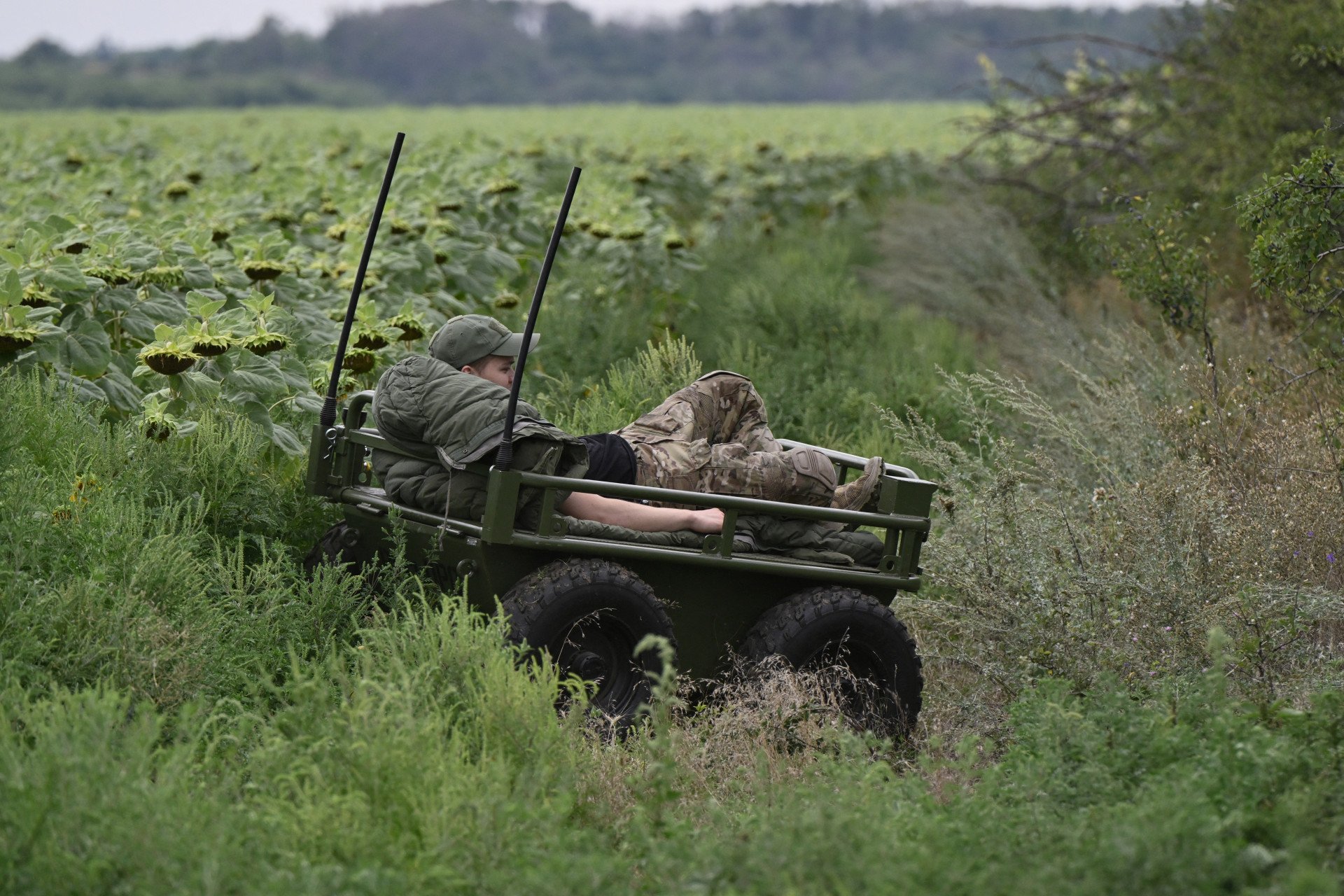
Once seen as clumsy or unconventional, ground drones are no longer sci-fi on Ukraine’s frontlines. This military technology is saving soldiers, hauling supplies, scouting enemy lines, and even leading assaults against Russian forces.
 Prefer U24 Media on Google
- Authors

-f88628fa403b11af0b72ec7b062ce954.jpeg "Photo of Amira Barkhush")
Russia’s full-scale invasion of Ukraine has accelerated the development and deployment of unmanned ground vehicles (UGV). While Ukraine’s use of ground drone technologies for defense dates back to 2014 , the 2022 invasion has significantly expanded their role.
UGVs have already proven invaluable but require ongoing refinement and development, Volodymyr Rovenskyi, officer in the Ground Systems Development Division for Unmanned Systems Command, told us during a July 2025 event organized by the Land Forces Command of the Ukrainian Armed Forces on the use of UGVs in Ukraine.
“Combat ground systems require further refinement and development,” he said, “but they are already actively used in the military today.”
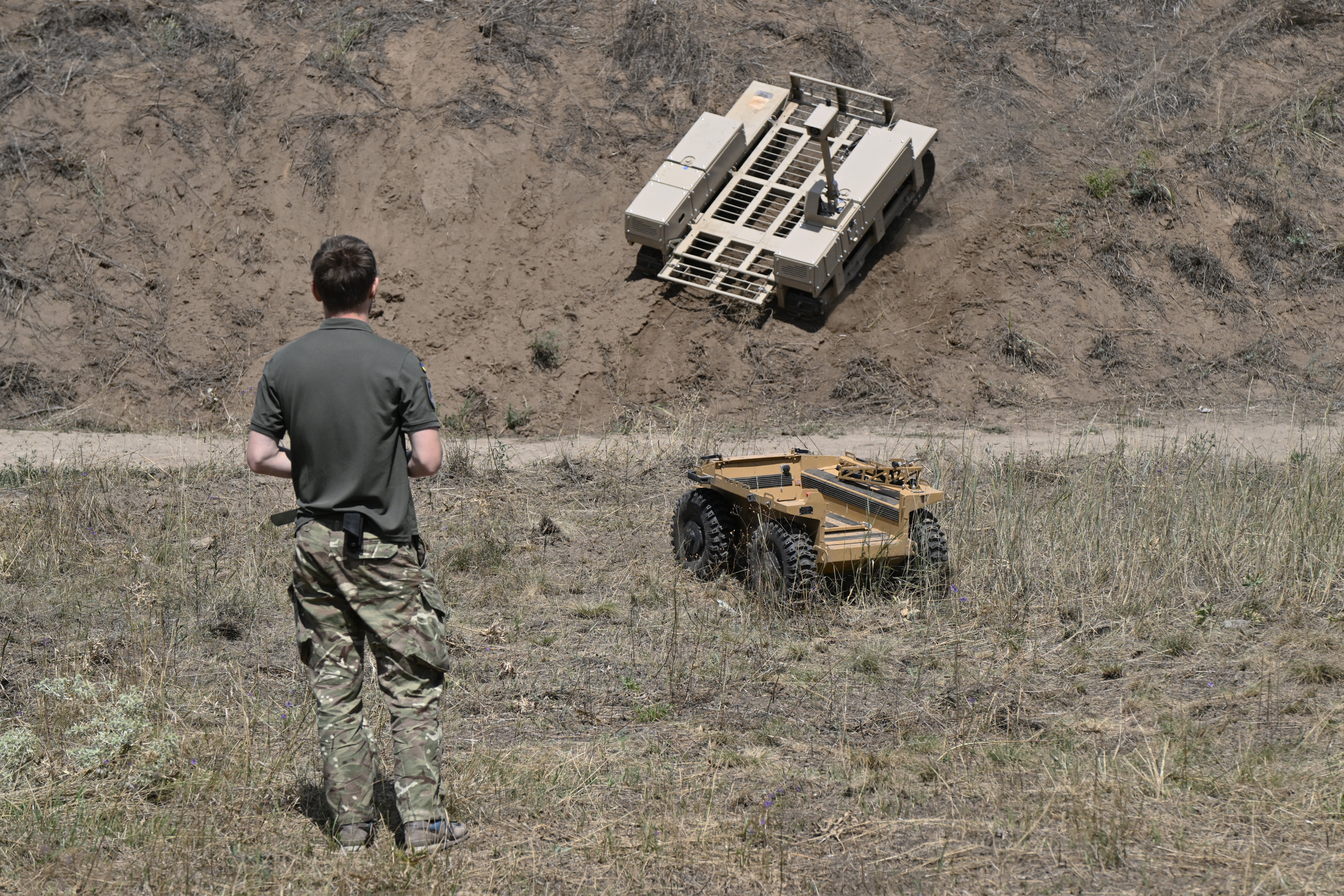
Categories and usage of ground drones
UGVs vary in size and purpose, each fulfilling a unique role on the battlefield. They can assault enemy positions, secure flanks, or engage targets from a safe distance. Ukraine’s use of UGVs has accelerated in recent months, helping relieve pressure on infantry amid recruitment challenges and battlefield losses.
“Everything can be done from a protected location, without exposing personnel to danger,” said Irish, ground drone engineer, during a video report on the TerMIT drone. “The future lies in technology, and from what I see today—all progress is moving toward autonomy. All the unmanned ground combat systems will become intelligent, autonomous, capable of making automatic decisions to fire, and so on.”
“Soon it will be a fight between robots, not human versus human.”
Irish
Ground drone engineer
Size matters
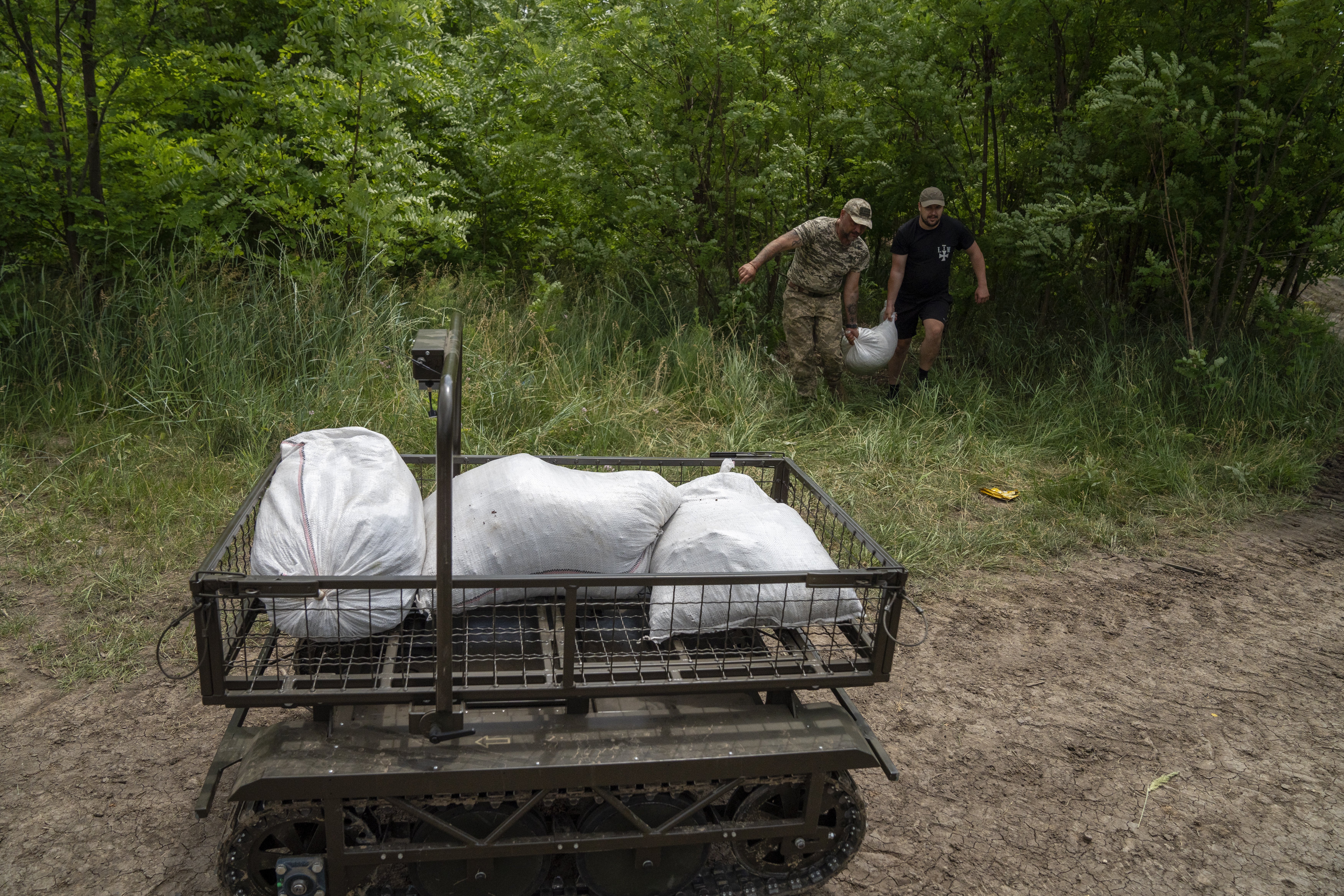
The design and capabilities of UGVs are often dictated by the intended application. The weight and dimensions of ground drones influence their mobility and payload capacity.
Small: less than 10 kg, these compact UGVs are designed for portability and can be manually carried or deployed in confined spaces. They are ideal for tasks such as reconnaissance and surveillance in urban environments.
Examples: Tarhan 1S—30kg, and BOMBETEL-M—22 kg.
Medium: Ranging from 10 kg to 1.5 tons, medium-sized UGVs offer a balance between mobility and payload capacity. They are commonly used for logistics support, surveillance, and mine detection.
Large: Exceeding 1.5 tons, such UGVs are typically used in military applications for tasks that require significant payloads or heavy-duty operations, such as armed combat or heavy equipment transport.
Purpose-based classification
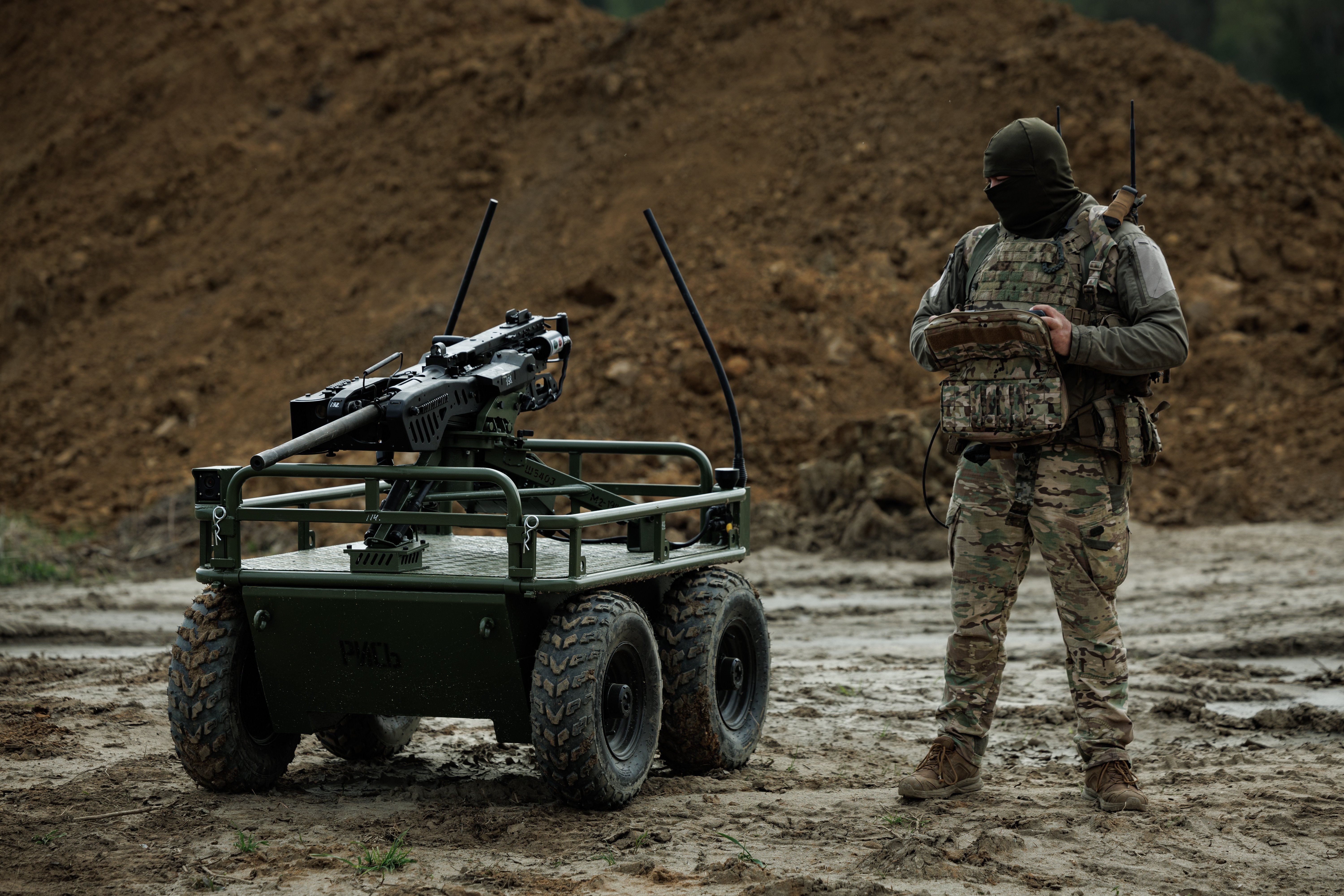
Depending on the intended purpose, ground drones can be equipped with machine guns, grenade launchers, military masts, anti-tank missiles, automatic cannons, mine-laying systems, and other modules.
Besides the obvious, unmanned ground vehicles perform their most important function—saving soldiers’ lives since they spend less time exposed to enemy fire.
Military UGVs: Designed for reconnaissance, explosive ordnance disposal (EOD), and combat support.
Industrial UGVs: Utilized in sectors like agriculture, mining, and construction for tasks such as material transport, inspection, and terrain mapping.
-cbdfe14cc9a9a3e026af478e16188fb8.jpeg)
Search and rescue UGVs: Engineered to navigate through debris and hazardous environments to locate and assist survivors.
Service UGVs: Employed in urban settings for surveillance, patrolling, and checkpoint operations.
Rovenskyi highlighted that about 47% of UGVs in Ukraine are used for logistics and evacuation, 25% for engineering tasks, and 12% for combat.
“The remaining percentage is made up of special-purpose systems, which also have specific applications,” he said.
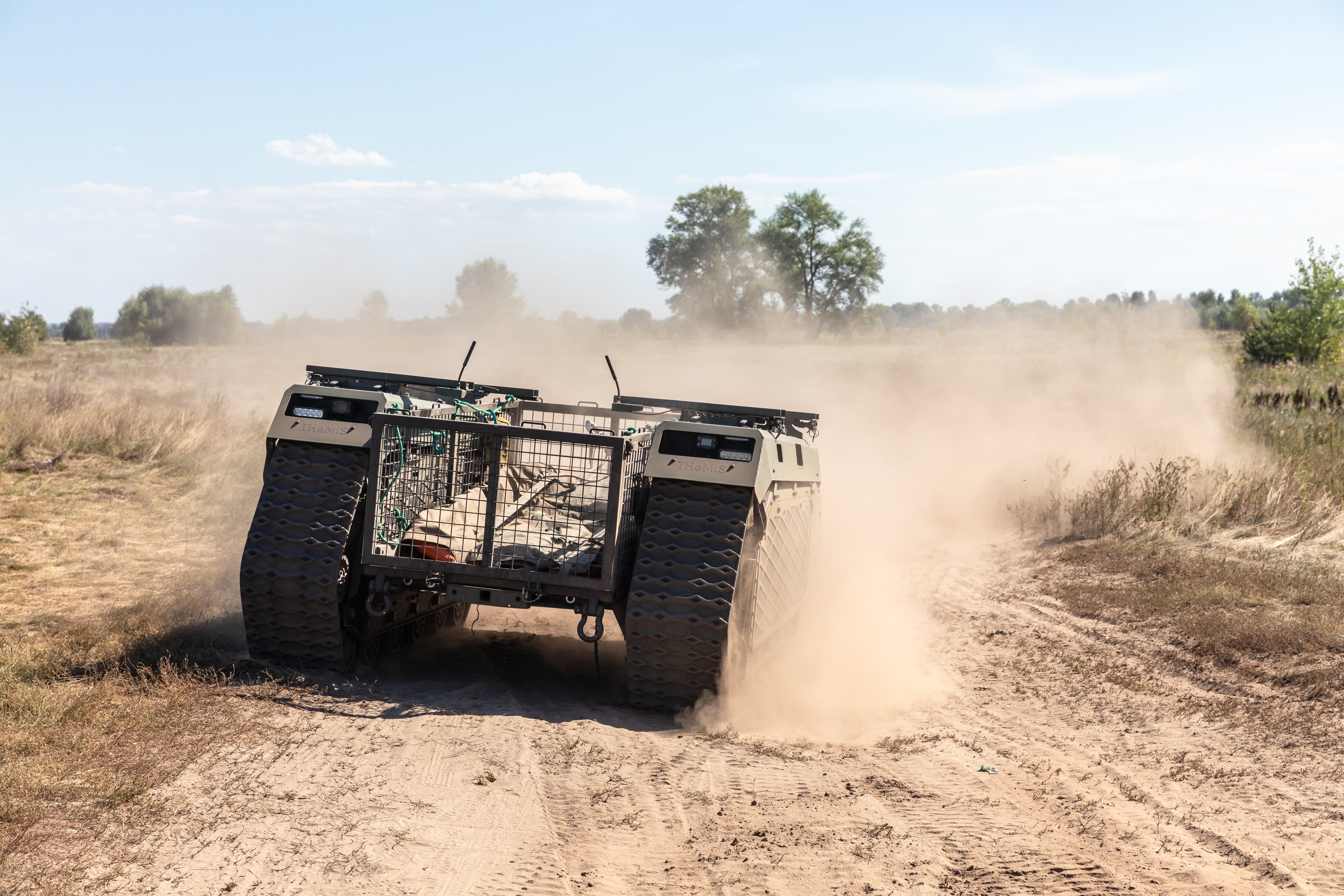
Successful UGV operations on the battlefield
As mentioned above, UGVs have a wide range of applications. The Ukrainian army is actively leveraging this technology and continuing to develop it to save lives and enhance operational effectiveness.
For example, in late 2024, Ukraine’s 13th National Guard Brigade Khartiia conducted the first known combined-arms operation using only drones. The strike integrated aerial and ground-based unmanned systems to destroy key Russian positions, forcing their units to regroup. This operation’s success showed the potential of drones in modern warfare.
However, Oleksandr, an instructor at the Unmanned Ground Systems Specialist School Varan and known by the call sign “Naruto,” told us that while some believe drones can fully replicate infantry roles, they cannot.
“They can’t replace a soldier,” he said. “But they can enhance their work, improve the conditions they operate in, and streamline logistics.”
Capturing POWs
In the summer of 2025, Ukrainian ground drones achieved a historic victory by storming a Russian position and capturing prisoners. The 3rd Separate Assault Brigade executed the operation, using a combination of ground robots, equipped with anti-tank mines, and suicide drones to neutralize Russian forces. The prisoners were taken by drone to Ukrainian defensive lines, marking a significant milestone in the use of unmanned systems in combat.
“It marks the first confirmed successful assault in the modern war carried out entirely by unmanned platforms,” the 3rd Assault Brigade wrote on X, noting that the NC13 unmanned systems unit from the DEUS EX MACHINA company of the 2nd assault battalion executed such an operation.
It is one more in a series of Ukrainian military firsts: from the large-scale use of naval drones in the Black Sea, to pioneering FPV interceptors, and now to ground robots not only storming positions but even taking prisoners.
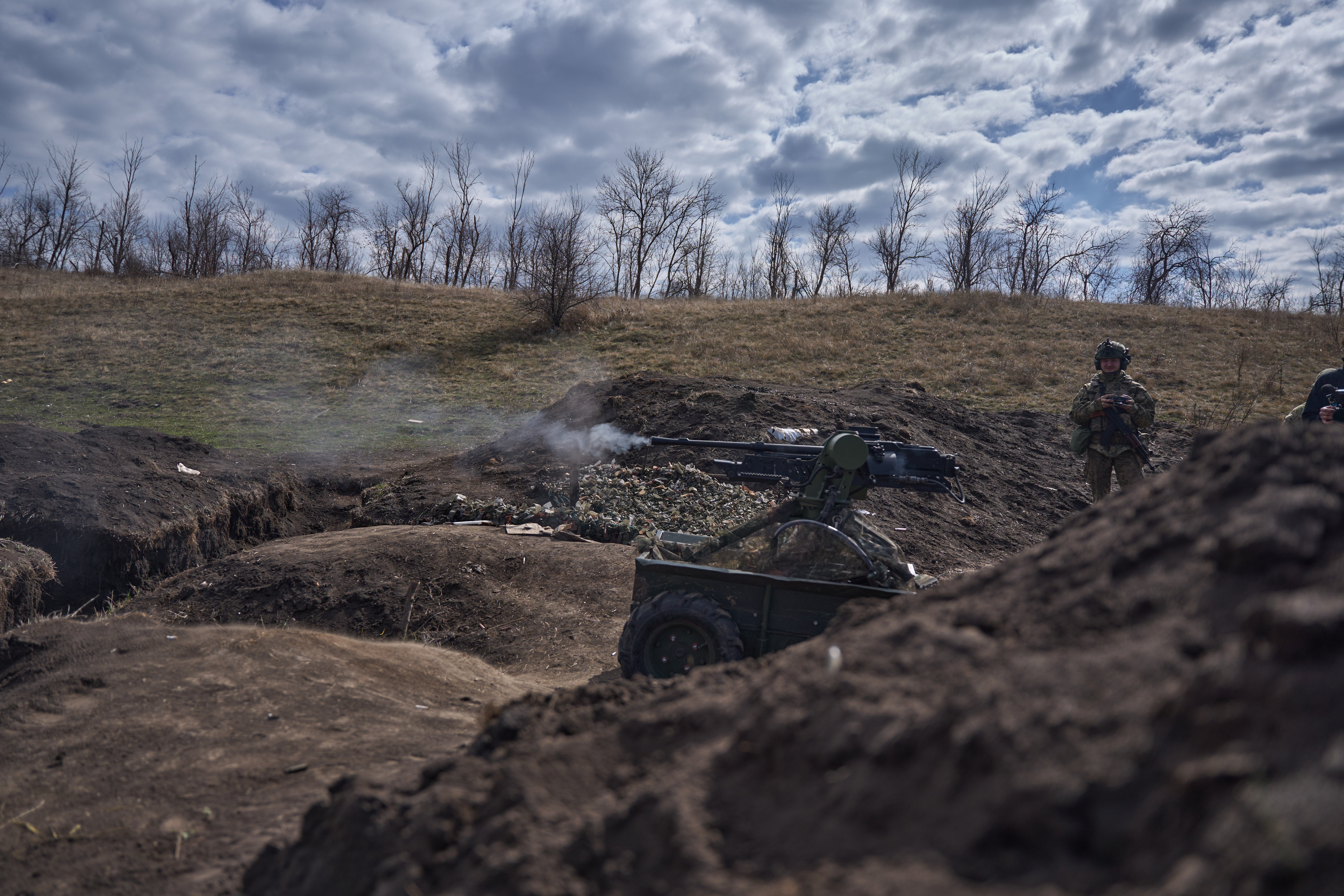
Evacuating the wounded
Khartiia Brigade posted a video on May 20, 2025, showcasing the successful evacuation of an injured Ukrainian soldier from the frontline using the “Tarhan” wheeled robotic system. The system covered a 24-kilometer route, 12 kilometers each way from the zero line.
The decision to use the Tarhan robotic system for evacuating the infantryman was made due to the impossibility of deploying conventional vehicles near the battlefield, said the brigade. Positions on both sides are often cut off from support for many kilometers because of the constant presence of strike FPV drones in the sky.
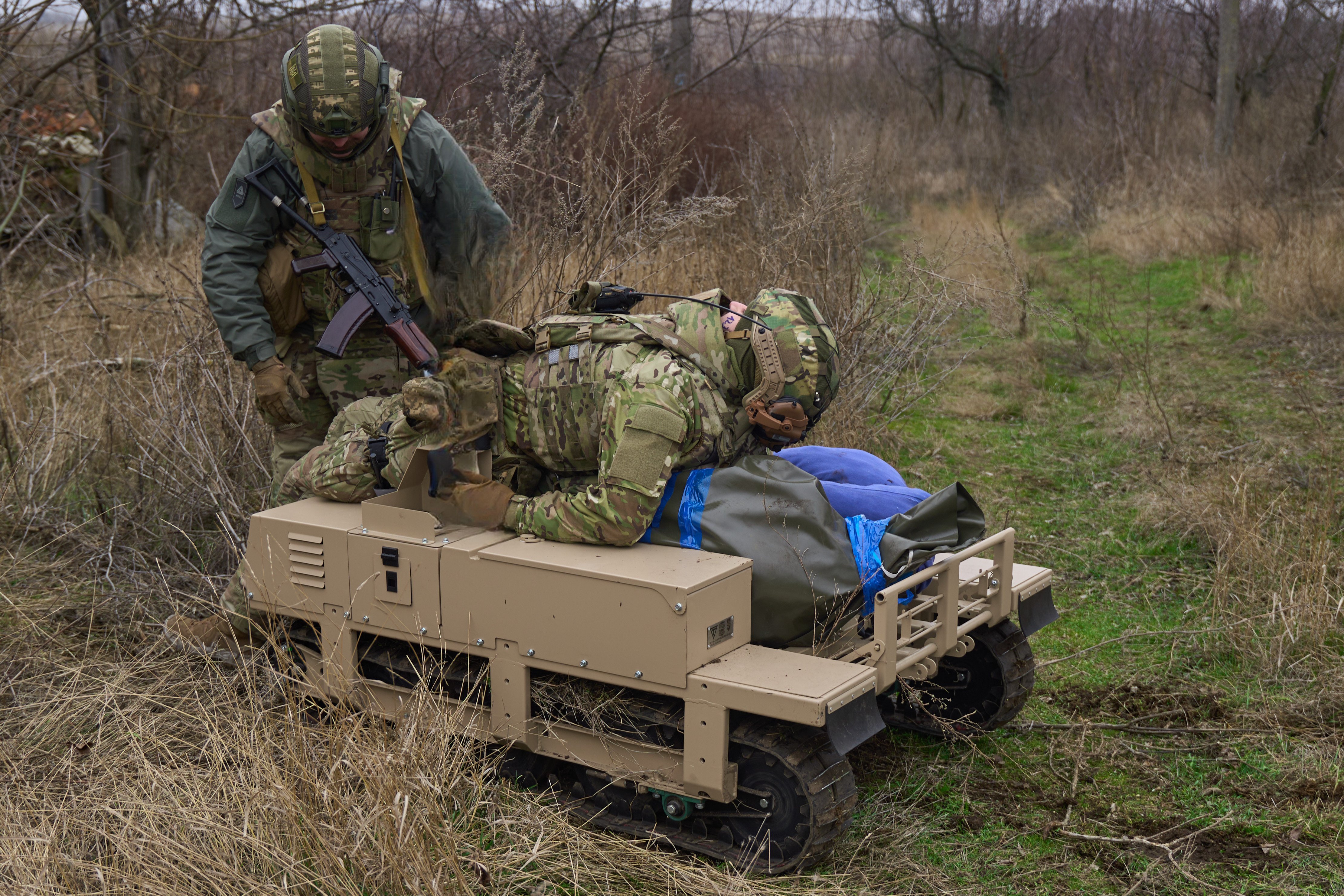
“Every robot on the battlefield is a potentially saved life,” said Colonel Maksym Holubok, Khartiia’s commander. “In this case, it wasn’t just our wounded soldier who was saved, but an entire evacuation team—their job in the danger zone was carried out by a ground robotic system.”
Khartiia is actively developing this line of robotic systems. “Our goal is to maximize the use of robots in logistics and evacuation—areas where, over time, they should fully replace humans,” he said.
Neutralization operation
Ukrainian Special Forces showcased a successful neutralization operation in July 2025 using a UGV equipped with a PKT machine gun. The robot, navigating tough terrain, successfully neutralized Russian positions with a precise stream of fire. This operation demonstrated the growing effectiveness of UGVs in offensive roles.
Rise of UGVs in Ukraine
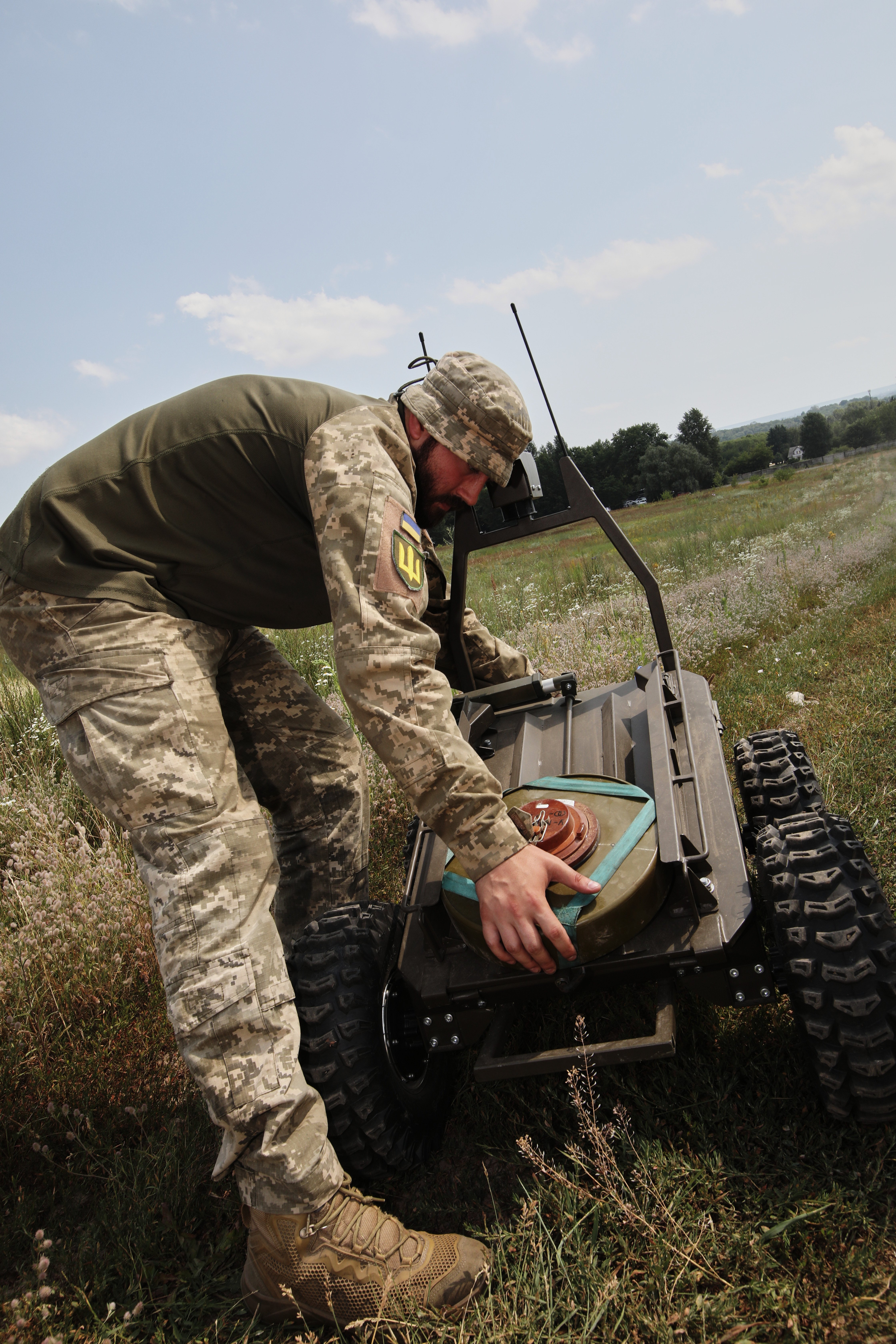
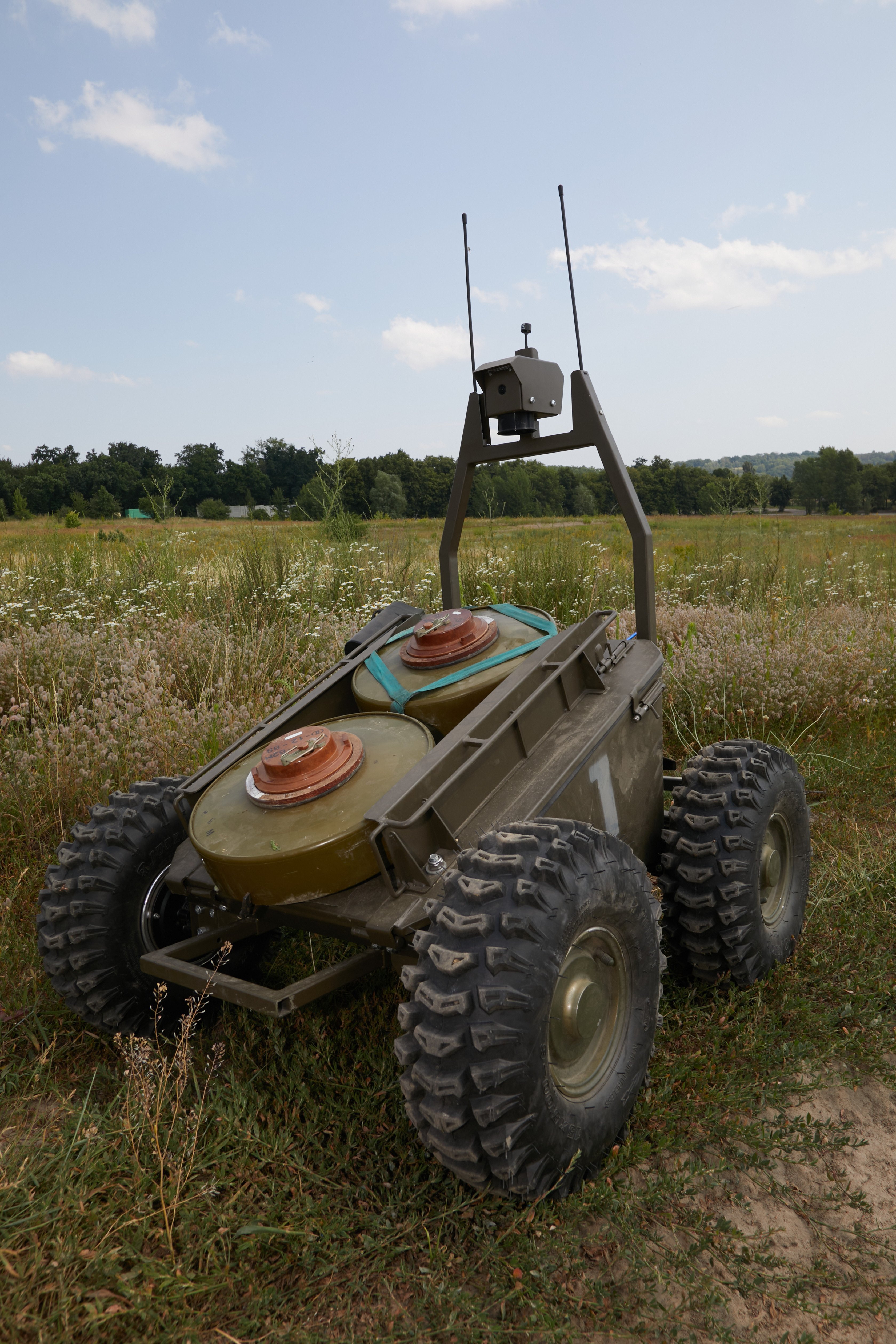
The Ukrainian military’s use of UGVs is continuously evolving. Since the start of 2025, the Ukrainian Defense Ministry has officially approved 40 Ukrainian-made ground robotic systems for operational use. In the previous year, nearly 60 systems were authorized, and the year before that, 13 systems were approved.
Among the most popular ground drones used by Ukrainian military units are logistical drones such as the TerMIT and Ardal, which are used for delivering supplies and ammunition and evacuating the wounded; the Gnom-Miner, designed for remote mining and raid operations; and Liut, equipped with a 7.62 mm machine gun, which is used for observation and fire support of the actions of Ukrainian units, engaging targets both day and night.
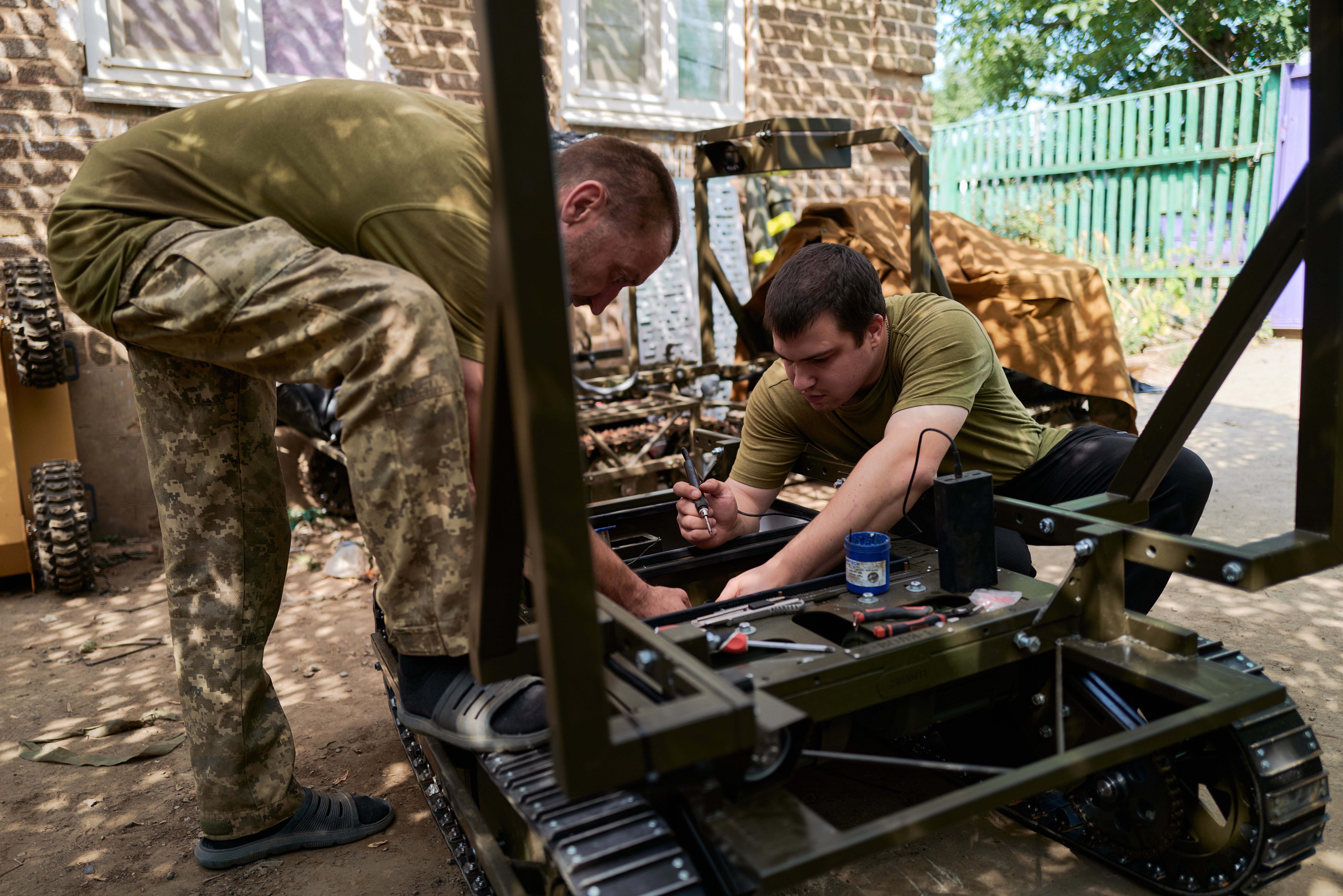
As of summer 2025, over 20 Ukrainian combat units include various structural components of UGVs, Rovenskyi said.
In August 2025, the 20th Separate Battalion of Unmanned Ground Complexes (K-2) became the first-ever battalion fully dedicated to operating UGVs. This battalion’s mission is to enhance logistical support and increase the use of autonomous systems to protect soldiers in high-risk areas.
Despite the advantages and potential of unmanned ground systems, their infrastructure requires significant improvement. Ground drones remain vulnerable to enemy fire, are prone to becoming immobilized in difficult terrain, and need improved coordination with aerial platforms, chief sergeant of the UGV platoon and a former molecular biologist with the callsign “Pan” explained.
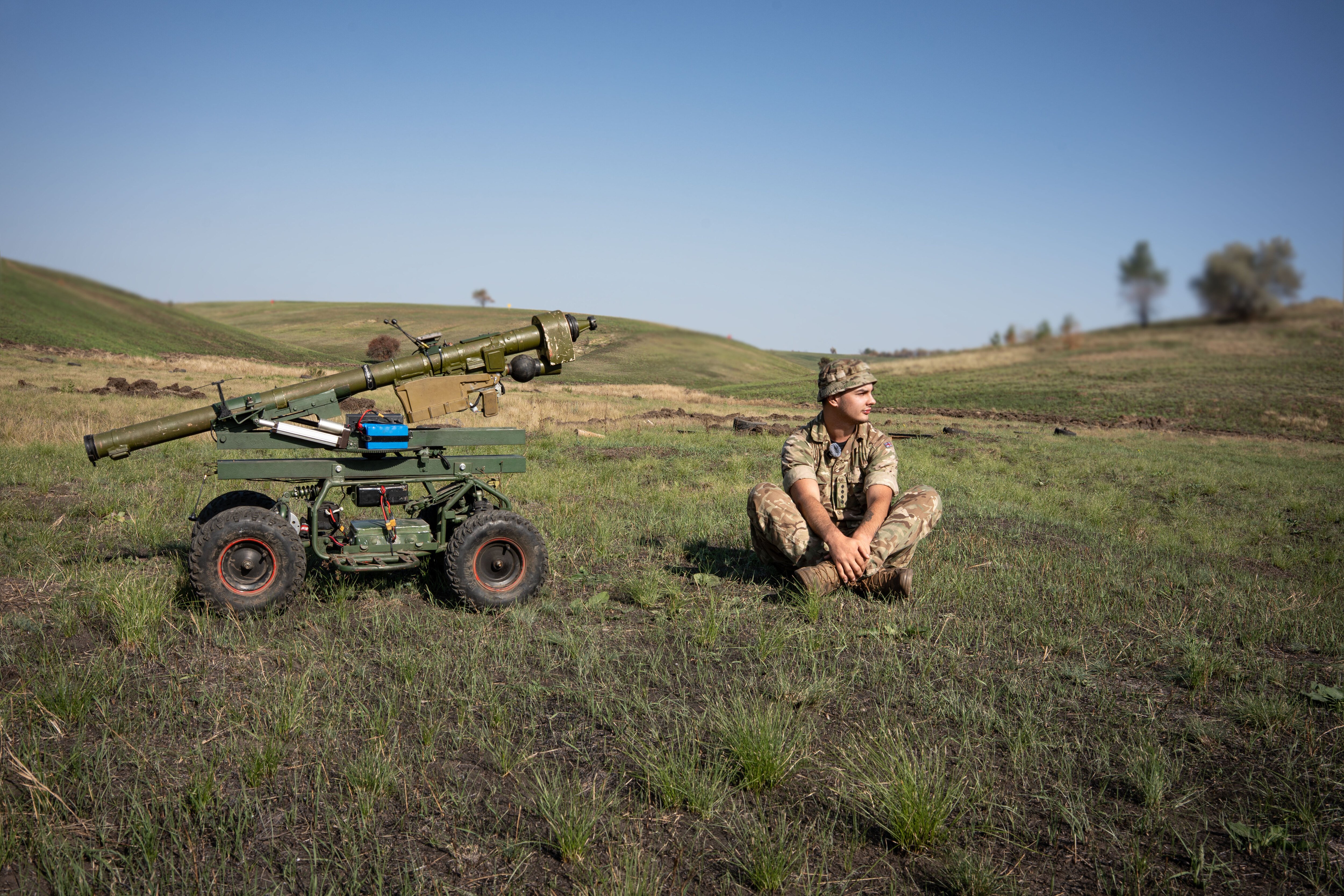
“One of our suicide ground drones got stuck in the dirt on its way to the target. Our turret also got stuck on its way back home,” Pan recalled of Khartiia’s combined drone operation.
Nevertheless, Ukraine is currently ahead of Russia in the field of UGVs. To maintain this advantage, continuous development is necessary, said Rovenskyi. The ultimate goal is the mass deployment of UGVs, making them as effective as trained infantrymen in battle.
Today’s war with Russia has shown that technological superiority on the battlefield will determine the course of this war.
Volodymyr Rovenskyi
Officer in the Ground Systems Development Division for Unmanned Systems Command
Discuss this article:

-87c2fcc9eb515511a4049f71f4c02252.jpg "Geran-5 K5-K variant of the Russian drone.")



-c439b7bd9030ecf9d5a4287dc361ba31.jpg "Photo of Katherina Popilnichenko")