- Category
- World
Beyond the Black Sea: Ukraine's Naval Drones Put Russian Supply Lines in the Crosshairs
From the Arctic to the Mediterranean, Russia built its naval supply network to move weapons, extract resources, and expand its sphere of influence across the globe. Now, Ukraine is turning those routes into hunting grounds. In just 12 days, Ukrainian forces have struck five Russian military-linked vessels, from the Gulf of Finland to the Libyan coast.
 Prefer U24 Media on Google
- Authors


The latest operation came in the early hours of November 22, when seven Ukrainian naval drones struck the Russian corvette Merkury and the sanctioned cargo ship MV Angara in the port of Benghazi, according to President Volodymyr Zelenskyy and the Security Service of Ukraine (SBU). A day earlier, another Russian military-linked cargo vessel, the Sparta II, had been set ablaze in the Baltic Sea.
These attacks are part of a widening campaign against the ships that sustain Russia's military operations. With a new mosquito fleet of sea drones, Ukraine is demonstrating that Russian warships and military cargo vessels can be targeted wherever they operate.
Benghazi: A Russian warship sunk 1,000 miles from home
The SBU says the Ukrainian drones were transported to their launch area aboard a "mothership" before being deployed against the Russian ships in Benghazi.
Libyan officials told the Associated Press that at least four drones were intercepted and two hit the corvette, with at least ten Russian and Libyan nationals wounded. Satellite imagery taken on November 22 showed the Merkury mostly underwater and capsized. The SBU also reports that a Ka-27 helicopter on board was destroyed; video material analyzed by Maritime Executive appears to show the blast setting off missiles in the corvette's launch cells.
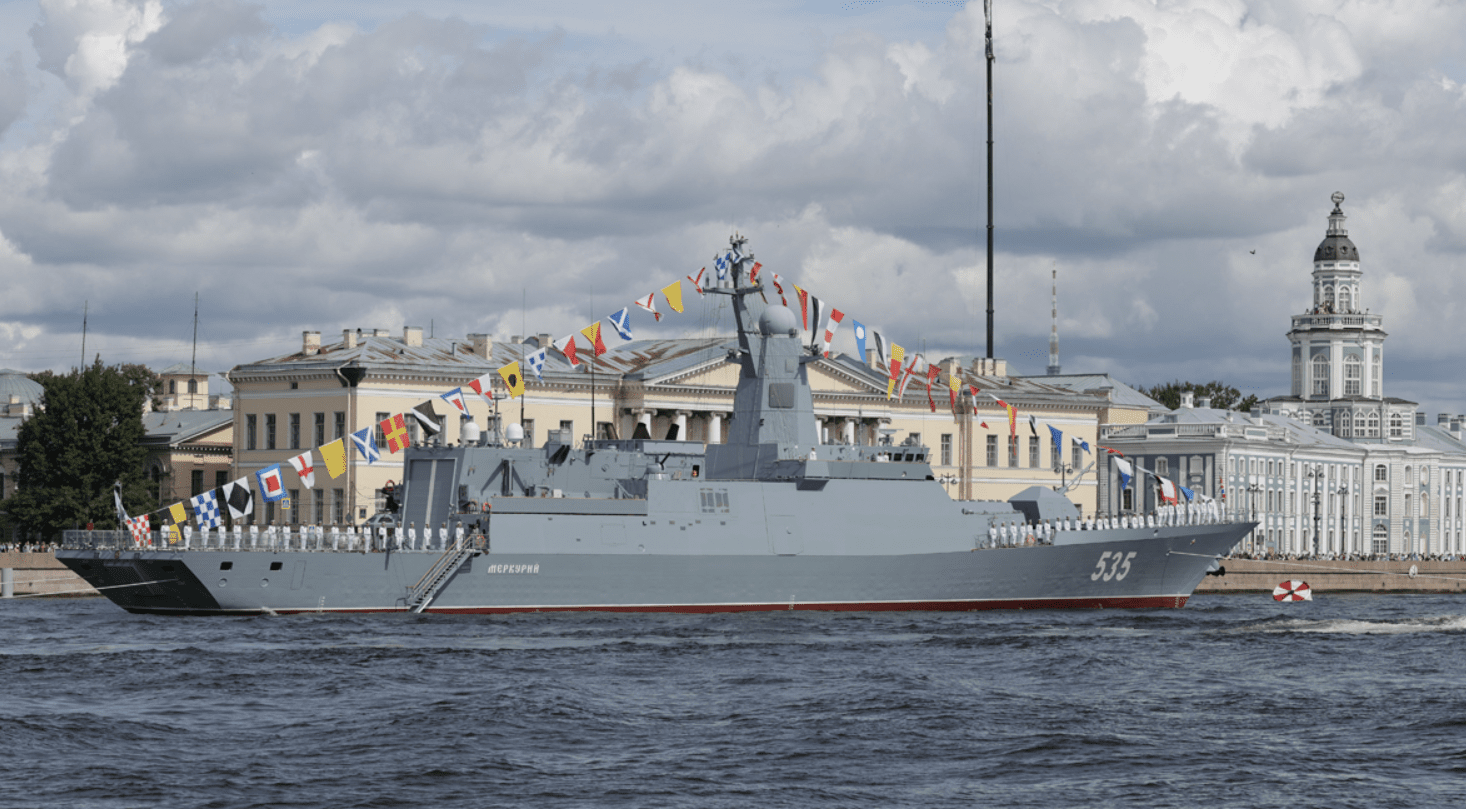
The corvette Merkury, commissioned in 2023, was among the newer vessels in the Russian Navy. According to the SBU, it regularly escorted Russian maritime convoys, including those involving the Angara, a sanctioned dry cargo vessel.
The operation was significant for two reasons. First, it removed a Russian warship from service while targeting a vessel involved in military logistics. Second, it demonstrated the reach of Ukraine's unmanned surface vessels (USVs). The attack took place approximately 1,000 miles from Ukraine, in a Libyan port where Russia has sought to maintain a military foothold.
The strike also illustrates how Ukraine's naval drone capabilities have evolved. What began as a means of pushing the Russian Black Sea Fleet away from Ukrainian shores has developed into a tool for attacking military assets operating in distant maritime theatres.
The military operation has also triggered a diplomatic dispute. Mousa al-Koni, vice chairman of Libya's Presidential Council, called for Zelenskyy to be placed on a terrorism watchlist, demanded an emergency UN Security Council meeting, and announced plans to take the matter to the International Court of Justice. Al-Koni described the Ukrainian operation as a declaration of war against Libya.
Ukraine's Foreign Ministry rejected the accusations, arguing that Russian warships and vessels transporting military equipment are legitimate military targets under Ukraine's right to self-defense, as established by the UN Charter. Foreign Ministry spokesperson Heorhii Tykhyi stressed that Ukraine's actions were directed against Russian military assets, not Libya or its population.
The dispute exposes a political dimension of Ukraine's expanding maritime campaign: Russia's military presence abroad is sustained not only by ships and weapons but also by relationships with governments and local power brokers.
Five Russian vessels hit in 12 days
The Benghazi operation was not an isolated incident. It followed a series of attacks on Russian military and military-linked shipping in the Baltic Sea, where Ukrainian forces reportedly struck several vessels between November 11 and 22.
According to reporting by Interfax-Ukraine, citing Andrii Klymenko of the Black Sea Institute of Strategic Studies, the series began on November 11, when Russia's Buyan-M-class missile corvette Naro-Fominsk was struck in the Gulf of Finland.
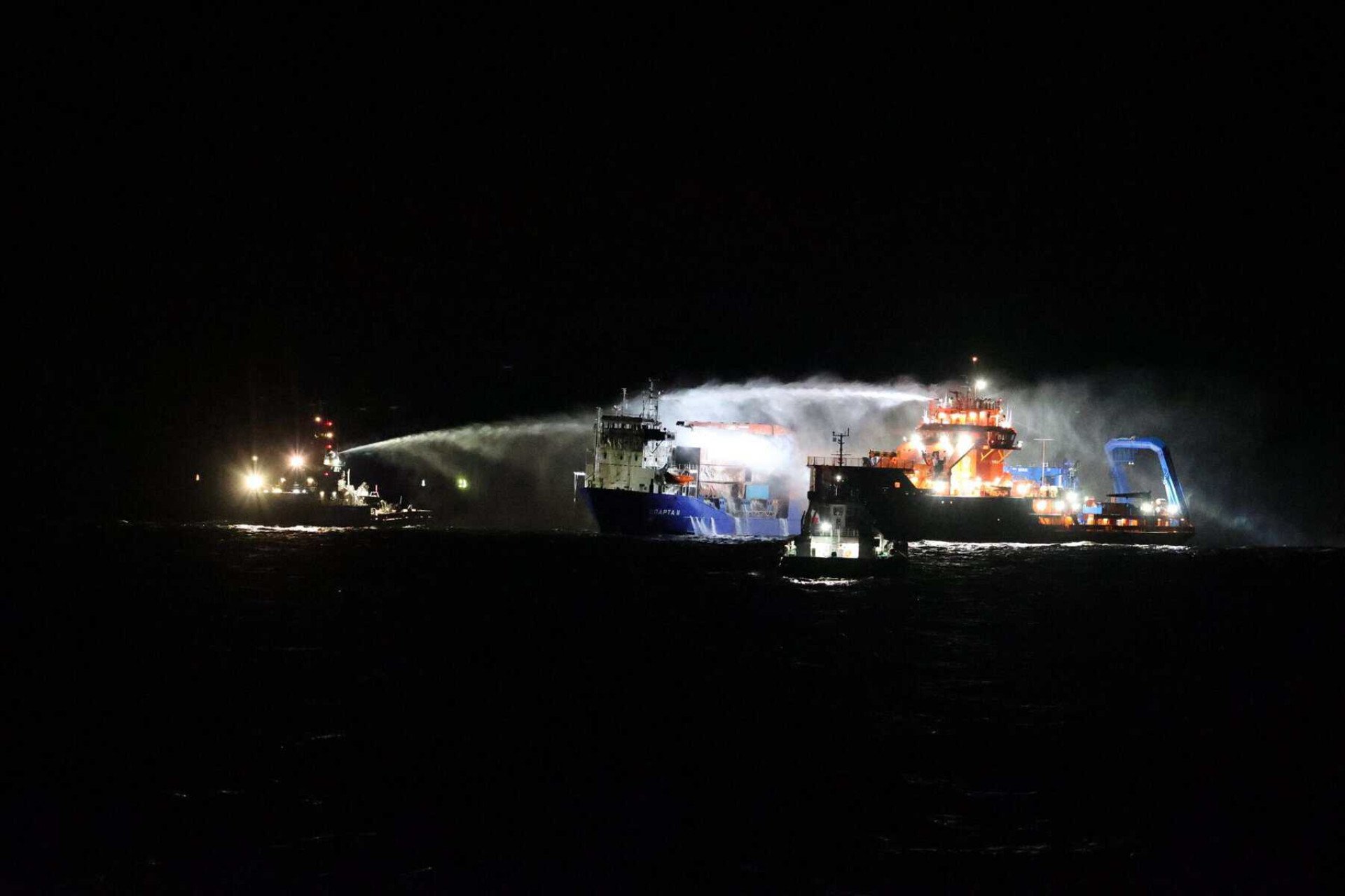
On November 21, two further vessels were targeted. Drones hit the 121-meter Sparta II in the eastern Gulf of Finland shortly after it departed the St. Petersburg vicinity. The Finnish Border Guard confirmed that the vessel had links to Russia's armed forces. Its crew was evacuated, and the burning ship drifted into Finnish waters before being towed away.
Fire boats with the Finnish Coast Guard are continuing attempts to save the Russian military-linked cargo ship, M/V SPARTA II (IMO: 9160994), which had just departed St. Petersburg before it was attacked and set ablaze by several unidentified drones earlier today in the Gulf of… pic.twitter.com/OynRNRVruA
— OSINTdefender (@sentdefender) November 21, 2026
On the same morning, the Russian railway ferry Ambal was reportedly struck approximately 20 nautical miles north of the Russian port of Ust-Luga. The extent of the damage remains unclear. The vessel operates between Ust-Luga and Baltiysk in Russia's Kaliningrad region, transporting railway wagons, vehicles, and other cargo.
Ukraine's Defense Intelligence Directorate identifies the Ambal as part of Russia's military logistics network and links it to the sanctioned company Oboronlogistika, associated with the Russian Defense Ministry. The ferry can transport up to 150 vehicles and approximately 8,000 tonnes of cargo per voyage, making it an important component of the maritime supply route connecting mainland Russia with the Kaliningrad exclave.
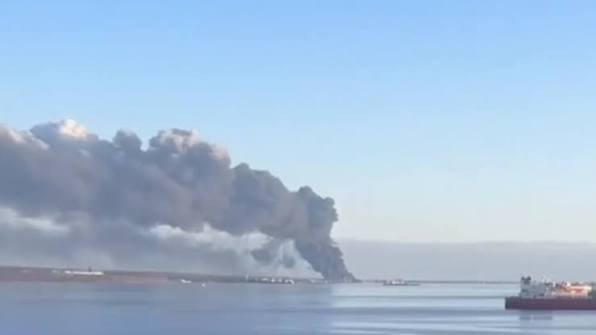
The fifth vessel was the aforementioned Angara, struck alongside the Merkury near Benghazi on November 22.
The geographical spread is as important as the number of targets. The attacks have reached vessels operating in the Gulf of Finland and the Mediterranean, striking both military escorts and the cargo ships that sustain Russian operations.
Moscow's Mediterranean dilemma
The Benghazi strike may already be complicating Russia's movements elsewhere in the Mediterranean.
A Russian naval convoy carrying suspected military cargo has been tracked moving unusually slowly off the coast of Tunisia. According to open-source naval tracking account SONARROW, the group consists of three sanctioned cargo vessels: Lady D, Lady R, and Maia-1. They are reportedly escorted by Russia's frigate Admiral Golovko, which took over escort duties from the Project 20380 corvette Stoikiy. The Russian fleet tanker Yelnya has has also been identified accompanying the group. The vessels departed Russia's Baltic naval base in Baltiysk on November 5, passing through the Danish straits and the English Channel. All three cargo ships are subject to Western sanctions and have allegedly been used to transport Russian military cargo in the past. Their current cargo and intended destination remain unknown. GeoInsider and SONARROW documented armored vehicles, infantry fighting vehicles, and trucks being loaded onto cargo ships, including the Lady D, at Baltiysk on October 15 and 16.
Nevertheless, the situation illustrates the growing challenge facing Moscow. The Merkury had been performing precisely the kind of escort role as the Admiral Golovko: protecting Russian military cargo vessels operating far from Russia's naval bases.
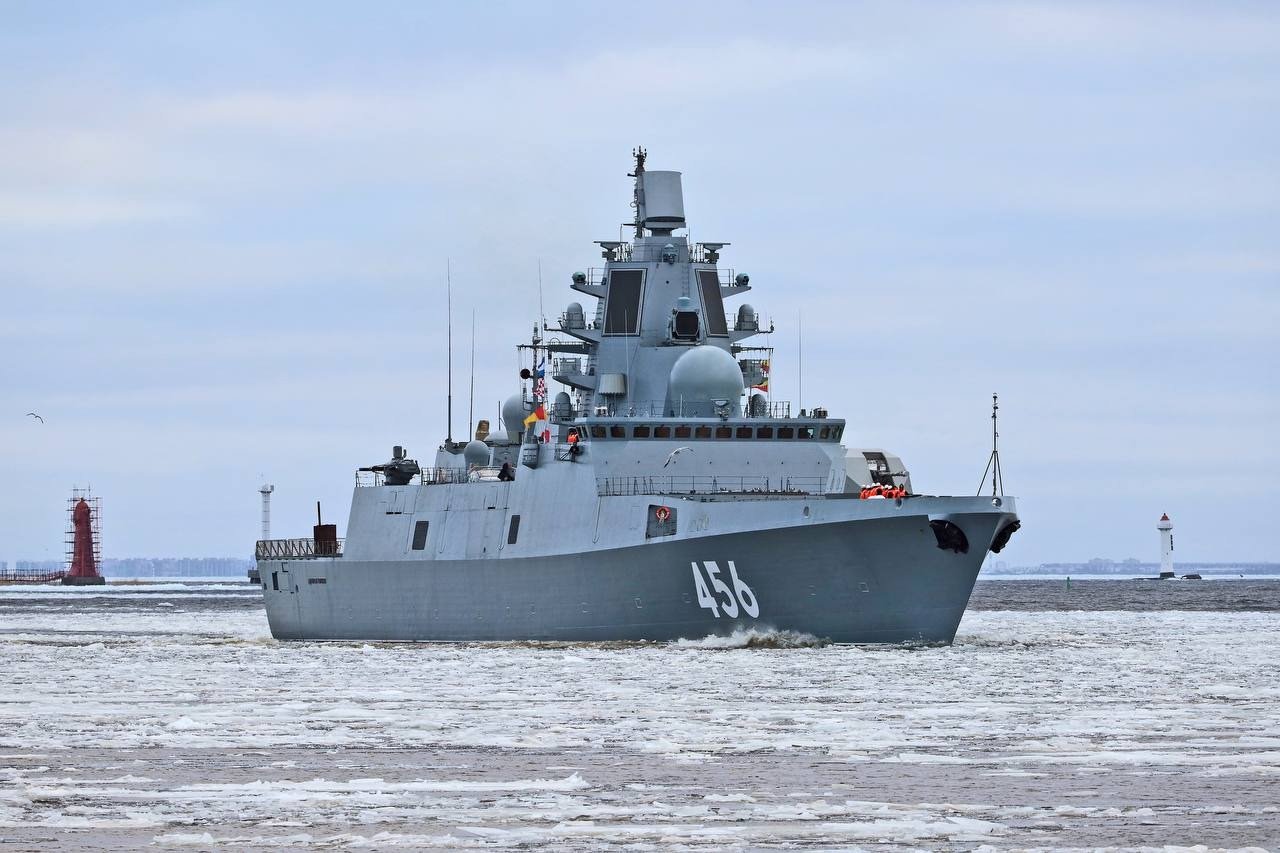
The loss of such a 200 million US-Dollar warship raises an uncomfortable question for the Russian Navy: how many warships can Moscow afford to dedicate to protecting its supply convoys, and how effectively can those escorts defend against relatively inexpensive unmanned surface vessels?
Russia's logistical vulnerability
These shipments illustrate the importance of maritime logistics to Russia's military presence abroad. Moscow relies on cargo vessels to move armored vehicles, equipment, and supplies. Its operations in Africa and the Mediterranean depend on keeping these routes open.
Ukraine's strategy is increasingly directed at this logistical infrastructure rather than exclusively at individual warships. The economics of this are particularly challenging for Russia. A relatively inexpensive unmanned surface vessel can threaten a sophisticated warship worth hundreds of millions of dollars. The operation off Libya also demonstrated that Ukraine can transport and deploy these systems far beyond its immediate coastline.
Russia has already lost a substantial portion of its Black Sea Fleet. Turkey's closure of the Bosporus to warships under the Montreux Convention has further complicated Moscow's efforts to reinforce its naval presence in the region.
The result is a growing mismatch between the geographical scale of Russia's maritime commitments and its capacity to protect them.
Discuss this article: