- Category
- World
EU Reportedly Considers Angela Merkel as Mediator in Ukraine-Russia Talks
 Prefer U24 Media on Google
- Authors

-c439b7bd9030ecf9d5a4287dc361ba31.jpg "Photo of Katherina Popilnichenko")
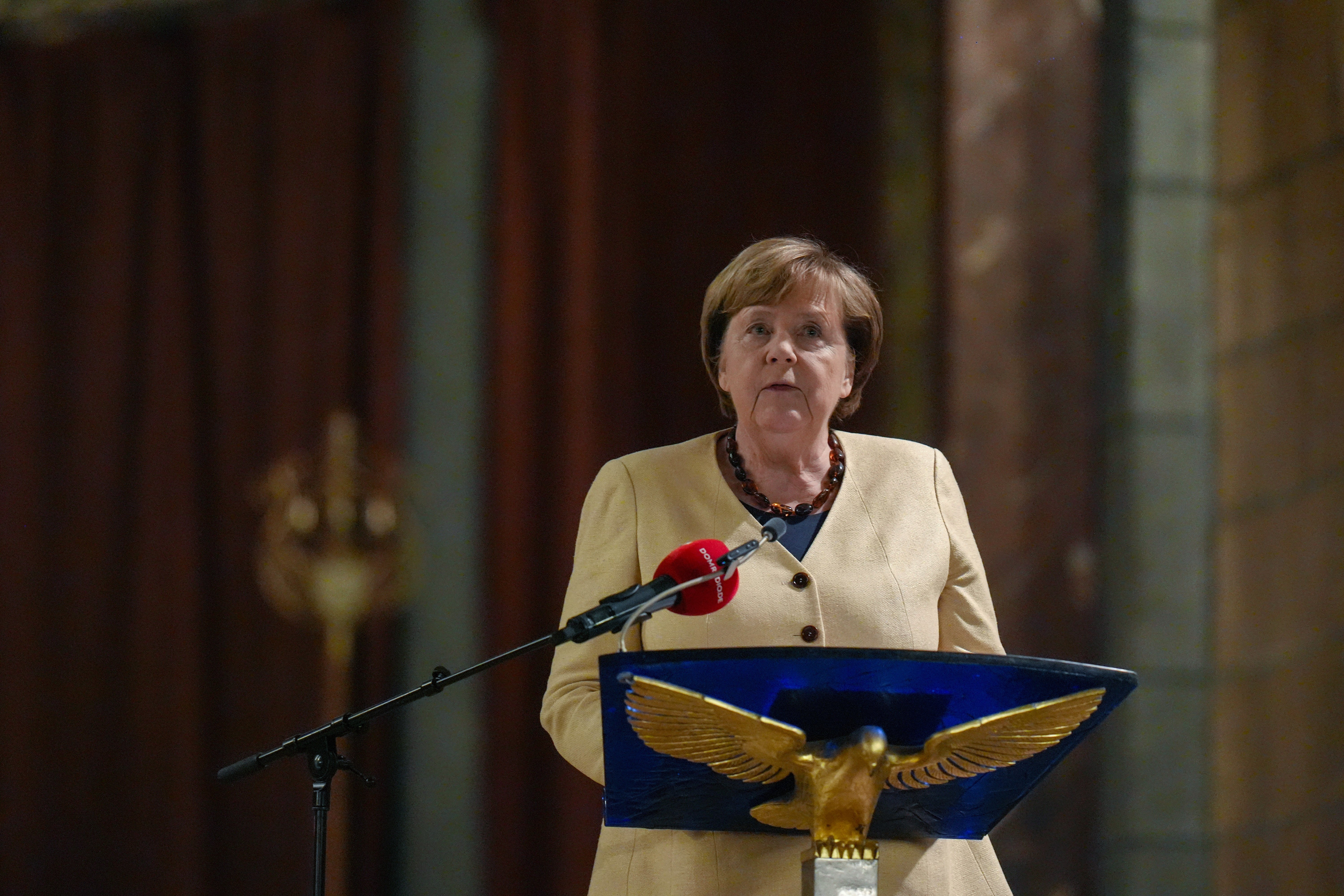
The European Union is exploring the possibility of involving former German Chancellor Angela Merkel as a mediator in negotiations with Russia.
EU sources suggest that Merkel’s fluency in the Russian language and her current retirement make her a relatively neutral candidate. Additionally, the 71-year-old former leader has previously engaged with both Ukrainian President Volodymyr Zelenskyy and Russian leader Vladimir Putin, according to Spiegel on May 11.
We bring you stories from the ground. Your support keeps our team in the field.
While Merkel’s office stated that she has not yet received any formal offers to take on this role, they did not rule out the possibility of her acceptance. Since the start of Russia’s full-scale invasion of Ukraine, Merkel has occasionally condemned Moscow's actions.
However, she has avoided direct criticism of Moscow in most statements and has not acknowledged mistakes regarding her past policies toward Russia. She maintains that the Minsk agreements were a successful attempt to "freeze" the situation in the Donbas region.
President Zelenskyy has previously criticized Merkel for her past support of the Nord Stream 2 gas pipeline and her general policy toward the Kremlin. He also invited her to visit Bucha after the city was liberated, but Merkel has not traveled to Ukraine since the full-scale invasion began.
In November 2024, Angela Merkel released her memoir, “Freedom: Memories 1954–2021”. During a book tour last year, Merkel repeated her stance that "it is necessary to talk to Russia" and defended her 2021 proposal for an EU-Russia summit, which was blocked by Poland and the Baltic states. She emphasized that "without talks, the war will certainly not end."
Vladimir Putin previously suggested using another former German Chancellor, Gerhard Schröder, as a mediator. EU officials rejected the idea. The 82-year-old Schröder has faced significant criticism for his friendship with Putin and his work for Russian oil and gas companies. Although Schröder called the invasion a "mistake" and presented his own peace plan in Moscow, his efforts were dismissed.
The EU’s top diplomat, Kaja Kallas, stated that it would not be "very smart" to let the Kremlin choose the mediator. Wolfgang Ischinger, chairman of the Munich Security Conference, noted that any candidate must have "broad approval" from the EU, particularly from Eastern European and Baltic countries.
Andreas Umland, an expert at the Institute for Euro-Atlantic Cooperation, suggested that Merkel would be a "good choice." He noted that while there are "complaints about her in both Germany and Ukraine, she is a politician of a completely different caliber."
Previously, Ukrainian Foreign Minister Andrii Sybiha proposed a limited ceasefire framework to European leaders, which aimed to halt strikes on airports. During a meeting in Brussels, he suggested that this "airport truce" could serve as a starting point for renewed negotiations.
Sybiha emphasized that a larger European diplomatic role was intended to be a complementary track to US-led efforts rather than a replacement. Meanwhile, data showed that Ukrainian long-range strikes had increasingly disrupted Russian aviation infrastructure, causing significant financial losses and hundreds of flight cancellations.
Discuss this article: