- Category
- World
Latvia Deploys “Dragons Teeth” Fortifications Near Russian Border to Protect From Potential Assaults
 Prefer U24 Media on Google
- Authors

-72b63a4e0c8c475ad81fe3eed3f63729.jpeg "Photo of Cyril Barabaltchouk")
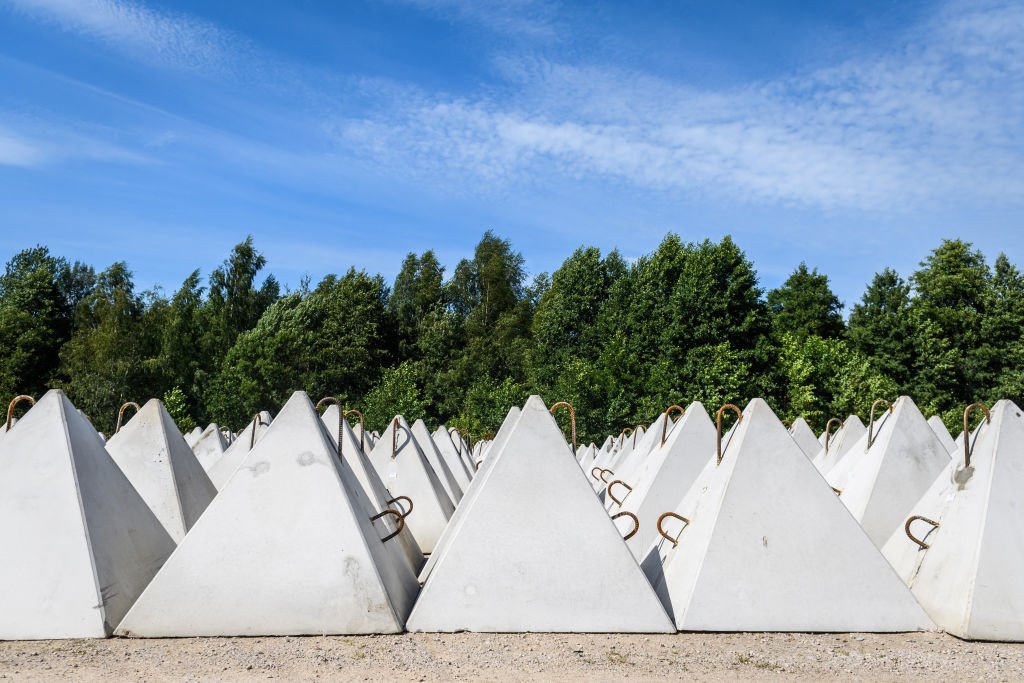
The National Armed Forces (NBS) of Latvia have begun installing the first physical anti-mobility barriers on expropriated lands along the Latvian-Russian border, LSM reported on May 28.
The deployment of these reinforced concrete “dragon’s teeth” is an expansion of the Baltic Defence Line, a massive joint regional fortification initiative aimed at blocking and destroying any potential cross-border military incursions.
We bring you stories from the ground. Your support keeps our team in the field.
The heavy barriers are arranged in three precise rows spanning approximately ten meters in width. According to reports by LSM, each of the “dragon’s teeth” weighs roughly one and a half tonnes, and they are placed with minimal gaps to completely prevent military vehicles and heavy armor from breaching the border.
Latvia’s border reinforcement follows similar actions by neighboring Baltic states. Lithuania has already installed extensive concrete dragon’s teeth barriers, anti-tank obstacles, and minefields along its borders with Russia’s Kaliningrad exclave and Belarus, establishing multi-layered counter-mobility defenses at key chokepoints like the Panemunė Bridge.
While the production and transport of these defensive assets began in 2024, and their installation on state and municipal lands launched in 2025, expanding the line onto private properties initially presented legal challenges. Military officials credited the recent adoption of the Law on the Establishment of Anti-Mobility Infrastructure for drastically cutting bureaucratic red tape and accelerating the land expropriation process, according to LSM.
“Until the Law on the Establishment of Anti-Mobility Infrastructure was adopted, we faced restrictions,” said Colonel Andris Rieksts, the officer overseeing the Baltic Defence Line project. “We could not come in and begin deploying these mobility barriers on private land. At this point, that has been resolved.”
Impacted private landowners are set to receive fair financial compensation determined by a specialized commission and certified real estate appraisers, LSM noted. Latvian military leadership emphasized that the core strategy of the Baltic Defence Line is to neutralize an adversary immediately at the frontier, drawing heavy tactical lessons from Russia’s full-scale invasion of Ukraine.
“If something does happen, we need to be able to destroy them here, because we see that in Ukraine – once we give up land, it’s practically impossible to get it back,” Colonel Rieksts stated.
Rieksts added that while modern warfare heavily features high-tech aerial threats, physical territorial control remains the ultimate deciding factor in national survival, as highlighted in the LSM coverage.
“They won’t be able to conquer us with drones,” Rieksts noted. “In Ukraine, we see that there are hundreds of drone and missile attacks every day, but as long as the land is held and no one physically comes and drives people out of their homes, that land is ours.”
Latvia shares a combined 450-kilometer border with Russia and Belarus, LSM detailed. Throughout this year, the NBS aims to construct more than eight kilometers of dense anti-mobility infrastructure, with future blueprints incorporating extensive anti-tank ditches.
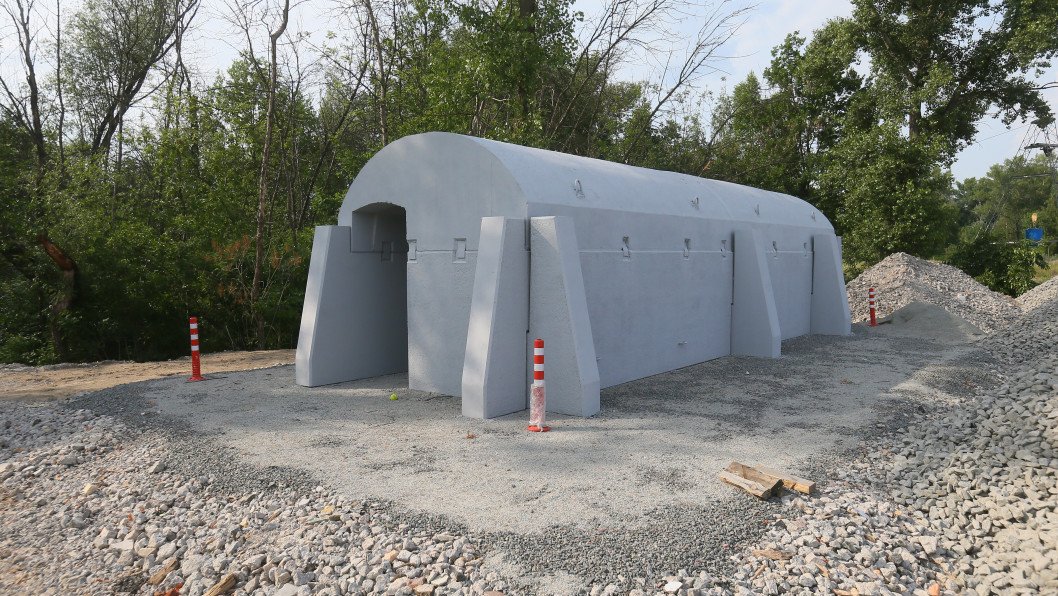
The Baltic Defence Line is a synchronized, multinational effort being implemented in close cooperation with Estonia, Lithuania, and Poland. Having commenced roughly two years ago, the comprehensive regional fortification network is slated for full completion by 2028.
Alongside physical border fortifications, Latvia is expanding its tech-based defense capabilities. Latvian Prime Minister Evika Siliņa and Dutch Minister of Defense Dilan Yeşilgöz-Zegerius have recently signed a memorandum of intent granting the Dutch armed forces access to Latvia’s Sēlija military training range.
The agreement facilitates specialized training and the live operational testing of advanced drone systems. Yeşilgöz-Zegerius emphasized that the current security climate requires faster results, pointing to Ukraine’s ability to mass-produce thousands of drones as a vital model for NATO members looking to accelerate and modernize their defense production cycles.
Discuss this article:


-c439b7bd9030ecf9d5a4287dc361ba31.jpg "Photo of Katherina Popilnichenko")