- Category
- World
More Than 3% of Russian Men Aged 40–50 Have HIV as Epidemic Spreads in 27 Regions
 Prefer U24 Media on Google
- Authors


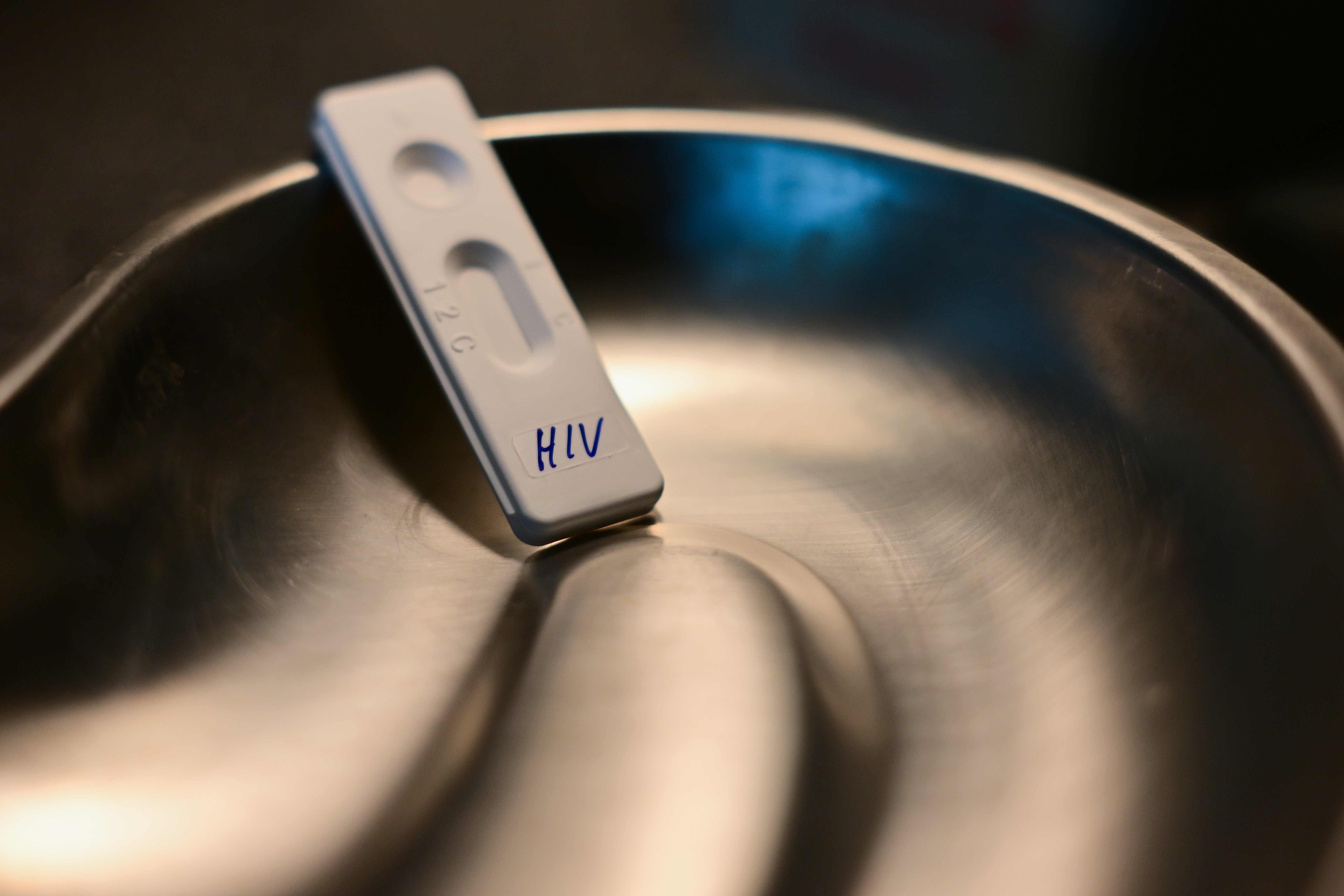
The HIV epidemic in Russia has reached a generalized stage in 27 regions, Vasily Akimkin, director of Rospotrebnadzor’s Central Research Institute of Epidemiology, told Nezavisimaya Gazeta, as reported by The Moscow Times on October 26.
We bring you stories from the ground. Your support keeps our team in the field.
A generalized epidemic means the virus no longer threatens only high-risk groups but is spreading among the broader population. In these regions, HIV is diagnosed in more than 1% of pregnant women.
The most affected regions are Kemerovo, Irkutsk, and Sverdlovsk, where more than 2% of residents are infected.
Among Russian men aged 40 to 50, the virus is present in more than 3%, stated Natalya Ladnaya, a leading researcher at the institute’s department for HIV/AIDS prevention and control. She noted that the average age of infected people has risen from 32 to 44 over the past 15 years. About two-thirds of new transmissions occur through heterosexual contact, Ladnaya added.
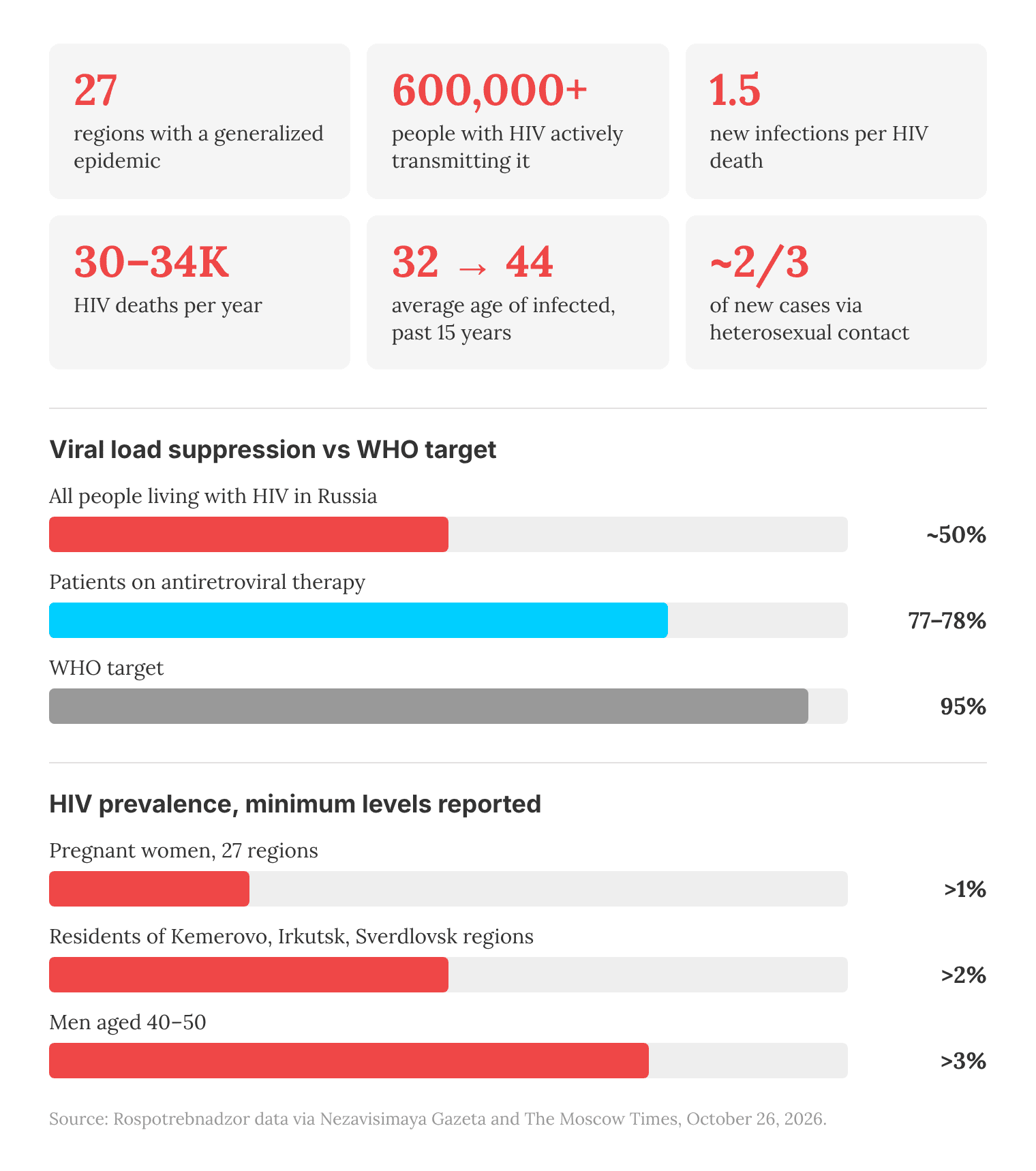
An infographic illustrates the scale of Russia’s HIV. (Data: Rospotrebnadzor via Nezavisimaya Gazeta and The Moscow Times)
Insufficient treatment coverage remains a central problem. Only half of the people living with HIV in Russia have a suppressed viral load, Ladnaya explained, meaning at least 600,000 people continue to transmit the virus. Among patients receiving antiretroviral therapy, viral load is suppressed in about 77–78%, compared with the 95% target set by the World Health Organization.
In 2025, Russia also recorded the highest number of bloodborne infections in medical facilities in 15 years, mostly HIV and hepatitis C, reported Elena Igonina, head of Rospotrebnadzor’s Department of Epidemiological Well-Being of the Population.
Investigations are ongoing into 11 clusters of such infections across ten regions. In 2026, authorities also identified two cases of HIV transmission through blood component transfusion, the first in six years.
Igonina attributed the infections mainly to violations of sanitary and epidemiological rules, including the use of the same catheters and glucometers for multiple patients.
According to Rospotrebnadzor, 30,000 to 34,000 people have died of HIV annually in recent years, an extremely high figure. For every death, there are 1.5 new infections. The draft federal budget for 2027 provides additional medication for 30,000 HIV patients.
That funding falls short of the number of new diagnoses, which stood at about 52,000 in 2024 and 45,000 in 2025.
Discuss this article: