- Category
- World
Russia Passes Law Requiring Domestic Artificial Intelligence to Align With “Traditional Values”
 Prefer U24 Media on Google
- Authors

-c439b7bd9030ecf9d5a4287dc361ba31.jpg "Photo of Katherina Popilnichenko")
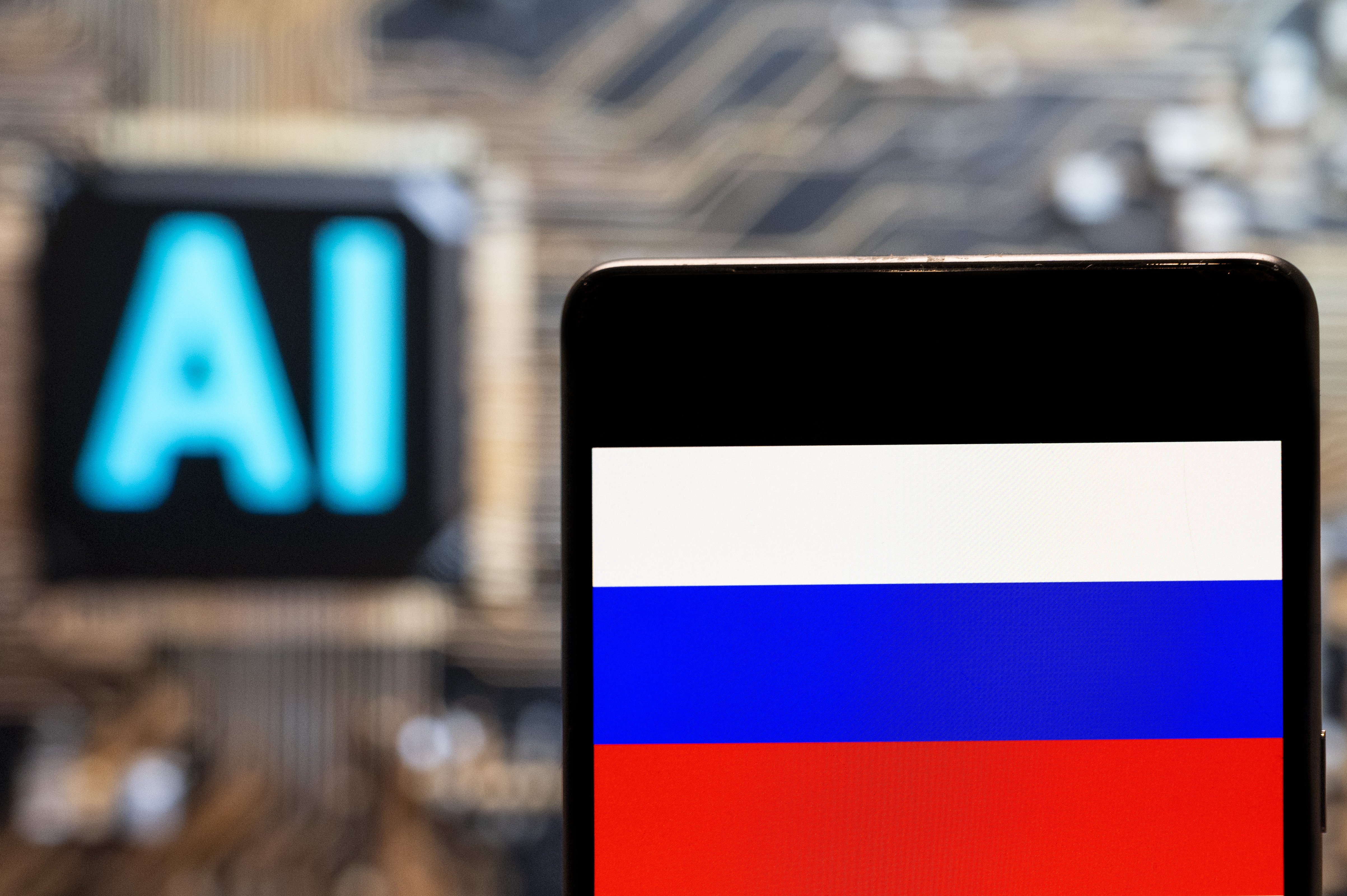
The Russian State Duma passed a new law to support artificial intelligence development during its second and third readings.
This law introduces the definitions of sovereign and national AI models into Russian legislation and requires them to align with "traditional Russian spiritual and moral values," according to The Moscow Times on July 8.
We bring you stories from the ground. Your support keeps our team in the field.
Under the new regulations, a sovereign model must be fully created by a Russian company, with its complete development, training, and data storage handled only inside Russian data centers.
A national model must also be created by a Russian company and keep its data within Russia, but it can use open-source foreign components. Both types can only receive their status after the government verifies that they match "traditional Russian spiritual and moral values."
The law divides responsibilities regarding artificial intelligence. Russian leader Vladimir Putin will approve the national strategy for AI development, while the government will oversee the development and deployment of large foundational models. The government will also decide on state support and establish specific situations where only sovereign or national models can be used.
Lawmakers rejected a proposal to require mandatory labeling of content made by neural networks. Instead, online platforms with a daily audience of more than 500,000 users must provide the technical means to label such content, allowing developers and platforms to choose the format themselves.
Owners of AI services must inform users about the copyright ownership of content made by neural networks and its terms of use. The law notes that using copyrighted material to train AI models is not a violation if the data was obtained legally without breaking technical protections.
State Duma Chairman Vyacheslav Volodin stated that this is a framework law and the government will draft the needed regulations. The document will take effect on September 1, 2026.
In March 2026, Russia actively implemented a nationwide “white list” system that restricted internet access exclusively to government-approved websites, applications, and key communication nodes.
Andrei Svintsov, Deputy Chairman of the State Duma’s Information Policy Committee, confirmed the sweeping measure, stating that the approved lists encompassed essential digital services like banking apps, marketplaces, mobile operators, email providers, and digital cash registers.
Although officials promised the infrastructure would become fully operational within two to three weeks without severe problems, the rollout quickly paralyzed connectivity across the country, with the white list system activated in 71 Russian regions and accompanied by outright mobile internet blackouts in 68 regions.
Discuss this article:




-1a53a90a73ce3e7127f5eef46d0c6c71.webp "The Russian cargo ship Sabetta, previously known as BBC Mississippi. (Source: ShipSpotting.com)")

-29a1a43aba23f9bb779a1ac8b98d2121.jpeg "Photo of Illia Kabachynskyi")

-72b63a4e0c8c475ad81fe3eed3f63729.jpeg "Photo of Cyril Barabaltchouk")