- Category
- World
Russia’s Aircraft Still Fly on Western Parts. Here’s How
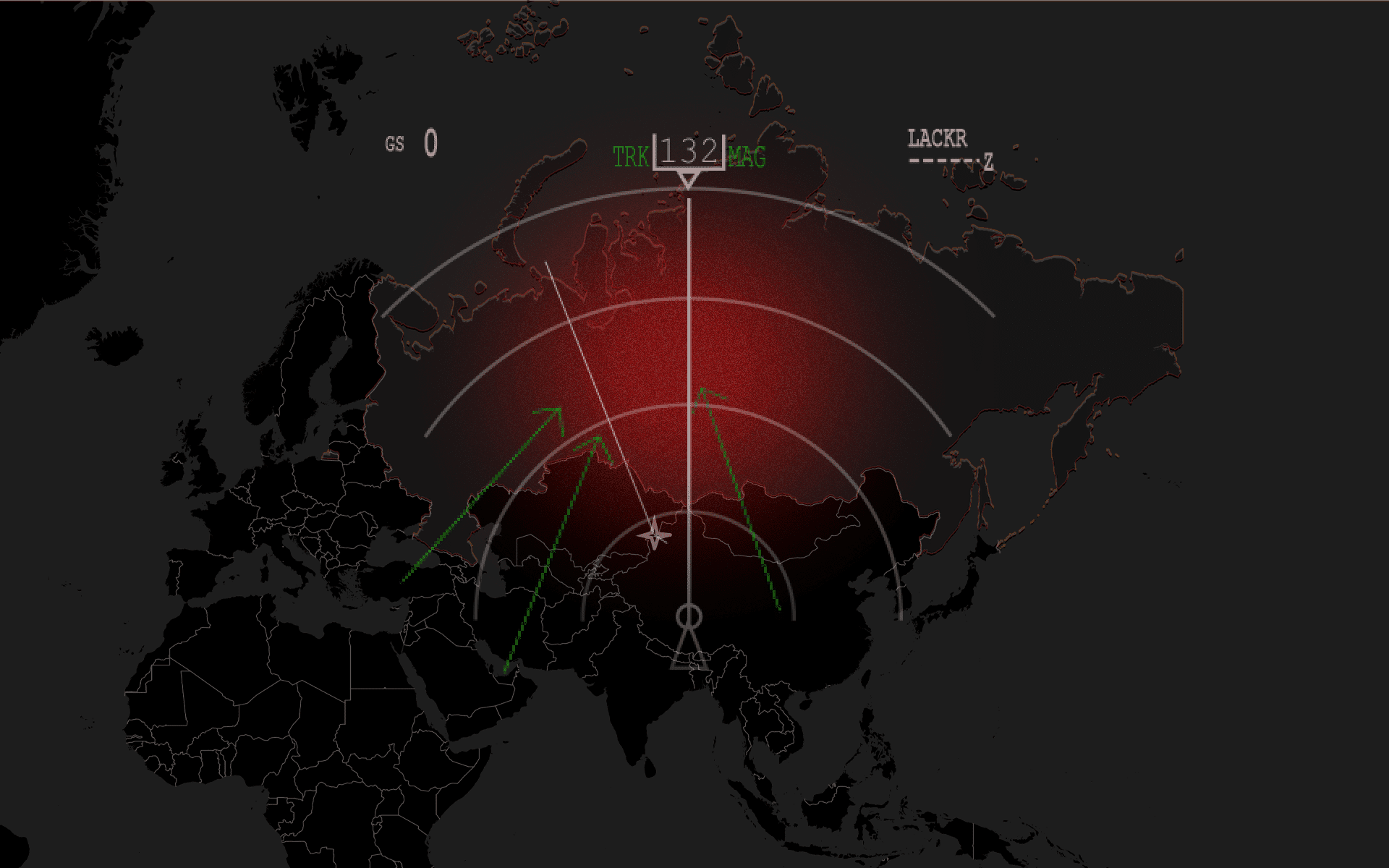
Exclusive documentation shows—Russia is still acquiring vast quantities of aviation equipment from Western suppliers via intermediaries we can identify.
 Prefer U24 Media on Google
- Authors

-605be766de04ba3d21b67fb76a76786a.jpg "Joseph Place")
Customs records and internal correspondence obtained by UNITED24 Media reveal large-scale shipments of restricted aviation components to Russia to bypass sanctions—evidence that Russian aviation depends on these components to function.
Russia’s sanctions evading network
Russia has a significant problem with maintaining its aircraft due to the strict sanctions of the EU and the US. Many aircraft depend on Western parts; after years of imports, prior to sanctions imposed by major aerospace companies in the USA and the EU. To solve this, they use a network of third-party companies worldwide to purchase the parts and then resell them to Russia. This breaks sanctions laws, as manufacturers typically cannot sell aviation products that will be re-exported, meaning information is hidden in the chain. Here is an excerpt of the data we have accessed.
Date | Components | Supplier | Importer | Importer Address |
|---|---|---|---|---|
03/31/2025 0:00:00 | WEATHER RADAR CONTROL PANEL FOR PASSENGER AIRCRAFT AIRBUS A319. P/N 2041220-3231, S/N CON4B-06240 - 1 PC. MARKING: 555-13204166 TECHNICAL PARAMETERS: AC SUPPLY VOLTAGE - 115V FREQUENCY - 400HZ CURRENT - 5A | AVS DIS TICARET AS | AVIATION SERVICE LLC | 123458, G.MOSCOW, STVARDOVSKOGOD ST. ROOM 12, FLOOR 2, OFFICE CENTER, |
03/31/2025 0:00:00 | CONTROLS, PANELS, CONSOLES, TABLES, DISTRIBUTION BOARDS AND BASES FOR ELECTRICAL EQUIPMENT WITH A VOLTAGE OF NO MORE THAN 1000 V ARE IMPORTED AS SPARE PARTS FOR PREVIOUSLY IMPORTED EQUIPMENT. | YOURTRANS LOGISTICS CO., LIMITED | TANDES LLC | 129344 G. MOSCOW, ISKRY ST., 31, BUILDING 1, ROOM II, OFFICE 22G |
03/30/2025 0:00:00 | GULFSTREAM GV-SP (G550) PASSENGER AIRCRAFT FIRE PARTITION DOOR LIMIT SWITCH. SUPPLY VOLTAGE 28 V. NOT A DUAL-USE/MILITARY ITEM. P/N 602EN55-6 - 1 PC. MARKING: 555-13203245 | VISIONJET LIMITED COMPANY ID ICC20180920 | AVIATEKHTSENTR ANGAR NO 1 LLC | 141407, MOSCOW REGION, KHIMKI, PANFILOVA ST., 19, BUILDING 1, ROOM 34/41/ |
03/06/2025 0:00:00 | AIRCRAFT WINDSHIELD WIPER BLADE. MADE OF STEEL. HAS A VULCANIZED RUBBER TAPE FOR CLEANING THE GLASS FROM PRECIPITATION AND DIRT. P/N 90-0327-1 - 1 PC. PACKAGING MARKING: 880-38786241 USED ON PASSENGER AIRCRAFT | RUIDA FLYING AVIATION TECHNOLOGY COMPANY LIMITED | AEROFLOT TECHNICS LLC | 141411, MOSCOW, INTERNATIONAL HIGHWAY, 28B, BUILDING 1, 4TH FLOOR, ROOM 21, |
One example from the network we examined shows that the Chinese-based Ruida Flying Aviation Technology Company purchased a push-button switch on June 18th, 2024 from Honeywell, a major US company in aerospace, building automation, industrial automation, and energy and sustainability solutions (ESS). Ruida legally imported it into China initially. They then resold it, and it was acquired by the giant Russian aviation company Aeroflot, which is majority-owned by the Federal Government, despite legislation prohibiting such sales. This is one of many examples.
We identified thousands of shipments between April 1st, 2024 and March 1st, 2025, involving avionics and aircraft systems arriving in Russia. Among all the transactions we analyzed, Honeywell stands out as the most frequent supplier, with parts such as safety systems, electronics, spare parts, mechanical parts, and other materials being re-exported to Russia. Other companies include Exxon Mobile, Safran Aerosystems, Korry Electronics, and Sourieu.
These companies are possibly unaware their parts are being re-exported to Russia. However, the data we have access to indicates the acquisition of components from the above listed companies via third-parties. We contacted multiple manufacturers for comment. As of writing, only Safran has responded with a statement.
“All Safran operations with Russia ceased on February 25, 2022,” said Safran. “Since that date, no shipment of equipment or provision of services has been made to Russia by any of the Group’s companies.”
We have not learned if these companies have investigated the companies, nor have they fully answered our questions.
Furthermore, in compliance with the EU sanctions against Russia, Safran adheres to regulatory requirements to prevent sanctions circumvention by including specific clauses in its contracts and commercial documents, such as the “No re-export to Russia” clause. To support this approach, and in accordance with the procedures defined by the European Commission, the Group has launched a major information campaign to inform its customers and partners about their obligations not to re-export its goods and services.”
Honeywell’s components appear across multiple Russian supply chains. Honeywell systems form part of the 138 imported components on Tu-214 aircraft and similar dependency levels across other models operated by the state flight detachment. Additionally, they had many direct orders to Russia prior to the full-scale invasion and a history. In 2000, the US export bank reported that it supported the export of Honeywell products to Russia. They stated “Ex-Im Bank also authorized long-term financing for US medical equipment exports to a Moscow children’s hospital and medium-term financing for the sale of air traffic collision avoidance systems by Honeywell Inc. of Phoenix, Ariz., to a Russian cargo airline.”.
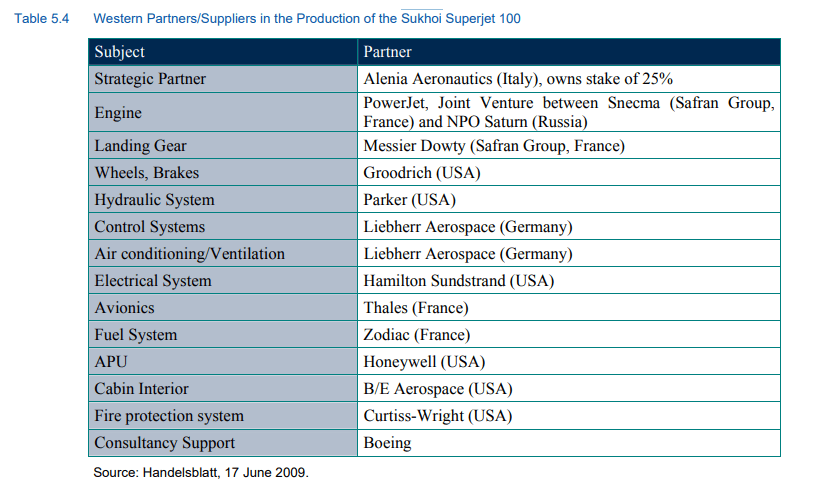
Additionally, some publicly available documentation indicates that a Russian Yak-142 aircraft was fitted with Honeywell avionics in 2007. Plus, in 2009, Honeywell was among many Western suppliers of air parts to Russia, for example, in the Sukhoi Superjet, as reported by the EU. This indicates the long-standing role of Western aviation in Russia's aerospace industries.
The KSE Institute also reported that many Honeywell parts were among the top 15 companies with components found in Russia in 2022 and 2023, even though the quantity dropped after sanctions.
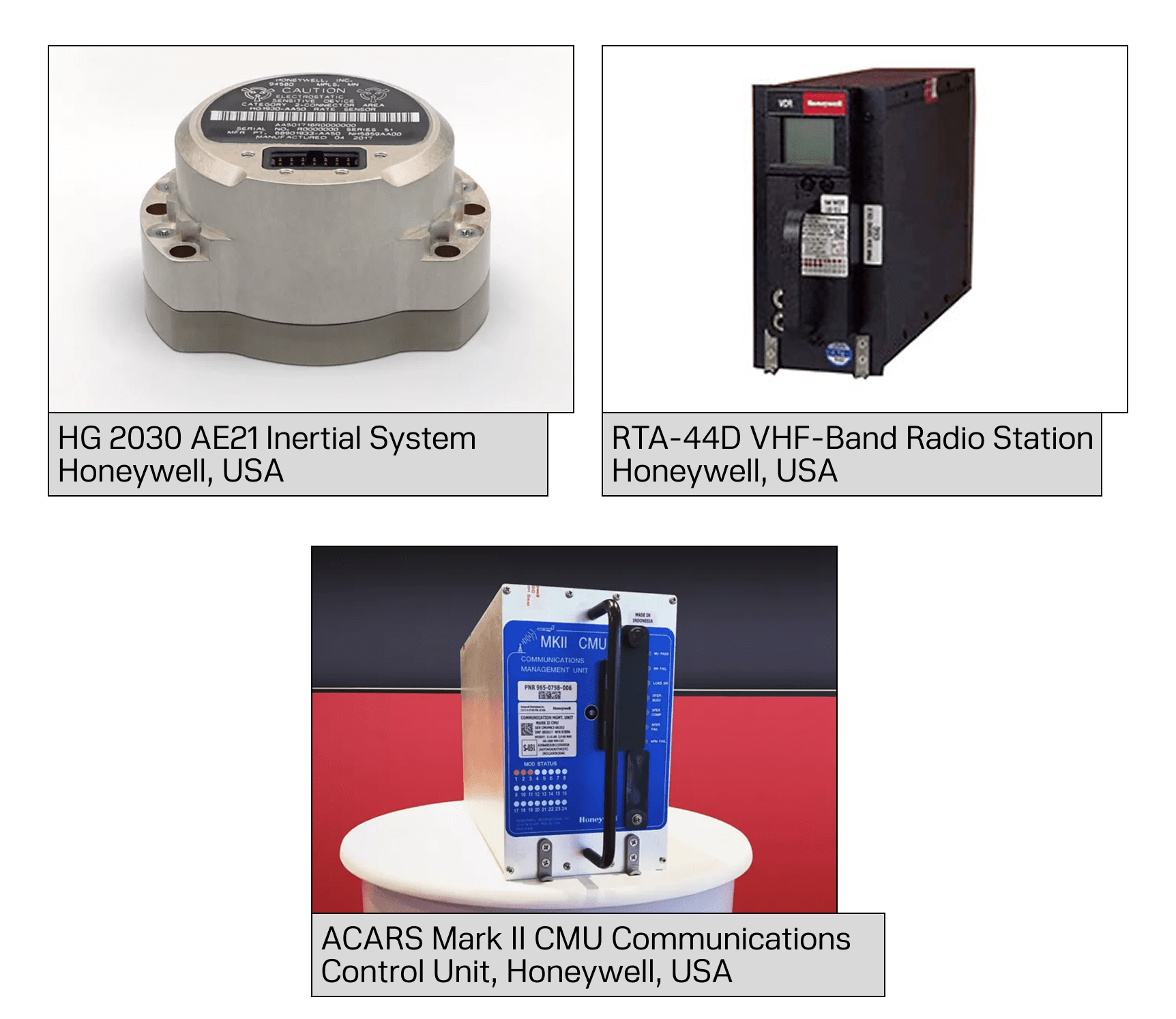
Internal documentation indicates that Russian aviation is highly dependent on Honeywell parts, including the Honeywell HG2030 Inertial System and the Honeywell RTA-44D radio station.
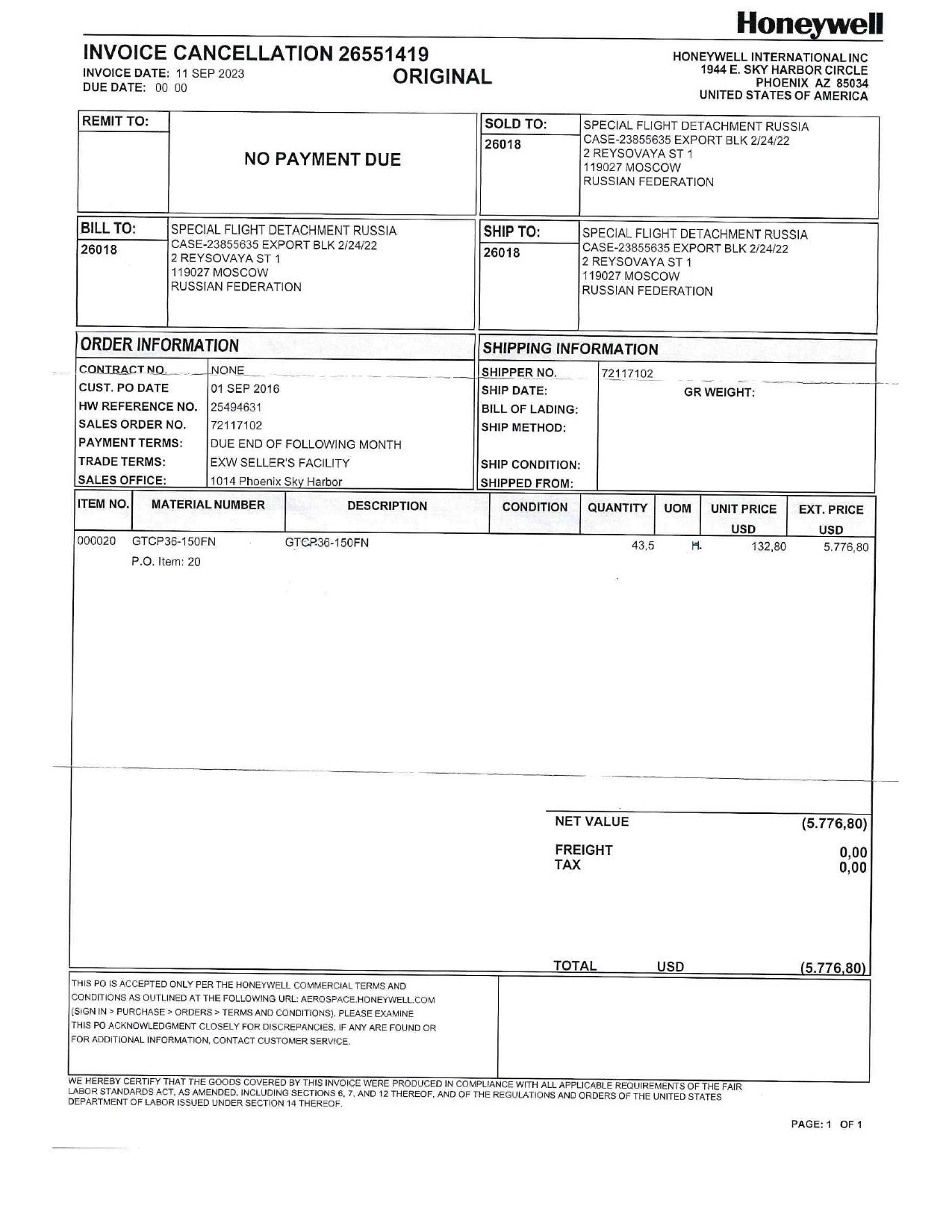
Furthermore, we acquired an invoice cancellation dated in 2023, between the Special Flight Detachment Russia and Honeywell. We asked them for comment on whether they have had contact with Aeroflot since 2022, and the fact that their components have been found in Russia since pulling out of Russia.
Sanctions law on re-export
As the companies listed are from the USA and the EU, the items on the list are subject to strict regulations. Under EU sanctions law, such as Council Regulation no/833 and the No Re-Export to Russia law, many products, especially related to aviation, cannot legally be exported to Russia.
In the US, Title 15 of the Code of Federal Regulations is meant to ensure that US-made parts cannot be resold to sanctioned countries without a license from the Bureau of Industry and Security (BIS) under the Export Administration Regulations (EAR). However, such licenses are rare. Also, both EU and US exporters are meant to know the final destination of their products, where possible.
How aviation parts get to Russia
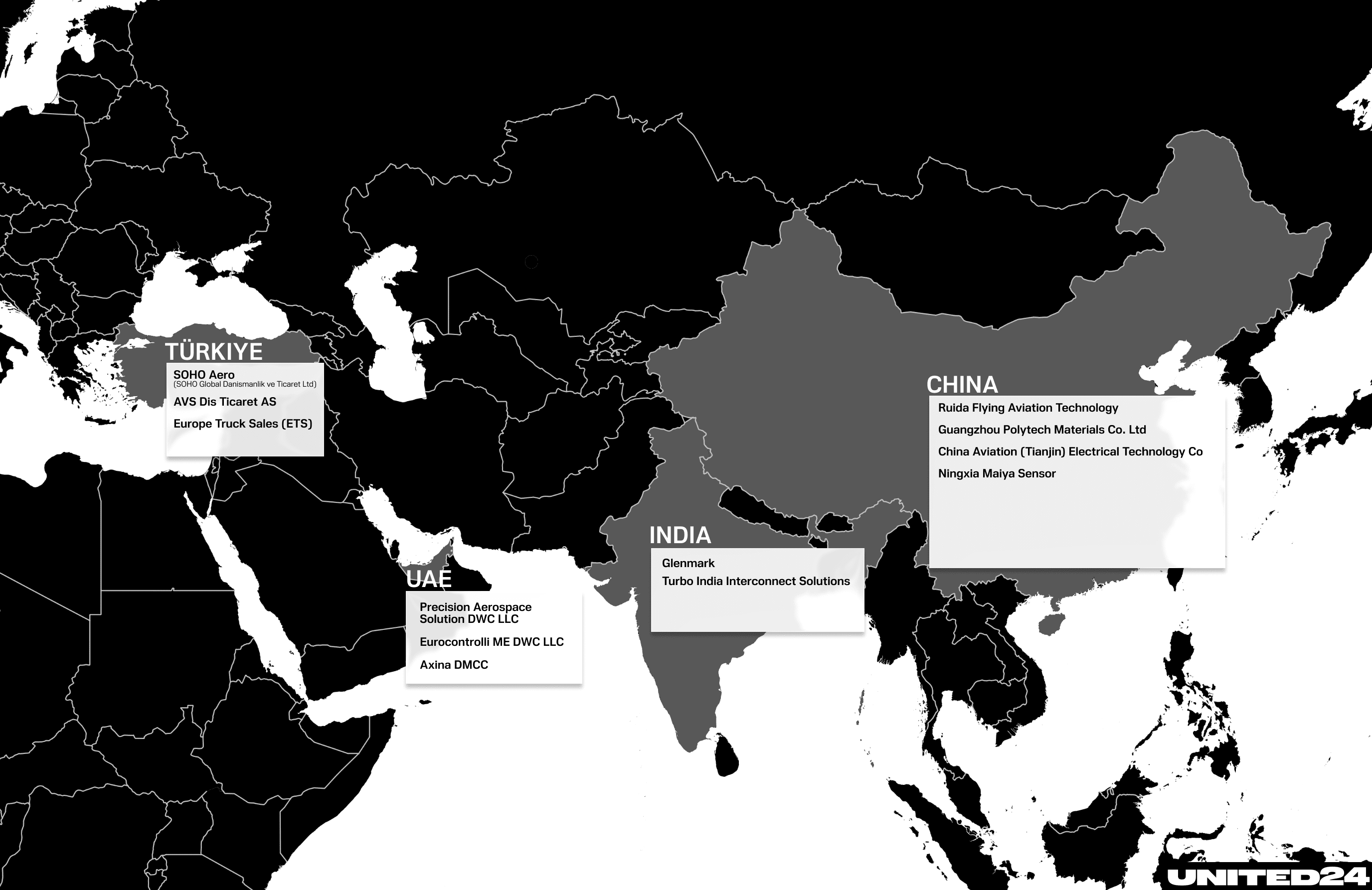
This massive range of components, materials, and parts is being distributed to a vast network of suppliers worldwide, with several key jurisdictions serving as hubs for bypassing sanctions. Mostly the UAE, China, and Türkiye. After that, they are shipped into Russia. There are companies with established names and locations, and others with minimal presence.
To illustrate, we can see that an oxygen system control, made by the French aerospace company Safran Aerosystems, was exported to the supplier “Al Lafa Trading Co. LLC” in Dubai on November 27th, 2024. This company name gives us little, with an address at a nondescript apartment building called the Al Mansoori building in the Hor Al Anz district.

After the French oxygen system control was shipped to Dubai, it was then resold to the Russian company ATS Group LLC, located on Pyatnitskaya St, Zamoskvorechye Municipal District, Moscow. Alongside Al Lafa LLC, there are many companies (over 300+) on the list that are part of the chain of importing and exporting these aviation components. One particularly interesting one is the “Middle East Learning Resources Co LLC”, which, according to their very sparse Facebook profile, is an educational company.

However, they appear to have purchased “switches for voltage not more than 60V, not intended for domestic use.” It is unclear why such a company would purchase this switch and export it to Russia, a company called Clean Distribution LLC, located at Neo Geo business park in Moscow, with no publicly available information.
Here are some of the ones we could identify that have more public-facing websites:
Precision Aerospace Solution DWC LLC — This is an aviation part provider based in Dubai, importing gasket parts from Honeywell
Glenmark Pharmaceuticals — A major pharmaceutical company that appears to be importing thermometers from Honeywell for transporting medicines and re-exporting them to its Russian-based subsidiary.
SOHO Global Danismanlik ve Ticaret Ltd (Soho Aero) — Trading firm specializing in Aviation and Marine industries, based in Turkey. They appear to be importing and exporting elements and small parts from Honeywell, and mostly exporting goods to Russia and India.
Ruida Flying Aviation Technology — Aviation company in China, which appears to be importing civil aviation steel gaskets from Safran and parts for indicator lights from Korry
Turbo India Interconnect Solutions — A subsidiary of Turbo India, they provide connectors and other components for aviation to and from suppliers globally, including for military aviation purposes. They appear to be importing Ferrous Metals from Sourrieu.
Guangzhou Polytech Materials Co. LTD — A Chinese polytech company, who appears to be importing polymers from Exxon Mobile
Ningxia Maiya Sensor — Chinese gas detector company, importing parts from Honeywell, such as for filtering gases
AVS Dis Ticaret AS — Turkish aerospace importer and exporter, who are transferring parts primarily for Boeing Jets from Honeywell
Europe Truck Sales (ETS) — Turkish lorry sales company with very minimal website
Eurocontrolli ME DWC LLC — Selling electronics for industrial, oil, civil, and residential sectors. There are both Italian and ME-based companies under this name, but it appears primarily in Dubai now
Axina DMCC — Supplier of engineering parts. Based in the UAE, but they have Russian on their site which tells us about some of the core users of this company.

A selection of some of the companies involved in the supply chain that gets aviation parts into Russia and their locations. Illustration: UNITED24 Media
Many other companies are very hard to find, with duplicated names or next to no publicly available information. This shows that they are effectively shell companies used to obscure the intended purposes of exporting to Russia. For example, Abdughafor Qayumi On, which seems to be a name and nothing more. Notably, one supplier LSS Global Insaat Sanayi Ve Ticaret Limited Sirketi, who bought from Soureiu, is already sanctioned by the USA, but not by the EU, meaning they are already a dubious purchasing partner.
It is worth understanding that there is an easier route now. In 2025, the US changed the law regarding Belavia, permitting the sale of US-made parts to them. Previously, they were under sanctions like any Russian or Belarusian aviation company. The law still forbids transit to Russia to prevent the sanctions on Russia. However, Belavia has been flying to Russia, which is prohibited with these US-made parts. With Belarus and Russia closely aligned and their borders symbolic, it is highly likely that more parts can be transferred to Russian aviation companies via Belarus. It remains to be seen if this channel will reduce the need for intermediaries elsewhere.
At the final end of the chain, the companies acquiring the parts in Russia are not small-scale buyers. They are major companies deeply connected to Russia's civil and defense infrastructure. For example, Aeroflot and Kazan Helicopters.
Aeroflot is one of the oldest airlines in the world and is partially owned by the Russian Federal State. Kazan Helicopters is a helicopter manufacturer with a legacy going back to the USSR, and is owned by “Russian Helicopters”, itself owned by “Rostec” and run by Sergey Chemezov, appointed by Vladimir Putin.
Why Russia needs these parts
These components shipped around the world through these dubious channels are essential for the Russian aviation sector, as the documentation we acquired illustrates. One document contains five pages of parts from Western aviation manufacturers (as well as some Ukrainian ones) used in Russian aircraft and helicopters operated by FGBU “SLO Rossiya” (the Russian State Flight Detachment).
This includes the Honeywell radio station and inertial system, as well as other components from Western and Ukrainian manufacturers, all essential to the Tu-204-300 aircraft. Another document shows that the Russian State Flight Detachment is requesting parts and documentation for:
EGPWS (Enhanced Ground Proximity Warning System)
Associated Honeywell-certified components
FAA/EASA-certified parts with Form 8130-3 or EASA Form 1
This is an explicit reliance on Western-certified safety systems. Another document, an internal letter, shows that Russian aviation is struggling to maintain its aircraft due to the lack of Western-made parts. If they cannot acquire these parts, they will have to rely on “cannibalism,” of other aircraft. This explains why they have set up this web of suppliers, rather than creating their own components. It is vital to note that the parties involved in these letters are state and state-affiliated, illustrating that this is beyond private individuals acquiring parts for their own aircraft; this is directly related to the civil and military aviation sectors.
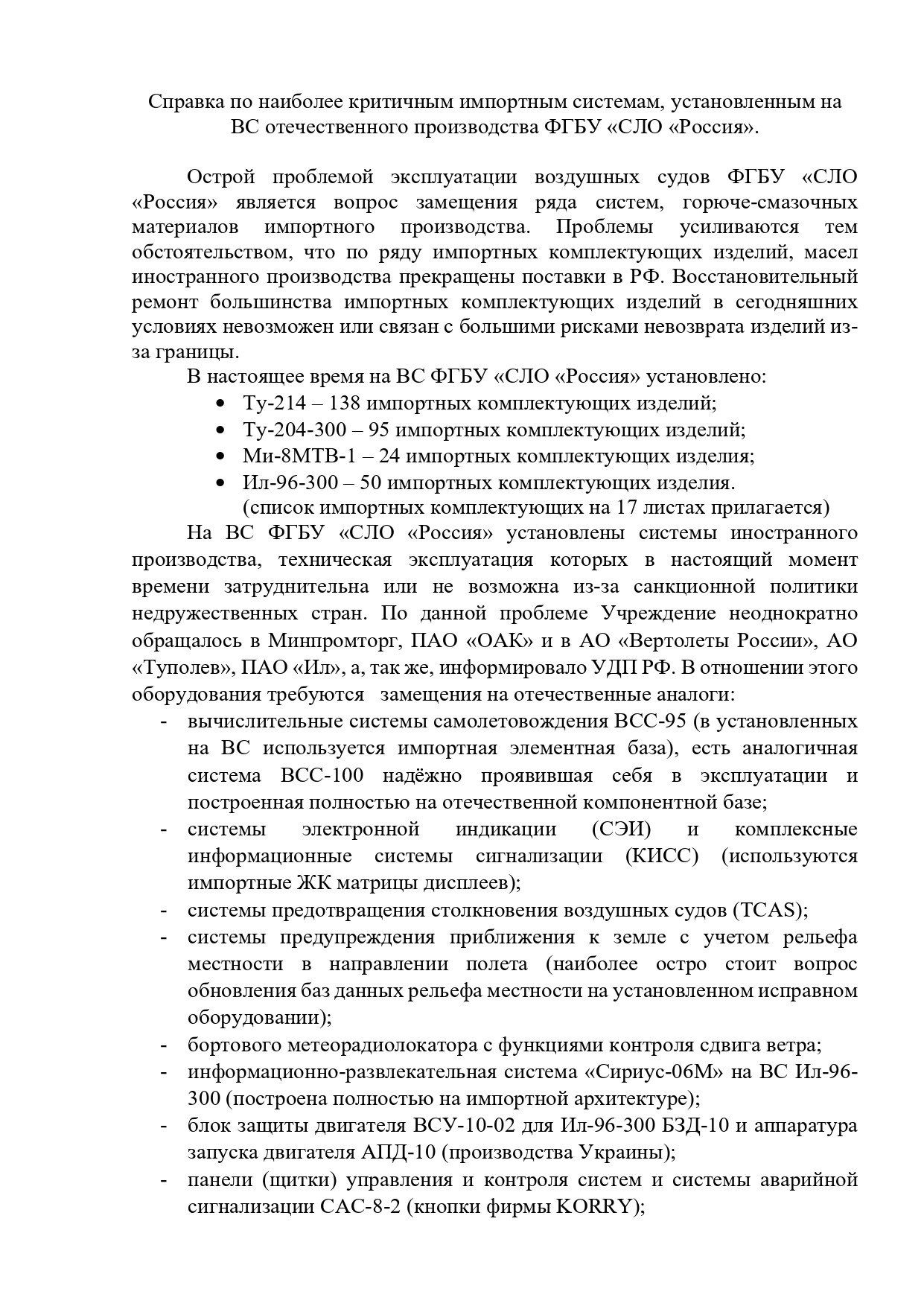
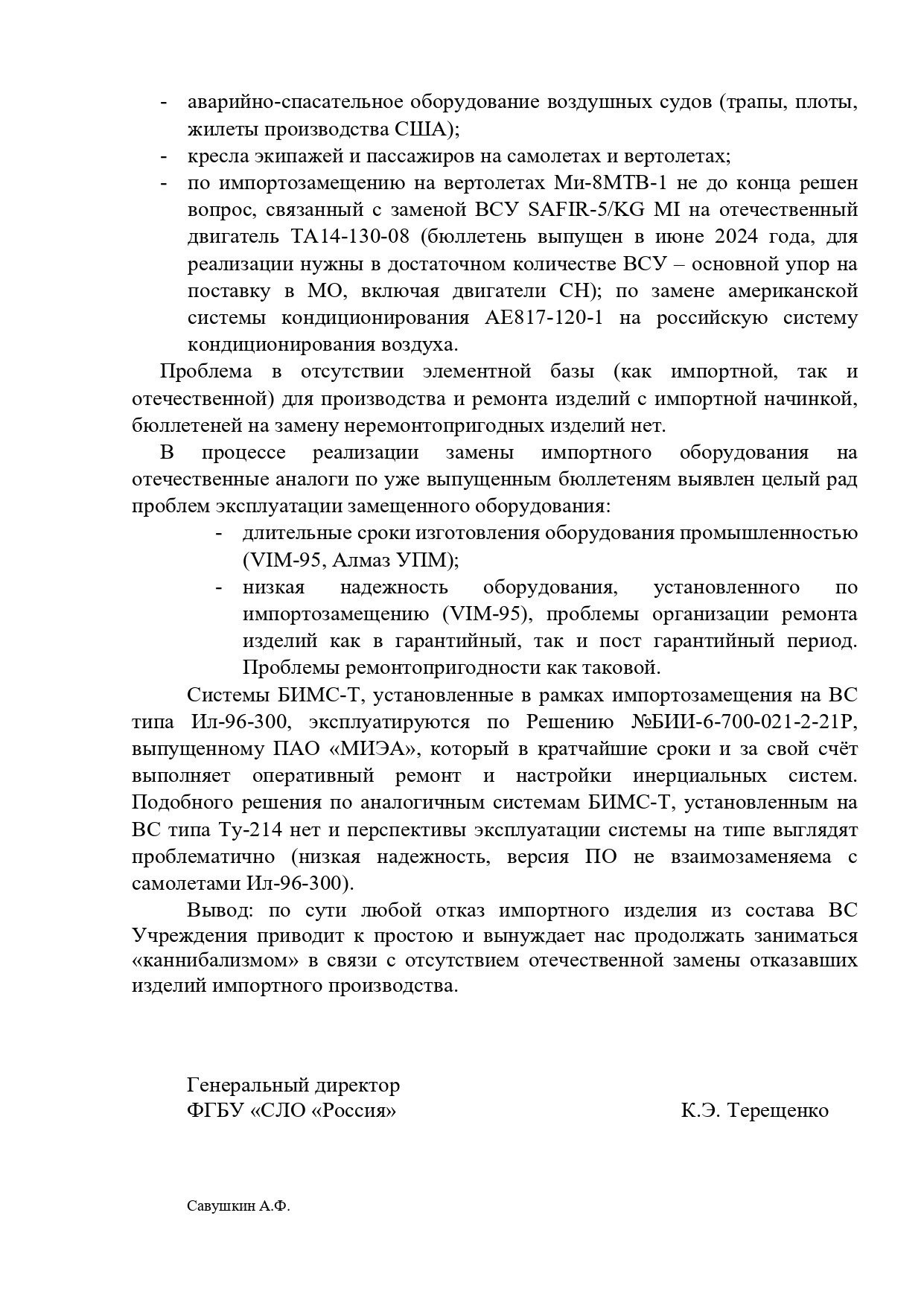
This is further corroborated by another letter, listing the difficulties and efforts to maintain their aircraft.
Closing the loophole
We can clearly identify many of the parties involved in this chain, indicating potential intervention by the EU and the USA, and we can also see that sanctions are having a significant impact. In fact, we contacted multiple companies we could identify who were in the middle of the chain, however, they did not respond.
We can see that Russia is clearly reliant on western made aviation parts and materials. Without this, their aerospace industry and military-industrial complex would struggle to maintain their air force, civilian, and military. That means it is more difficult for Russia to create as many aviation products as it claims. If further sanctions can close these loopholes, we can expect a deeper impact on both civil and military aircraft maintenance, which will impact their military capabilities and economic function. Reversing these sanctions now would ease pressure when it is needed more than ever.
Discuss this article:
-4a56a6b482ec132402c16ef6fcabf9a2.png)


-c439b7bd9030ecf9d5a4287dc361ba31.jpg "Photo of Katherina Popilnichenko")