- Category
- World
Satellite Images Reveal Russia’s Giant 3,000-Km Radar Rising Inside NATO’s Backyard
 Prefer U24 Media on Google
- Authors


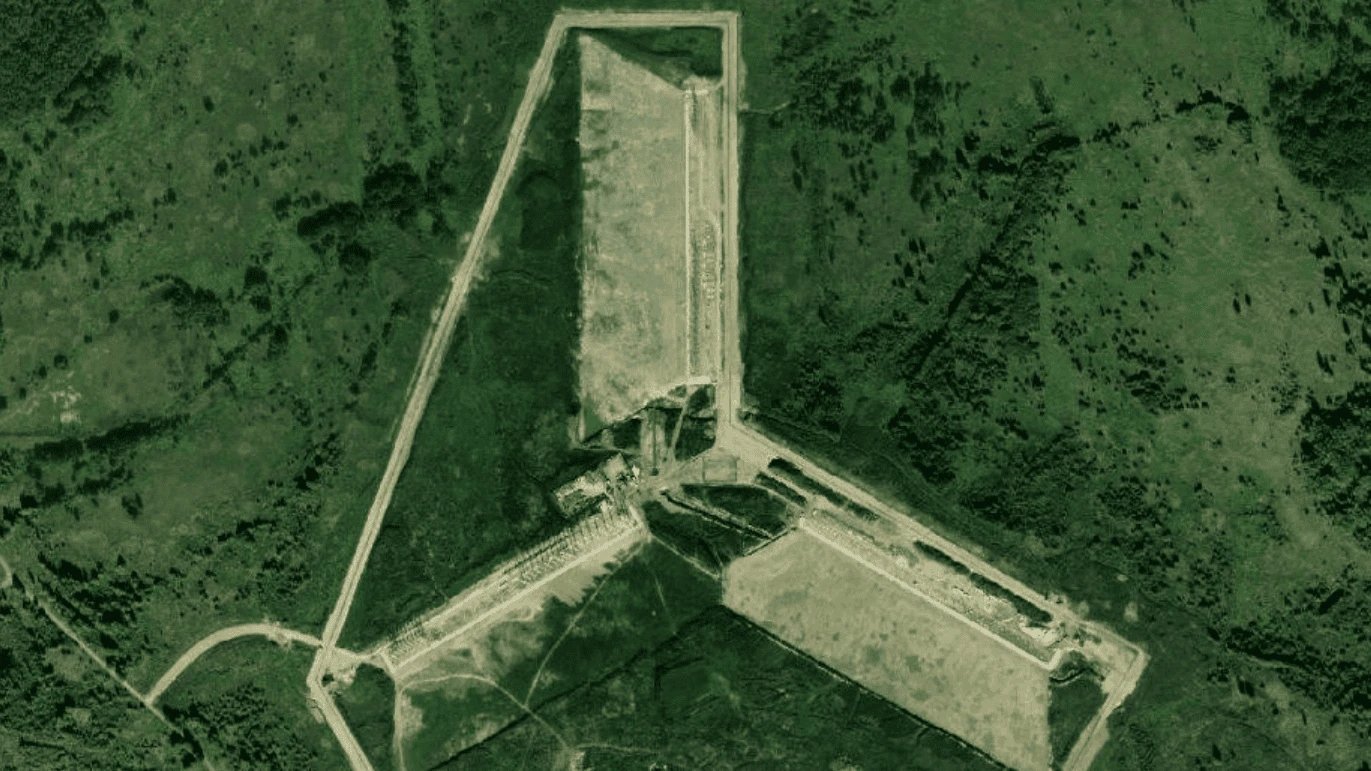
Russia is nearing completion of a massive over-the-horizon radar complex in its heavily militarized Kaliningrad exclave, potentially giving Moscow the ability to monitor aerial activity across much of Europe and Ukraine, according to Deutsche Welle on November 2.
The facility, located near the town of Gvardeysk, consists of three sprawling antenna arrays, each extending more than 500 meters across a forested nature reserve. Although Russian authorities have not officially confirmed the project, reports indicate that construction is approaching completion.
We bring you stories from the ground. Your support keeps our team in the field.
According to Lithuanian security expert Vaidotas Malinionis, a retired military commander, the radar could have a surveillance range of approximately 3,000 kilometers (1,864 miles), allowing Russia to monitor targets far beyond the Earth's curvature.
The system could reportedly enable Russian forces to intercept satellite communications, track aircraft movements, and detect ballistic missiles across a vast geographical area, including much of Europe and Ukraine.
“The goal and the purpose of this radar is observation of long-distance targets and early warning capabilities. We still don't know if it is operationally capable of doing that, but it is definitely being constructed right now,” Malinionis told Deutsche Welle.
🇷🇺 RUSSIA | Satellite Imagery Reveals Massive Over-the-Horizon Radar Under Construction in Kaliningrad
— MizarVision (@MizarVision) October 20, 2026
Newly published satellite imagery from ICEYE reveals the construction of a large Russian over-the-horizon (OTH) radar installation near Gvardeysk, in the strategically… pic.twitter.com/nOqYAPXw5A
The radar's potential capabilities have raised concerns among regional security analysts, particularly regarding its implications for NATO's surveillance and defense systems.
Latvian geopolitical analyst Evija Djatkovica warned that the revival of Soviet-era radar technology could complicate NATO's efforts to integrate modern unmanned systems into its regional defense strategies.
“It will help Russia close existing loopholes in detecting low-flying objects, making the rapidly developing integration of drones into regional defense doctrines less effective,” said in a comment to Deutsche Welle.

According to Polish defense outlet Defence24, the construction began in March 2023. The facility may be similar to Russia's existing 29B6 Container over-the-horizon radar system, which uses shortwave radio signals reflected off the ionosphere to detect objects beyond conventional radar line of sight.
According to claims made by the Russian military, the Container system can simultaneously track up to 10,000 aerial targets, including F-35 fighter jets. However, the facility’s exact purpose remains unclear.
The development comes as Russia has also taken steps to reinforce the protection of its existing strategic radar infrastructure in Kaliningrad.

On August 31 it was reported that Russian forces had installed protective netting around the Voronezh-DM early-warning radar, apparently seeking to safeguard the installation against potential long-range drone attacks.
Satellite imagery revealed anti-drone nets surrounding the radar complex at the former Dunaevka airfield in Russia's Kaliningrad exclave.
Unlike conventional battlefield radar systems, the Voronezh-DM forms part of Russia's strategic missile early-warning network and has a claimed detection range of up to 6,000 kilometers (approximately 3,700 miles).
Discuss this article: