- Category
- Defense Tech
Inside Ukraine’s Defense Tech Demo Day: Armed Robots, Modular Drones, and Smarter Strikes

Ukraine’s defense industry put its vision of the next battlefield into motion at a live demonstration outside Kyiv—showing armed ground robots, modular strike drones, electronic warfare systems, and reconnaissance platforms designed around problems Ukrainian troops are facing now.
 Prefer U24 Media on Google
- Authors


Tech Force in UA held its second Demo Day, “Designed for the Future: Ukrainian Defense Technologies in Action,” in the Kyiv region on July 15, Ukrainian Statehood Day, attended by a UNITED24 Media correspondent.
We bring you stories from the ground. Your support keeps our team in the field.
The event brought together nearly 500 participants, including Ukrainian service members, government officials, diplomats, technology developers, and representatives of major international defense companies.
Eighteen TFUA member companies demonstrated more than 30 products across four major fields: aerial systems, unmanned ground vehicles, electronic warfare, and signals intelligence. More than 50 member companies also displayed their latest systems in a dedicated exhibition area.

The live program went beyond static presentations. Visitors watched flight demonstrations, precision strikes, real-time target engagements, and tests intended to show whether the systems could continue operating under electronic warfare pressure.
“Ukraine is no longer merely adapting to the future of warfare—we are helping shape it,” said Anastasia Mishkina, executive director of Tech Force in UA.
Last week, the Odd Systems team joined the "Built for the Future" Demo Day by Technological Forces of Ukraine – a large-scale event bringing together 50+ Ukrainian defense tech manufacturers, as well as government representatives and the tech community. pic.twitter.com/ccXLERNyjU
— OddSystems (@SystemsOdd) July 23, 2026
She said Ukraine had evolved from a recipient of Western military assistance in 2022 and 2023 into “one of the world’s leading innovators in modern warfare.”
The systems presented at Demo Day were developed around real operational demands and battlefield experience, Mishkina added, with many ready for scaling and international cooperation.
Here are just a small part of the new defense tech products presented at the Demo Day.
Droid TW 40 puts an MK-19 on wheels
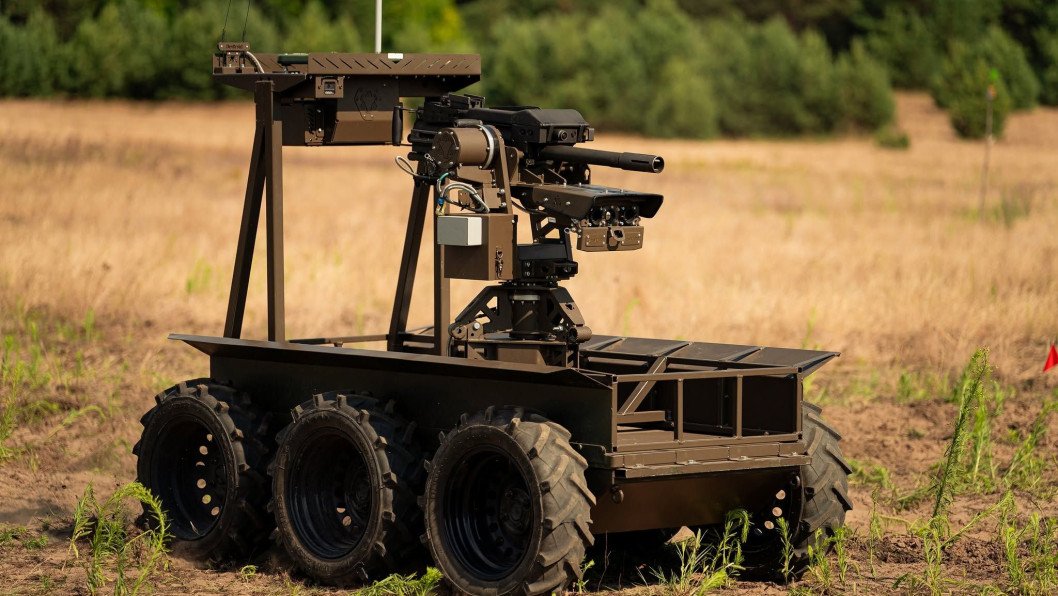
DevDroid presented the Droid TW 40, a wheeled reconnaissance-and-strike robot carrying a remotely operated MK-19 automatic grenade launcher.
The company had previously placed the weapon on a tracked platform. The new version was developed after Ukrainian troops requested greater mobility across changing terrain, seasons, and sectors of the front.
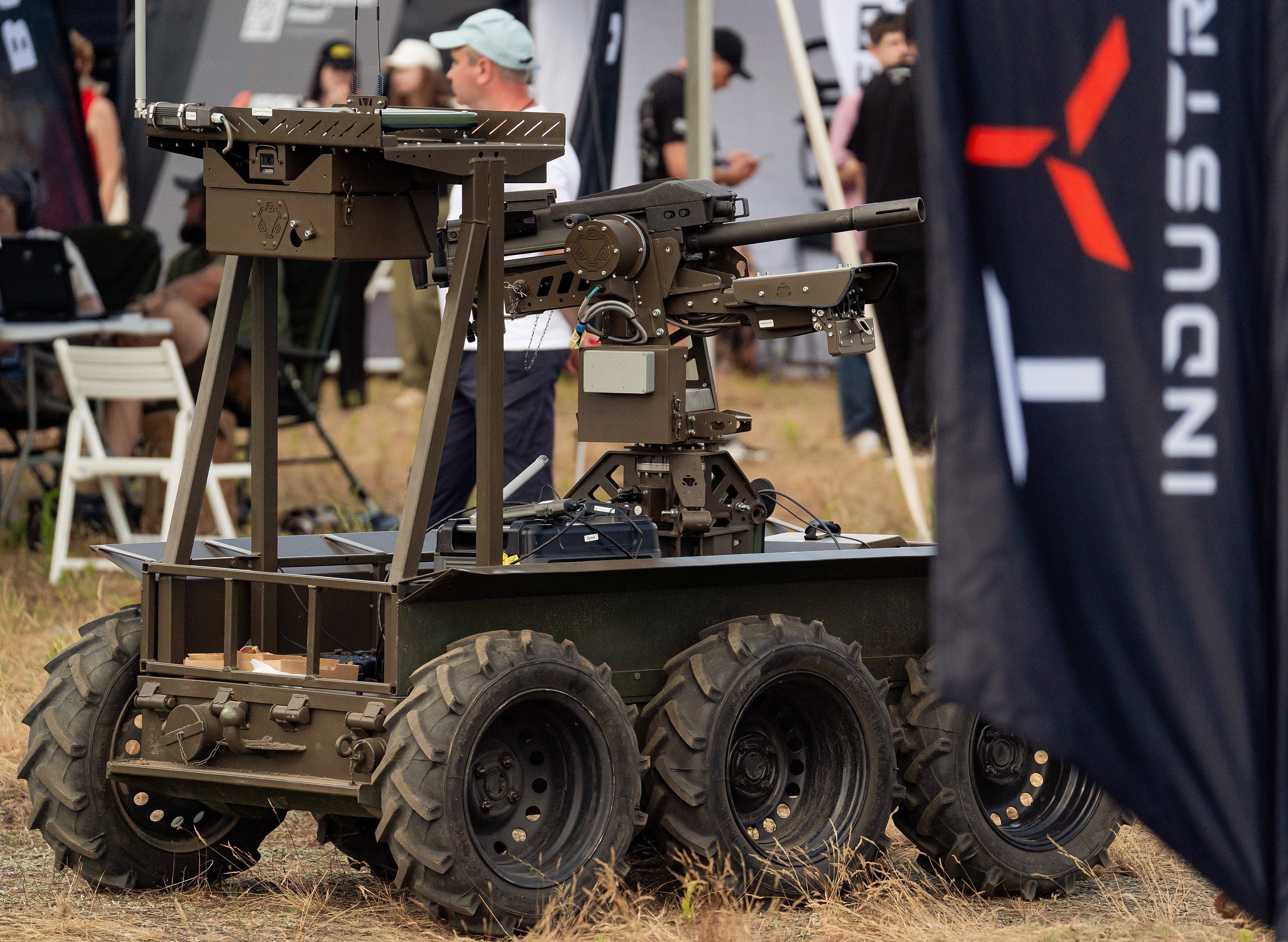
Its wheeled chassis is designed to move through mud, snow, sand, rocky ground, off-road routes, and shallow water. The platform combines the Wolly 40 weapon station with DevDroid’s universal Droid Box control system, a thermal-imaging camera, a ballistic computer, and coordinate-based targeting.
Operators can use the robot to engage troops, trenches, firing positions, and fortifications while remaining at a safer distance. The platform has already been officially codified, clearing an important step toward operational deployment.
BULLDOG carries the signal—or the strike
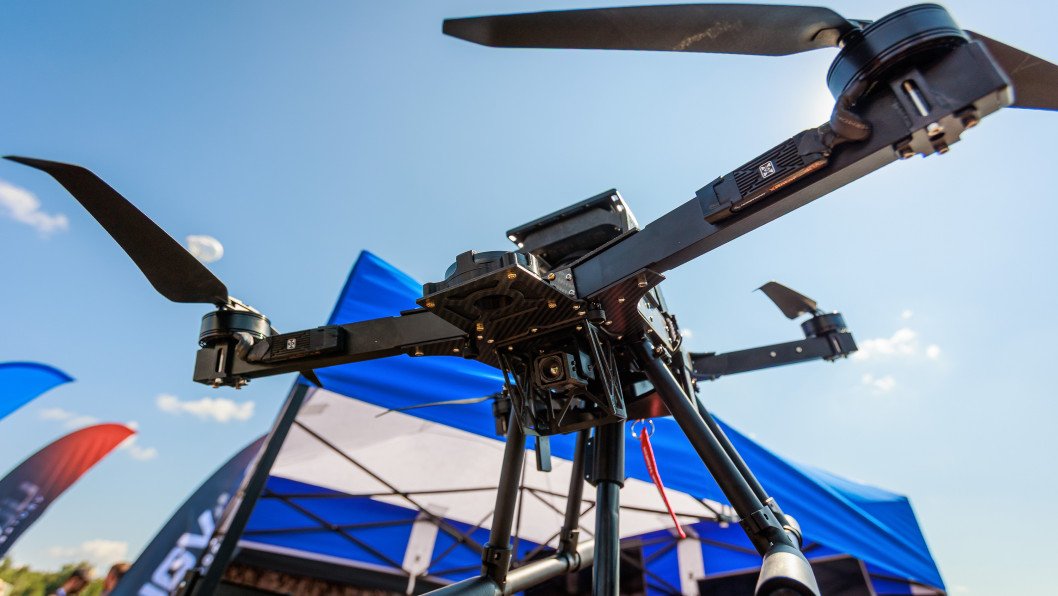
ROBONEERS unveiled BULLDOG, a modular UAV that can switch between two sharply different roles.
Configured as a communications relay, it can maintain radio links between ground and aerial systems in dense urban environments or difficult terrain. Reconfigured as a strike drone, it can deliver and release specialized payloads against targets at tactical depth.
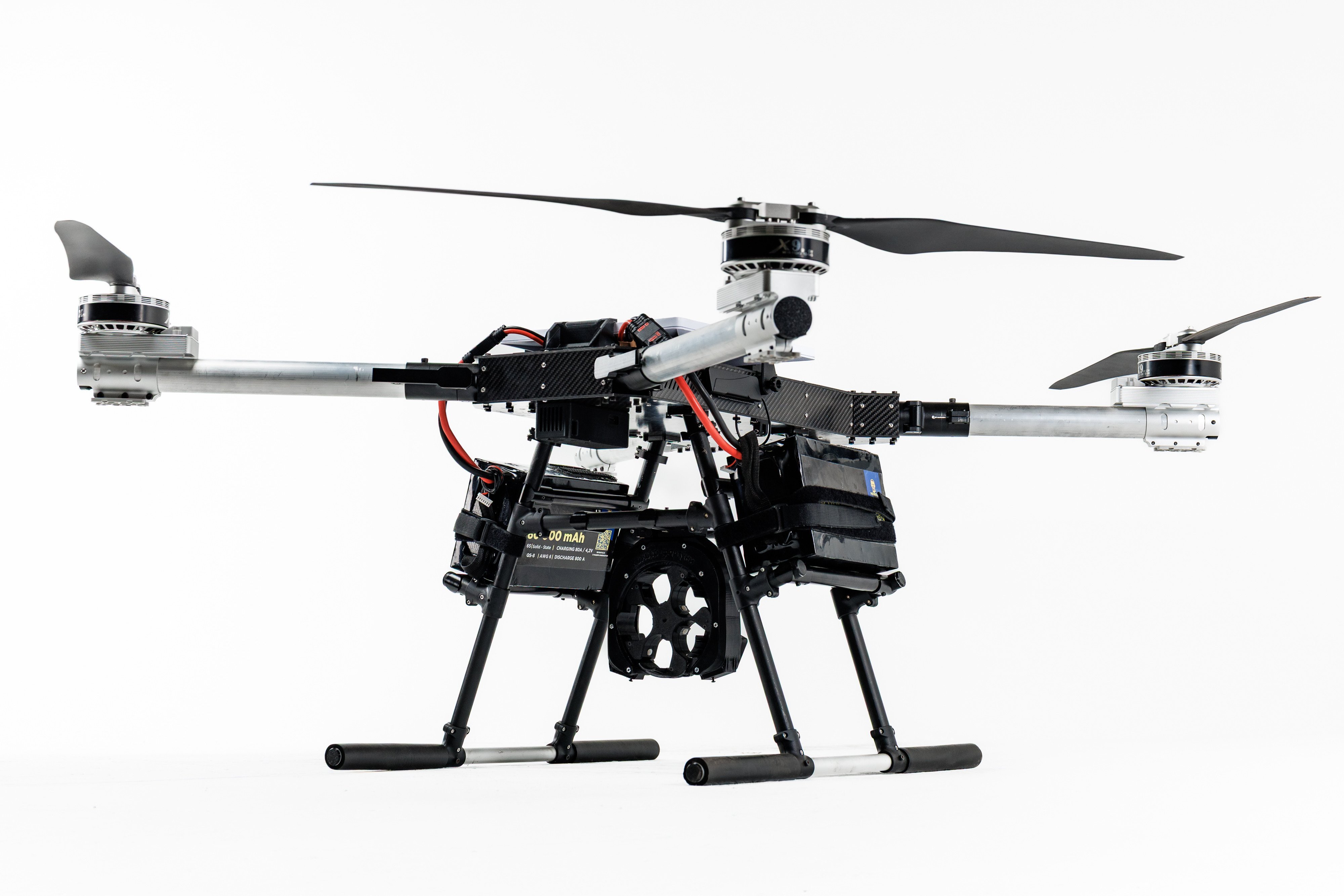
BULLDOG can fly for up to 70 minutes without a payload, carry roughly 22 pounds, and operate at distances of up to 12.4 miles. It was designed to function at night, in dust and high humidity, under poor visibility, and without GPS.
The aircraft folds into a backpack and can be deployed by one or two service members. Its batteries, propellers, and payload-release components are standardized with heavy drones already used by Ukrainian forces, allowing frontline units to repair it using existing supplies rather than waiting for unique replacement parts.
Palytsya gives Leleka a new strike partner
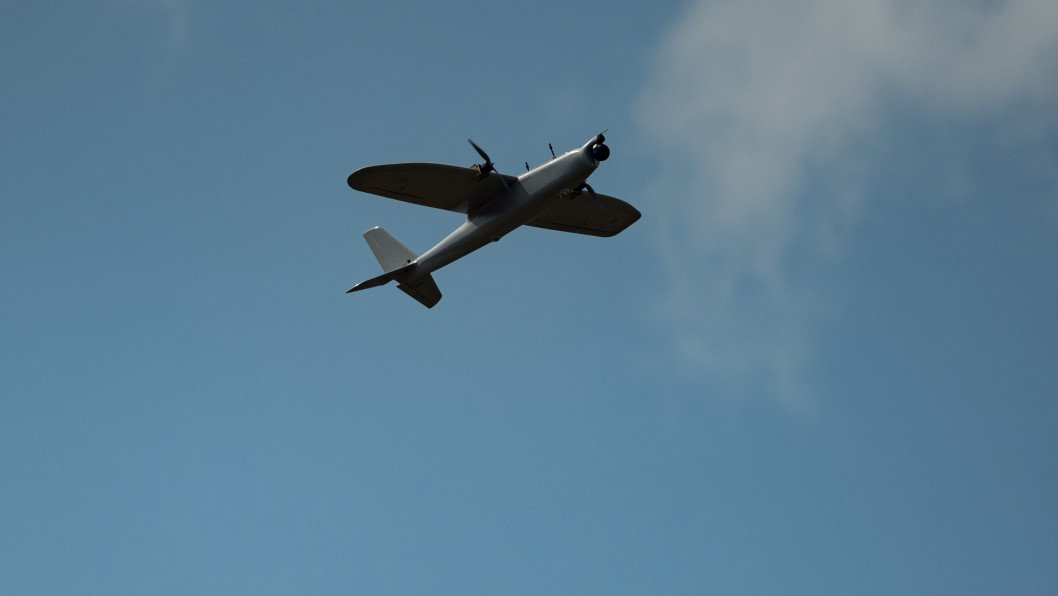
DEVIRO presented Palytsya, a prototype strike drone designed as a cheaper and more scalable partner for the company’s well-known Leleka reconnaissance family.
Palytsya has a reported combat radius of roughly 56 miles, an endurance of up to 70 minutes, and a warhead capacity of up to 6.6 pounds. After an operator identifies and selects a target, computer-vision guidance can take over the final stage of the attack.
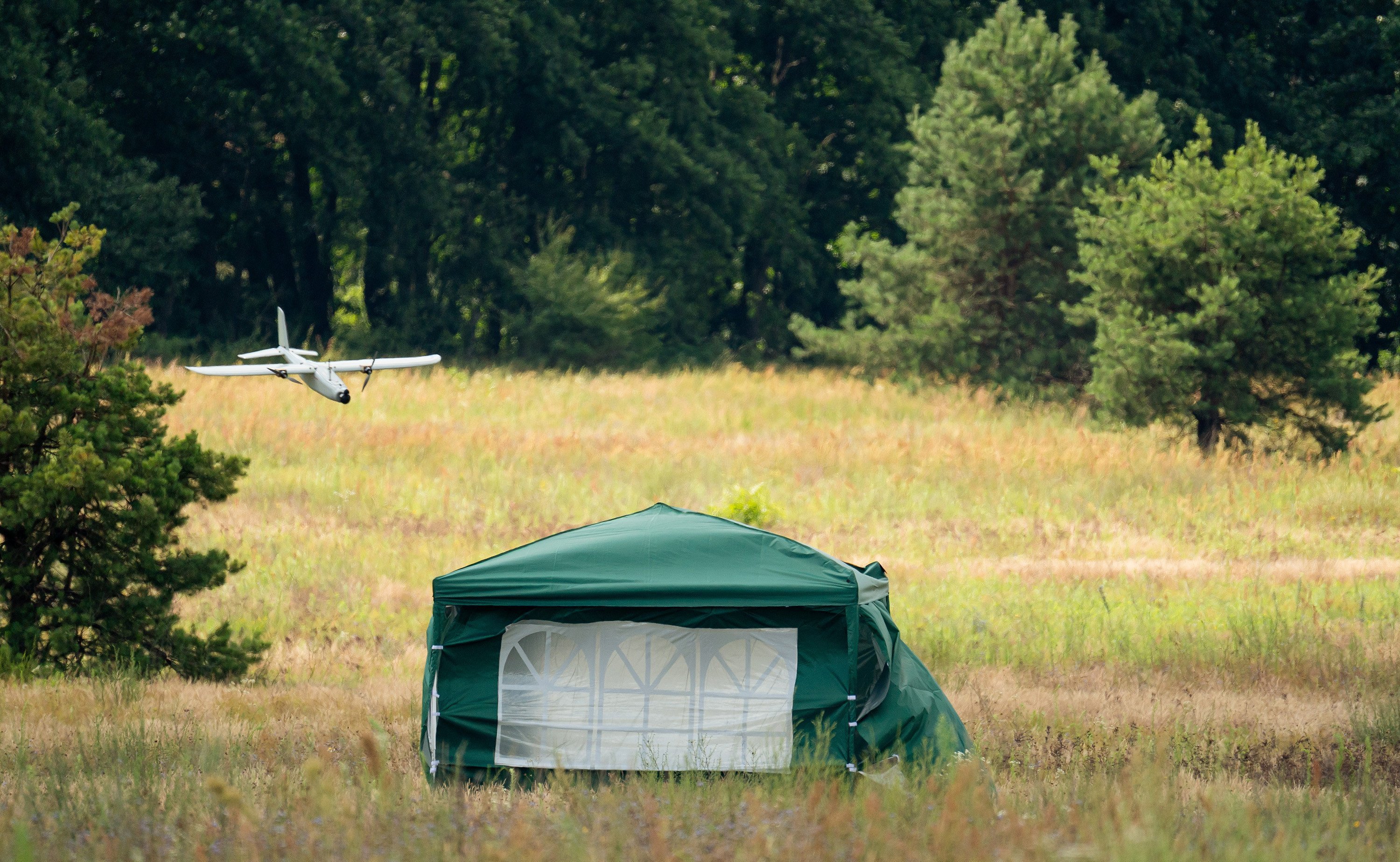
The drone can navigate without GPS and communicate through an encrypted digital channel with mesh-networking capability.
It is designed to work with every version of the Leleka, allowing the reconnaissance drone to locate and track a target before Palytsya is sent to strike it.
That pairing could give Ukrainian units a complete reconnaissance-and-strike chain from one manufacturer: Leleka serving as the eyes and Palytsya as the lower-cost weapon against logistics, equipment, and infrastructure beyond the immediate front line.
🇺🇦#Ukraine continues to expand its arsenal of low-cost precision strike weapons w/ defense company #Deviro unveiling #Palytsya.
— 🇺🇸 🇺🇸 🇺🇸Midobecker 🇺🇸 🇺🇸 🇺🇸 (@midobecker_1) July 23, 2026
The new attack drone designed as a more affordable alternative to the #BULAVA loitering munition carrying a 3kg warhead. pic.twitter.com/FaFuVZu1C1
Palytsya remains under development and has not yet been officially codified, but the prototype reflects a wider trend visible throughout Demo Day: Ukrainian companies are not simply creating individual drones or robots.
They are building connected battlefield ecosystems in which reconnaissance, communications, electronic warfare, and strike platforms work together.
Technology built around the soldier
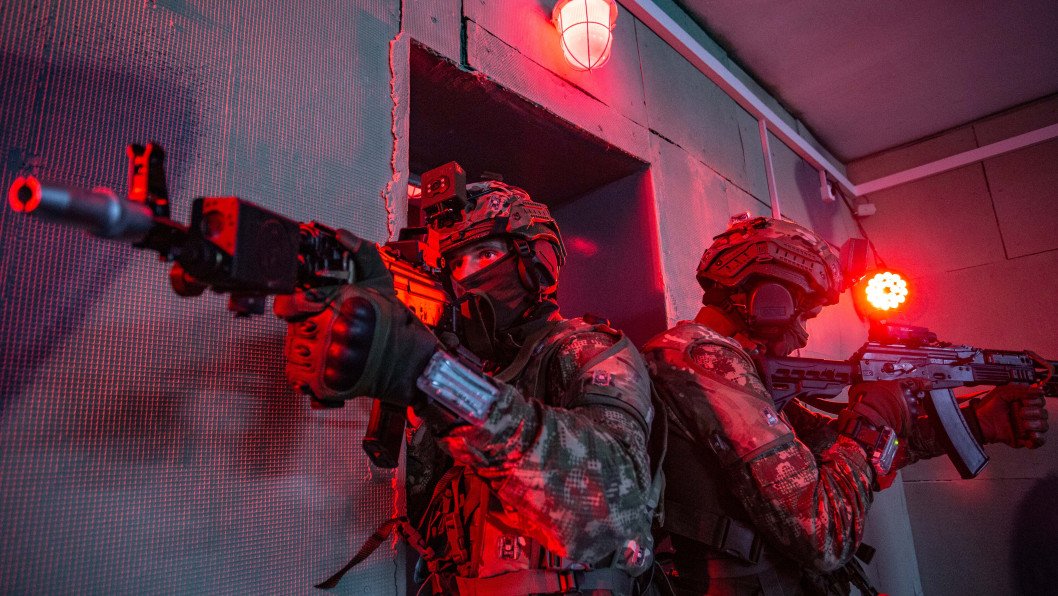
The systems displayed in the Kyiv region varied widely in size and purpose, but they shared one central design principle: move Ukrainian personnel farther from danger while making units faster, more precise, and less dependent on vulnerable infrastructure.
Together, they show how Ukraine’s defense industry is turning wartime improvisation into deployable products—and battlefield lessons into technologies that foreign partners are increasingly coming to Ukraine to see in action.
More than 50 TFUA member manufacturers showcased their implementation-ready technologies and innovative solutions, including:
Fire Point, Quantum-Systems, WIY DRONES, UGV Laboratory, Lama Tech, Sine Engineering, Airlogix, Omnitech Defense, INFOZAHYST, Ukrainska Bavovna, KRUSH Link, Buntar Aerospace, General Cherry, DEVIRO, TAF Industries, HIMERA, Roboneers, DevDroid, Oko Camera, UKRSPECSYSTEMS, The Fourth Law, Odd Systems, PG Robotics, WARMAX, SKYRIPER, BlueBird Tech, Motor-G, Aerobavovna, Chupacabra, Zli Ptakhy, Crossfire Technologies, VYTACH, Brave Technics, Air3F, Aero Center, Celebra Tech, Drone Hub, 2021 Solutions, Star Agrodrone, U-force, BTRY ENERGY, Kara Dag Technologies, Spaceray, UASkyline SKIF, Huless, Trypillian, SKIFTECH, Toloka, F Drones, SmartBirds.
The Tech Force in UA Demo Day, “Designed for the Future: Ukrainian Defense Technologies in Action,” was held with the support of manufacturers Quantum Systems, General Chereshnya, Helsing, Airlogix, Sine Engineering, and F Drones.
Militarnyi served as the event’s media partner, HIMERA provided technical communications support, and Dronarium Academy provided organizational support.
Discuss this article:


-c439b7bd9030ecf9d5a4287dc361ba31.jpg "Photo of Katherina Popilnichenko")