- Category
- Defense Tech
Russia Says Its Secret Laser Has Downed Hundreds of Ukrainian Drones—No One Has Verified It
 Prefer U24 Media on Google
- Authors


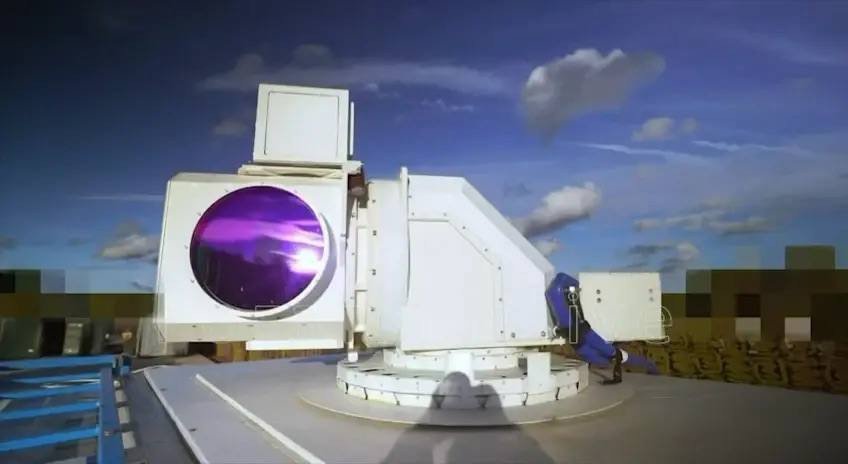
Footage circulating across Russian pro-military channels appears to show a Russian laser weapon engaging aerial drones, with military bloggers claiming several of the systems are already protecting strategic facilities in southwestern Russia, Defence Blog reported on August 31.
The claims have not been independently verified, and neither Russia’s Defense Ministry nor another government agency has publicly confirmed the system’s reported combat record.
We bring you stories from the ground. Your support keeps our team in the field.
One Russian military blogger described the footage as an “exclusive” and claimed the laser systems had already destroyed several hundred Ukrainian drones.
“Only we have sensational footage of the destruction of Ukrainian drones in the sky by a combat Russian laser complex,” the blogger wrote. “Several of these laser installations now cover our strategic facilities in the southwest of the country.”
Footage circulating from a Russian military blogger claims to show a laser weapon shooting down Ukrainian drones.
— Dylan Malyasov | 🧐 (@DylanMalyasov) August 31, 2026
Full story: https://t.co/GwEpGVfJ7B pic.twitter.com/d3htoeqyPD
Based on the available footage, the weapon appears to be built around a containerized platform combining a directed-energy laser, targeting and guidance equipment, and a separate command post from which an operator controls the system.
The complex also appears to include its own detection equipment for locating and tracking aerial threats, reportedly combining radar and optical sensors.
Russian sources have not publicly disclosed the system’s official designation, power output, effective engagement range or manufacturer.
The blogger also claimed developers are already working on a second-generation version intended to engage substantially faster targets, potentially including tactical aircraft and cruise missiles.
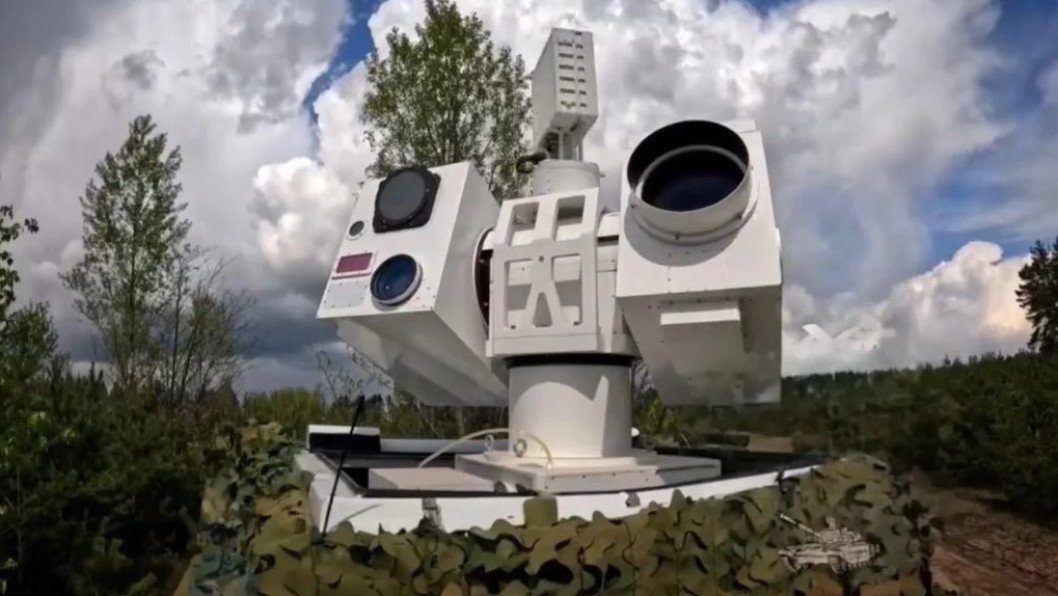
That capability has not been independently demonstrated.
“I am not inclined to overestimate this innovative type of weapon based on ‘new physical principles,’ but combined with traditional air defense systems, a combat laser will definitely be useful for protecting the country from air raids,” the blogger wrote.
“It is also gratifying that we not only have such combat ‘purple beams,’ but they have also proven their effectiveness. Now these ‘Jedi swords’ need to be developed and constantly improved. Such is the path.”
Directed-energy weapons have attracted growing interest from militaries around the world as a potential lower-cost answer to increasingly large drone attacks.
Unlike conventional air defense systems, which expend missiles or ammunition with every engagement, a laser can theoretically continue firing as long as sufficient electrical power and cooling are available.

That makes the technology particularly attractive for countering relatively inexpensive drones, where using costly surface-to-air missiles can quickly become economically unsustainable.
But laser weapons also face significant practical limitations.
Heavy rain, fog, dust, smoke and other atmospheric conditions can weaken or scatter a laser beam, reducing its effectiveness. Longer engagement distances also increase the impact of atmospheric interference.
Sustained firing creates another challenge because high-powered lasers generate substantial heat, requiring sophisticated cooling and power-management systems.
Earlier, Russia’s top business lobby appealed directly to Russian leader Vladimir Putin for heavy weaponry, electronic warfare systems, and dedicated military reservists to protect private industrial facilities.
Discuss this article:



-c439b7bd9030ecf9d5a4287dc361ba31.jpg "Photo of Katherina Popilnichenko")