- Category
- War in Ukraine
Five Russian Superweapons That Became Military Tech Disasters
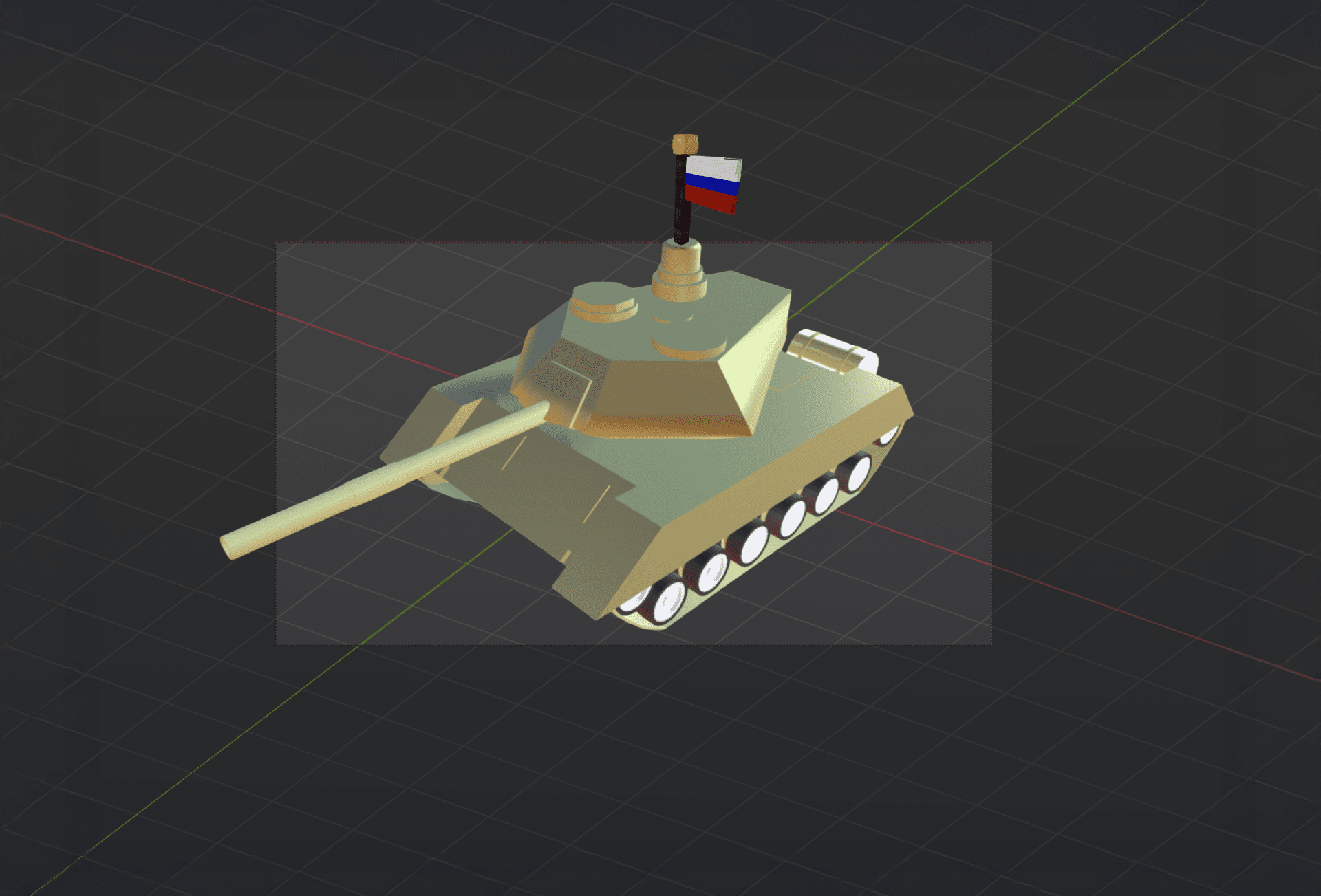
Despite years of bold claims from Moscow about next-generation weaponry, many of Russia’s most publicized military projects have failed to meet expectations. From advanced tanks kept away from the front to warships sunk by drones, these high-profile systems reveal the widening gap between Russian military propaganda and battlefield performance.
 Prefer U24 Media on Google
- Authors


As Russia’s full‑scale invasion of Ukraine grinds on, the costs to its forces remain severe: hundreds of soldiers are reported killed each day, warplanes largely avoid the front line, armored vehicles are routinely destroyed, and the Black Sea Fleet has been pushed into remote ports. On many sections of the front, Russia’s advances have relied heavily on high‑risk infantry assaults—troops moving on foot or using motorcycles and even scooters—supported by improvised logistics that at times involve donkeys.
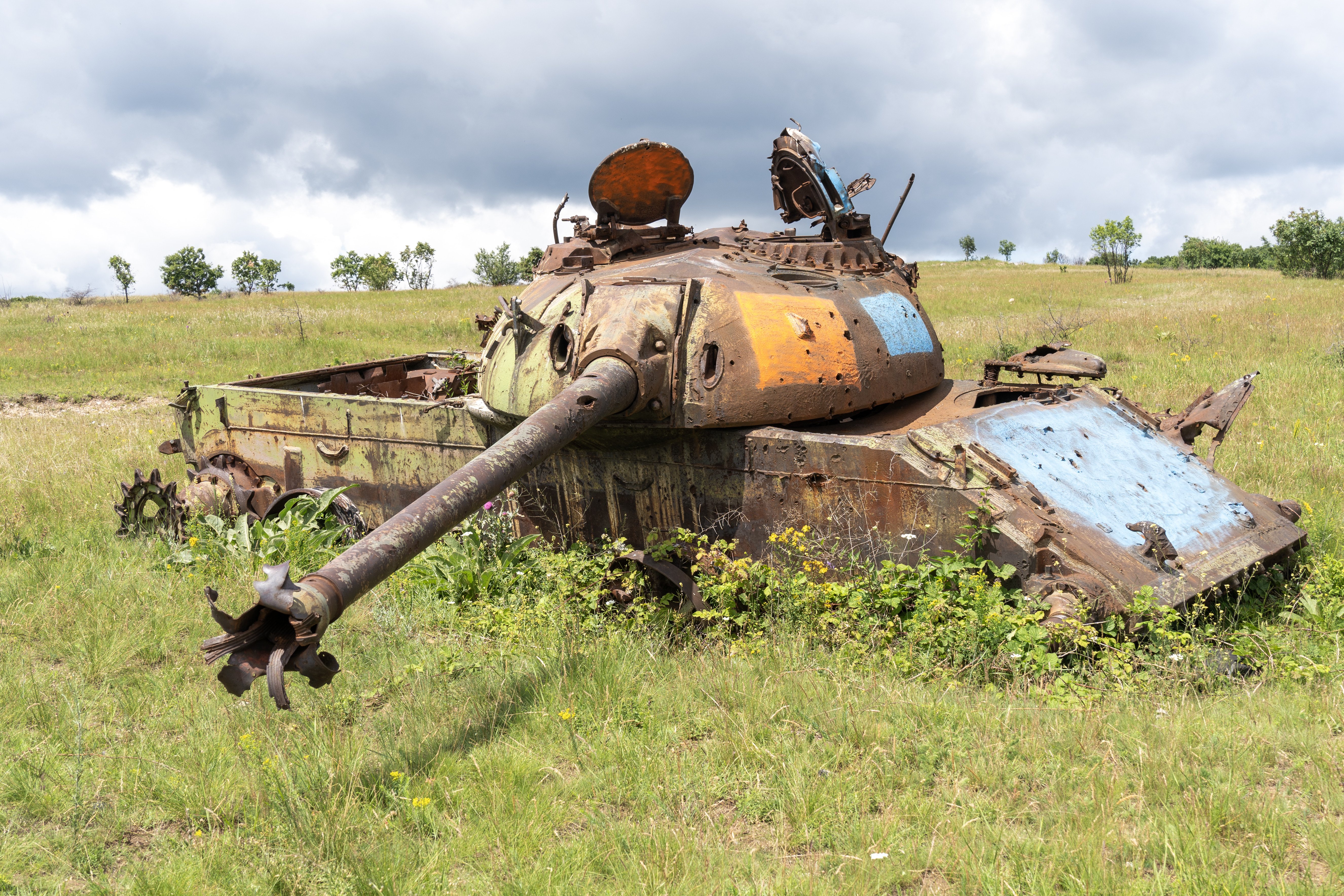
Still, Russia continues to champion the strength of its military‑industrial complex. Years of ambitious promises about next‑generation weapons have produced systems that are often unreliable, unfinished, or ineffective in combat. From underperforming tanks and vulnerable armored platforms to mockup aircraft and unfulfilled aviation projects, the distance between Russia’s rhetoric and its capabilities has become increasingly evident.
What follows is a closer look at several high‑profile Russian weapons programs whose prospects appear limited.
The “Invincible” tank—Armata
For the past 15 years, the Armata tank has been a flagship of Russian propaganda. It was hailed as the best in the world, printed on postage stamps, and slated for mass procurement—2,300 units for the Russian army. In December 2021, the Russian state-owned defense conglomerate Rostec claimed that serial production had begun, and in 2024, officials announced that the tank had already entered service. However, it appears that the PR campaign and the tank itself are distinct entities.
Development began in 2009 and was reportedly completed in 2013. The tank was showcased at the 2015 Victory Day parade in Moscow.
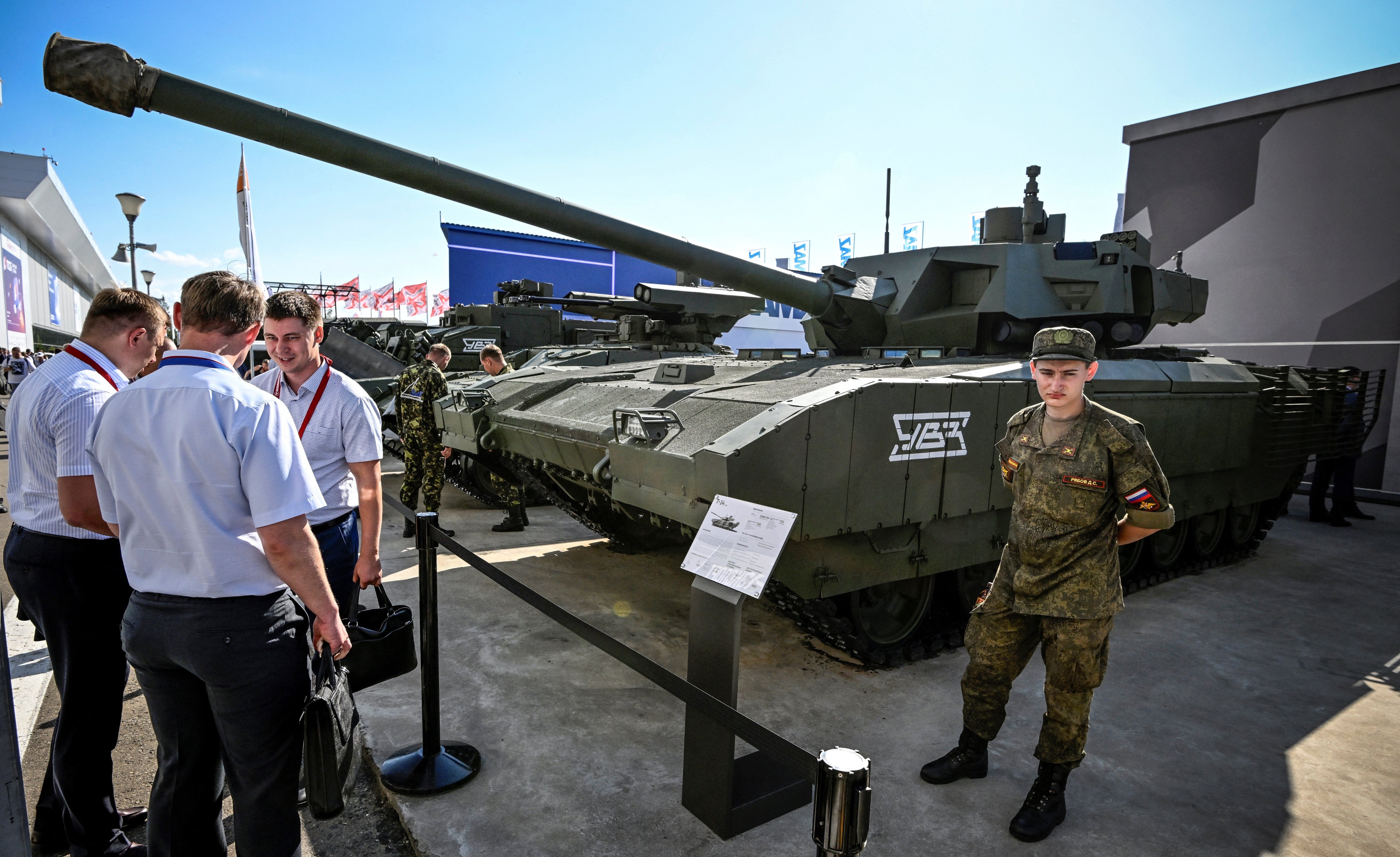
Known specifications include: a weight of up to 55 tons, a 1,500-horsepower engine capable of accelerating the tank to 75 km/h (50 mph), and a 125 mm 2A82-1M gun with a firing range of up to 8 km. Its main feature is an unmanned turret, with all three crew members seated inside an armored capsule. Russia also claims the T-14 is a “stealth tank” with drastically reduced infrared, magnetic, and radar signatures.
Flaws, delays, and doubts
Armata’s engine has been criticized as outdated and underpowered. The turret is overloaded with devices—weather sensors, sights, a phased-array radar, antennas, infrared cameras, and others—making it easy to disable even with light cannon fire or heavy machine guns. And if the autoloader fails, switching to manual loading drops the rate of fire to a miserable one round per minute.
Russia heavily promoted its Afghanit active protection system installed on the Armata. But the system’s mortars sit beneath the turret, at angles that cannot intercept munitions attacking the tank from above—the exact attack profile used by modern anti-tank guided missiles and suicide drones.
Eventually, confronted with reality, even Russian officials admitted the truth. “The Armata is unsuitable for war,” said former Roscosmos state corporation head Dmitry Rogozin in an interview with propagandists from the Russian news platform Politnavigator. This was the same Rogozin who, in 2015, claimed: “The Armata is a giant leap in our tank-building, a challenge we have thrown at our competitors who believed their armor was far superior to ours.”
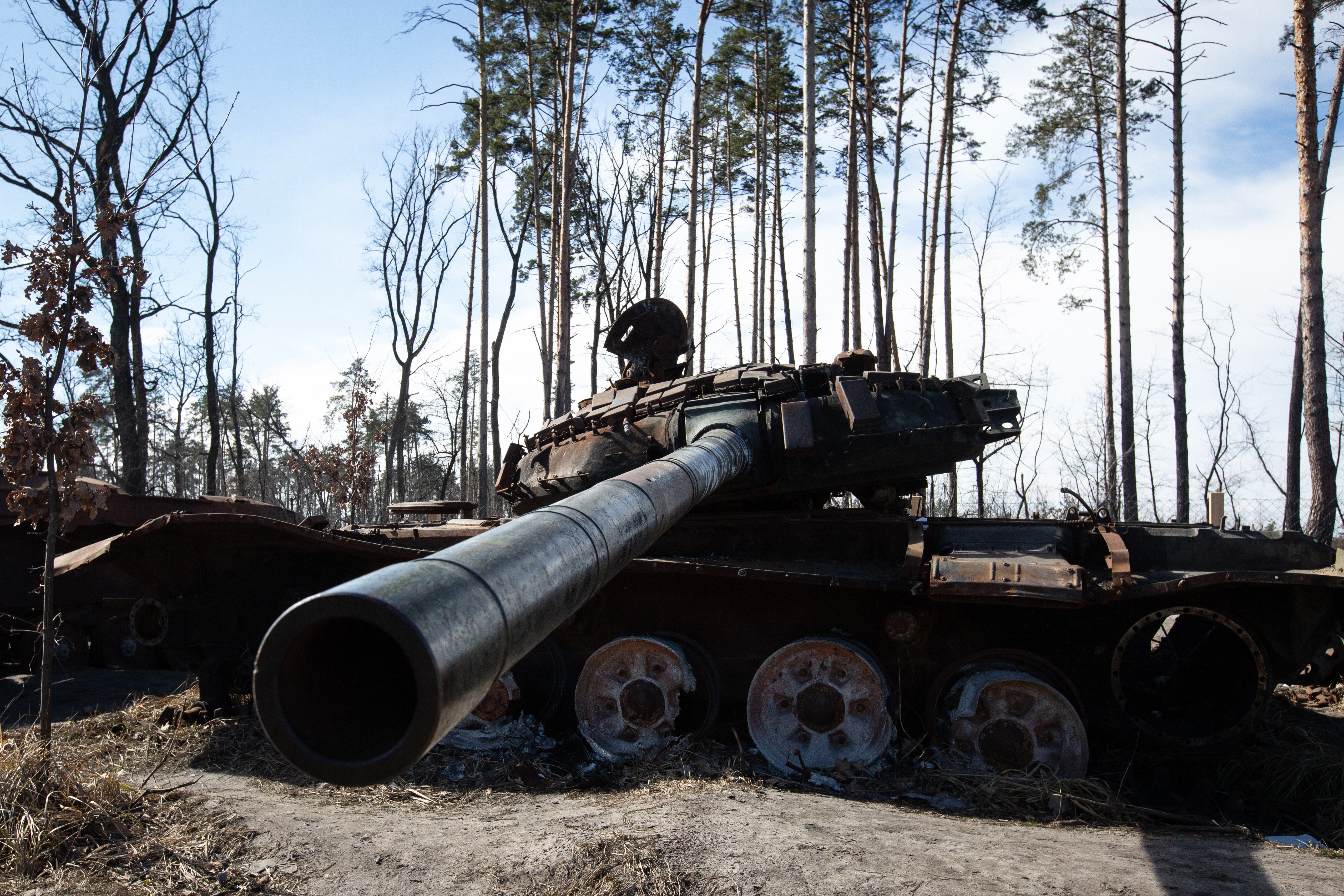
Today, Rogozin admits the T-14 is good only for parades—though even that is questionable. During a rehearsal for the 2015 Victory Day parade, the tank stalled and died in the middle of Red Square.
Too risky for real war
The Armata has never been seen in real combat. Some have even speculated that the tank is little more than a functioning chassis topped with a mockup. Although in 2023, Russian media claimed the T-14 had entered the war in Ukraine, no documentary evidence has ever been presented.
Too expensive (one T-14 reportedly costs around $8 million) and too unfinished. Also, too overhyped to risk sending it into battle, where Ukraine could severely damage Russia’s image as a tank-building power. As a result, Russia continues to fight with old equipment while hiding its “innovative” Armata far from the front, despite having begun development a decade and a half ago.
By late November 2025, Russia had already lost nearly 11,500 tanks. Storage bases and training grounds holding Soviet-era equipment are running dry. Even the old T-62/T-62M tanks, first adopted in 1961, are being sent into battle.
Phantom Fighter—Su-75
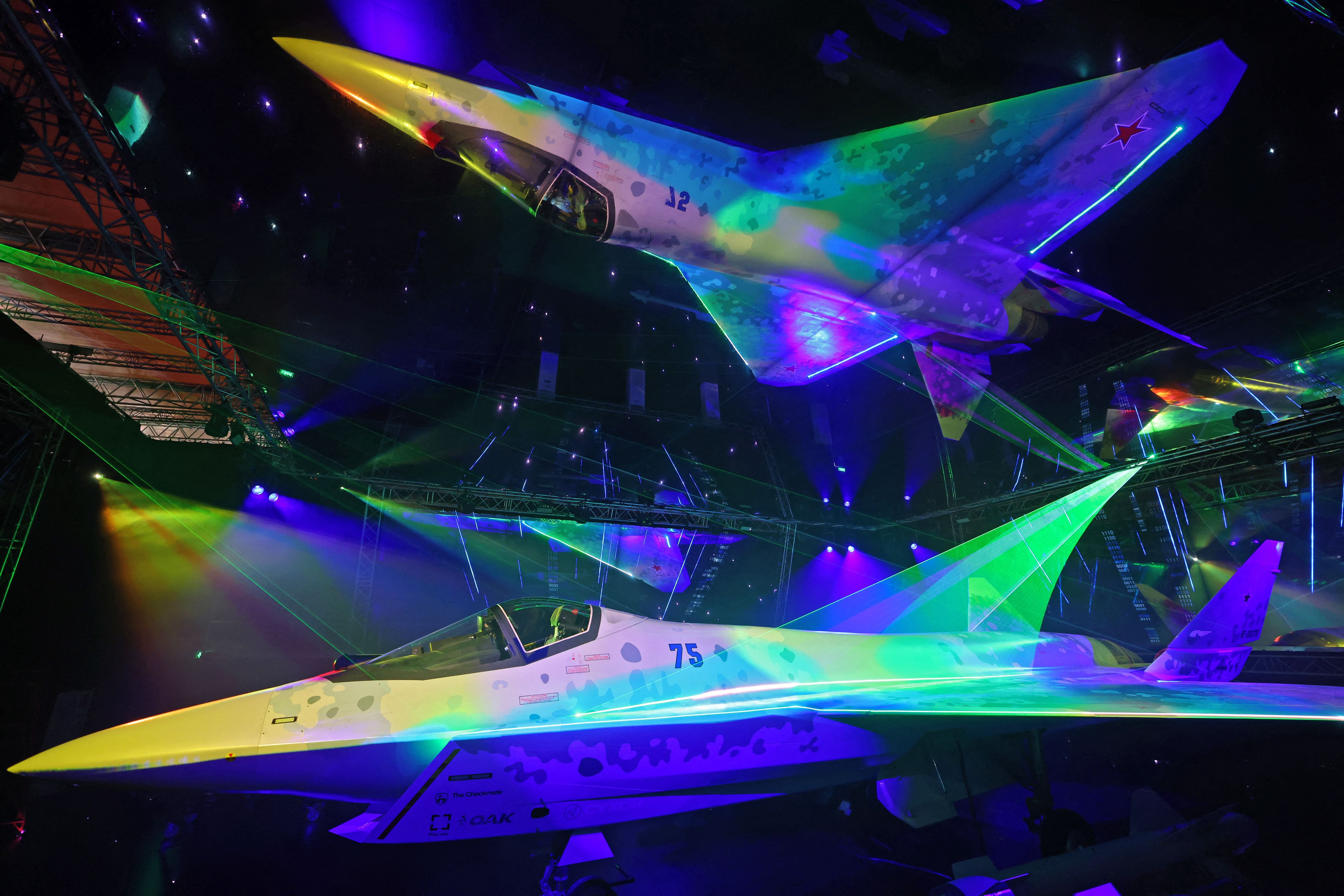
Russia first unveiled its so-called fifth-generation Su-75 Checkmate light fighter jet in 2021 at the MAKS airshow and the Dubai Airshow, both times as a mockup. In the more than four years since, not much has changed.
Expensive PR misfire
The spectacle cost $30 million, making it the most expensive marketing campaign Russia has ever staged. It included multiple teasers, slick promotional videos, and even a perfume inspired by the aircraft. The scent allegedly included “original samples of fifth-generation fighter cockpit metal alloys, glass, and leather, combined with bright notes of juniper, patchouli, and oak moss.”
However, the fragrance failed to impress experts, who noted not only that Russia had nothing beyond a mockup and promises but also identified an embarrassing detail in a promotional clip.
One video featured a simulation of the aircraft’s targeting system striking ground vehicles with precision weapons—yet the footage clearly came from the Target Acquisition and Designation System (TADS) of a US AH-64 Apache helicopter made by Lockheed Martin.
Nevertheless, Russia promised the fighter’s first flight would take place in 2023 and serial production would begin in 2026. Analysts, however, were skeptical of these claims.
Recently, a new image of the Su-75 appeared on social media, showing it beside the larger Su-57. Test pilot Sergey Bogdan of Sukhoi announced that the fighter could make its first flight in 2026: “With God’s help, it should be soon.”
‼ For the first time in history, a warplane was destroyed by a sea drone.
— Defense of Ukraine (@DefenceU) May 3, 2025
On May 2, @DI_Ukraine together with @ServiceSsu destroyed a russian Su-30 fighter jet near Novorossiysk with a Magura V5 naval drone.
War at sea is entering a new era. pic.twitter.com/qFTxseh0co
The claims vs. capabilities
The Su-75 concept envisions a single-engine, multirole fighter with internal weapons bays and stealth-optimized surfaces. The manufacturer claims the Checkmate will reach speeds of Mach 1.8–2.0, carry up to 7.4 tons of weapons, and have a range of up to 3,000 km. It is marketed as a competitor to the American F-35 and Chinese FC-31.
Russia further claims the Checkmate can detect and engage fifth-generation fighters at long ranges using onboard electronic warfare systems. But Russia currently lacks avionics capable of detecting F-35s or F-22s before those aircraft can launch air-to-air missiles at a Russian fighter. Moreover, the range of US standard air-to-air missiles exceeds that of their Russian counterparts. Russian long-range missiles are effective only when supported by airborne early-warning aircraft such as the A-50—but Russia has only about a dozen of those, several of which Ukraine has already destroyed or damaged.
We bring you stories from the ground. Your support keeps our team in the field.
Despite Moscow’s claims that the Checkmate is superior to the F-35, the F-35 is a serially produced, extensively tested aircraft with a proven combat record. The Su-75, meanwhile, remains little more than a mockup. Russia also faces major problems with stealth technology—the very basis of the Checkmate’s design.
Given these realities, expecting a serial aircraft anytime soon is unrealistic.
International sanctions have crippled Russia’s ability to purchase or manufacture critical aviation components, including precision machining equipment and semiconductors, without which advanced avionics cannot function, some experts say. Other experts openly call the Su-75 a paper tiger.
In 2025, Russia once again brought the Checkmate to the Dubai Airshow. Once again, it was a mockup.
BMPT “Terminator” Tank Support Fighting Vehicle
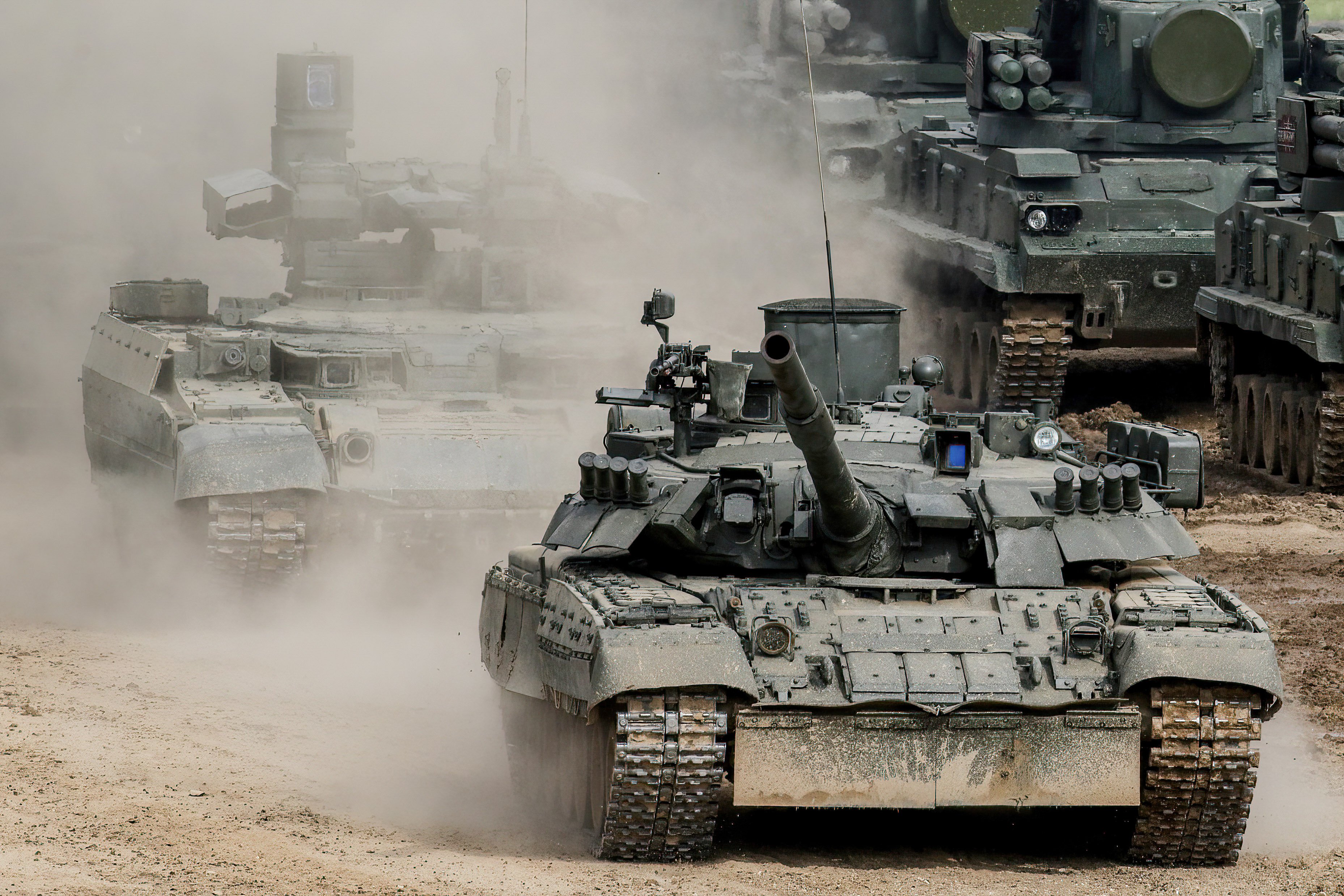
Unlike the Su-75, the BMPT Terminator armored fighting vehicle is a real-life vehicle that has been used in combat in Ukraine.
Decades in the making
Development of the modern version began in 1998 and was completed around late 2006. The concept dates back to the Soviet war in Afghanistan, where tanks proved easy targets for RPG teams. Engineers decided to create a vehicle to protect heavy armor.
The Terminator is a multi-purpose, heavily protected tracked fire-support vehicle designed to engage light armored targets, tanks, infantry fighting vehicles, and helicopters. It is equipped with two 30 mm cannons, a heavy machine gun, and Ataka-T anti-tank missiles. The crew consists of five.
The project dragged on for years. The vehicle entered service only in 2011, but the Russian Defense Ministry was in no rush to order it in large numbers—apparently recognizing that something was off.
Combat debut and design failures
The Terminator debuted in combat in May 2022, deployed by Russia’s 90th Tank Division and 76th Air Assault Division in the Donetsk region. After rolling onto a ridge to fire on a highway, the vehicles were forced to flee under Ukrainian artillery fire.
One major weakness is armor protection. While the T-72-based chassis provides decent resistance to mines and shell fragments, the turret is vulnerable. Experts note that critical systems can be disabled even by relatively light weapons. With the proliferation and low cost of FPV drones on the battlefield, any mission for the Terminator looks like a suicide run.
The first confirmed destruction of a Terminator was reported in early 2023.
Analysts at Oryx, a Dutch-based open-source intelligence (OSINT), have documented several damaged or destroyed Terminators, despite the fact that Russia now rarely sends them near the front. Only a few dozen exist in total. The vehicle is expensive, difficult to produce, overly complex—half the crew is busy managing its weapons—and extremely vulnerable to FPV drones. In the end, it is more a PR product than a real battlefield threat.
Vibrating upgrades
Recently, Russia delivered a new batch of Terminators to its army. The 2025 models feature more reactive armor and additional side protection. New promotional videos were released to highlight the vehicle’s firepower. The result was the opposite.
Viewers noticed extreme vibration of the twin 30 mm 2A42 cannons during firing.
“This machine scares the enemy with its shaking guns and pompous, meaningless promises,” said tank-development researcher Andrii Tarasenko. “The BMPT hasn’t been used in combat in over a year. Judging by everything, like the only T-72B3M equipped with the Arena active protection system, it seems to be busy mainly filming movies.”
Patrol Ships—Project 22160
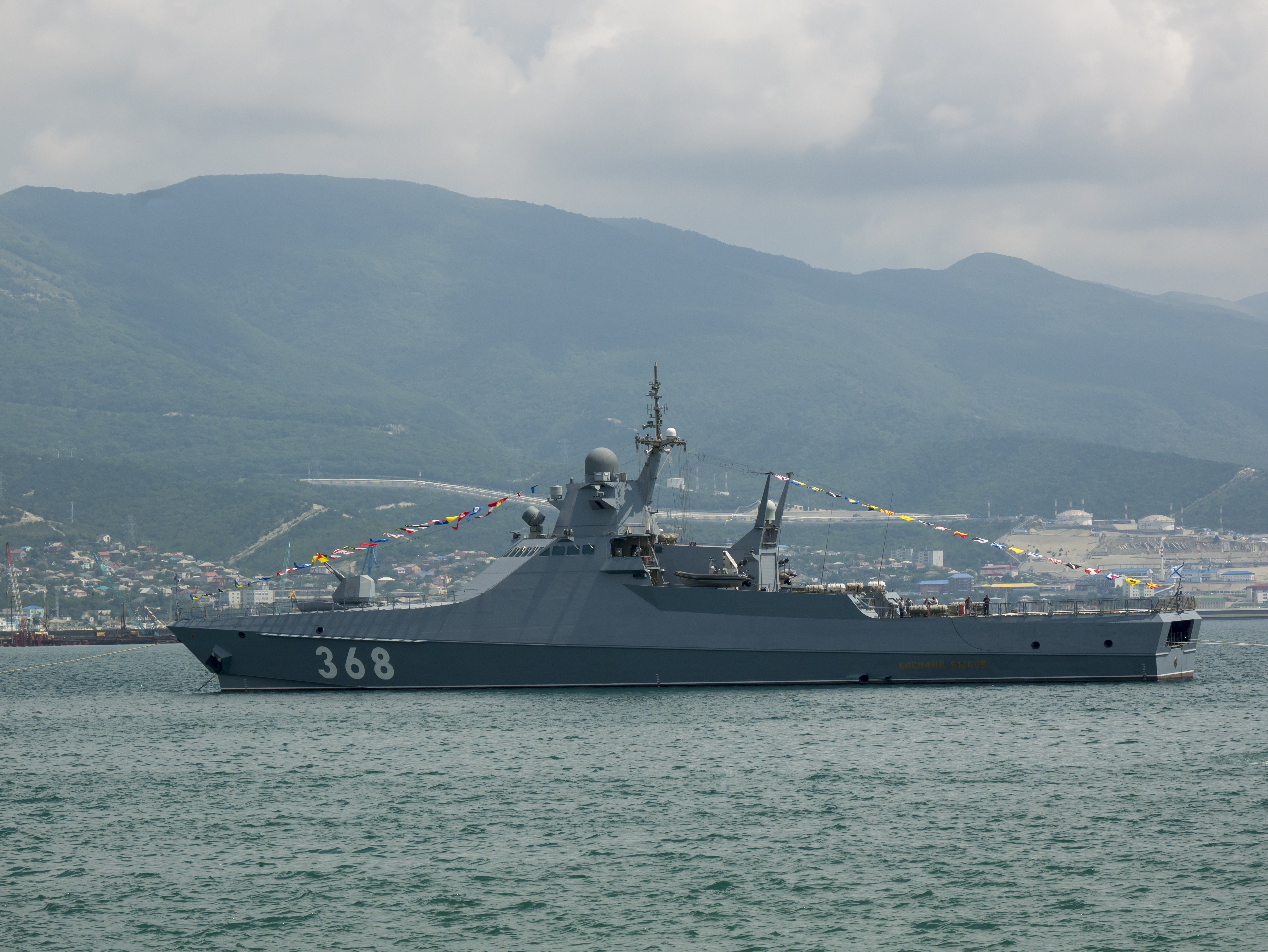
Ukraine sank Russia’s new Project 22160 vessel Sergey Kotov on March 5, 2024, using Magura V5 naval drones. The strike also destroyed a Ka-29 helicopter aboard the ship.
It may be the most fitting conclusion to the entire project.
The first ship was launched only in 2017. Russia planned to build six corvettes, with a possible expansion to 12. But it quickly became clear that even six might be too many.
A warship that can’t fight
In wartime, such vessels must search for and attack enemy submarines, engage surface ships of similar or smaller class, strike maritime and land targets, provide air defense, and support other naval units—in short, perform all tasks of a modern multipurpose warship. Project 22160 can do none of these.
Its low displacement results in poor seaworthiness. The “innovative” hull design leaves the ships slower than even the armored cruiser Boyarin—built more than a century ago.
At 1,800 tons displacement and 94 meters in length, the ship carries only a single 76 mm gun and a few machine guns. Its only “missile” armament is man-portable air-defense systems.
Modular in theory
Russia had hoped to enhance armament through modular systems—entire weapons blocks that could be swapped depending on mission needs. The idea was borrowed from the US, which developed two lines of Littoral Combat Ships (Freedom and Independence) using similar logic. But the US found that a ship plus module cost far more than a conventional ship, and swapping modules took not days but up to a month. By 2016, the US abandoned modularity.
Russia copied the concept but insisted on sticking with it. Now it has modular ships—but no modules.
Even Russian experts admit it: “Project 22160 is the most failed naval ship project in modern Russian history. Its shortcomings not only outweigh its advantages—there are no advantages at all. Minimal displacement led to inadequate seaworthiness. The modular weaponry was never developed or produced, leaving the ships in service with laughable armament: a 76 mm gun and a couple of 14.5 mm machine guns.”
The mysterious aircraft—Product 80
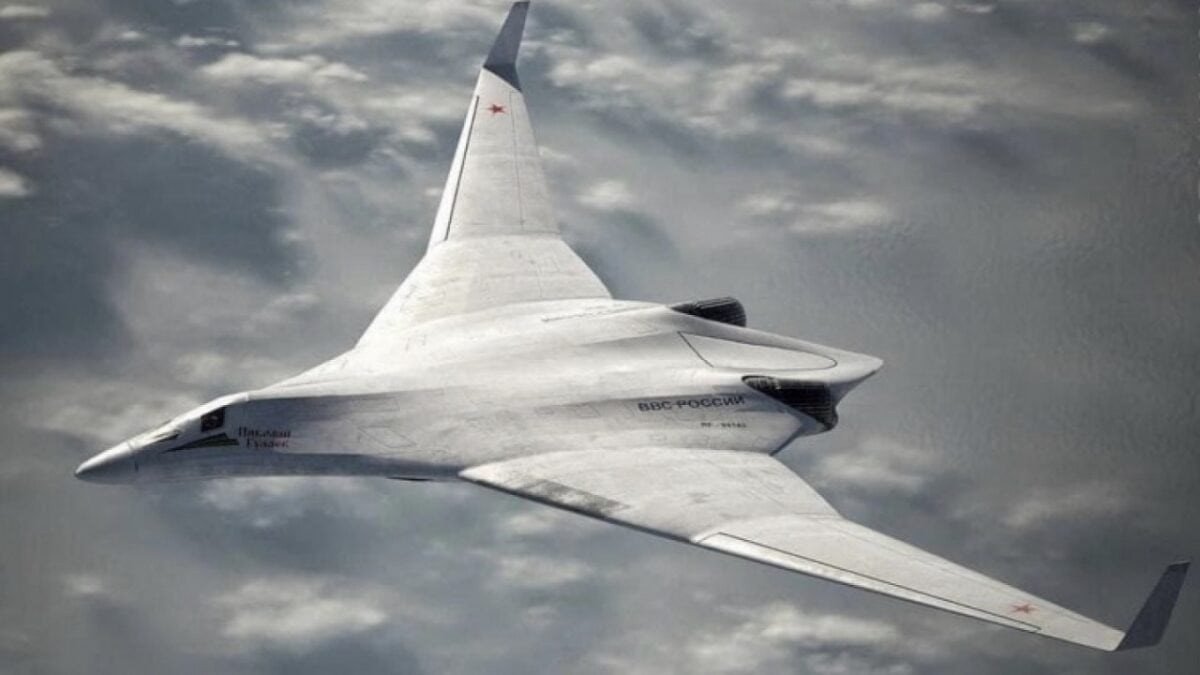
The American B-2 stealth bomber made its first flight in 1989. More than three decades later, Russia is still trying to build its counterpart, Tupolev PAK DA.
A 15-year-old concept
PAK DA stands for “Prospective aviation complex for long-range aviation.” Development began in 2008, and the aircraft was initially promoted as a fifth-generation bomber. Over time, Russia began referring to it as sixth-generation.
Like the 1980s US stealth bomber, the PAK DA is designed as a flying wing with no vertical stabilizers and a radar-absorbing coating.
According to Russian plans, the aircraft would be stealthy, carry all its munitions internally, and reach supersonic speeds without the need for afterburners. Claimed range: 12,000 km. Payload: 30 tons. More extravagant promises included laser weapons, network-centric warfare capabilities, and fully autonomous modes after future upgrades.
Stealth mode: Permanently unavailable
Although the United States has operated such aircraft for decades, the project remains critical for Russia—mostly because it desperately needs a replacement for its aging Soviet-era Tu-95 bombers, many of which Ukraine seriously depleted during Operation “Spiderweb.”
But the surviving Tu-95s look likely to remain Russia’s only option for a long time.
Russia faces enormous challenges with stealth technology. Even the Su-57 does not meet low-observability standards, let alone a 145-ton strategic bomber.
The PAK DA program involves several factories: the Kazan Aviation Plant, the Novosibirsk Aviation Plant, and the Beriev Aircraft Company in Taganrog. But none has demonstrated the capability to build the technologies required for the project. Meanwhile, the United States has already developed its next stealth bomber, the B-21 Raider.
Moreover, Washington and Europe have imposed sweeping sanctions on electronics, machining equipment, and composite-material technologies—making it highly likely, experts say, that the PAK DA will remain nothing more than a paper airplane that never flies.
Discuss this article:
-9bd5e1532102621f8fb1c4ba871a3171.png)



-605be766de04ba3d21b67fb76a76786a.jpg "Joseph Place")

-72b63a4e0c8c475ad81fe3eed3f63729.jpeg "Photo of Cyril Barabaltchouk")