- Category
- War in Ukraine
Ukraine’s Magura Sea Drone, the Last Thing a Russian Warship Wants to See
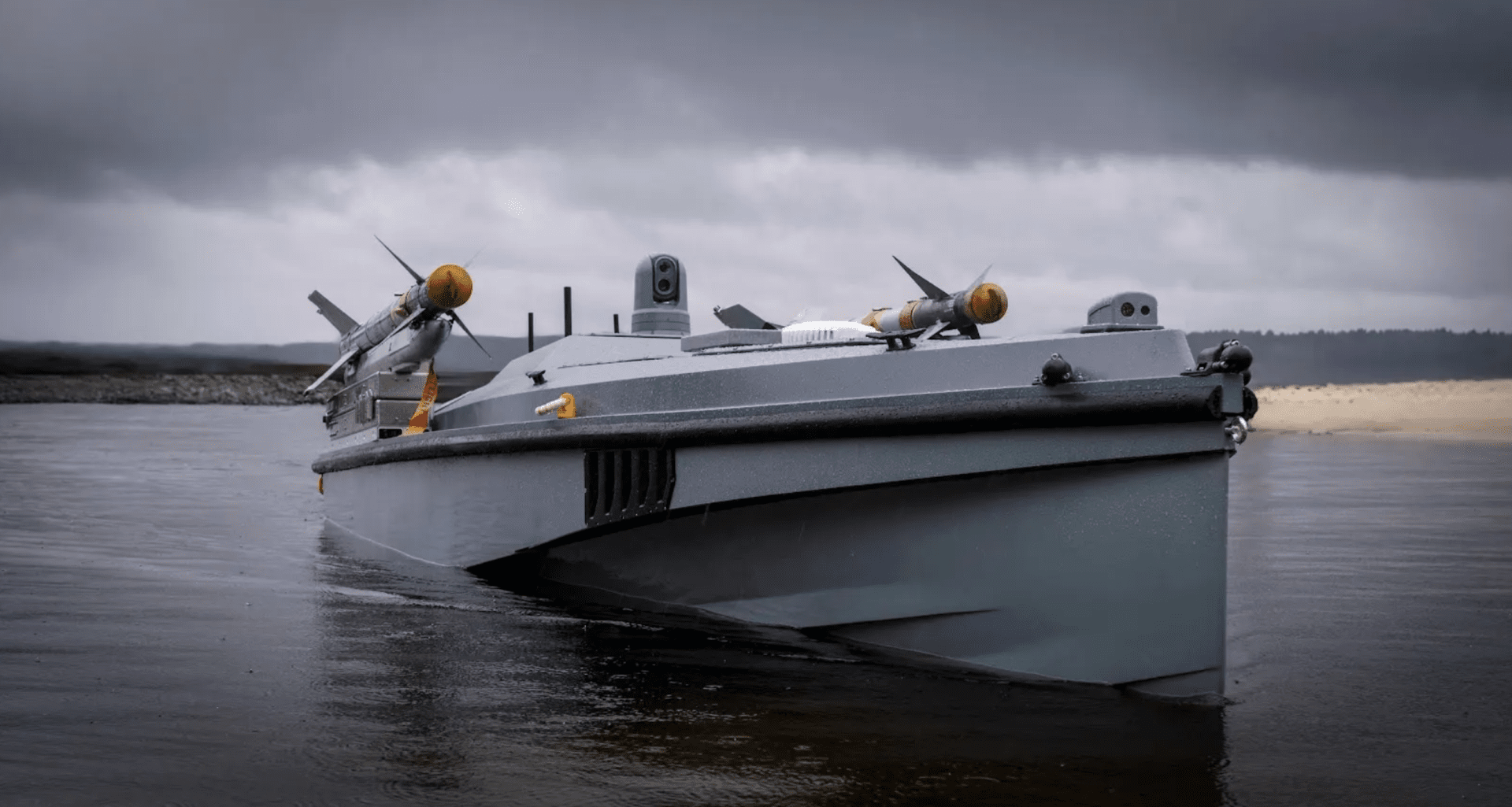
Ukraine’s Magura sea drone operations against Russian vessels have proved that you don’t need a traditional navy to take on enemy warships or break a blockade. A small drone can inflict massive damage at a fraction of the cost of the vessels it destroys.
 Prefer U24 Media on Google
- Authors


When the invasion began, Ukraine had virtually no navy. Russian warships moved freely through its territorial waters, bringing with them blockade and destruction. A solution was urgently needed, and time wasn’t on Ukraine’s side. Then came MAGURA — a product of Ukrainian ingenuity and persistence — followed by a flood of footage showing Russian ships, ports, and even aircraft being destroyed.
Magura origins and design choices
MAGURA—short for Maritime Autonomous Guard Unmanned Robotic Apparatus—is the brainchild of Ukraine’s state defense conglomerate SpetsTechnoExport, developed under the Brave1 defense-tech cluster. Magura was made outside of the constraints of traditional military R&D timelines, as the team behind the drone took advantage of the country's sense of urgency (and lack of red tape) to create a weapon system the Russian Navy was not ready for.
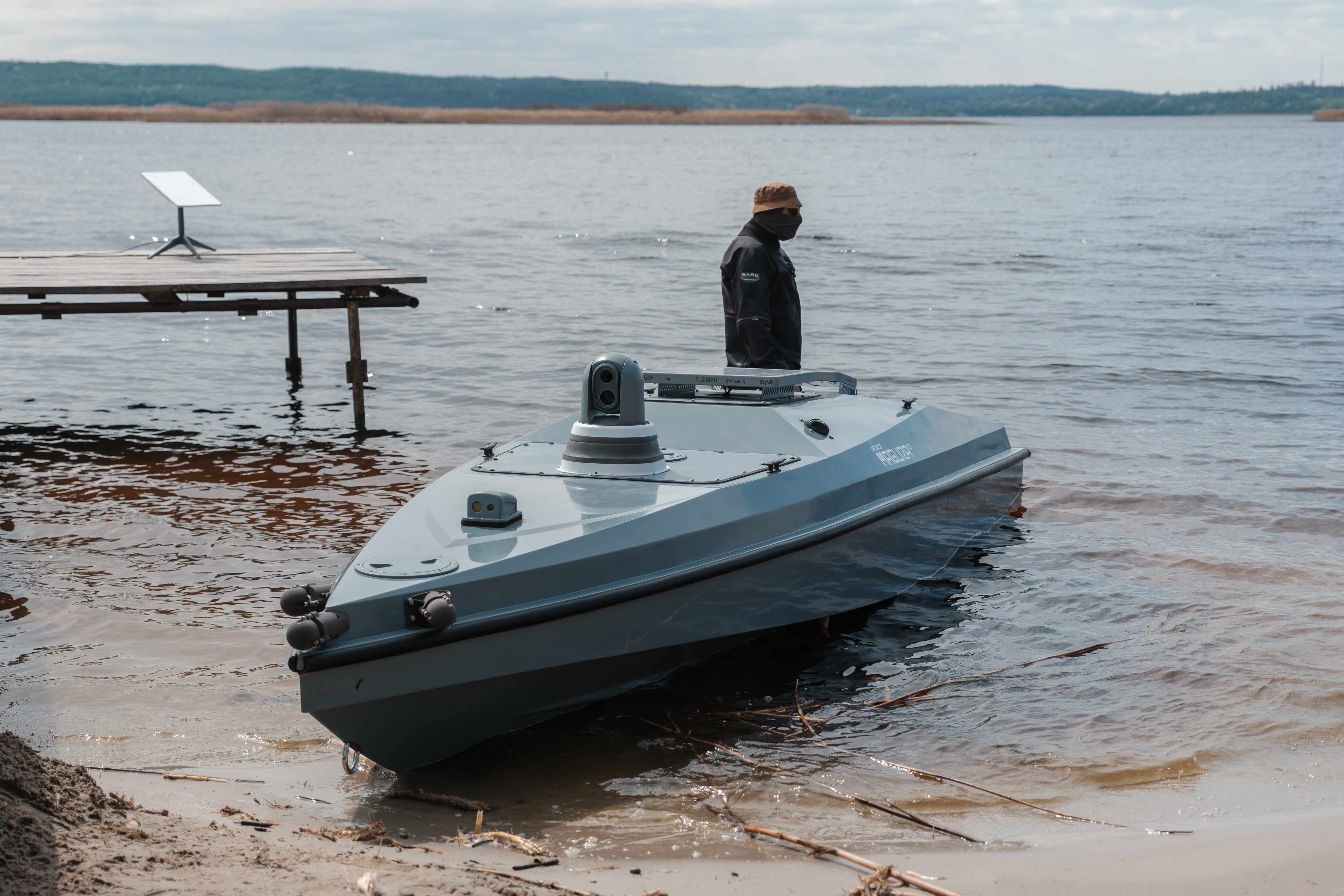
Magura is an unmanned surface vessel (USV)—a straightforward, 5.5-meter drone boat weighing under a ton. It carries up to 320 kilograms of explosives, cruises at 40–50 knots, and can operate for 800 kilometers on a single mission. Skimming the waterline makes it nearly invisible to radar, while its low thermal and acoustic signature helps it slip past patrols.
By late 2024, Ukraine had scaled up the design into multi-purpose naval platforms. MAGURA V5s were fitted with guided rocket launchers, allowing them to shoot down aircraft using the black sea as an airway, which they famously would.
Ukraine’s GUR said it destroyed a Russian Project 12150 Mangust patrol boat this morning with a Magura V5 naval drone. Footage from the Russian MoD and Russian channels shows a Ka-29 helicopter firing at another naval drone reportedly armed with R-73 air-to-air missiles.… pic.twitter.com/oLIROAqXAu
— Rob Lee (@RALee85) May 6, 2024
Then came the Naval drone carriers: enlarged USVs capable of launching UAVs and FPV drones (that's a lot of abbreviations) deep into occupied territory. In January 2025, three Russian air-defense systems in Skadovsk, Kherson region, were destroyed by drones believed to have been deployed this way.
These upgrades turned Magura from a single-use drone into a modular platform. Now it could strike ships, shoot down aircraft, and launch its own drones against targets far inland. Almost four years into the full-scale war, the Ukrainians have expelled Russia from the Black Sea while managing to destroy a third of its fleet stationed there.
Magura’s successful missions
In February 2024, Ukrainian drones sank the Ivanovets, a Russian Tarantul-class missile corvette, inside their own rear in Sevastopol Bay. That summer, another strike badly damaged the Olenegorsky Gornyak, a landing ship near Novorossiysk—one of Russia’s safest deep-water ports.
In March 2024, a swarm (yes, you read that correctly) of MAGURAs struck and eventually sank the Sergey Kotov, a patrol ship worth around $65 million. Even the infamous Kerch Strait Bridge and vital oil depots in Novorossiysk have been hit, proving the drones can expose huge cracks in Russia’s maritime defenses.
⚡️ Ivanovets was sunk by six Ukrainian-made MAGURA V5 maritime drones, according to Kyrylo Budanov. https://t.co/5spziSfaiJ
— UNITED24 Media (@United24media) February 4, 2024
By the end of 2024, after evolving from a single-use suicide drone into a multi-purpose platform, a MAGURA armed with short-range R-73 missiles shot down two Russian Mi-8 helicopters over the Black Sea—the first time a naval drone had destroyed aircraft.
Weeks later, in January 2025, Ukrainian naval drone carriers launched UAVs from the sea to destroy two Russian Pantsir and one Osa air-defense systems in Skadovsk, deep inside the occupied Kherson region.
Even more remarkably, in May 2025, MAGURA drones equipped with the same R-73 missiles shot down two Russian Su-30 fighter jets on separate occasions over the Black Sea — advanced aircraft worth millions of dollars each.
🔴 BREAKING: Ukrainian Magura maritime drone shot down a Russian Su-30 fighter jet near the city of Novorossiysk in Russia's Krasnodar Krai, Defense Intelligence of Ukraine confirmed. pic.twitter.com/1dsR5k1hdL
— UNITED24 Media (@United24media) May 3, 2025
On August 28, 2025, another milestone followed. For the first time in history, an FPV drone likely transported by a MAGURA platform successfully struck a military ship—the Buyan-M corvette, armed with Kalibr cruise missiles, in the Azov Sea near Temryuk Bay. The target was hit from more than 350 kilometers away.
Russia is clearly exposed; these relatively tiny maneuverable vessels can now show up at Russian naval bases in Crimea or send UAVS to inland positions far behind the front line. Each strike carried strategic weight and a message to many of the war’s spectators. Ukraine broke the image of the Russian Navy’s invulnerability, decreased power projection, and forced Russia to abandon the idea of a sustained blockade altogether.
What does it mean for the world?
Beyond opening a Pandora’s box for naval warfare doctrine, MAGURA has changed how the world thinks about fighting at sea by democratizing it. For centuries, sea power belonged to empires wealthy enough to build fleets of frigates, destroyers, and submarines. Now, it seems inevitable that inexpensive, fast, and expendable unmanned boats are becoming more and more accessible to navies and irregular formations across the world.
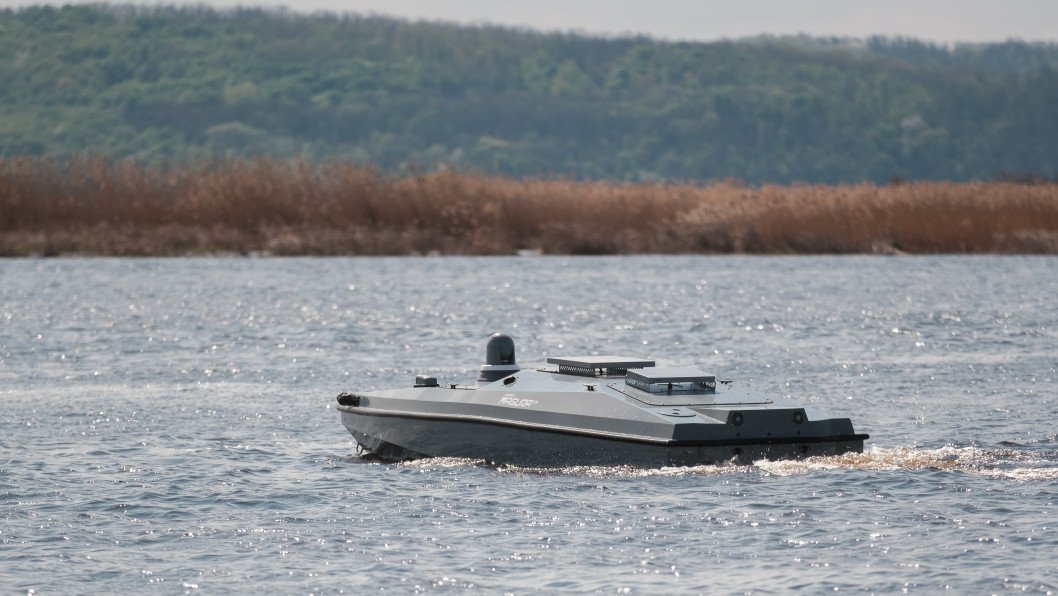
That lesson is not lost on the world’s admirals. NATO navies are already testing counter-Unmanned Surface Vessel (USV) systems and developing their own drone fleets. China, which has closely studied the Black Sea campaign, is accelerating investment in unmanned surface and subsurface craft. Even smaller states, long shut out of naval power, now have a platform for contesting shipping lanes and carving out their territorial waters.
The impact on Ukraine is immediate. Grain exports move again, as do some imports, because Russia cannot enforce a blockade. Globally, the signal is clear: large warships are slow, expensive, and increasingly vulnerable to systems like MAGURA. In terms of cost and production, a hundred naval drones can be built for the price of a single destroyer—and in months, not decades. For navies around the world, the conversation has shifted to how quickly they can adopt this technology, and just as urgently, how to defend against it.
Discuss this article:
-9bd5e1532102621f8fb1c4ba871a3171.png)


-c439b7bd9030ecf9d5a4287dc361ba31.jpg "Photo of Katherina Popilnichenko")



-29a1a43aba23f9bb779a1ac8b98d2121.jpeg "Photo of Illia Kabachynskyi")