- Category
- Latest news
Russia Claims Ukraine Just Used a Laser to Burn a Fiber-Optic Drone Cable—Is It Real?
 Prefer U24 Media on Google
- Authors



Footage circulating online appears to show a Russian fiber-optic FPV drone losing connection after a bright concentrated light strikes the cable linking the drone to its operator.
We bring you stories from the ground. Your support keeps our team in the field.
The video has fueled speculation that Ukrainian forces may be using a laser system to physically destroy fiber-optic control lines—though there has been no official confirmation from Ukraine.
According to Serhii “Flash” Beskrestnov, an advisor to Ukraine’s Ministry of Defense who commented on the footage on Telegram, Russian sources themselves claim Ukrainian forces have developed a method to counter fiber-optic drones.
Very interesting footage from Russians indicating that Ukrainian Forces use laser light beam to fry fiber optic on "waiter" drones.
— Dimko Zhluktenko 🇺🇦⚔️ (@dim0kq) March 10, 2026
Quite unexpected turn of the warfare, take notes. pic.twitter.com/C1zDkBo8oU
“Russians say we have found a way to counter fiber optics. With this thing we also scan brains and abduct people,” Beskrestnov wrote sarcastically, responding to claims circulating in Russian channels.
Fiber-optic FPV drones have become more common in Russia’s war against Ukraine because they cannot be jammed by electronic warfare. Instead of radio signals, they use a physical cable that unwinds from the drone during flight. Damaging that cable is one of the few ways to disable the drone.
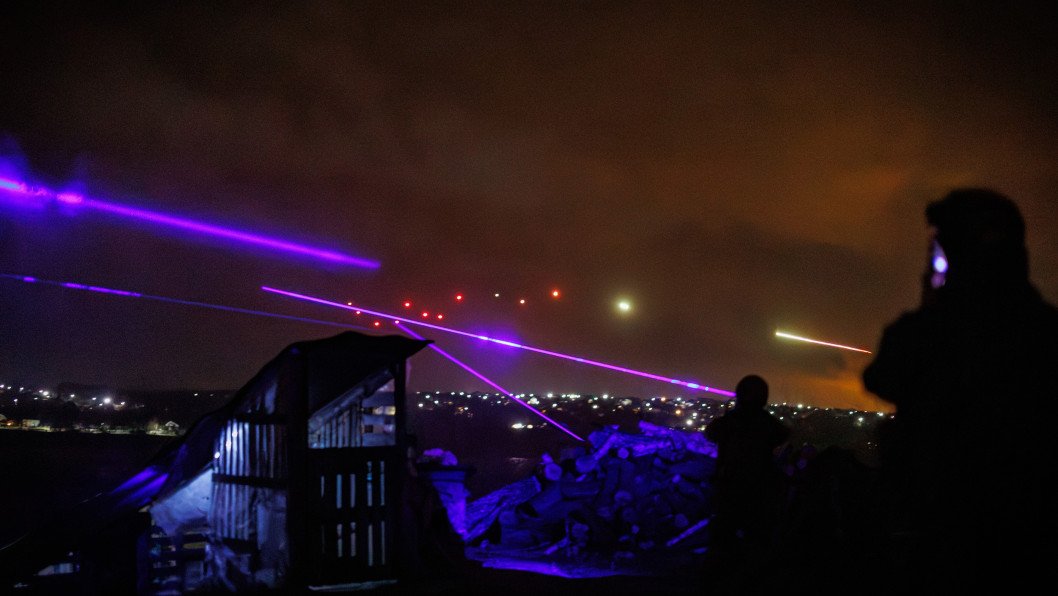
There has been no official confirmation from the Ukrainian military that lasers are being used this way. However, Ukraine has previously said it is developing directed-energy systems to counter drones and other aerial threats.
The footage appeared days after comments by retired US Rear Admiral Mark Montgomery, who said Ukraine could deploy battlefield laser systems years earlier than the United States.
Montgomery said the US military may be four to six years away from fielding an effective combat laser, while Ukraine could potentially achieve it within one to two years due to its faster wartime innovation cycle.
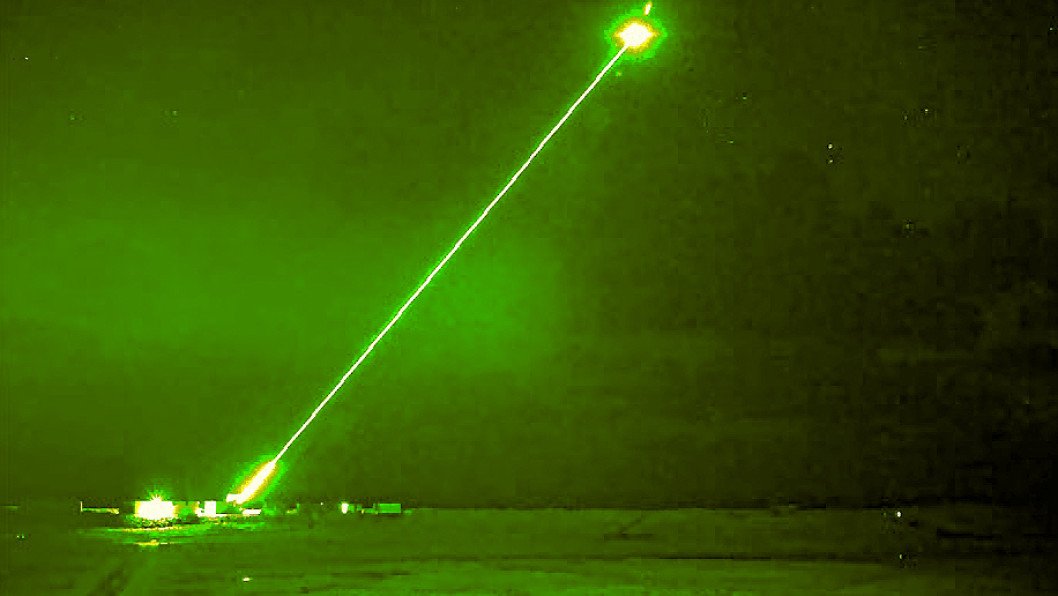
“In the US Navy or Army, I would say we are four to six years from a truly effective laser. In Ukraine—one to two,” Montgomery told Babel.
He said early laser systems would likely be used against drones rather than missiles. “Will it work against a ballistic missile in a year or two? No… But against Shahed drones—yes,” he said.
Montgomery argued that Ukraine’s rapid battlefield adaptation—particularly in drone warfare—allows it to test and deploy emerging technologies far faster than traditional Western defense programs.
Discuss this article:



-c439b7bd9030ecf9d5a4287dc361ba31.jpg "Photo of Katherina Popilnichenko")