- Category
- Latest news
Ukraine Could Deploy Battlefield Lasers Years Ahead of the US, Former US Navy Admiral Says
 Prefer U24 Media on Google
- Authors

-72b63a4e0c8c475ad81fe3eed3f63729.jpeg "Photo of Cyril Barabaltchouk")
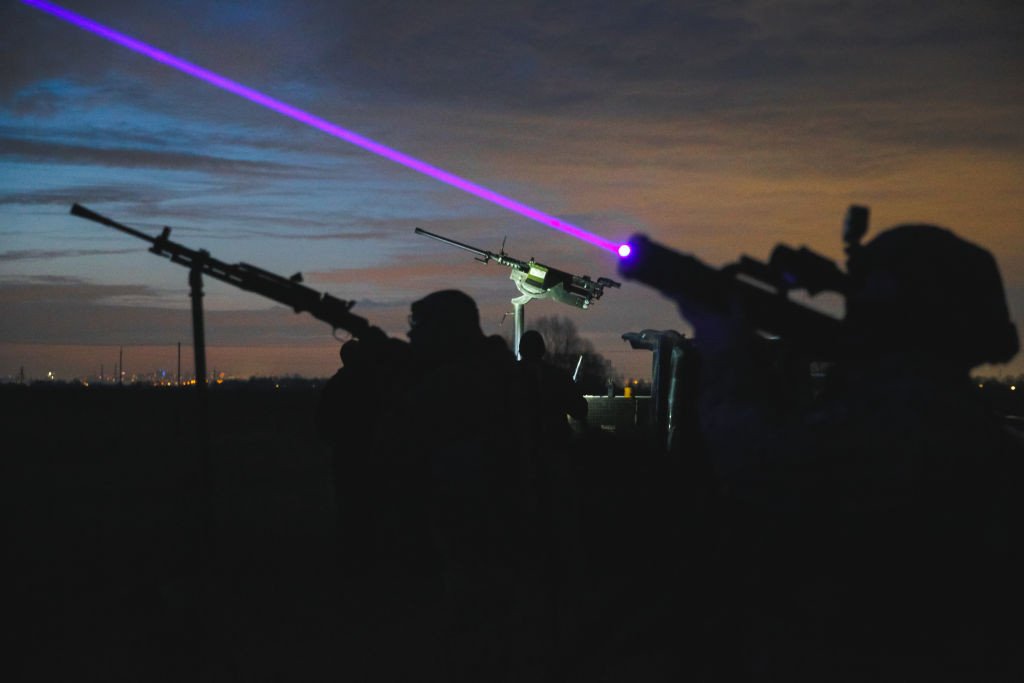
The United States may be four to six years away from deploying a truly effective battlefield laser, but Ukraine could achieve it within one to two years, retired US Rear Admiral Mark Montgomery said in an interview with Babel on March 2.
Montgomery, who served 32 years in the US Navy and later worked at the White House National Security Council and the Senate Armed Services Committee, has been regularly visiting Ukraine since 2023. He now works at the Washington-based Foundation for Defense of Democracies and helps train Ukrainian officers in operational planning in coordination with Ukraine’s Armed Forces General Staff.
We bring you stories from the ground. Your support keeps our team in the field.
“In the US Navy or Army, I would say we are four to six years from a truly effective laser,” he said. “In Ukraine—one to two. You are willing to take risks. Sometimes you fail—and that’s normal.”
According to Montgomery, laser systems will not soon be capable of intercepting ballistic or hypersonic missiles. But they could be effective against Iranian-designed Shahed drones, known in Russia as Geran-2, Babel wrote.
“Will it work against a ballistic missile in a year or two? No. Against a fast cruise missile? Probably not. Against a hypersonic missile? No. But against Shahed drones—yes,” he said. “And in two years it will be better. In five years it could be effective even against ballistic missiles.”
Montgomery argued that Ukraine’s faster adaptation cycle gives it an advantage in emerging technologies. “One generation is three months,” he said, referring to drone innovation. “You need to be two generations ahead of the Russians.”
He described Ukraine’s armed forces as among the fastest adapting militaries in the world, particularly in drone warfare. “New generations of drones are mastered every two, three, four months. That’s fantastic. We have not seen that in the United States,” he told Babel.
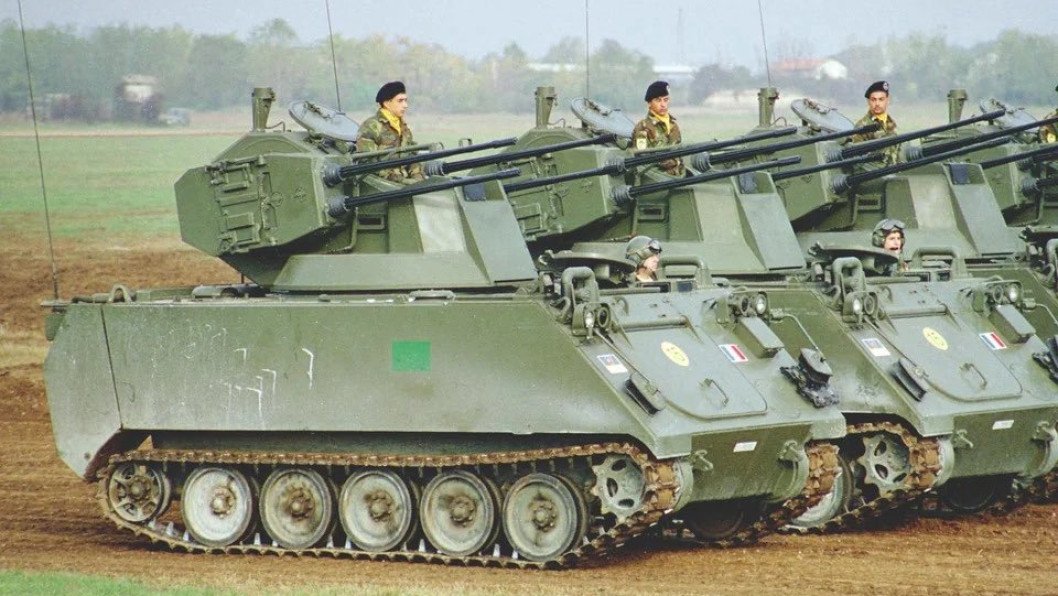
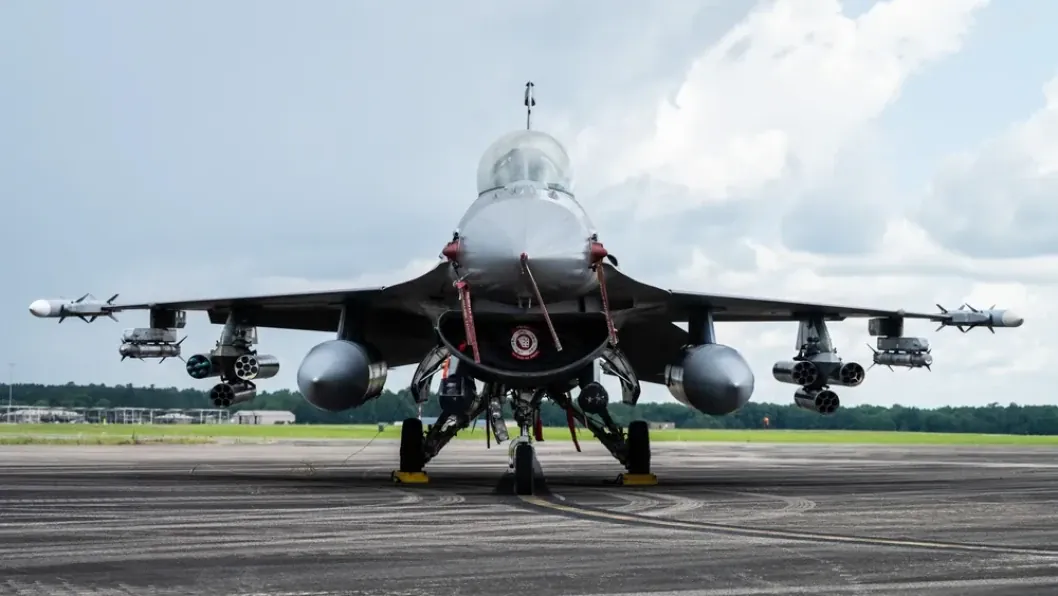
At the same time, Montgomery said Ukraine must more aggressively use its air capabilities. He suggested shifting a greater share of air power toward offensive operations, though he acknowledged the constraints posed by limited aircraft and munitions.
“Historically, in US joint operations, we would allocate 70 percent to offense and 30 percent to defense—maybe even 80–20,” he said. “That’s not realistic for Ukraine today. But perhaps it could be 20 percent offense, 80 percent defense. Right now, it appears even less.”
He pointed to US-supplied precision-guided weapons such as GBU-39 bombs and the ERAM extended-range munition as tools that could help push Russian forces farther from the front line by expanding strike depth from roughly 100 kilometers to 400 kilometers. “The key is that the United States must continue supplying offensive munitions,” he said. “Which specific system—Tomahawk, ATACMS, ERAM—matters less than having sufficient long-range strike capability.”
Montgomery was critical of the current US diplomatic approach toward Russia. “Putin reacts only to strength. He does not seek consensus. He wants to win,” he said. He also argued that economic pressure remains decisive. “This war will not end without strong economic pressure on Russia,” Babel reported.
On the battlefield, he said Russia has improved technologically, particularly in drone warfare, but continues to suffer from structural weaknesses in command culture and integration. “The Russian officer corps is still reluctant to take initiative and tied to outdated philosophy,” he said. “The Ukrainian officer corps is better—not perfect, but better.”
Montgomery said Ukraine’s ability to deny Russia control of the Black Sea without deploying large naval vessels was one of the most significant military achievements of the war. In his view, Ukraine’s future naval strength lies in a combination of anti-ship missiles, unmanned surface and underwater vehicles, aerial drones and intelligence—rather than large ships vulnerable to missile strikes.
Ultimately, he said, Ukraine’s advantage lies not only in technology but in resilience. “You have shown the strongest societal resilience in the world,” he said. “Authoritarian empires come here to die.”
Earlier, it was reported that Ukraine was racing to build cheaper, homegrown air defenses as Russian drone and missile strikes continue to batter its cities and infrastructure.
The reports stated that Ukrainian engineers have developed experimental systems ranging from interceptor drones to a prototype laser weapon known as “Sunray,” designed to burn drones out of the sky within seconds.
Unlike large Western laser programs such as the US Navy’s Helios, which cost $150 million to develop, Ukrainian developers say their laser system was built in roughly two years for just a few million dollars, with an expected price tag of a few hundred thousand dollars per unit, the Atlantic wrote.
Discuss this article:
-4a56a6b482ec132402c16ef6fcabf9a2.png)