- Category
- Latest news
Ukraine Turns F-16s Into Mass Drone Hunters Using Low-Cost APKWS II Guided Rockets
 Prefer U24 Media on Google
- Authors


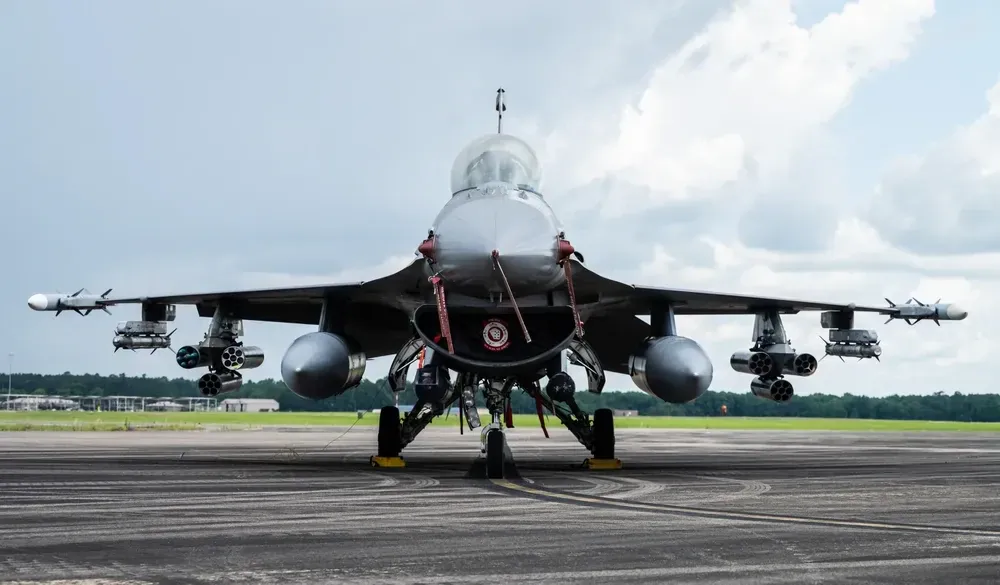
Ukrainian Air Force footage has, for the first time, revealed F-16 fighters intercepting Shahed-type attack drones using inexpensive APKWS II guided rockets, a development that could dramatically lower the cost of defending against large-scale drone attacks, according to reporting highlighted by Defense Express on February 18.
The Ukrainian Air Force released a compilation showing air-to-air interceptions during Russia’s overnight attack from February 16 to 17, when 425 aerial threats were launched.
We bring you stories from the ground. Your support keeps our team in the field.
Air defenses destroyed or suppressed 392 targets, including:
367 drones of various types;
20 Kh-101 cruise missiles;
4 Iskander-K cruise missiles;
1 Kh-59/69 guided air-launched missile.
Among the footage, one interception drew particular attention from analysts cited by Defense Express.
Бойова робота протиповітряної оборони під час комбінованого удару у ніч на 17 лютого 2026 року.
— Генеральний штаб ЗСУ (@GeneralStaffUA) February 17, 2026
Відео - Повітряні Сили ЗСУ pic.twitter.com/sfe2GD3UrA
Evidence points to APKWS II drone interception
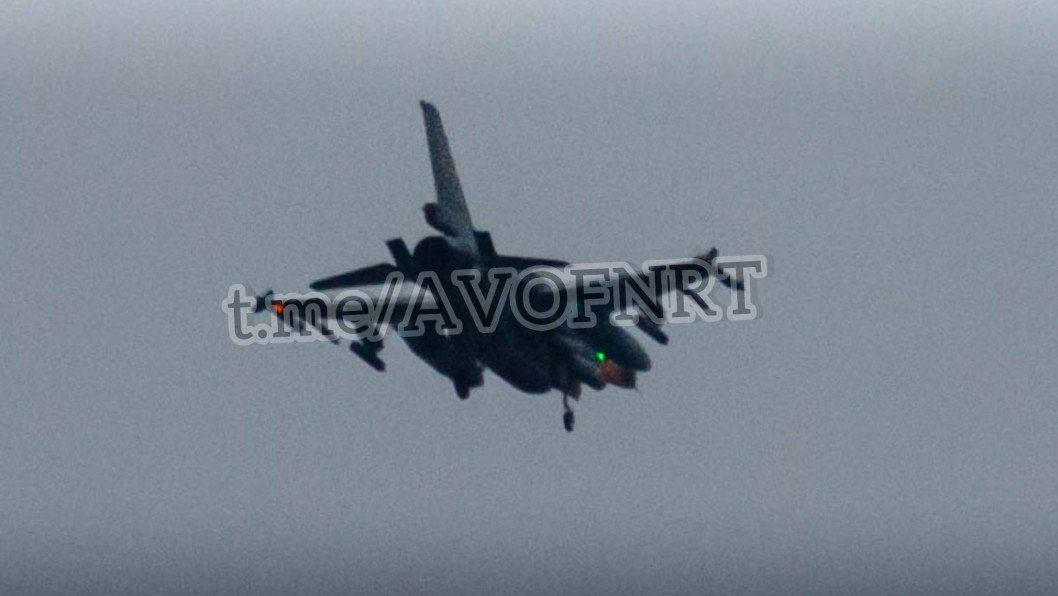
In the highlighted clip, at 00:19, a targeting system locks onto an unidentified aerial object—likely an Iranian-designed Shahed drone used by Russia. Moments later, a relatively slow-moving missile closes in and destroys the target.
Based on flight characteristics, targeting behavior, and interface elements visible in the video, analysts referenced by Defense Express assess that the interception was most likely carried out using an APKWS II laser-guided rocket fired from a Ukrainian F-16.
The strike appears to have been recorded through an AN/AAQ-33 Sniper Advanced Targeting Pod, whose on-screen interface closely matches what is visible in the released footage, though only the central portion of the display was shown.
The Shahed drone also appears to have been laser-designated, a requirement for APKWS guidance—further supporting the assessment.
From ground use to air-to-air combat
Ukrainian F-16s were first observed carrying AN/AAQ-33 targeting pods and APKWS II rockets in December 2025, but no confirmed combat footage has shown these weapons being used for aerial interception.
APKWS has already proven effective in ground-based air defense roles, a trend Defense Express has repeatedly analyzed, but this marks a significant evolution in air-to-air employment.
Cheap rockets versus million-dollar missiles
The development carries major economic implications. Traditional air-to-air missiles such as AIM-9 or AIM-120 cost millions of dollars per shot. By contrast, recent contracts price APKWS II at roughly $30,000 to $31,000 per rocket.
Loadout capacity also differs:
F-16 with AIM-9/AIM-120: about 6 targets per sortie;
F-16 with APKWS II: up to 28 rockets or more, depending on launcher configuration.
Combined with the aircraft’s 20-mm M61 Vulcan cannon holding 511 rounds, this could theoretically allow dozens of drone kills in a single flight—though such outcomes depend on favorable combat conditions.
Earlier, reports emerged that Sweden’s Saab was evaluating the possibility of equipping its JAS 39 Gripen fighter jets with low-cost APKWS guided rockets as an affordable way to counter drones—a concept shaped heavily by Ukraine’s battlefield experience.
Discuss this article:



-c439b7bd9030ecf9d5a4287dc361ba31.jpg "Photo of Katherina Popilnichenko")