- Category
- Defense Tech
Three Yandex Data Centers Hit in Four Days—Now All of Its Supercomputers May Be Down
 Prefer U24 Media on Google
- Authors



A series of Ukrainian drone strikes on Russian data centers may have knocked all three of Yandex’s supercomputers offline, potentially taking out half of the six largest supercomputing systems operating in Russia, Russian technology outlet T-Invariant reported on October 11.
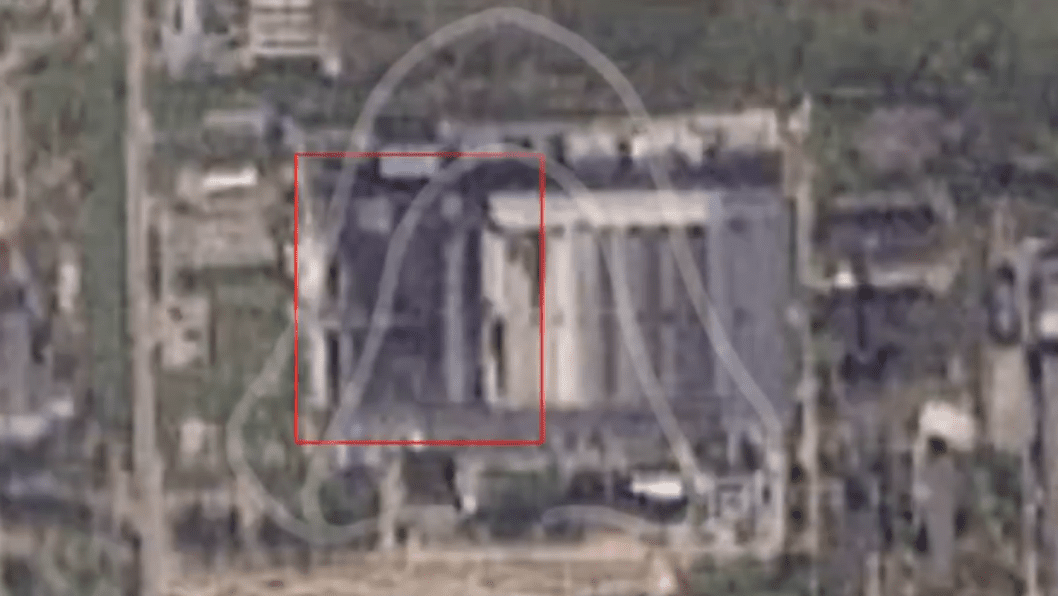
The first strike came overnight on October 8 against Yandex’s Sasovo data center in Russia’s Ryazan region. The facility, operating since 2014, hosts two of the company’s three supercomputers—Chervonenkis, with a peak performance of 29.42 petaflops, and Lyapunov, rated at 20.03 petaflops.
We bring you stories from the ground. Your support keeps our team in the field.
Chervonenkis is Yandex’s most powerful machine and had been Russia’s strongest newly built supercomputer of the past 15 years. When it entered service in 2021, it ranked 19th in the global TOP500 list. It has since fallen into the second hundred as sanctions and limited access to advanced hardware made infrastructure upgrades increasingly difficult.
A second strike followed on October 9 against Yandex’s data center in Kaluga, located in the Grabtsevo industrial park. Yandex describes the site as its largest data center and one of the biggest such facilities in Russia. Two days later, on October 11, another strike hit the company’s Vladimir data center, home to its third supercomputer, Galushkin, which has a peak performance of 20.64 petaflops.
❌ System failures are recorded not only in Yandex. Their data centers serve a number of Russian companies that used these capacities
— MAKS 26 🇺🇦👀 (@Maks_NAFO_FELLA) October 11, 2026
One of Yandex's three supercomputers, "Galushkin", was located in Vladimir. They are key for training the company's AI models.
All three… pic.twitter.com/c7n4PJt5Ct
According to T-Invariant, all three Yandex supercomputers are now out of service. Experts interviewed by the outlet said the attacks may have caused enormous damage to Russia’s high-performance computing infrastructure, particularly because the facilities were built long before physical protection against drone strikes became a serious consideration.
“Yandex built its centers and supercomputers in peacetime and for peacetime. All development focused on normal human life; nobody imagined drones would hit the roof. Earthquakes and other natural disasters are not expected in the Ryazan and Vladimir regions, so nobody thought about investing in physical protection for the buildings,” one supercomputing expert told the outlet.
Yandex built the systems primarily to train neural networks and handle large-scale machine-learning workloads. All three rely on AMD EPYC processors and NVIDIA A100 accelerators connected through high-speed InfiniBand networking—hardware that Russian companies have found increasingly difficult to obtain in large quantities.
One expert argued that restoring systems of this scale could prove far more difficult than simply repairing a damaged building.
“It will not be possible to restore supercomputers of this level. And it is not even about the availability of money. The main problem is not even sanctions, but the shortage of chips and other components: there is a huge queue for them around the world. However, the costs of gray and black imports are also very high,” the specialist said.
T-Invariant noted that Russia’s remaining major supercomputing capacity is concentrated around Moscow. Sberbank’s Christofari and Christofari Neo are located in Skolkovo, an area considered relatively well protected by air defenses, while MTS operates its GROM supercomputer in Lytkarino. Yandex also maintains other data centers in Mytishchi and Ivanteyevka in the Moscow region.
Previously, Russia’s internet segment suffered widespread outages hours after a retaliatory Ukrainian drone strike hit a Yandex data center in the Ryazan region.
Discuss this article:


-c439b7bd9030ecf9d5a4287dc361ba31.jpg "Photo of Katherina Popilnichenko")